Smart buildings are transforming how we manage commercial and residential properties, with IoT gateways serving as the critical nervous system connecting thousands of sensors, controllers, and devices into unified intelligent networks. Traditional building management—siloed systems, manual monitoring, and reactive maintenance—can no longer meet the demands of energy efficiency, occupant comfort, and operational excellence. Schedule a consultation to discover how IoT gateway solutions can revolutionize your building operations and maintenance strategy.
Why IoT Gateways Matter for Smart Buildings
Buildings consume nearly 40% of global energy and account for significant carbon emissions, making them prime targets for efficiency improvements. IoT gateways bridge the gap between field devices and cloud platforms, enabling real-time monitoring, predictive maintenance, and automated optimization that traditional systems simply cannot achieve.
30%
Energy consumption reduction through IoT-enabled smart building management
4.12B
IoT devices projected in commercial buildings by 2030
20%
Average operating expense reduction with IoT optimization
31%
Total building energy savings through IoT automation
Ready to connect your building systems? Join facility managers using Oxmaint to centralize IoT gateway data and streamline maintenance operations.
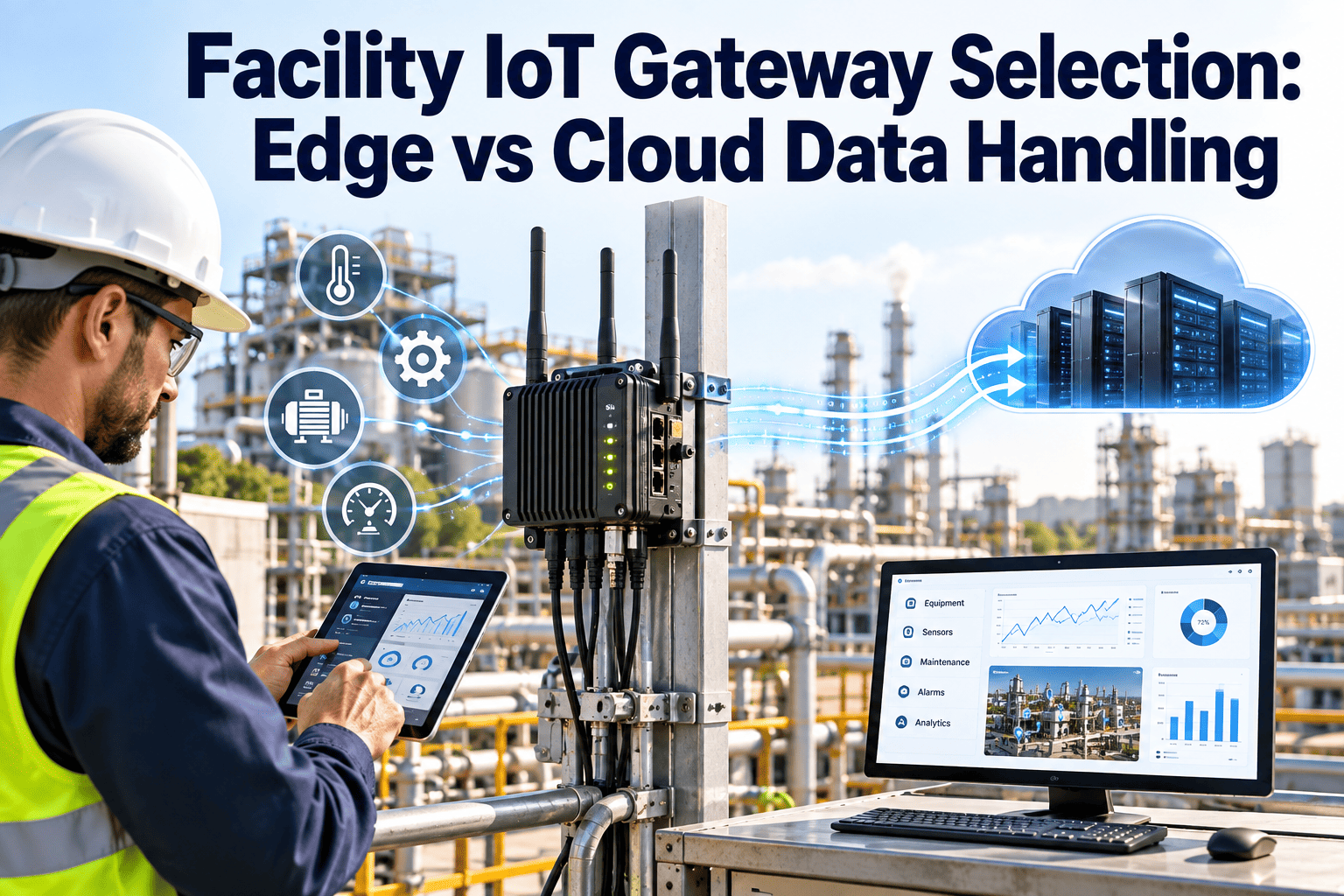
IoT gateways function as intelligent bridges between your building's physical infrastructure and digital management platforms. They aggregate data from hundreds of sensors and devices, translate between different communication protocols, and enable real-time monitoring and control of building systems.
IoT Gateway Architecture ComponentsFrom sensors to actionable intelligence
Layer 1
Field Device Layer
Sensors capture environmental data—temperature, humidity, occupancy, air quality, and energy consumption via BACnet, Modbus, and LoRaWAN protocols.
Layer 2
Gateway Processing
IoT gateways aggregate multi-protocol data, perform edge computing for time-sensitive decisions, and ensure continuous operation during network interruptions.
Layer 3
Protocol Translation
Multi-protocol gateways convert between BACnet/IP, Modbus RTU/TCP, MQTT, OPC-UA, and REST APIs—enabling legacy HVAC systems to communicate with modern cloud platforms.
Layer 4
Cloud Integration
Processed data flows to building management systems, analytics platforms, and maintenance software. Sign up for Oxmaint to centralize your building's IoT data and automate maintenance workflows.
Key IoT Gateway Capabilities
Modern IoT gateways deliver far more than simple connectivity. They serve as intelligent edge devices that process, filter, and act on building data in real-time—reducing latency and enabling autonomous building responses.
Gateway Features for Building Intelligence
Multi-Protocol Support
Bridge BACnet, Modbus, LonWorks, KNX, Zigbee, Z-Wave, and LoRaWAN into unified building networks without replacing existing equipment.
Edge Computing
Process data locally for sub-second response times. Critical controls continue functioning during cloud connectivity interruptions.
Security & Encryption
Enterprise-grade security with TLS/SSL encryption, certificate management, VPN support, and role-based access control.
Real-Time Monitoring
Continuous data streaming with configurable polling intervals from milliseconds to minutes for equipment monitoring.
Remote Management
Configure, monitor, and update gateways remotely through web interfaces. Firmware updates deploy automatically.
Data Analytics
Semantic tagging enables AI-driven insights and predictive maintenance triggers across building systems.
See how IoT integration transforms maintenance. Book a demo to explore real-time building monitoring and automated work order generation.
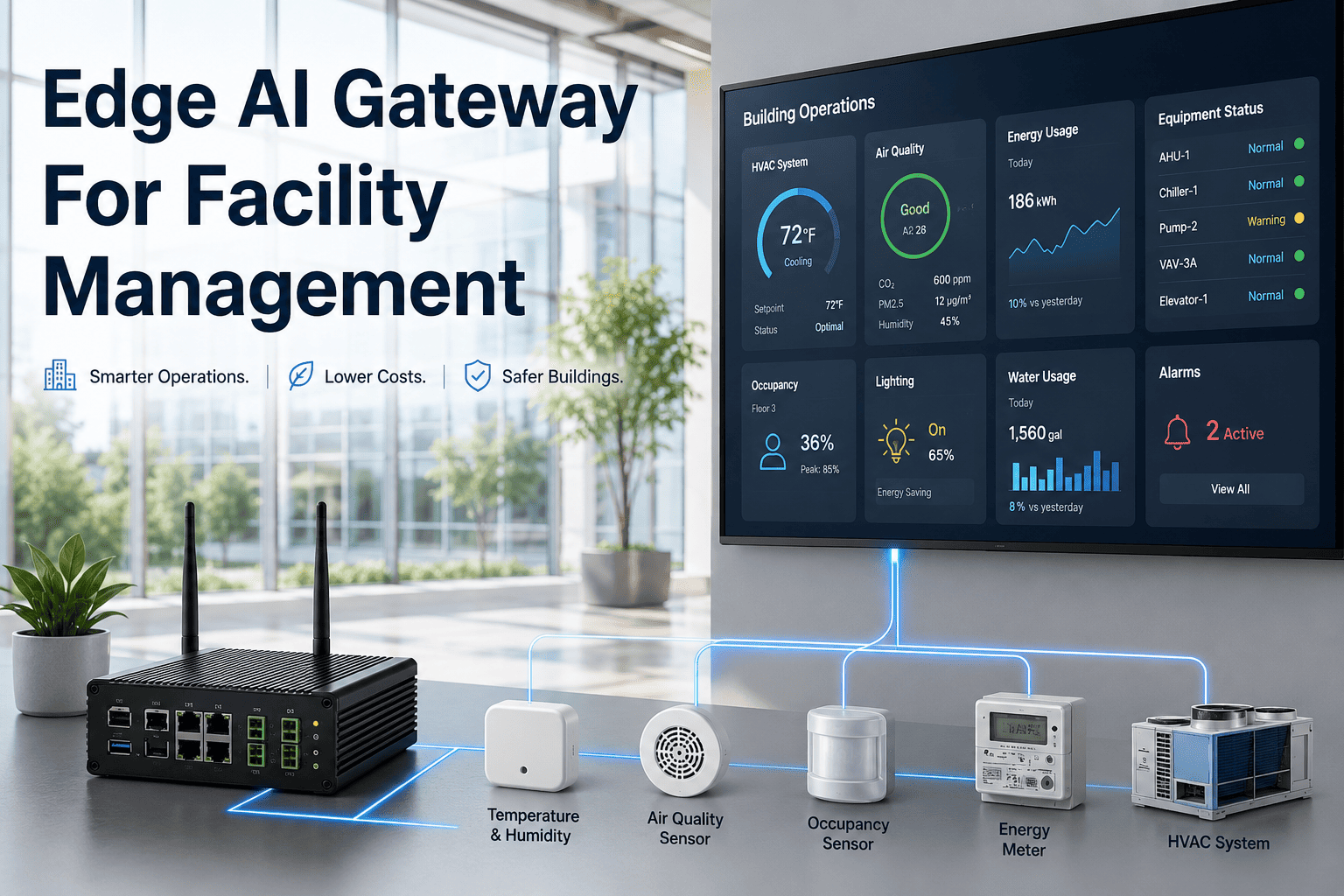
IoT gateways unify previously siloed building systems into a coordinated intelligent environment. Each system contributes data that enhances overall building performance when analyzed together.
Smart Building System Integration
Building System
Typical Protocols
IoT Gateway Benefits
HVAC Systems
BACnet, Modbus, LonWorks
Occupancy-based temperature control, predictive maintenance alerts, energy optimization
Lighting Control
DALI, KNX, Zigbee
Daylight harvesting, presence detection, automated scheduling, dimming control
Access Control
Wiegand, OSDP, RS-485
Unified security monitoring, HVAC integration for occupied zones, audit trails
Integrated emergency response, HVAC coordination during events, status monitoring
Elevator Systems
Modbus, CAN, proprietary
Usage analytics, predictive maintenance, energy monitoring, destination dispatch
Gateway selection depends on existing infrastructure protocols and desired cloud platform integration requirements.
Legacy vs. IoT-Connected Building Management
Understanding the transformation from traditional building management to IoT-enabled operations reveals why facility managers are prioritizing gateway infrastructure investments.
Building Management Evolution
Traditional Management
X
Siloed systems with no data sharing
Manual monitoring and periodic inspections
Reactive maintenance after equipment fails
Fixed schedules regardless of occupancy
Limited visibility into energy consumption
75%of buildings are energy inefficient
IoT Gateway-Enabled
✔
Unified platform connecting all systems
Real-time monitoring with instant alerts
Predictive maintenance before failures occur
Dynamic scheduling based on actual usage
Granular energy tracking by zone and system
30%energy savings with smart optimization
Unify Your Building Systems with Oxmaint
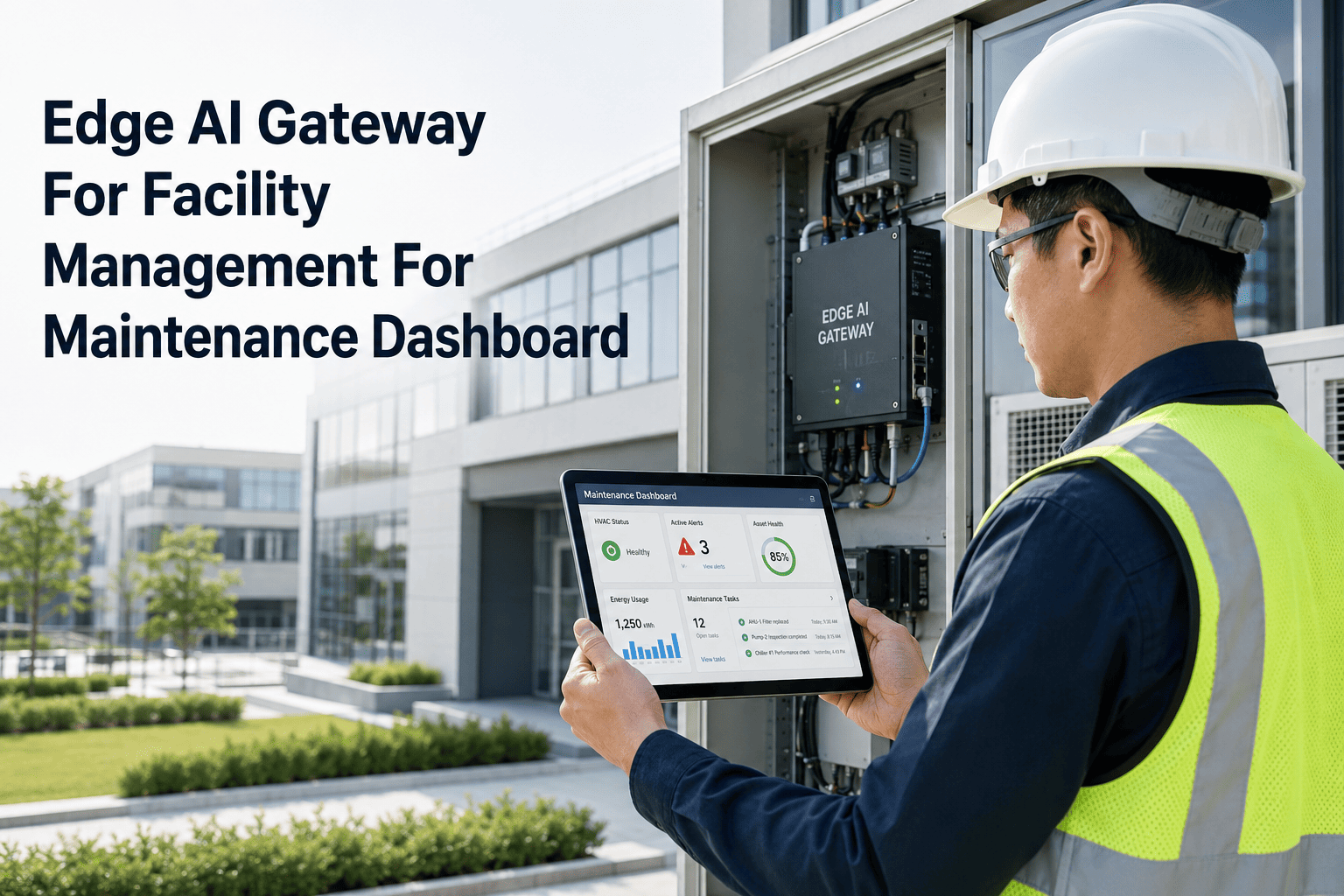
Oxmaint integrates with IoT gateway data from across your building portfolio—centralizing sensor readings, equipment status, and maintenance workflows in one platform. Transform raw IoT data into actionable maintenance intelligence.
Choosing appropriate gateway hardware depends on your building's existing infrastructure, scale requirements, and integration goals. Key factors include protocol support, processing capability, and security features.
Selection Factors
Protocol Compatibility
Support for existing building protocols (BACnet, Modbus, LonWorks) plus modern standards (MQTT, REST, OPC-UA) for cloud connectivity.
Processing Power
Edge computing requirements vary—simple data forwarding needs minimal resources, while AI inference demands more powerful hardware.
Device Capacity
High-capacity gateways support 1,000+ data points, while compact units handle smaller deployments efficiently.
Security Features
Encrypted communications, secure boot, certificate management, and compliance with building automation security standards.
Implementation Roadmap
Successful IoT gateway deployment requires careful planning across network infrastructure, device configuration, and integration with existing building systems.
Deployment Phases
1
Assessment
Audit existing building systemsIdentify protocol requirementsMap integration points
The increasing adoption of IoT in commercial buildings has elevated the importance of IoT gateways. These devices serve as the central hubs for communication between IoT devices and cloud platforms, bridging different protocols and ensuring that data flows seamlessly.
— Building Automation Industry Analysis
Connect Your Smart Building to Intelligent Maintenance
Your IoT gateways are generating valuable data every second—equipment status, environmental conditions, energy consumption. Oxmaint transforms this data into automated maintenance workflows, predictive alerts, and actionable insights that keep your building running at peak performance.
What protocols do IoT gateways support for smart buildings?
Modern IoT gateways support multiple protocols including BACnet/IP and MS/TP, Modbus RTU and TCP, LonWorks, KNX, and wireless standards like LoRaWAN, Zigbee, and Z-Wave. They also connect to cloud platforms via MQTT, REST APIs, and OPC-UA. Schedule a consultation to discuss which protocols match your building infrastructure.
Can IoT gateways work with legacy building systems?
Yes, one of the primary benefits of IoT gateways is their ability to bridge legacy systems with modern cloud platforms. Multi-protocol gateways can translate between older protocols like Modbus and LonWorks to newer standards, enabling smart building capabilities without replacing existing equipment.
How many devices can a single IoT gateway support?
Gateway capacity varies by model. Compact gateways typically support 250-500 data points, while enterprise-grade units handle 1,000+ monitoring points. LoRaWAN gateways can connect thousands of low-power sensors across large buildings or campuses. Sign up for Oxmaint to centralize data from multiple gateways.
What security measures protect IoT gateway communications?
Enterprise IoT gateways implement multiple security layers including TLS/SSL encryption for data in transit, secure boot processes, certificate-based authentication, VPN support for remote access, and role-based access control. Many gateways also support air-gapped configurations for critical building systems.
How do IoT gateways integrate with CMMS platforms like Oxmaint?
IoT gateways transmit sensor data and equipment status to cloud platforms via MQTT or REST APIs. Oxmaint can receive this data to automatically trigger maintenance work orders based on equipment conditions, track asset performance trends, and enable predictive maintenance. Book a demo to see the integration in action.