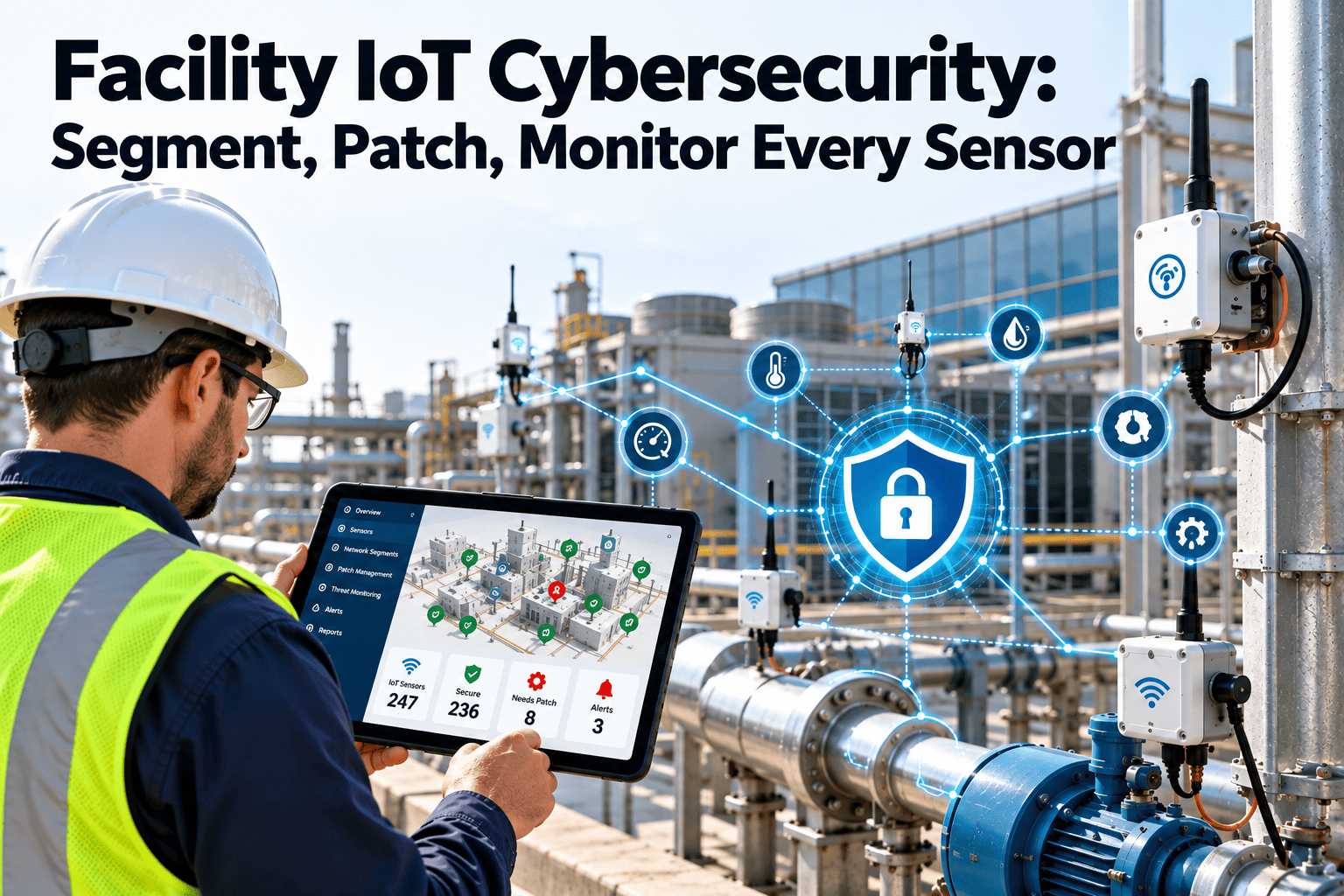
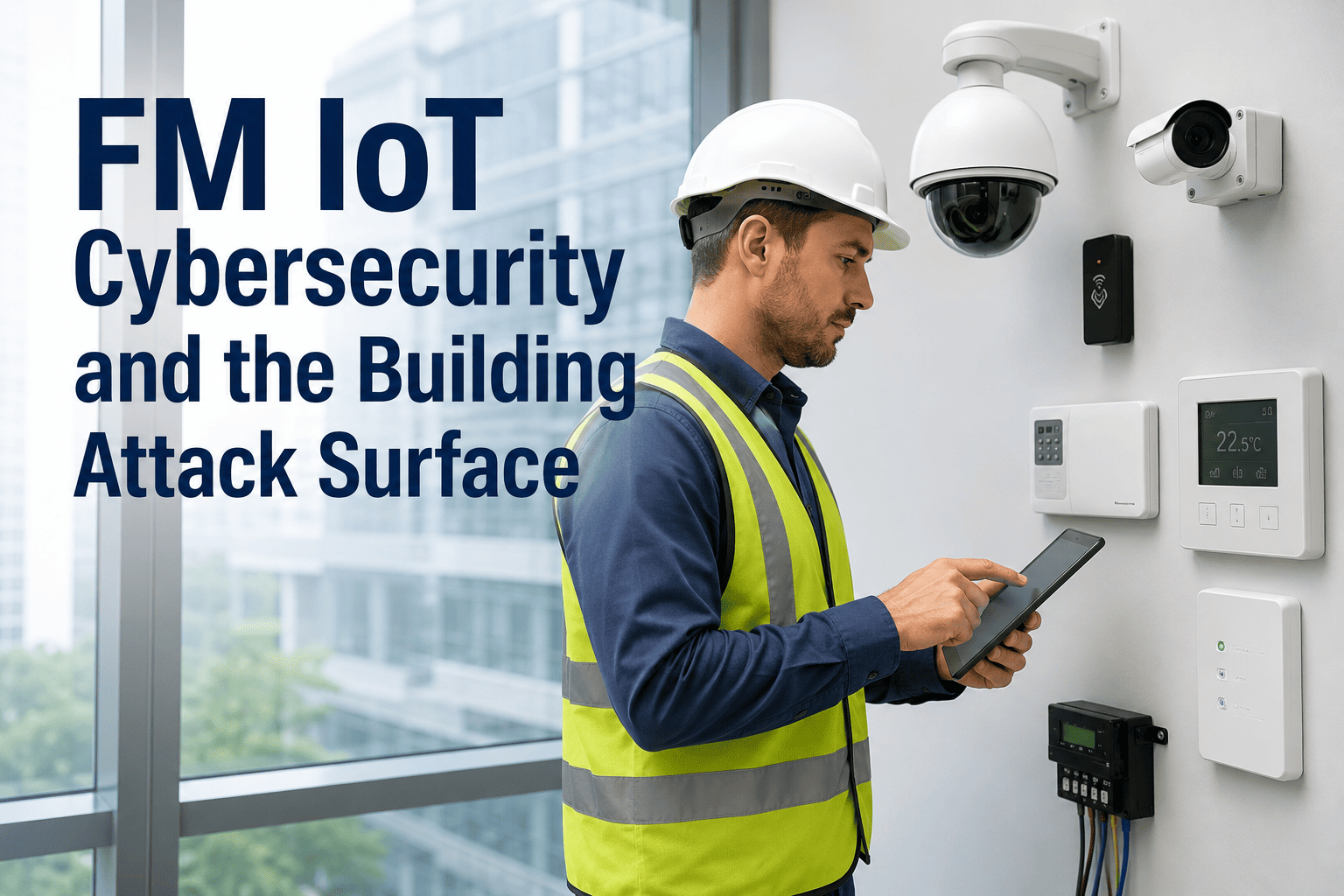
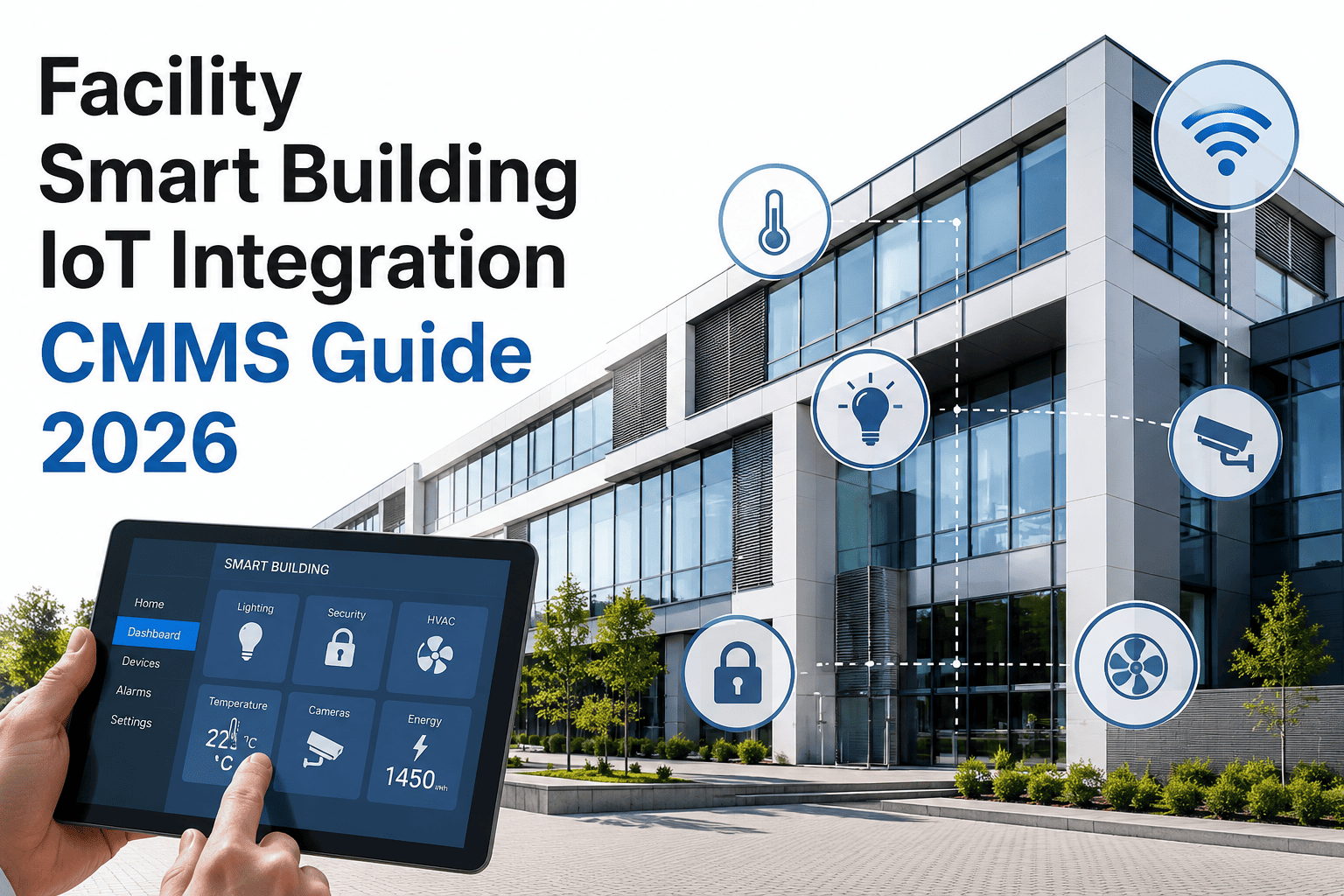
OxMaint protects your facility's connected systems — CMMS data, IoT sensors, BMS platforms, and maintenance workflows — with enterprise-grade cloud security, role-based access controls, and encrypted audit trails. Smart buildings now run on interconnected systems: HVAC, access control, elevators, fire suppression, and energy management are all network-connected and all vulnerable. In 2025, there were an average of 820,000 IoT attacks per day globally, and the average cost of a data breach reached $4.44 million. Building Management Systems are now a primary target because compromising a BMS gives attackers physical control — not just data access. This guide covers the real threats your facility faces, how attackers move through building systems, and the security architecture that stops them.
Blog · Safety & Compliance · Cloud CMMS Security
Smart Building Cybersecurity: Protect Facility Systems from Modern Threats
IoT sensors, BMS platforms, CMMS data, and access control systems are under attack every day. Here is how connected facilities defend themselves in 2025.
Threat Landscape
The Numbers Behind Smart Building Cyber Risk
820K
IoT attacks per day globally in 2025 (Deepstrike)
$4.44M
Average cost of a data breach in 2025 (IBM)
355%
Increase in ransomware attacks from 2020 to 2025
107%
Jump in IoT endpoint attacks in early 2024 year-over-year
Live Threat Simulation
Real-Time Attack Events in Unprotected Facility Systems
BMS Controller — Unauthorized Login Attempt
2 min ago — HVAC Zone 3 controller targeted with brute-force credential attack on default SSH port
CRITICAL
IoT Sensor Network — Anomalous Data Exfiltration
11 min ago — Occupancy sensor in Floor 4 transmitting data to unrecognized external IP address
WARNING
CMMS Platform — Privilege Escalation Detected
28 min ago — Technician account attempted admin-level access to financial module outside normal hours
WARNING
OxMaint Cloud CMMS — Access Attempt Blocked
44 min ago — MFA enforcement blocked unrecognized device login. Audit log created. User notified.
BLOCKED
Attack Surface
How Attackers Move Through a Smart Building
1
Entry Point
Default-password IoT device or unpatched BMS interface exposed to internet
2
Lateral Move
Pivot from BMS network to IT network via shared infrastructure or flat network topology
3
Escalation
Gain admin access to CMMS, maintenance records, vendor credentials, and contractor portals
4
Impact
Ransomware deployment, physical system control, or data theft with $4.44M average cost
Vulnerability Comparison
Secured vs Unsecured Facility System Risk
Default IoT Credentials
87% exploited within 48 hrs
Flat Building Network
78% lateral movement risk
Security Architecture
7-Layer Smart Building Security Framework
L1
Network Segmentation
Isolate BMS, IoT, IT, and OT networks using VLANs and firewalls. Building systems must never share the same network as tenant IT or internet-facing services.
L2
CMMS Access Control
Role-based permissions, multi-factor authentication, and session timeouts for every maintenance platform user. OxMaint enforces granular permissions by asset, location, and user role.
L3
IoT Device Hardening
Change all default credentials immediately on deployment. Disable unused ports and services. Maintain a live inventory of every connected device with firmware version tracking.
L4
Patch Management
Automate firmware updates for IoT sensors and BMS controllers. Unpatched devices are the most common initial access vector — 21% of SMBs remain vulnerable to known CVEs for years after disclosure.
L5
Continuous Monitoring
Deploy anomaly detection on building network traffic. Smart buildings generate detectable traffic patterns — unexpected data volumes from sensors or off-hours BMS access are early indicators of compromise.
L6
Vendor & Contractor Access
All third-party remote access must be time-limited, logged, and revoked immediately after work completion. Contractor credential sharing is one of the highest-risk access vectors in facilities management.
L7
Data Encryption & Audit
Encrypt all maintenance data in transit and at rest. Maintain immutable audit logs of every CMMS action. OxMaint logs every work order change, user login, and asset modification with timestamp and IP address.
Protect Your CMMS Data with OxMaint’s Secure Cloud Platform
OxMaint delivers MFA, role-based access, encrypted audit logs, and SOC 2-aligned data handling for facility maintenance teams who cannot afford a breach.
OxMaint Security Features
How OxMaint Secures Your Facility Maintenance Data
| Security Feature | What It Does | Threat It Blocks |
| Multi-Factor Authentication |
Requires second device verification on every login |
Credential theft, unauthorized access |
| Role-Based Access Control |
Technicians see only their assigned assets and work orders |
Insider threats, privilege escalation |
| Encrypted Data Storage |
AES-256 encryption for all maintenance records and attachments |
Data theft, breach exposure |
| Immutable Audit Logs |
Every action timestamped with user ID, IP, and device |
Unauthorized changes, compliance gaps |
| Session Timeout Controls |
Auto-logout after configurable inactivity period |
Unattended device exploitation |
| Contractor Access Management |
Time-limited credentials with auto-revocation |
Third-party vendor breaches |
| API Security Controls |
Authenticated endpoints with rate limiting and token expiry |
BMS integration vulnerabilities |
“The line between an IT problem and a facilities problem has collapsed. When a BMS controller is compromised, the attacker does not just access data — they can disable fire suppression, lock out tenants, or manipulate HVAC to create physical hazards. Facilities teams need to treat cybersecurity as a life-safety issue, not an IT department issue. Every connected building asset is an entry point until it is secured and monitored.”
RN
Ravi Nair
OT/IoT Cybersecurity Architect · Smart Building Security Specialist · 14 years critical infrastructure protection
FAQ
Smart Building Cybersecurity — Common Questions
Why are building management systems such a high cyber risk? +
BMS platforms control physical building systems including HVAC, elevators, access control, fire suppression, and lighting. Thousands of BMS interfaces are exposed directly to the internet with default or weak credentials. Compromising a BMS gives attackers physical control of the facility, not just data access — enabling service disruption, occupant harm, and ransomware leverage that is far harder to contain than a standard IT breach.
OxMaint’s API security layer protects BMS integration points with authenticated, rate-limited connections and full access logging.
What is the biggest cybersecurity mistake facilities teams make? +
Running all building systems on a flat, unsegmented network is the most common and most dangerous mistake in smart building security. When IoT sensors, BMS, tenant IT, and internet-facing services share the same network, a single compromised IoT device gives an attacker access to everything. Network segmentation using VLANs and firewalls isolates these systems so that a breach in one zone cannot propagate to others. This is a configuration change, not a product purchase, and it should be the first security action in any facility.
Book a demo to see how OxMaint integrates securely with segmented building networks.
Does OxMaint comply with cybersecurity and data protection standards? +
OxMaint’s cloud platform is built on SOC 2-aligned security practices including encryption at rest and in transit, immutable audit logging, role-based access controls, and multi-factor authentication. All maintenance data is stored in encrypted cloud infrastructure with regular security assessments and penetration testing. Facilities operating in regulated environments including healthcare, government, and critical infrastructure can configure OxMaint to meet their specific compliance requirements.
Create a free account to review OxMaint’s security documentation and data handling practices.
How should contractors and vendors access our facility CMMS securely? +
All contractor and vendor access to CMMS platforms should be time-limited, scoped to only the assets and work orders they are actively servicing, and revoked immediately after work is completed. Shared contractor credentials are one of the highest-risk access patterns in facilities management — a single compromised shared password gives attackers persistent access that is nearly impossible to detect. OxMaint supports individual contractor accounts with configurable access scope, automatic expiry dates, and full access logs that show every action taken by external parties during their engagement.
Secure Your Facility CMMS Before the Next Breach Attempt
OxMaint gives facilities teams enterprise security controls — MFA, audit logs, role-based access, and encrypted data — without enterprise complexity or cost.