Plumbing pump failures cost facilities an average of $15,000-$50,000 per incident when factoring in emergency repairs, water damage, and operational downtime. With pumps representing the backbone of building water systems—from domestic water supply to HVAC circulation and sewage handling—understanding failure causes and troubleshooting techniques is essential for every facility manager. Studies show that 85% of pump failures are preventable through proper maintenance, yet most facilities operate reactively, waiting for catastrophic breakdowns before taking action. OXmaint's maintenance management software helps you shift from reactive to predictive pump maintenance—start your free trial today to protect your critical pump assets.
Reactive Approach
$50,000+
Average Failure Cost
Emergency service premiums (2-3x cost)
Water damage to facility
Tenant/occupant disruption
Regulatory compliance risks
VS
Proactive Maintenance
$2,500
Average PM Cost
Scheduled maintenance windows
Extended pump lifespan (15-20 years)
Zero unplanned downtime
85% fewer emergency calls
Proactive pump maintenance delivers 20:1 ROI compared to reactive repairs
Understanding the 7 Primary Causes of Pump Failure
Pump failures don't happen randomly—they follow predictable patterns that facility teams can identify and prevent. Research from the Hydraulic Institute shows that mechanical seal failures account for 45% of pump failures, followed by bearing issues at 25%, and cavitation damage at 15%. Understanding these failure modes is the first step toward building a robust preventive maintenance program.
01
Mechanical Seal Failure
45%
Dry running, misalignment, chemical attack, and thermal shock damage seals.
02
Bearing Wear
25%
Improper lubrication, contamination, and misalignment cause premature degradation.
03
Cavitation Damage
15%
Insufficient NPSH creates vapor bubbles that erode impeller surfaces.
04
Motor Overheating
8%
Voltage imbalance, blocked ventilation, and excessive cycling cause thermal damage.
05
Impeller Erosion
4%
Abrasive particles wear away impeller vanes, reducing efficiency progressively.
06
Shaft Misalignment
2%
Poor installation creates misalignment, accelerating seal and bearing wear.
07
Electrical Failures
1%
Power surges and phase loss cause immediate shutdown or gradual damage.
Each failure mode produces detectable symptoms before catastrophic breakdown. OXmaint's CMMS platform automates pump monitoring schedules and triggers work orders at the first sign of trouble—schedule a demo to see how it works.
Stop Pump Failures Before They Start
OXmaint's predictive maintenance features monitor pump health indicators and automatically generate work orders when intervention is needed.
Comprehensive Troubleshooting Guide by Symptom
When a pump starts showing problems, rapid diagnosis is critical. The following troubleshooting matrix covers the most common symptoms facility teams encounter, their probable causes, and corrective actions needed.
| Symptom | Probable Cause | Diagnostic Check | Corrective Action |
|---|
| No Flow / Won't Start | Power supply failure | Check breaker, fuses, voltage | Reset breaker, verify 3-phase balance |
| Pump not primed | Check suction line for air leaks | Prime pump, repair suction leaks |
| Impeller clogged | Measure amp draw | Remove debris, install strainer |
| Reduced Flow | Impeller wear | Compare performance to pump curve | Replace impeller, check wear rings |
| Suction restriction | Measure suction pressure | Clear blockage, clean strainer |
| Wrong rotation | Verify rotation matches casing arrow | Swap two motor leads |
| Excessive Vibration | Cavitation | Listen for gravel sound, check NPSH | Increase suction pressure, lower pump |
| Shaft misalignment | Laser alignment check (0.002" TIR) | Realign pump and motor |
| Bearing failure | Vibration readings, stethoscope | Replace bearings, proper lubrication |
| Motor Overheating | Operating beyond curve | Measure flow/head, plot on curve | Throttle discharge, install VFD |
| Voltage imbalance | Measure all three phases | Balance loads on transformer |
| Blocked ventilation | Inspect motor fan and fins | Clean debris, ensure airflow |
| Seal Leakage | Seal face wear | Inspect for scoring, carbon buildup | Replace mechanical seal assembly |
| Dry running damage | Check for heat discoloration | Replace seal, install low-flow switch |
| Shaft runout | Dial indicator (max 0.002") | Replace shaft or sleeve |
OXmaint's mobile CMMS puts these diagnostic procedures at your technicians' fingertips. Try OXmaint free and see how digital work orders streamline pump troubleshooting.
Cavitation: The Silent Pump Killer
Cavitation is responsible for more premature pump failures than any other single phenomenon. When the absolute pressure in the pump suction drops below the fluid's vapor pressure, microscopic bubbles form and then violently collapse, generating localized pressures exceeding 100,000 psi that erode impeller surfaces.
Warning Signs
?Crackling or gravel-like sound from pump
?Fluctuating discharge pressure
⚡Erratic power consumption
?Pitting on impeller vanes
Common Causes
?Excessive suction lift
?Clogged suction strainer
?️High fluid temperature
?Undersized suction piping
Prevention
✅NPSH Available ≥ NPSH Required + 3 ft
✅Keep suction piping short and straight
✅Use eccentric reducer (flat side up)
✅Clean suction strainers regularly
Preventive Maintenance Schedule for Facility Pumps
A structured preventive maintenance program is the most cost-effective way to maximize pump reliability and lifespan. Adjust frequencies based on operating hours, fluid characteristics, and criticality to your operations.
Daily Checks
Visual inspection for leaks around seals and flanges
Check suction and discharge pressure gauges
Listen for unusual noise or vibration
Verify motor temperature is within normal range
Weekly Tasks
Check and record amp draw on all phases
Inspect packing gland drip rate (if applicable)
Verify control system operation and alarms
Check oil level in bearing housing
Monthly Tasks
Grease bearings per manufacturer specification
Clean suction strainer and document debris
Check shaft alignment with straightedge
Test backup pump under load
Quarterly Tasks
Perform vibration analysis and trend comparison
Measure and record flow rate vs. design
Check motor insulation resistance (megger test)
Review energy consumption trends
Annual Overhaul
Disassemble pump for complete internal inspection
Measure and record wear ring clearances
Replace mechanical seal (proactive replacement)
Perform precision laser alignment
OXmaint automatically schedules all pump maintenance activities, sends technician notifications, and tracks completion rates. Start your free trial and see your pump reliability improve within the first quarter.
Automate Your Pump PM Program
OXmaint schedules, tracks, and documents all pump maintenance activities automatically. Never miss a PM task again.
Pump Types and Their Specific Failure Modes
Different pump types serve different functions in facilities, and each has unique failure characteristics. Matching your maintenance approach to the specific pump type dramatically improves reliability.
Centrifugal Pumps
Domestic water, HVAC circulation, cooling towers
Seal failure from dry running
Impeller erosion from cavitation
Bearing wear from misalignment
Tip: Never throttle suction—always control flow on discharge side
Submersible Pumps
Sump pits, sewage ejectors, well water
Seal failure allowing water intrusion
Motor burnout from frequent cycling
Clogging from debris and solids
Tip: Maintain proper float switch spacing to prevent short cycling
Booster Pumps
High-rise water pressure, irrigation systems
Pressure tank bladder failure
Pressure switch malfunction
Check valve failure causing backflow
Tip: Check tank pre-charge pressure annually (2 psi below cut-in)
Condensate Pumps
HVAC condensate removal, steam systems
Float switch stuck from algae/slime
Discharge line clogging
Receiver tank overflow
Tip: Add condensate pan tablets to prevent biological growth
Grinder Pumps
Sewage ejection with maceration
Cutter blade wear from non-flushables
Motor overload from grease
Float malfunction
Tip: Post "no wipes" signs—#1 cause of grinder pump failure
Circulation Pumps
Hot water recirculation, hydronic heating
Cartridge seal failure (wet rotor)
Impeller corrosion from oxygen
Air binding from improper venting
Tip: Purge air from high points monthly during heating season
OXmaint lets you create custom PM templates for each pump type. Schedule a demo to see equipment-specific maintenance templates.
Cost-Benefit Analysis: Repair vs. Replace
Making the wrong call either wastes money on repeated repairs of a pump that should be retired, or discards equipment with years of useful life remaining. This decision framework provides objective criteria.
Consider Repair When:
✓Repair cost less than 50% of replacement
✓Pump less than 10 years old
✓First major failure on this pump
✓Spare parts readily available
✓Pump meets current requirements
✓Efficiency within 10% of new equivalent
Consider Replacement When:
✗Repair cost exceeds 50% of replacement
✗Pump has exceeded 15 years of service
✗Third major repair in 5 years
✗Manufacturer discontinued parts
✗System requirements changed significantly
✗New pump offers 20%+ energy savings
New Pump Cost
Premium efficiency with VFD
$12,500
Annual Energy Savings
22% efficiency improvement
$4,200
Avoided Repairs (5 yr)
No seal/bearing replacements
$8,500
Reduced Downtime
Eliminating emergencies
$6,000
Simple Payback Period:
14 Months
5-year net benefit: $57,500
Emergency Response Protocol
Having a documented response procedure minimizes damage and gets your facility back to normal operations quickly.
1
Assess and Isolate
Identify failed pump, isolate electrically (LOTO), close valves, document conditions.
2
Activate Backup
Switch to standby pump, verify operation, notify management of timeline.
3
Preliminary Diagnosis
Check electrical supply, control signals, obvious mechanical issues.
4
Contact Support
Call service contractor with pump data, symptoms, and site access info.
5
Mitigate Damage
Address water damage, set up dehumidification, document for insurance.
6
Post-Incident Review
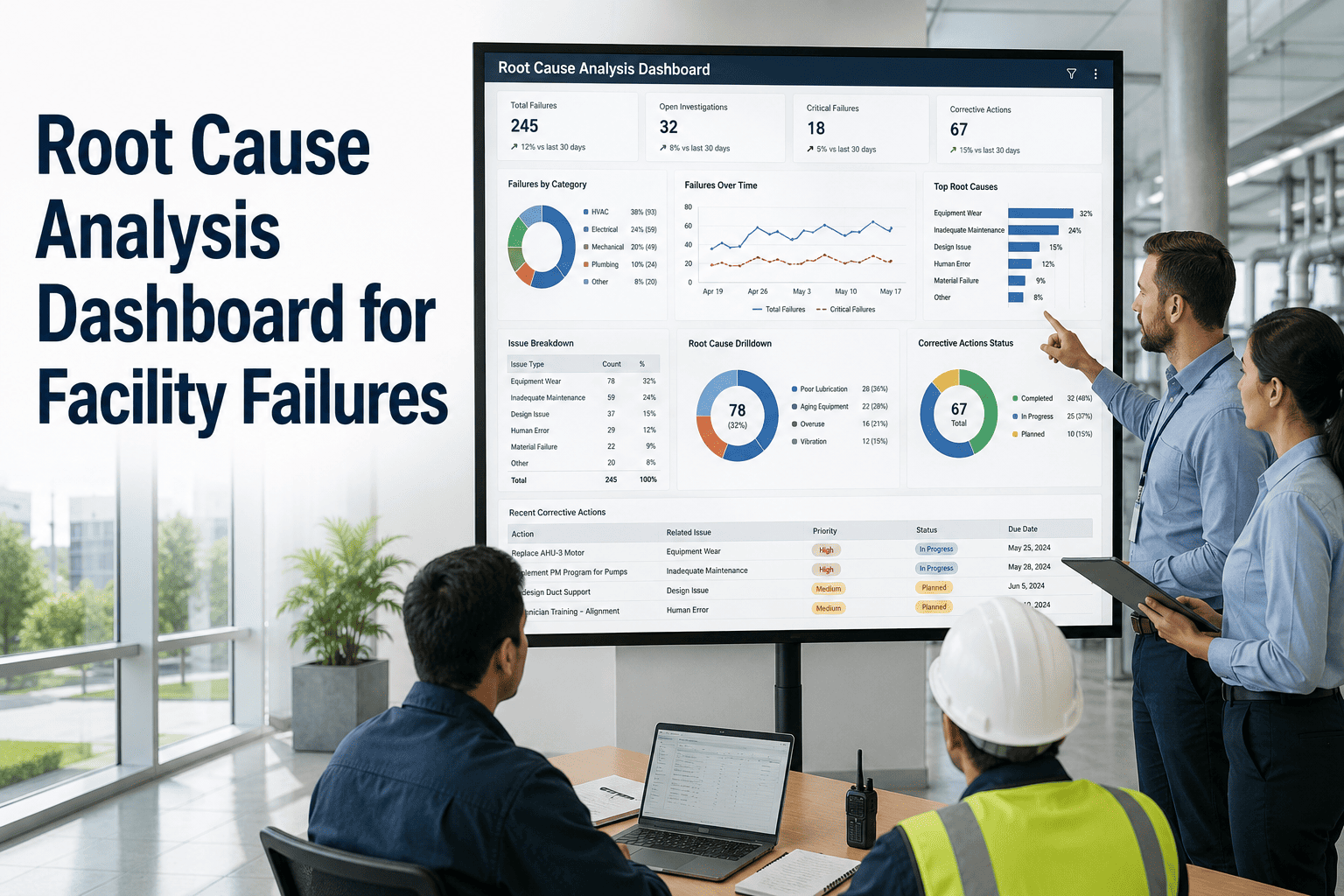
Conduct root cause analysis, update PM procedures, document lessons learned.
Be Ready for Any Pump Emergency
OXmaint puts emergency procedures, equipment history, and vendor contacts at your fingertips—all from your mobile device.
Predictive Maintenance Parameters
Leading facilities are moving to condition-based and predictive approaches that detect problems weeks before failure.
Vibration Analysis
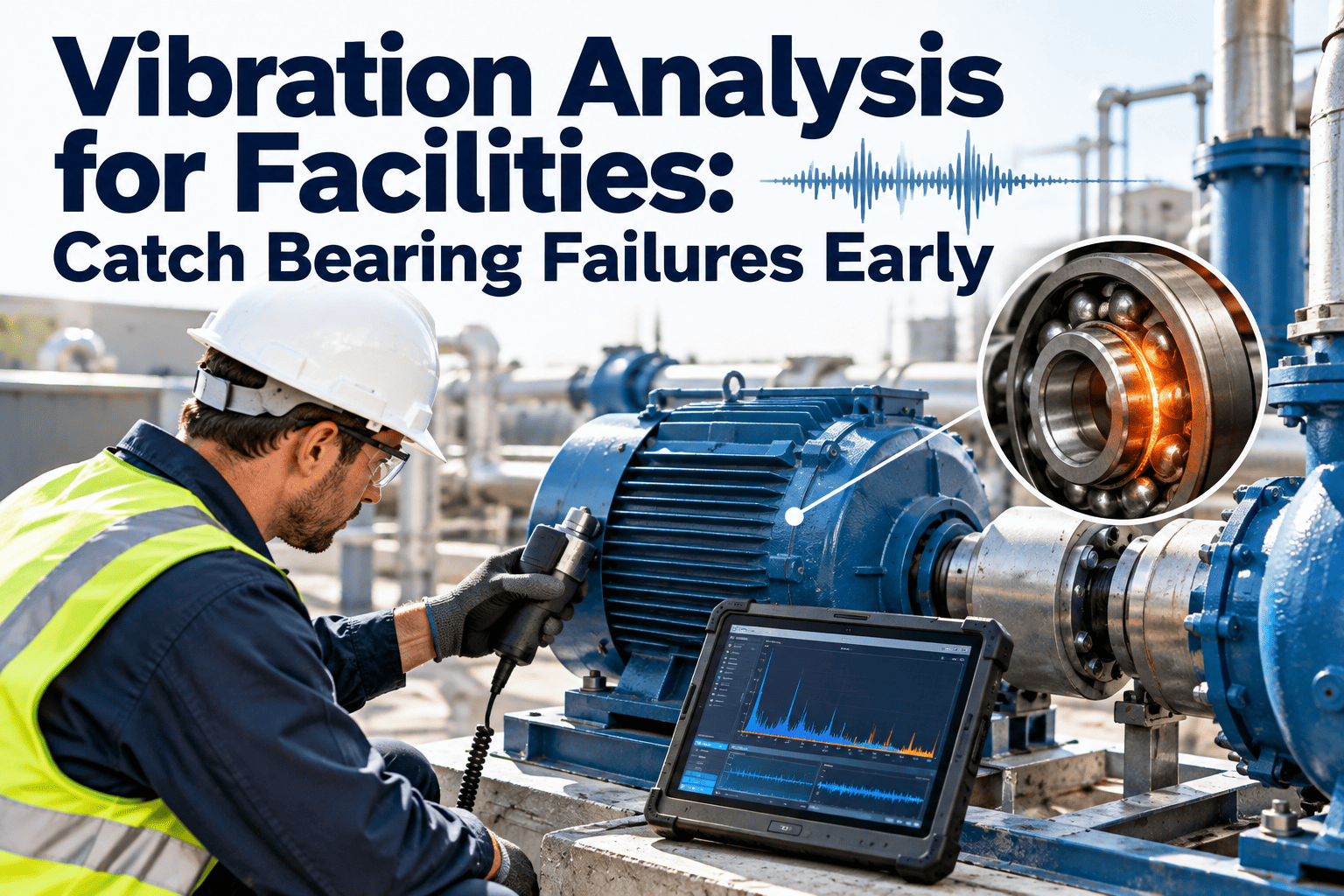
Detects: Bearing wear, imbalance, misalignment, cavitation
Warning: 0.2 in/sec velocity (ISO 10816)
Lead time: 2-8 weeks
Temperature Monitoring
Detects: Bearing failure, seal problems, motor overheating
Warning: 20°F above baseline or 180°F absolute
Lead time: 1-4 weeks
Current Signature
Detects: Rotor bar issues, bearing defects, load imbalance
Warning: Harmonic changes >10%
Lead time: 4-12 weeks
Pressure Differential
Detects: Impeller wear, suction blockage, system changes
Warning: 15% deviation from baseline
Lead time: Immediate to 2 weeks
Flow Rate Trending
Detects: Impeller degradation, system fouling, valve issues
Warning: 10% reduction from baseline
Lead time: Gradual tracking
Energy Consumption
Detects: Efficiency loss, mechanical binding, system issues
Warning: 15% increase in kWh/gallon
Lead time: Weeks/months
OXmaint integrates with building automation systems and IoT sensors to automatically capture pump performance data. Book a demo to see predictive maintenance in action.
Frequently Asked Questions
What is the average lifespan of a facility pump?
With proper maintenance, centrifugal pumps typically last 15-20 years, submersible pumps 10-15 years, and circulation pumps 10-12 years. Poorly maintained pumps may fail in 3-5 years. OXmaint helps extend pump life by ensuring all PM tasks are completed—
start your free trial.
How often should pump mechanical seals be replaced?
Mechanical seals should be replaced proactively every 3-5 years or at the first sign of leakage. The seal cost ($200-$500) is minimal compared to emergency repair costs ($5,000-$15,000).
Schedule a demo to see how OXmaint tracks seal replacement intervals.
What causes a pump to lose its prime?
Pumps lose prime when air enters the suction line from leaking piping, failed foot valves, low water levels, or damaged shaft seals. Maintain suction line integrity and ensure adequate submergence.
Try OXmaint free—our checklists include priming system checks.
How can I tell if my pump is cavitating?
Cavitation produces a distinctive crackling or "gravel in the pump" sound, along with fluctuating discharge pressure and erratic amp draw. The root cause is insufficient NPSH. Solutions include lowering the pump, shortening suction piping, or reducing fluid temperature.
Book a consultation.
What is the recommended vibration level for facility pumps?
Per ISO 10816, pumps should operate below 0.12 in/sec velocity for "good" condition. Above 0.28 in/sec requires investigation, and above 0.45 in/sec demands immediate action. OXmaint stores vibration history and alerts you to trends—
sign up today.
Should I repair or replace a 12-year-old pump needing a new seal?
A seal replacement on a 12-year-old pump is typically worthwhile if otherwise in good condition. Check bearing condition, impeller wear, and energy consumption. If repair cost exceeds 50% of replacement or a new pump offers 20%+ energy savings, replace.
See a demo of OXmaint's lifecycle cost tracking.
Take Control of Your Facility's Pump Reliability
Join thousands of facilities using OXmaint to prevent pump failures, reduce maintenance costs, and extend equipment life. Our CMMS platform automates PM scheduling, tracks repair history, and provides the data you need to make smart decisions.