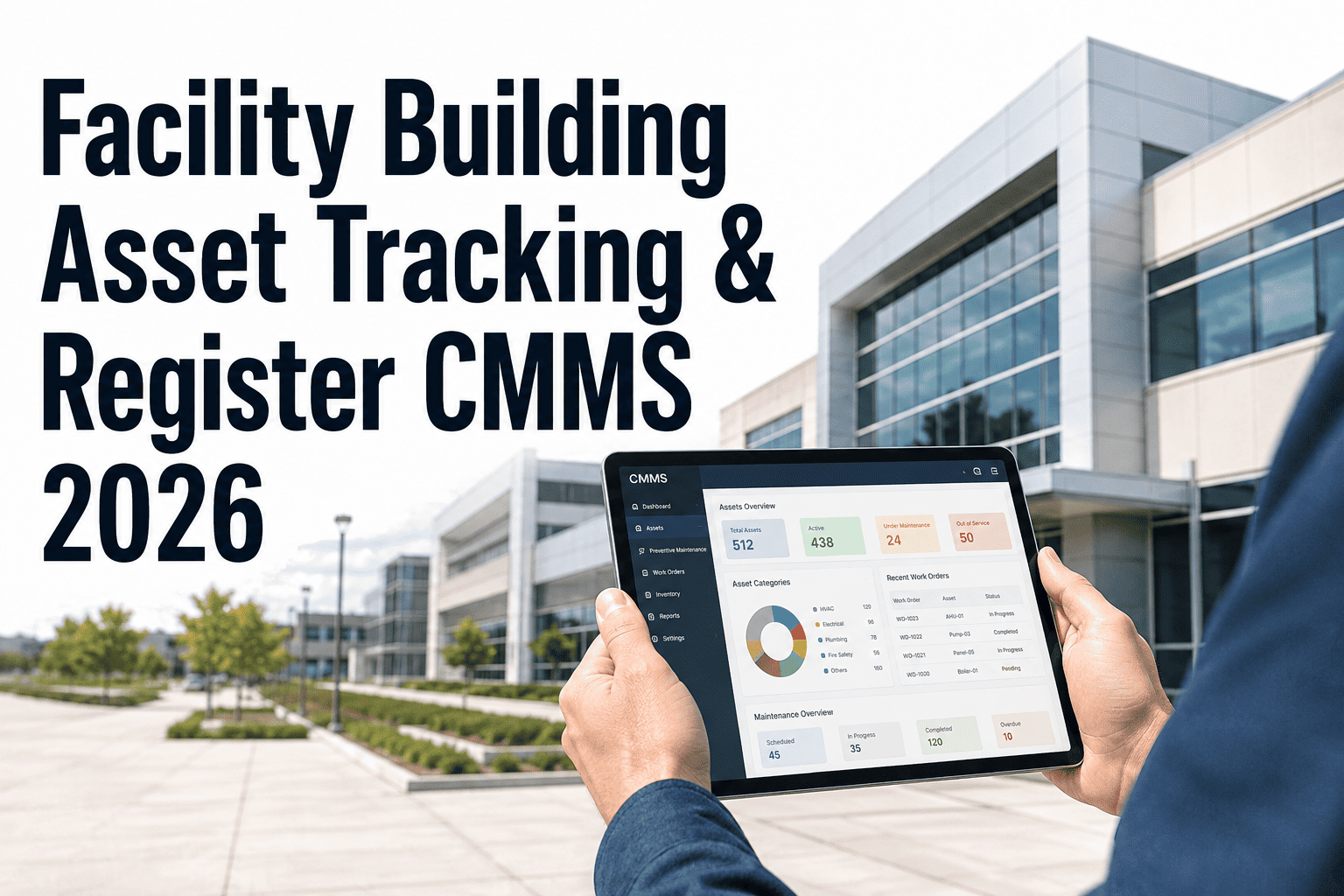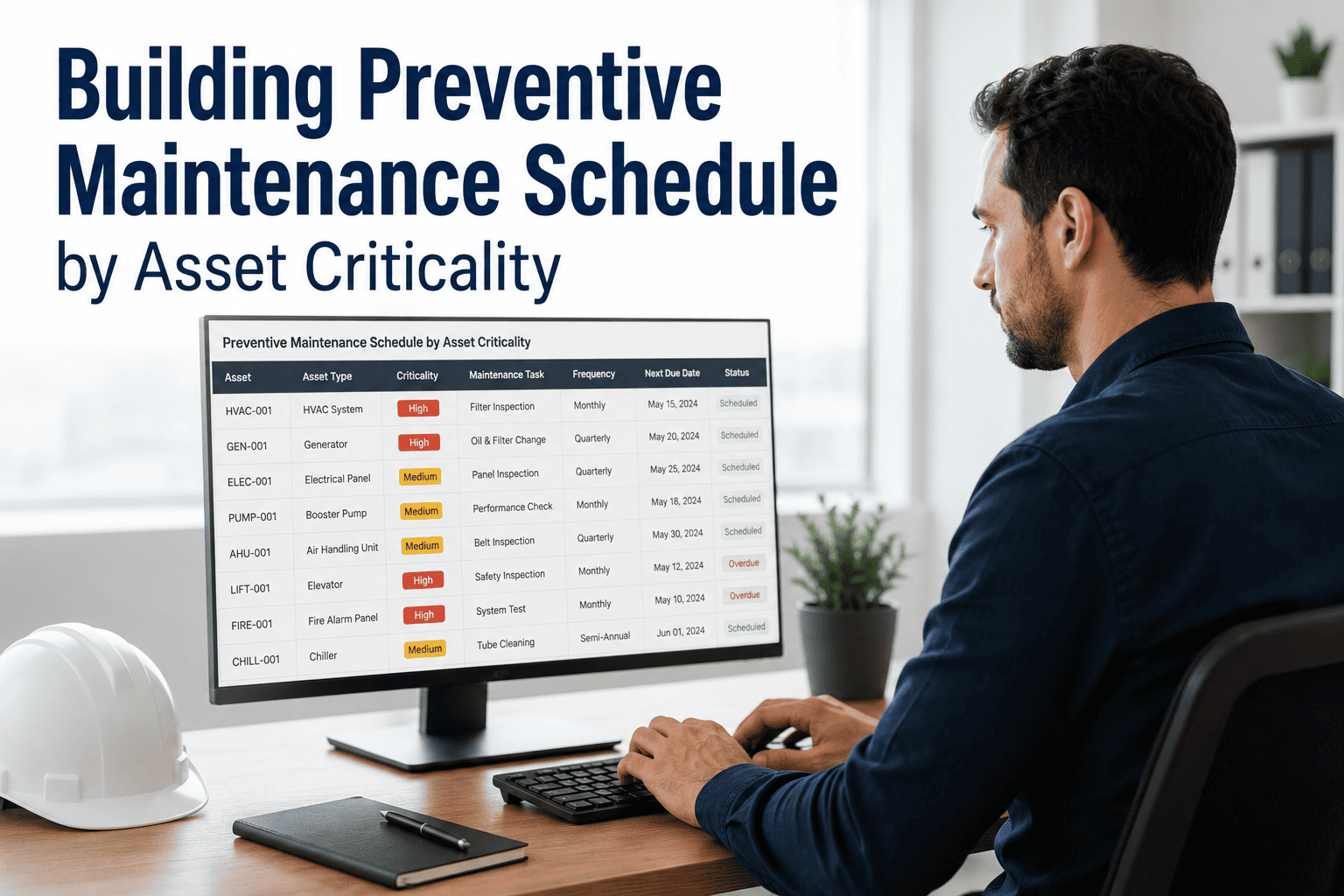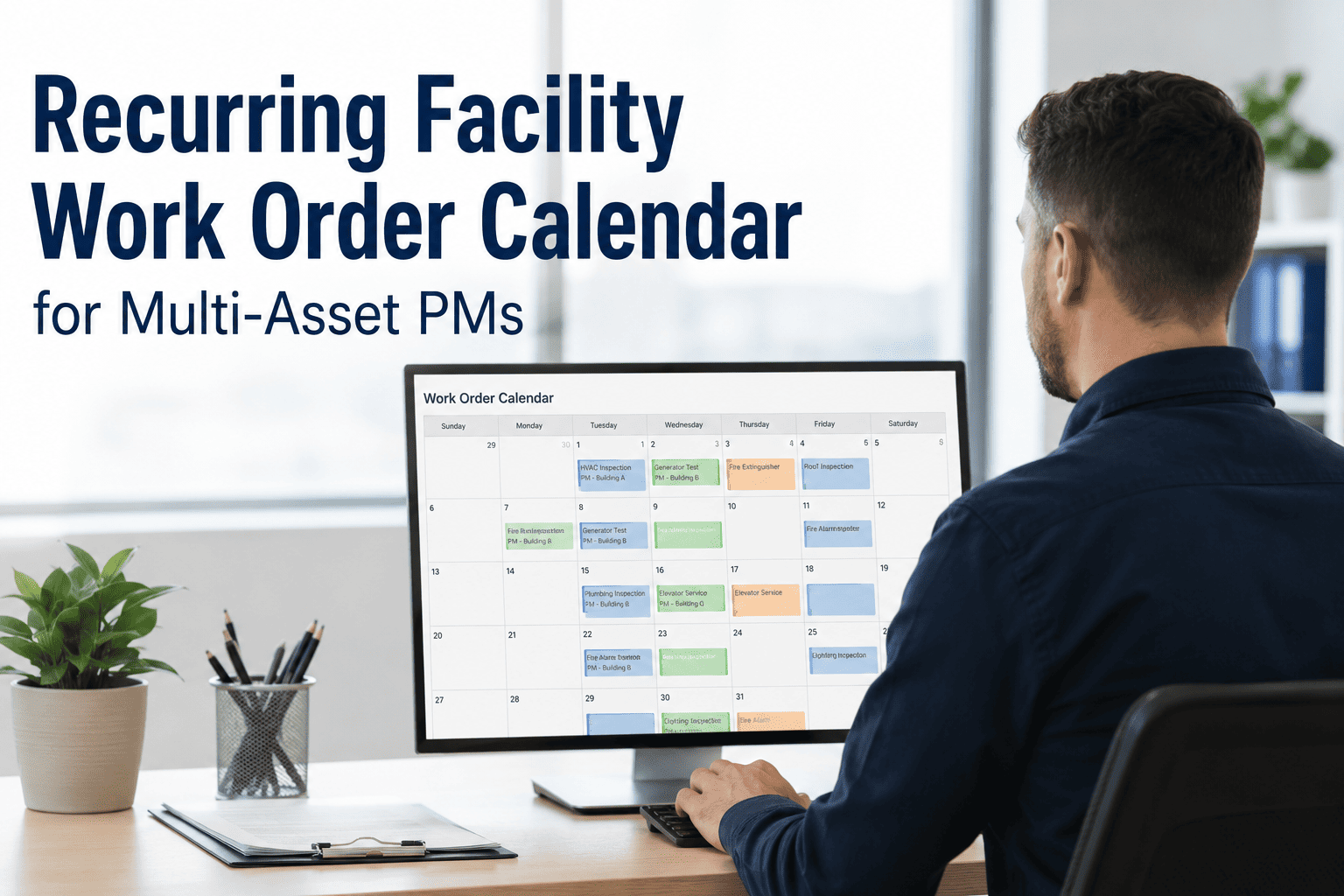
Buildings do not fail on a random schedule — they fail on a seasonal one. The chiller that ran fine in October dies on the first ninety-degree day in May, the pipe that was sound in September splits in January, and the cooling tower that sat dormant all winter becomes a Legionella risk the moment it restarts in spring. The fix is timing: run each season's preparation two to four weeks before the weather actually turns, not after the emergency call comes in. This 2026 calendar lays out exactly what to do each season — for heat, storms, freeze protection, occupancy shifts, and peak load — so your team prepares for the weather instead of reacting to it. See how OxMaint Preventive Maintenance auto-generates each season's work orders at the right interval for every asset. Book a demo to put your whole portfolio on a seasonal schedule.
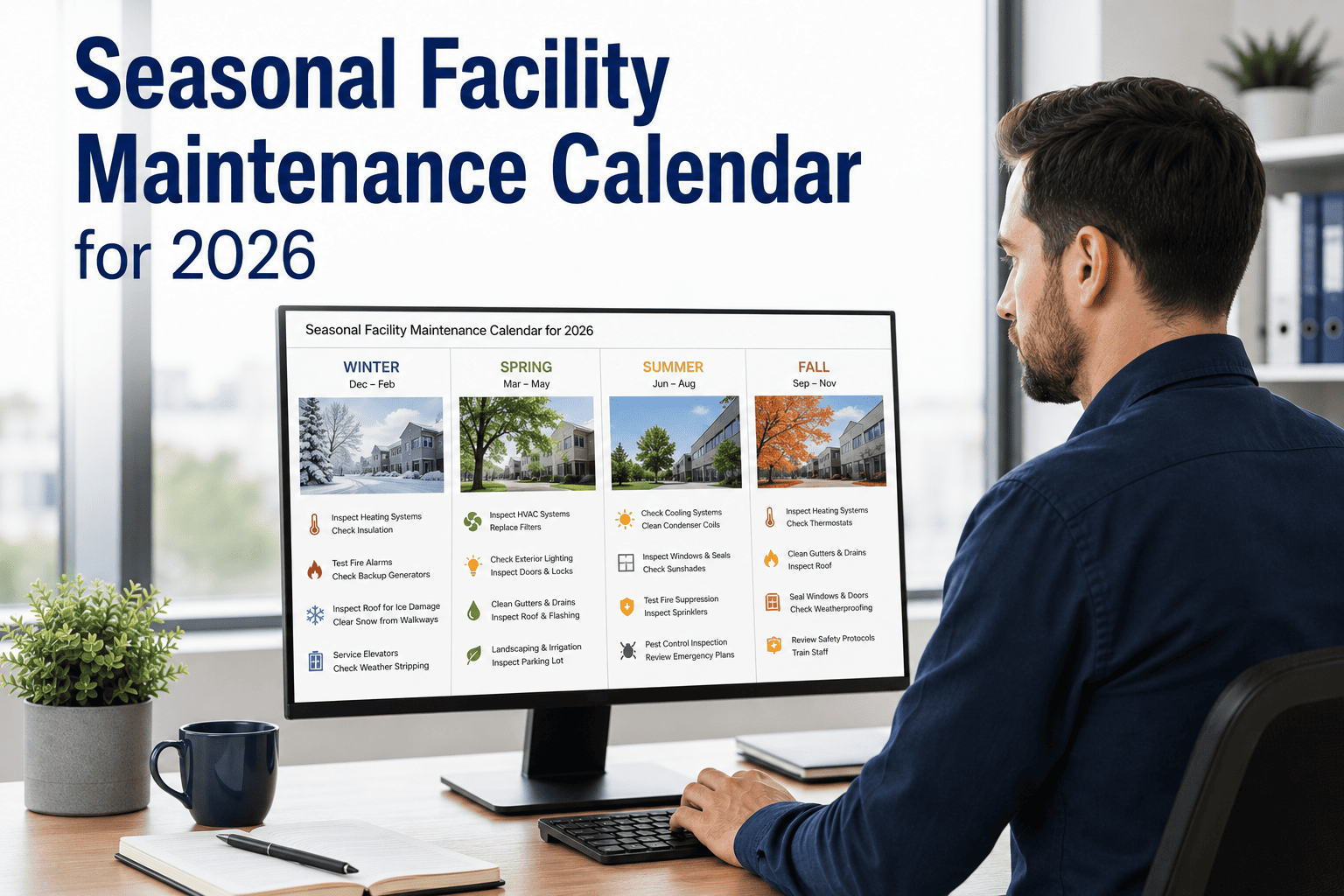
Seasonal Facility Maintenance Calendar for 2026
A season-by-season schedule that prepares your buildings for heat, storms, freeze, occupancy changes, and peak load — every task timed ahead of the conditions that cause the failure.
Four Quarters, Four Jobs
Each quarter carries a different dominant risk, so each gets a different focus. Use this as the year's map, then work the detailed season checklists below.
What to Do, Season by Season
Every task carries a priority. Critical items prevent failures with safety or six-figure consequences and must not slip; Monitor and Routine items protect efficiency and equipment life. Schedule each block before its season begins.
OxMaint builds each season's checklist once, then auto-generates the work orders weeks ahead of the weather, checks parts inventory, and tracks seasonal readiness across every building on one dashboard — so spring startup and freeze protection never depend on someone remembering.
Peak Load and Occupancy Shifts
Temperature is only half the seasonal story. Load and occupancy swing through the year too, and both quietly change what your building needs — plan for them alongside the weather.
What One Missed Season Actually Costs
Seasonal PM is cheap; the failures it prevents are not. These are the real numbers behind the tasks above — and why the critical items carry that label.
| Skipped Task | Likely Cost |
|---|---|
| Freeze protection — burst pipe | $50,000–$200,000 water damage |
| Cooling-tower service | $8,000–$25,000 per emergency repair |
| Legionella control | $100,000+ remediation & liability |
| Roof maintenance — warranty void | $50,000+ full replacement |
| Any deferred PM — emergency labor | 3–5× the cost of scheduled work |
What Facility Professionals Say
The most predictable emergency in this business is the chiller that ran fine in October and dies on the first ninety-degree day in May. Commission your cooling under load in spring — actually start and test it before the heat arrives — and that call simply never comes. Around eighty percent of the summer failures I get pulled into were sitting there, visible, during the spring inspection nobody ran.
Commercial HVAC Service Manager · 22 Years Seasonal Plant OperationsFall is the one season you cannot let slide. A cooling failure in July is uncomfortable; a heating failure in January is a life-safety event, and a burst pipe is six figures before you finish the insurance call. Run the freeze-protection checklist in October — glycol, heat trace, low-limit stats — while you still have budget left and a contractor who will actually answer the phone.
Director of Facilities · 19 Years Multi-Site Building OperationsFrequently Asked Questions
When should I actually run each season's checklist?
Two to four weeks before the season begins, not after the temperature has already shifted — the whole point is to be ready before the load arrives. Spring is also the busiest stretch for HVAC contractors, so booking cooling startup early avoids the queue that forms once the first hot week hits. Treat the calendar as a head start, not a same-week scramble. Book a demo to auto-schedule each season ahead of time.
Which season is the highest stakes?
Fall, by a wide margin. Heating failures in winter carry life-safety implications that cooling failures in summer usually do not, and fall is the last window to catch heat-exchanger, combustion, and freeze-protection problems before cold weather turns them into emergencies. Freeze-protection failures cause the single most expensive HVAC damage events of the year. Start free to prioritize fall freeze-protection tasks.
How do occupancy changes affect the seasonal schedule?
Occupancy moves the real load around the building — holiday peaks, summer slowdowns, and back-to-work surges all change where heating, cooling, and ventilation are actually needed. Updating setpoints, ventilation rates, and night setbacks to match real occupancy prevents both over-cooling empty floors and starving busy ones. It is one of the cheapest energy wins in the calendar. Book a demo to align schedules to occupancy.
Why is cooling-tower startup such a big deal in spring?
A tower that sat dormant all winter is the highest-risk period for Legionella growth, so spring startup requires basin cleaning, disinfection, a water-treatment restart, and baseline Legionella testing — much of which is a documented regulatory requirement. Skipping it risks both a health incident and a compliance citation. Emergency tower repairs run thousands; a remediation event can exceed six figures. Start free to attach Legionella documentation to startup work orders.
How do I prepare for summer peak electrical load?
Run a thermal-imaging scan of all electrical panels in the spring quarter, before peak demand. Summer load exposes loose connections and undersized capacity that showed no symptoms in cooler months, and infrared catches the resulting hot spots weeks before they become an outage at the worst possible time. It is a fast scan with an outsized payoff. Book a demo to schedule pre-peak electrical scans.
Can the calendar run automatically across multiple buildings?
Yes — seasonal work orders generate automatically at the right interval for each asset class across every building, with parts checked against inventory before the season and a multi-site dashboard showing which buildings are ready and which still have open tasks. You manage by exception instead of by spreadsheet. That visibility is what keeps a portfolio consistent. Book a demo to see multi-site seasonal readiness.
Make 2026 the Year Nothing Catches You Off-Season
OxMaint turns this calendar into automatic, pre-timed work orders for every building — cooling startup before the heat, freeze protection before the cold, storm prep before the season — so your team is always a step ahead of the weather instead of a call behind it.