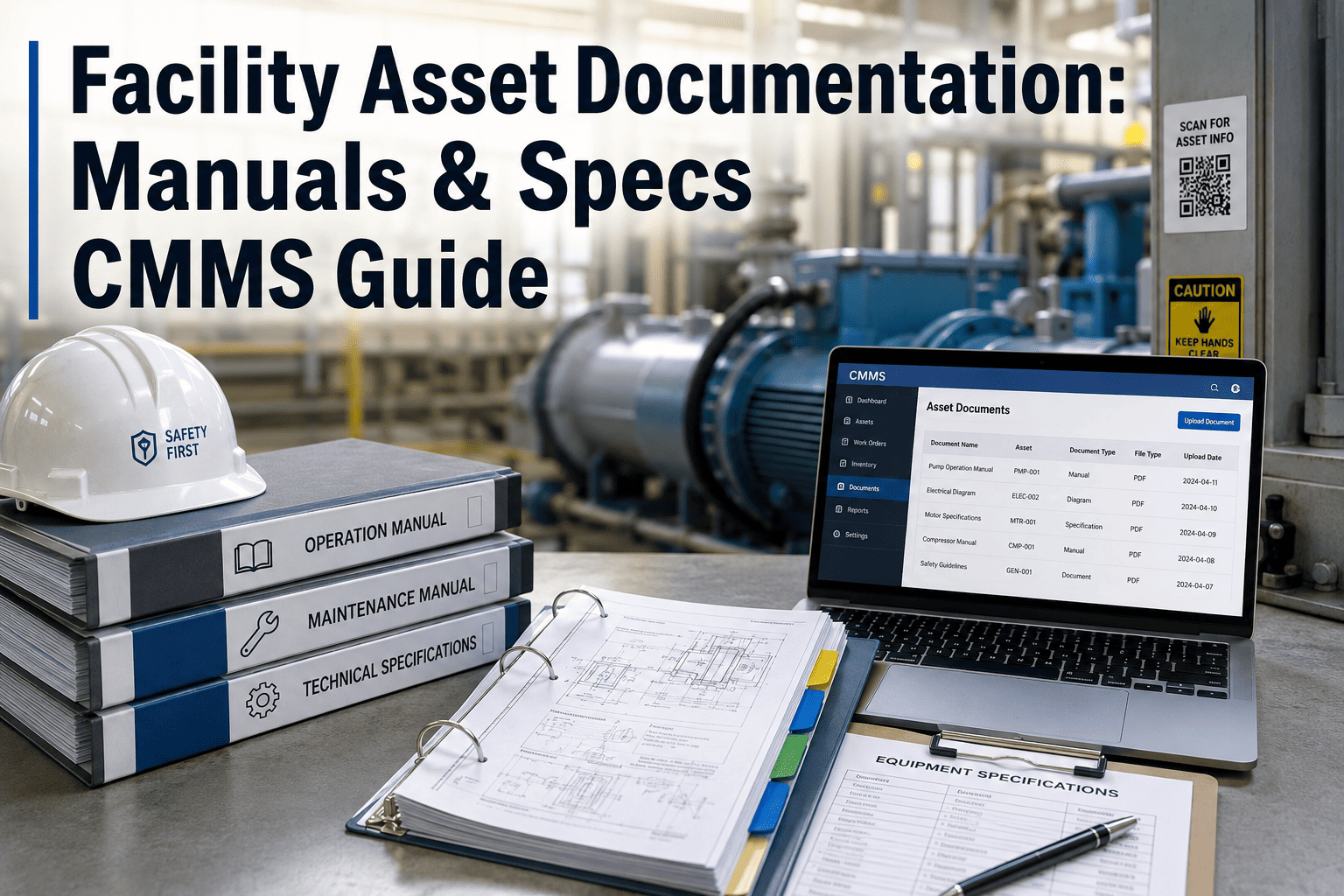
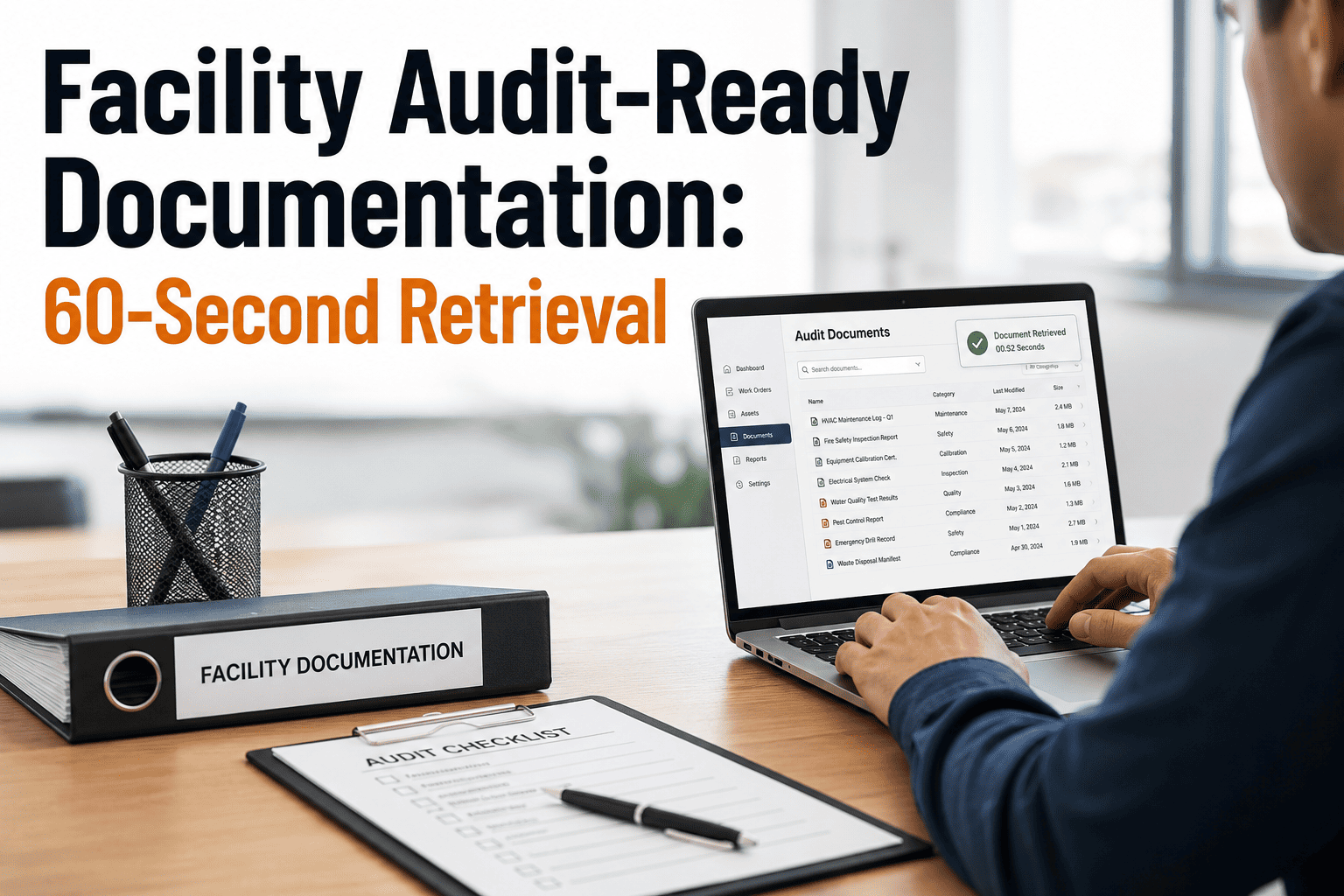
Document intelligence transforms how industrial organizations manage SOPs, manuals, and compliance records. Traditional approaches—filing cabinets full of paper procedures, scattered digital files, and manual compliance tracking—cannot meet the demands of modern regulatory environments and operational complexity. AI-powered document intelligence extracts actionable insights from maintenance procedures, safety protocols, and compliance documentation, making critical information instantly searchable and automatically linking procedures to work orders and asset records. Schedule a consultation to discover how document intelligence can revolutionize your maintenance documentation and compliance processes.
Why Document Intelligence for SOPs and Compliance
Manufacturing and industrial operations face increasing regulatory scrutiny, complex maintenance procedures, and the challenge of maintaining institutional knowledge as experienced workers retire. Manual document management creates compliance gaps, procedure inconsistencies, and delays in accessing critical information during maintenance activities.
Document Intelligence Platform Architecture
Modern document intelligence platforms combine optical character recognition, natural language processing, and machine learning models trained on millions of technical documents to automatically extract, classify, and connect maintenance procedures with equipment records, compliance requirements, and operational workflows.
Document Processing Capabilities
AI document intelligence platforms process diverse document types—from handwritten maintenance logs to complex technical manuals—extracting structured information and creating searchable knowledge repositories that integrate directly with operational workflows.
Types of Documents Processed
Document intelligence platforms handle the full spectrum of maintenance and compliance documentation—from equipment manuals and safety procedures to regulatory filings and inspection records—creating a unified, searchable knowledge base that supports operational excellence.
| Document Category | Document Types | Extracted Information | CMMS Integration |
|---|---|---|---|
| Standard Operating Procedures | Maintenance SOPs, work instructions, safety procedures | Step-by-step procedures, safety warnings, required tools, estimated time | Auto-attached to work orders, procedure templates, safety checklists |
| Equipment Manuals | OEM manuals, technical specifications, parts catalogs | Part numbers, torque specifications, maintenance intervals, troubleshooting guides | Linked to asset records, spare parts inventory, maintenance schedules |
| Compliance Records | Inspection reports, certifications, regulatory filings | Compliance dates, inspector details, required actions, renewal schedules | Compliance tracking, automated reminders, audit trail generation |
| Safety Documentation | LOTO procedures, permit requirements, hazard assessments | Safety protocols, permit types, hazard classifications, PPE requirements | Safety work permits, LOTO generation, hazard warnings on work orders |
| Historical Records | Maintenance logs, inspection histories, failure reports | Failure patterns, maintenance history, performance trends | Failure analysis, predictive maintenance models, equipment histories |
| Training Materials | Training manuals, competency records, certification tracking | Skill requirements, training status, certification expiration | Technician qualification verification, training reminders |
Traditional vs AI-Powered Document Management
Understanding the capability gap between traditional filing systems and AI document intelligence reveals why industrial organizations are transitioning from manual document management to intelligent, automated systems that integrate seamlessly with maintenance operations.
- Paper filing systems and scattered digital folders
- Manual search through documents during maintenance
- No connection between procedures and work orders
- Version control managed through file naming
- Compliance tracking in separate spreadsheets
- Intelligent document processing and classification
- Instant semantic search across all documentation
- Automatic procedure linking to work orders
- Automated version control and change tracking
- Integrated compliance monitoring and reporting
Industry-Specific Applications
Different industries have unique documentation requirements, compliance frameworks, and operational procedures. Document intelligence platforms adapt to sector-specific terminology, regulatory standards, and workflow patterns to deliver maximum value for each industry context.
| Industry | Key Document Types | Critical Compliance | Intelligence Focus |
|---|---|---|---|
| Oil & Gas | API procedures, PTW systems, HSE documentation | API standards, HSE regulations, environmental permits | Safety procedure automation, permit tracking, regulatory reporting |
| Pharmaceuticals | GMP procedures, validation protocols, batch records | FDA regulations, GMP compliance, validation requirements | GMP procedure linking, validation tracking, audit trail management |
| Food & Beverage | HACCP plans, sanitation procedures, quality manuals | FDA/USDA regulations, HACCP compliance, food safety standards | HACCP monitoring, sanitation tracking, allergen management |
| Automotive | TS16949 procedures, quality manuals, maintenance standards | TS16949 compliance, safety standards, environmental regulations | Quality procedure automation, standard work management, recall tracking |
| Aerospace | AS9100 procedures, maintenance manuals, certification records | AS9100 compliance, FAA regulations, certification requirements | Certification tracking, maintenance procedure validation, traceability |
| Power Generation | O&M manuals, safety procedures, environmental documentation | NERC standards, environmental permits, safety regulations | Outage planning, safety procedure management, environmental tracking |
ROI of Document Intelligence
Document intelligence investments deliver returns through reduced compliance costs, faster maintenance execution, improved safety outcomes, and enhanced knowledge retention. The financial impact compounds as organizations scale digital transformation across multiple facilities and operational areas.
Technical Specifications
Document intelligence platforms require robust processing capabilities, high-accuracy OCR engines, and scalable architecture to handle enterprise document volumes while maintaining security and integration requirements for industrial operations.
Implementation Approach
Successful document intelligence deployment requires systematic planning across document digitization, system integration, and user adoption. A phased approach delivers immediate value while building toward comprehensive knowledge management transformation.
Integration Capabilities
Document intelligence platforms integrate seamlessly with existing maintenance management systems, quality platforms, and compliance tools to create unified workflows that deliver the right information at the right moment in operational processes.
| System | Integration Type | Data Exchange |
|---|---|---|
| CMMS/EAM | Real-time bidirectional | Work order procedures, asset documentation, maintenance history, compliance tracking |
| Quality Management | Event-triggered | Quality procedures, inspection checklists, non-conformance documentation, corrective actions |
| Document Management | Continuous sync | Document repositories, version control, access permissions, audit trails |
| Training Systems | Scheduled updates | Training requirements, competency tracking, certification status, skill verification |
| Compliance Platforms | Real-time monitoring | Regulatory requirements, compliance status, audit documentation, reporting dashboards |
Common Challenges & Solutions
Document intelligence implementations face common challenges from legacy document formats, data quality issues, and user adoption barriers. Understanding these challenges and proven solutions accelerates successful deployment and maximizes organizational value.
| Challenge | Impact | Solution |
|---|---|---|
| Legacy document formats | Poor OCR accuracy, missing information | Progressive digitization prioritized by usage, manual validation for critical procedures |
| Inconsistent procedures | Conflicting information, compliance gaps | AI-powered comparison tools, automated conflict detection, standardization workflows |
| Version control chaos | Outdated procedures, safety risks | Automated version tracking, approval workflows, sunset notifications for obsolete documents |
| User adoption resistance | Continued manual processes, system underutilization | Workflow integration, mobile access, gamification, demonstrated time savings |
| Compliance complexity | Audit failures, regulatory violations | Automated compliance mapping, regulatory update notifications, audit trail automation |