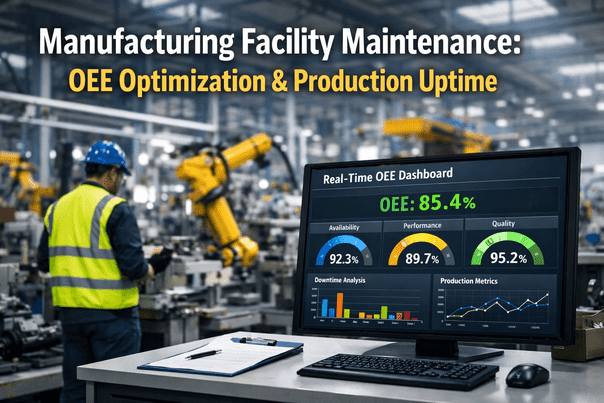
A mid-sized integrated steel plant running two blast furnaces and a continuous caster discovered that its actual throughput had drifted 23% below rated capacity — not because of equipment failure, but because of scheduling blind spots, untracked idle time, and maintenance windows that consistently overran estimated durations. Melt shop utilization sat at 61% while management reported 82% based on incomplete manual logs. After implementing runtime-based equipment tracking through Oxmaint CMMS — Sign Up Free, the plant recaptured 340 additional heats per quarter, reduced unplanned downtime by 47%, and achieved a verified 78% Overall Equipment Effectiveness within 90 days. This guide provides steel plant operations teams with a structured framework to identify utilization gaps, optimize capacity across every production stage, and sustain gains through digital maintenance workflows — Book a Demo to see how.
23%
Average hidden capacity loss in steel plants relying on manual production logging and paper-based scheduling systems
47%
Reduction in unplanned downtime after deploying runtime-triggered maintenance scheduling across critical steelmaking assets
$4.2M
Annual revenue recovered per blast furnace when capacity utilization improves from 61% to 78% OEE through digital tracking
Why Steel Plants Operate Below Rated Capacity
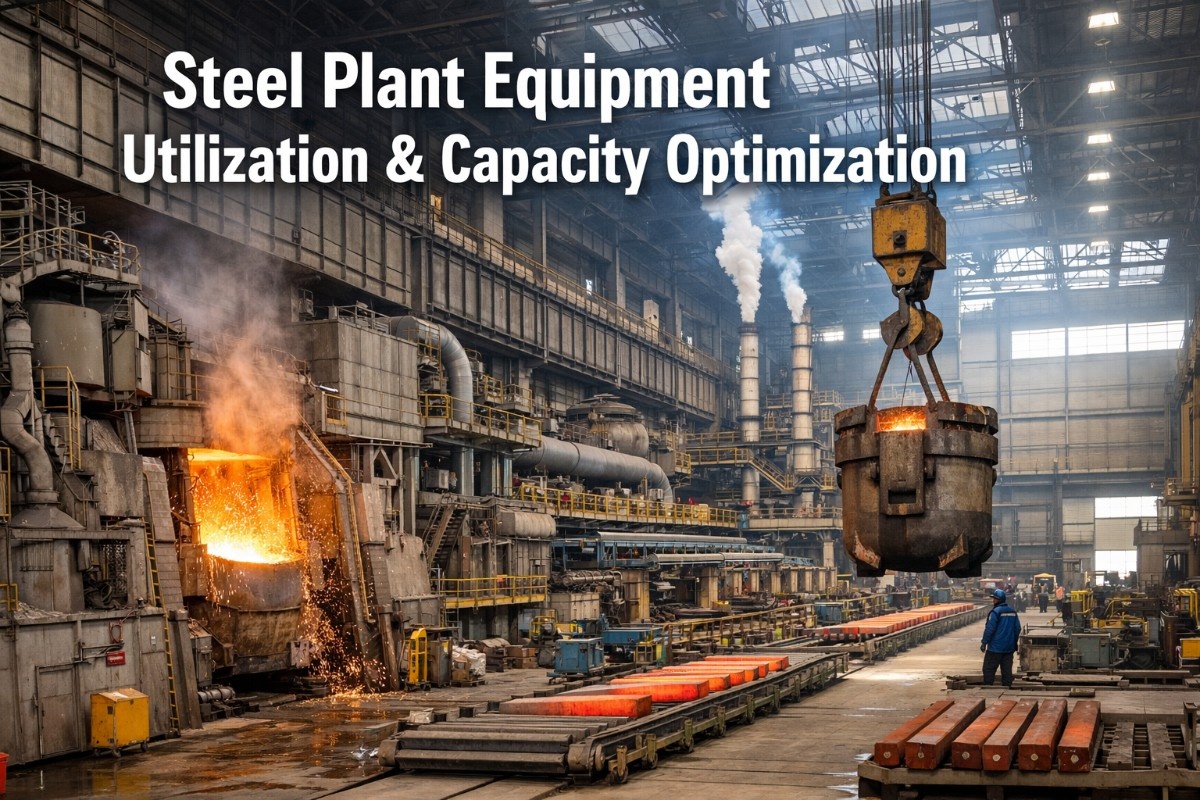
Steel production involves tightly sequenced operations — ironmaking, steelmaking, casting, and rolling — where a bottleneck at any stage cascades into lost tonnage across the entire line. Plants that track utilization manually miss the compounding micro-losses: a 12-minute ladle turnaround delay, an unlogged torpedo car idle period, a caster strand restart that takes 18 minutes longer than spec. These losses accumulate to hundreds of missed heats per year. Facilities that digitize equipment tracking with Oxmaint gain real-time visibility into every minute of asset operation and idle time.
Manual Tracking & Paper Logs
−
Shift-end batch reporting — production data entered 4-8 hours after events, losing granular timing and causation detail
−
Untracked idle windows — torpedo car waits, ladle preheating gaps, and strand sequencing delays invisible to planners
−
Maintenance overruns accepted — no baseline data to challenge why a 4-hour reline takes 11 hours
−
Siloed department metrics — melt shop, caster, and rolling mill each report independently with no cross-stage visibility
Digital CMMS-Integrated Tracking
+
Real-time event capture — every state change logged automatically with timestamps and duration calculations
+
Idle time categorization — system classifies wait types as scheduled, unplanned, or operational and quantifies each
+
Maintenance duration benchmarking — actual vs. estimated completion times tracked per task type with variance alerts
+
Cross-stage production flow view — unified dashboard showing bottleneck migration across the entire production chain
Key Insight
340
Additional Heats Per Quarter
Steel plants that transition from manual production logging to automated runtime tracking through CMMS integration recover an average of 340 additional heats per quarter — equivalent to 51,000 additional tonnes of crude steel annually from existing equipment with zero capital expenditure on new assets.
Each domain below addresses a critical production stage where utilization losses concentrate in steel plants. Facilities managing these workflows through Oxmaint's integrated platform — Sign Up Free track every metric in real time with automated alerts when KPIs drift outside target ranges.
BFU
Blast Furnace Utilization
Blast furnace productivity is measured in tonnes of hot metal per cubic meter of working volume per day. Top-performing furnaces achieve 2.5+ t/m3/day, while underperformers sit below 1.8. The gap almost always traces to burden distribution inconsistencies, irregular tapping schedules, and cooling system maintenance delays that force operators to reduce wind rates.
Tap-to-tap cycle tracking — monitor actual vs. target cycle times per cast with automated variance flagging above 8% deviation
Stave cooler flow rate monitoring — track cooling water flow per circuit to detect partial blockages before they force wind rate reductions
Burden distribution analysis — correlate charging sequence data with gas utilization efficiency to optimize stockline profile
Tuyere condition tracking — runtime-based inspection scheduling prevents unplanned blowouts that cause 24-48 hour shutdowns
Identifies cooling circuit degradation before forced wind rate reductions
Flags tapping schedule deviations that reduce daily heat count
BOF
Basic Oxygen Furnace Optimization
BOF heat-to-heat cycle time directly controls melt shop throughput. Target cycle times of 35-42 minutes are achievable, but plants averaging 55+ minutes lose 8-12 heats per day. The delays concentrate in three areas: lance maintenance windows extending beyond schedule, slag door buildup restricting vessel tilting speed, and delayed hot metal delivery from torpedo cars waiting at the transfer station.
Heat-to-heat cycle analysis — decompose total cycle into charging, blowing, sampling, tapping, and turndown phases with individual benchmarks
Lance tip consumption tracking — monitor copper wear rates per heat to schedule replacements before nozzle degradation forces mid-campaign shutdowns
Torpedo car queue management — track arrival, wait, and pour times at the BOF transfer pit to eliminate hot metal delivery bottlenecks
Detects cycle time drift before it compounds into lost daily heats
Identifies torpedo car scheduling conflicts causing melt shop starvation
CCM
Continuous Caster Machine Efficiency
Caster utilization is measured as percentage of available casting time versus total calendar time. World-class operations achieve 92%+ casting availability, while plants with manual scheduling average 74%. The primary losses are sequence breaks caused by tundish wear exceeding safe limits, mould oscillation system faults, and ladle turret rotation delays during grade transitions.
Tundish campaign life tracking — predict remaining heats per tundish based on wear sensor data and refractory thickness measurements
Mould level control stability — monitor oscillation frequency, stroke, and negative strip ratio to detect control degradation before breakouts
Ladle turret changeover timing — benchmark actual rotation and connection times against target to reduce sequence gap losses
Spray cooling zone calibration — validate nozzle spray patterns per strand to prevent surface quality issues that trigger speed reductions
Prevents unplanned sequence breaks from tundish refractory failures
Identifies mould control deviations before breakout risk escalates
HRM
Hot Rolling Mill Throughput
Rolling mill utilization depends on minimizing the gap between slabs arriving from the reheat furnace and the mill's rolling speed capability. Plants lose 15-20% of potential throughput to reheating furnace walk-beam delays, descaler pump pressure drops, and roll change durations that exceed the 12-minute benchmark. Each minute of rolling delay translates directly to tonnes of lost daily production.
Reheat furnace discharge pacing — synchronize slab discharge timing with mill entry speed to eliminate inter-slab gap waste
Roll campaign tracking — monitor roll surface degradation per tonnage to schedule changes at optimal intervals rather than fixed schedules
Descaler system pressure monitoring — track pump pressures and nozzle conditions to prevent scale defects that force speed reductions
Flags roll wear approaching defect-generating thresholds
Stop losing tonnage to invisible utilization gaps. Oxmaint gives your operations team real-time visibility into every minute of equipment runtime, idle time, and maintenance duration across your entire steel production chain.
Capacity optimization in steelmaking is not about running equipment faster — it is about eliminating the gaps between operations that silently consume 15-25% of available production time. The features below show how Oxmaint's digital maintenance platform connects scheduling, runtime tracking, and maintenance execution into a single system that keeps your entire production chain synchronized.
Runtime-Based Maintenance Triggers
Replace calendar-based PM schedules with runtime-triggered work orders. A ladle that runs 180 heats in three weeks gets maintained sooner than one running 90 heats in the same period. Runtime triggers ensure maintenance happens when equipment needs it — not when the calendar says so.
Predictive SchedulingAuto Work Orders
Cross-Stage Bottleneck Dashboard
Visualize production flow from blast furnace through rolling mill on a single screen. When the caster slows down, the dashboard shows the upstream ladle furnace queue building and downstream reheat furnace going idle — letting operators rebalance before tonnage is lost.
Real-Time FlowBottleneck Alerts
Maintenance Window Compression
Track actual vs. estimated duration for every maintenance task. When a tundish change consistently takes 2.8 hours against a 2.0-hour estimate, the system flags the variance and identifies which sub-tasks are overrunning — enabling targeted process improvements that recover casting time.
Duration AnalyticsVariance Tracking
Refractory Life Prediction
Integrate refractory thickness measurements from BOF, ladle, and tundish linings into the maintenance system. Predict remaining campaign life based on wear rates per heat rather than fixed schedules — extending lining campaigns where safe and intervening early where wear accelerates unexpectedly.
Wear AnalyticsCampaign Planning
Integration Capabilities for Steel Operations
Oxmaint connects with existing steel plant systems to create a unified operations platform without replacing your Level 1 or Level 2 automation.
Level 2 Automation Interface
Pull production events, heat data, and equipment state changes directly from your process control system into maintenance workflows — no manual data entry required.
Production Planning Sync
Align maintenance windows with production scheduling to ensure planned outages coincide with grade changes, reducing the net impact on available casting time.
Spare Parts Inventory Link
Connect refractory, roll, and wear-part inventories to consumption-based reorder triggers — ensuring critical spares are available when runtime thresholds trigger maintenance.
Compliance Documentation
Auto-generate ISO 14001, OSHA, and environmental compliance records from completed maintenance tasks — every work order becomes part of your audit trail automatically.
Steel-Specific Maintenance Capabilities
01
Refractory Lining Campaign Management
Track lining thickness, wear rate per heat, and remaining campaign life for BOF vessels, ladles, tundishes, and torpedo cars. The system generates work orders for relining at the optimal point — maximizing campaign length without risking a lining failure that shuts down the melt shop for 72+ hours.
02
Roll Shop Scheduling Integration
Synchronize roll grinding schedules with mill campaign plans. When a roughing mill roll approaches its tonnage limit, the system verifies that a ground replacement is available in the roll shop and schedules the change during the next planned coil-to-coil gap rather than forcing a reactive mill stop.
03
Ladle Turnaround Cycle Optimization
Monitor every phase of the ladle cycle — tapping, treatment, casting, slagging off, and preheat — with individual timestamps. Identify which ladles consistently exceed target turnaround times and which phases are causing the delays to focus improvement efforts where they deliver the most recovered heats.
04
Water System Health Monitoring
Steel plants consume 20-40 cubic meters of cooling water per tonne of steel. Monitor pump pressures, flow rates, and heat exchanger effectiveness across all cooling circuits — from BF stave coolers to caster spray zones — with automated alerts when parameters drift toward equipment protection thresholds.
We thought our blast furnace utilization was 82%. The actual number was 61%. The gap was hiding in micro-delays that nobody tracked because our paper system only captured start and end times. Within 60 days of deploying digital runtime tracking, we identified 340 recoverable heats per quarter.
Recover Hidden Capacity From Your Existing Equipment
Every steel plant has 15-25% of production capacity trapped in scheduling gaps, maintenance overruns, and untracked idle time. Oxmaint makes that lost capacity visible and recoverable — without capital investment in new equipment.
How does Oxmaint integrate with existing Level 2 automation in a steel plant?
Oxmaint connects via standard OPC-UA and REST API interfaces to pull production events, heat completion signals, and equipment state changes from your existing process control system. No modifications to your Level 1 or Level 2 automation are required — the integration layer reads data without writing back to control systems. Book a demo to see the integration architecture.
What equipment types does the runtime tracking cover?
Runtime tracking covers blast furnaces, BOF converters, EAFs, ladle furnaces, continuous casters, reheat furnaces, rolling mills, torpedo cars, ladles, tundishes, and all auxiliary systems including water treatment, gas recovery, and fume extraction. Each asset type has preconfigured KPI templates that can be customized to your specific operating targets.
How quickly can we see utilization improvements after deployment?
Most steel plants see measurable utilization gains within 30-60 days. The first two weeks focus on establishing accurate baseline measurements — which often reveals that actual utilization is 10-20% lower than what manual systems reported. Improvement actions based on real data typically recover 5-8% of lost capacity in the first quarter. Sign up free to start your baseline assessment.
Does the system handle refractory tracking for multiple vessel types?
Yes. Refractory campaign management covers BOF vessels, steel ladles, iron ladles, tundishes, torpedo cars, and reheat furnace hearths. Each vessel type maintains its own wear model based on lining material, operating temperature, and campaign history. The system predicts remaining life and generates relining work orders at configurable safety margins.
Can Oxmaint replace our existing ERP maintenance module?
Oxmaint is designed to complement ERP systems rather than replace them. It handles the operational maintenance execution layer — work orders, runtime tracking, inspection checklists, and mobile field data capture — while syncing cost data and asset records back to your ERP. This gives maintenance teams a purpose-built tool without disrupting financial or procurement workflows already running through SAP, Oracle, or similar systems.