The hospital security director receives an alert at 2:47 AM—a badge reader on the pediatric unit failed 6 hours ago, and the door has been propped open since the night shift couldn't get it to unlock. The infant protection system shows no alarms, but there's no documentation of when the failure occurred, who was notified, or what compensating controls were implemented. Tomorrow's Joint Commission surveyor will ask about access control maintenance records, and the compliance officer needs to know if this incident requires a security breach report.
Hospitals operate under regulatory frameworks demanding documented proof of security system reliability—HIPAA requires physical safeguards for protected health information, Joint Commission expects maintenance records for life safety systems and CMS Conditions of Participation mandate functioning access controls. Yet most healthcare facilities track visitor safety equipment through fragmented systems: access control software logs badge events, security monitors cameras, facilities maintains door hardware, and IT manages network components—with no unified data governance connecting system health to compliance documentation.
This framework establishes data governance practices that transform visitor safety maintenance from reactive troubleshooting to proactive reliability management, creating the audit trail documentation that surveyors require while reducing security system downtime by 40-60%. Healthcare facilities ready to unify access system data can sign up free to start tracking access control equipment.
What if every access control failure automatically generated documented work orders, notified stakeholders, and created audit-ready compliance logs—without manual effort?
Data Governance Framework Overview
Effective data governance for hospital access systems requires four interconnected pillars—each addressing a critical aspect of how security maintenance data is captured, managed, analyzed, and reported for compliance.
Defining what data must be collected for every access system asset, maintenance event, and security incident to meet regulatory requirements
Categorizing access equipment by security zone, criticality, and compliance obligations to enable risk-appropriate maintenance protocols
Establishing audit trail requirements that satisfy Joint Commission, CMS, DEA, HIPAA, and state regulatory expectations
Leveraging AI analytics to identify patterns, predict failures, and generate SLA reporting across single or multi-site operations
Security Zone Classification
Data governance begins with classifying every access point by security zone—determining what data must be captured, how quickly failures must be addressed, and which compliance requirements apply to each location.
Modernize Facility Management Reliability via Digital Work Orders
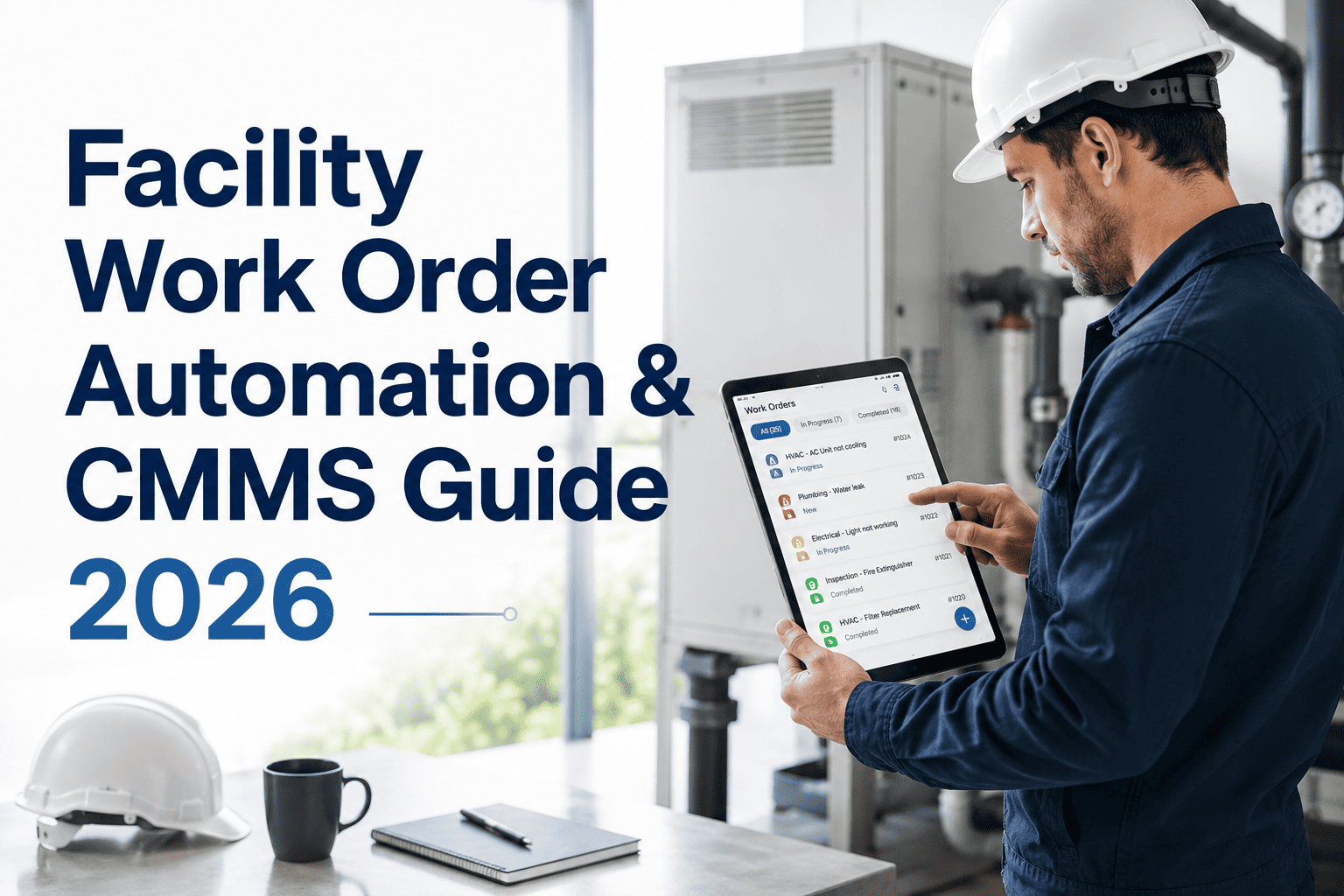
Paper-based security maintenance creates data gaps that become compliance gaps. Digital work orders through Oxmaint CMMS establish the documented audit trail that surveyors expect, enabling work order automation that accelerates response while capturing every data point required for regulatory reporting.
Work Order Data Capture Standards
| Data Category | Required Fields | Compliance Purpose |
|---|---|---|
| Incident Identification | Timestamp, asset ID, zone, failure type, reporter ID | Establishes incident timeline for regulatory review |
| Response Documentation | Dispatch time, arrival time, technician ID, response actions | Proves SLA compliance and response adequacy |
| Compensating Controls | Interim measures implemented, security coverage, duration | Documents risk mitigation during repair period |
| Resolution Details | Root cause, repair actions, parts used, completion time | Supports trend analysis and prevention planning |
| Verification | Functional test results, sign-off, photos/evidence | Confirms restoration and system integrity |
| Stakeholder Notification | Security notified, compliance notified, management notified | Demonstrates proper escalation protocols |
Asset Data Requirements
Every access system component requires comprehensive data records in asset tracking facility management to support maintenance decisions and compliance documentation.
| Component | Asset Data Fields | PM Schedule | Documentation |
|---|---|---|---|
| Readers & Credentials | Make, model, firmware, install date, zone, IP address | Monthly inspection, annual calibration | Read range tests, credential audits, firmware logs |
| Controllers & Panels | Model, firmware, battery date, doors controlled, network | Quarterly check, annual battery replacement | Battery load tests, firmware updates, comm logs |
| Locking Hardware | Type, manufacturer, install date, door ID, fire rating | Monthly functional test, annual service | Hold force testing, timing verification |
| Infant Protection | System type, zone coverage, tag inventory, receiver locations | Weekly tag check, monthly zone test | Tag status, alarm tests, zone verification |
| Specialty Systems | Duress buttons, wander management, video intercoms | Per OEM manuals specification | Functional tests, response verification |
Risk Scoring Framework
Risk scoring enables automatic prioritization of access system issues based on zone criticality, compliance impact, and patient safety implications—ensuring maintenance resources address highest-risk situations first.
| Risk Score | Priority | Response SLA | Escalation Path | Example Scenario |
|---|---|---|---|---|
| 90-100 | Critical | 15 minutes | Immediate to Security Director | NICU infant protection system offline |
| 70-89 | High | 4 hours | 1 hour to Security Manager | Pharmacy door lock malfunction |
| 50-69 | Moderate | 24 hours | 4 hours to Supervisor | Patient unit reader intermittent |
| 0-49 | Standard | 72 hours | 24 hours to Lead Tech | Lobby ADA operator slow response |
Compliance Documentation Standards
Healthcare facilities must satisfy multiple oversight bodies—each with different documentation requirements per facility management compliance requirements. Data governance establishes unified standards that serve all compliance needs from a single source of truth.
- PM completion records for door hardware
- Testing logs for infant protection
- Incident documentation with response times
- Evidence of OEM-recommended maintenance
- Pharmacy access control testing records
- Lock function verification logs
- Credential audit trails
- Security incident reports
- Access control maintenance verification
- Facility access policies and procedures
- Workstation security documentation
- Device and media control records
- Security system maintenance records
- Access control verification
- Emergency system testing
- Staff safety documentation
Standardizing Compliance at Scale — A Facility Management Framework with AI
AI analytics transform raw maintenance data into actionable insights—predicting failures before they occur, identifying compliance risks across the enterprise, and enabling multi-site rollouts with standardized data governance.
AI-Driven Capabilities
Machine learning analyzes transaction patterns, error rates, and maintenance history to identify readers, controllers, and locks likely to fail within 2-4 weeks
AI continuously evaluates PM completion rates, documentation gaps, and incident patterns against regulatory requirements
Real-time analysis of access events detects unusual patterns—doors held open, repeated failures, off-hours activity
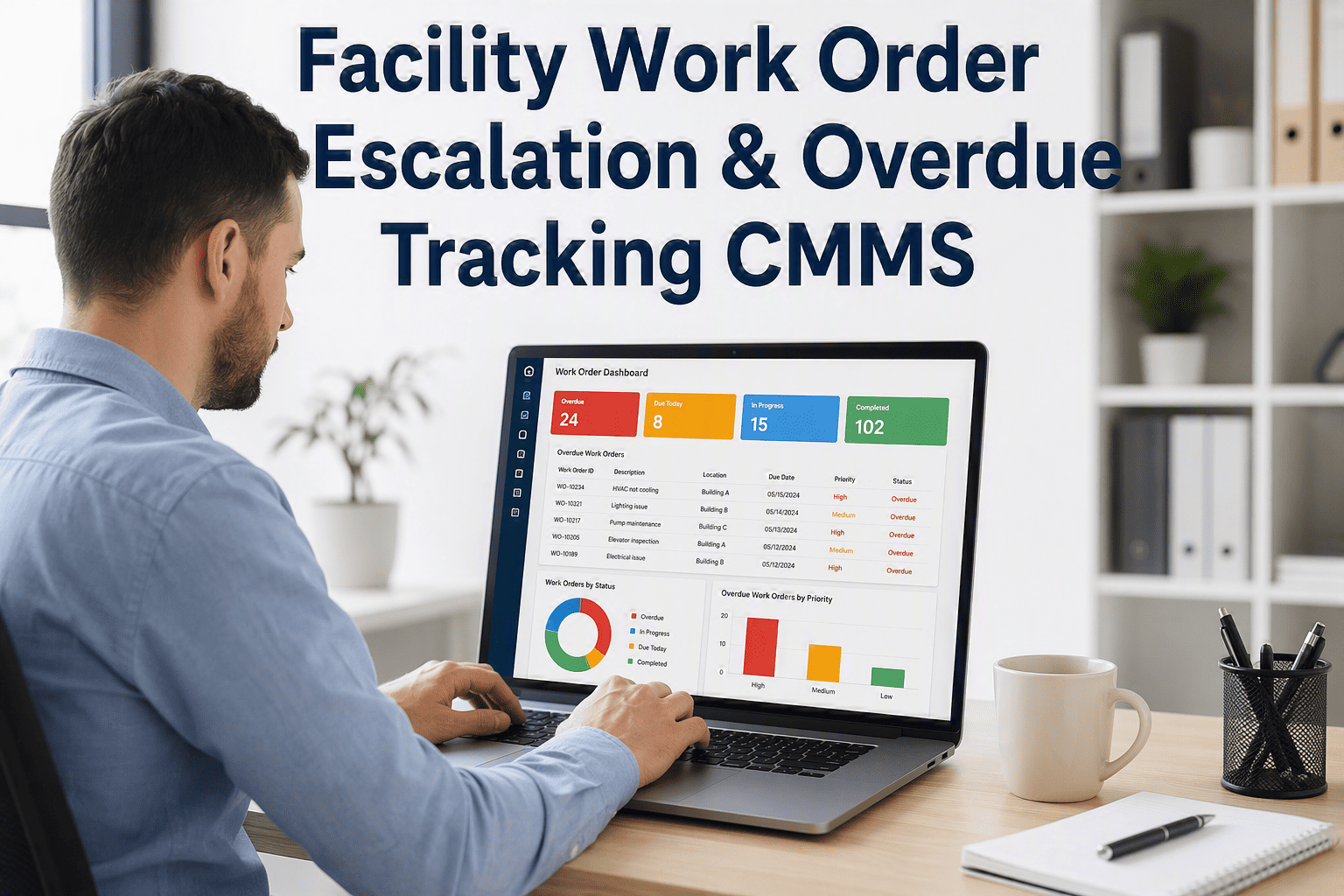
Automated SLA reporting tracks response times, resolution rates, and compliance metrics across all facilities
Multi-Site Data Governance Standards
Health systems with multiple facilities require enterprise data governance that standardizes core requirements while allowing site-specific configurations.
| Governance Layer | Enterprise Standard | Site-Specific Allowance |
|---|---|---|
| Zone Classification | Four-tier model (Critical, High, Controlled, General) | Zone boundaries based on local layout |
| Risk Scoring | Standardized calculation formula | Threshold adjustments for facility size |
| Data Fields | Core fields required for all work orders | Additional fields for specialty units |
| PM Schedules | Minimum frequencies per equipment type | More frequent based on equipment age |
| SLA Targets | Response time standards by zone | Tighter SLAs for high-volume facilities |
| Reporting | Enterprise dashboard metrics | Site-specific operational reports |
KPI Dashboard
Implementation Roadmap
Asset inventory, zone classification, barcode/QR tagging, CMMS configuration, work order template creation
Risk scoring implementation, work order automation rules, escalation workflows, access system integration
PM program deployment, compliance checklists, documentation standards, audit trail verification
AI analytics activation, predictive alerting, SLA dashboards, multi-site standards deployment
ROI Summary — 400-Bed Hospital
Stop scrambling for compliance documentation. Start building audit-ready records automatically with unified data governance.