
A conveyor system that goes down during peak shift in a distribution center does not just stop one line — it cascades through pick zones, pack stations, loading docks, and outbound shipment windows, creating a ripple that costs $8,000–$25,000 per hour in delayed orders, overtime labor, and carrier penalties. Warehouse and logistics facilities are among the most maintenance-intensive environments in the built world — high-cycle conveyor systems, cold storage refrigeration, dock levelers processing hundreds of truck bays daily, and fire suppression systems governing massive floor areas — all running on tight schedules where unplanned downtime has an immediate, measurable commercial consequence. This article covers how logistics facility managers use OxMaint's work order management platform to keep conveyors, dock equipment, HVAC, and compliance programs running at the throughput levels that modern distribution operations demand.
Warehouse Facility Management: Optimize Maintenance for Logistics Operations
How distribution center and warehouse facility managers control conveyor downtime, dock equipment reliability, cold storage compliance, and safety inspections — with CMMS work order management built for the pace of logistics.
Conveyor System Maintenance — The Highest-Stakes Asset
Conveyor systems in distribution centers run 18–22 hours per day during peak seasons, accumulating wear at a rate that outpaces most scheduled maintenance intervals designed for single-shift industrial environments. A single failed component — a belt splice, a drive chain, a motor bearing — can cascade through an entire sortation zone before a fault is detected.
- Belt tension and tracking — adjust if deviation exceeds 10mm
- Splice condition — inspect for separation or fraying daily
- Drive motor amp draw — log vs. baseline weekly
- Idler roller rotation — replace seized rollers immediately
- Belt cleaner condition — check weekly in high-volume lanes
- Chain elongation measurement — replace at 3% wear (weekly)
- Lubrication — auto-lube system check or manual application
- Sprocket tooth profile — replace when hooked profile develops
- Roller end bearings — listen for noise, check monthly
- Accumulation zone sensors — calibrate quarterly
- Divert mechanism timing — verify accuracy weekly
- Scan tunnel alignment and read rate — check daily
- Pop-up wheel condition and height calibration monthly
- Control panel fault log review — weekly trending
- Emergency stop function test — monthly verification
Real-Time Work Order Feed — Distribution Center Floor
Dock Equipment — The Hidden Maintenance Gap
Dock levelers, dock doors, and vehicle restraints collectively process every inbound and outbound shipment — yet most warehouses have no structured PM program for dock equipment. A single failed dock leveler halts that bay entirely, redirecting trucks to already-loaded bays and creating loading delays that ripple into carrier relationships.
| Dock Equipment | PM Task | Frequency | Failure Risk if Skipped | CMMS Trigger |
|---|---|---|---|---|
| Dock Leveler (hydraulic) | Fluid level, cylinder seal inspection, lip chain | Quarterly | Leveler fails to raise — bay unusable | Calendar PM |
| Dock Leveler (mechanical) | Spring tension, pull chain, deck hinge pins | Semi-annual | Snap failure — worker safety incident | Calendar PM |
| Overhead Dock Door | Spring balance, cable condition, track alignment | Quarterly | Door falls or jams — bay shutdown | Calendar PM |
| Vehicle Restraint | Hook wear, activation test, indicator light check | Monthly | Truck creep during loading — injury risk | Monthly check |
| Dock Seal / Shelter | Fabric tear inspection, foam pad condition | Quarterly | Weather infiltration — cold storage compromise | Visual checklist |
| Dock Light | LED function, housing seal condition | Monthly | Worker trip / fall — safety citation | Monthly check |
OxMaint auto-generates conveyor PMs, dock equipment service schedules, cold storage checks, and safety inspection work orders — keeping every system on your floor running at the throughput level your SLAs demand.
Cold Storage & Warehouse HVAC — Compliance + Comfort
| System | Key Maintenance Task | Frequency | Compliance Standard | OxMaint Automation |
|---|---|---|---|---|
| Cold Room Refrigeration | Temp log, condenser coil, refrigerant charge | Daily log / Monthly PM | FDA 21 CFR (food), USDA cold chain | Auto-log temp alerts + PM schedule |
| Blast Freezer | Evaporator defrost cycle, door seal condition | Weekly inspection | Food safety / insurance requirement | Weekly checklist work order |
| Ambient Warehouse HVAC | Filter change, belt inspection, coil cleaning | Quarterly PM | OSHA thermal comfort (heat illness) | Quarterly calendar PM |
| Loading Dock HVAC | Makeup air unit filter + damper inspection | Monthly (high traffic) | ASHRAE ventilation standards | Monthly work order |
| Humidity Control | Sensor calibration, dehumidifier coil check | Quarterly | Product storage specs | Quarterly PM + sensor alert |
"Distribution centers are the most maintenance-intensive facilities I manage — the combination of 24-hour operations, high-cycle mechanical systems, and direct financial exposure from every hour of downtime means that reactive maintenance is never a viable strategy. The facilities that run at the highest throughput reliability share one characteristic: they have structured PM programs for every asset tier, not just the conveyors. Dock equipment, cold storage, and HVAC failures are just as disruptive as a conveyor outage in the right circumstances — and they are far more preventable with basic scheduled maintenance."
— Director of Facility Operations, Top-5 3PL Provider — 3.8M sq ft of distribution space under management
A 2024 MHI Industry Report found that distribution centers with CMMS-managed PM programs achieved 23% higher OEE on conveyor systems and reported 41% fewer unplanned downtime events compared to facilities managing maintenance reactively — with the ROI on CMMS investment averaging 8 months payback period in high-volume facilities.
Every Stopped Conveyor is a Missed SLA. Make Downtime the Exception.
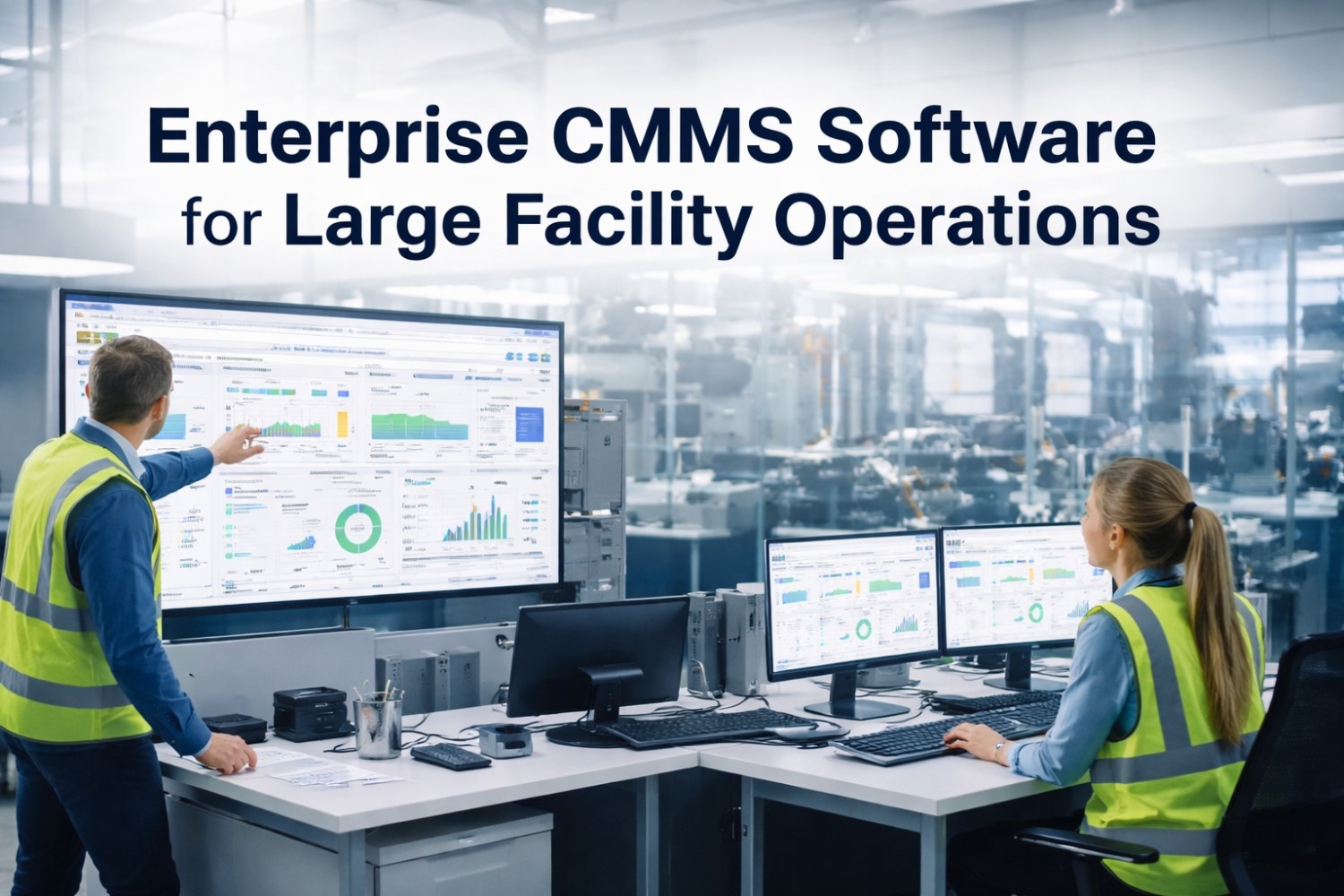
OxMaint's work order management platform gives warehouse facility teams automated PM scheduling, real-time work order tracking, and asset performance analytics — across conveyors, dock equipment, cold storage, and HVAC — in one system built for the pace of logistics operations. Book a demo to see the warehouse facility dashboard configured live.

.jpeg)