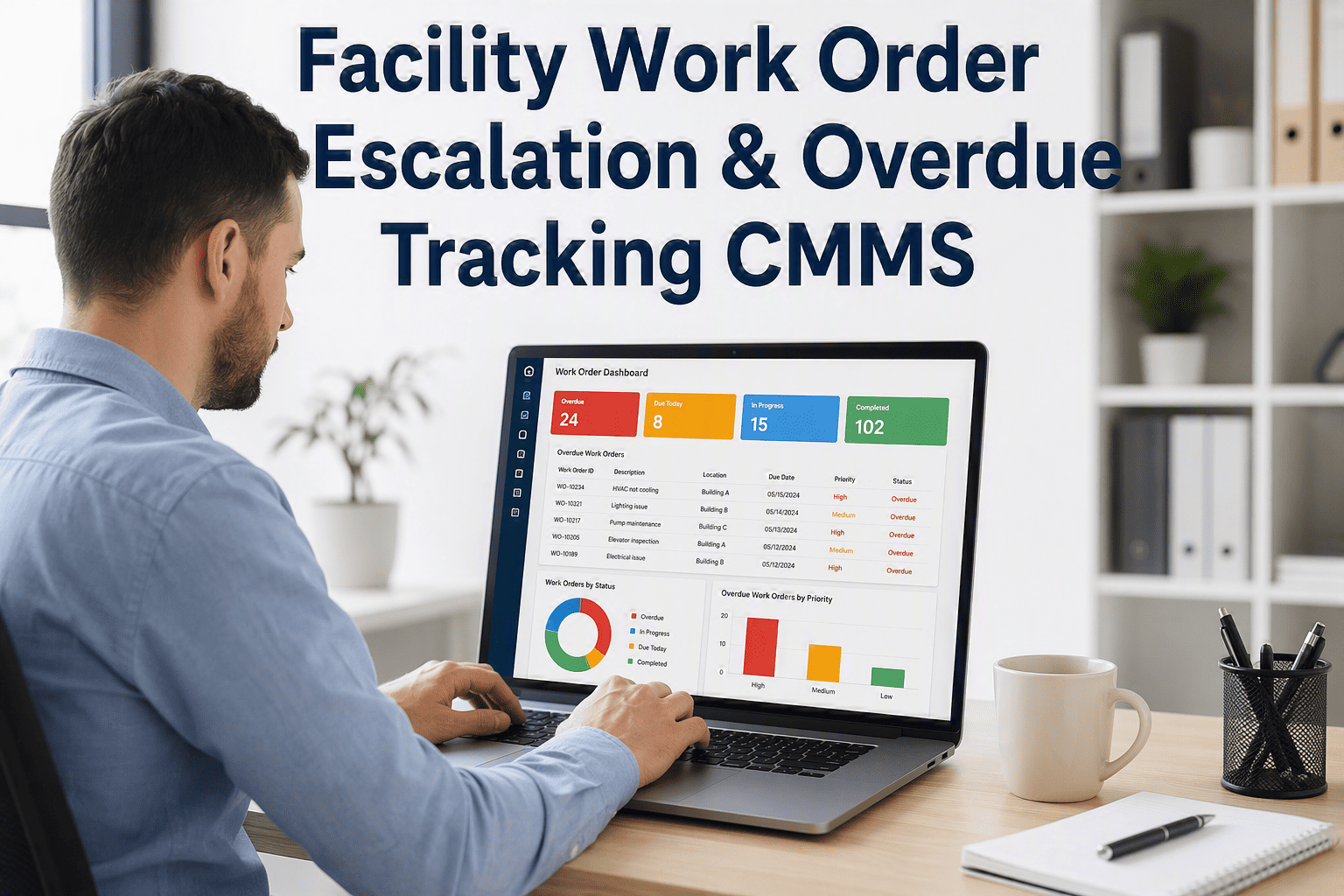
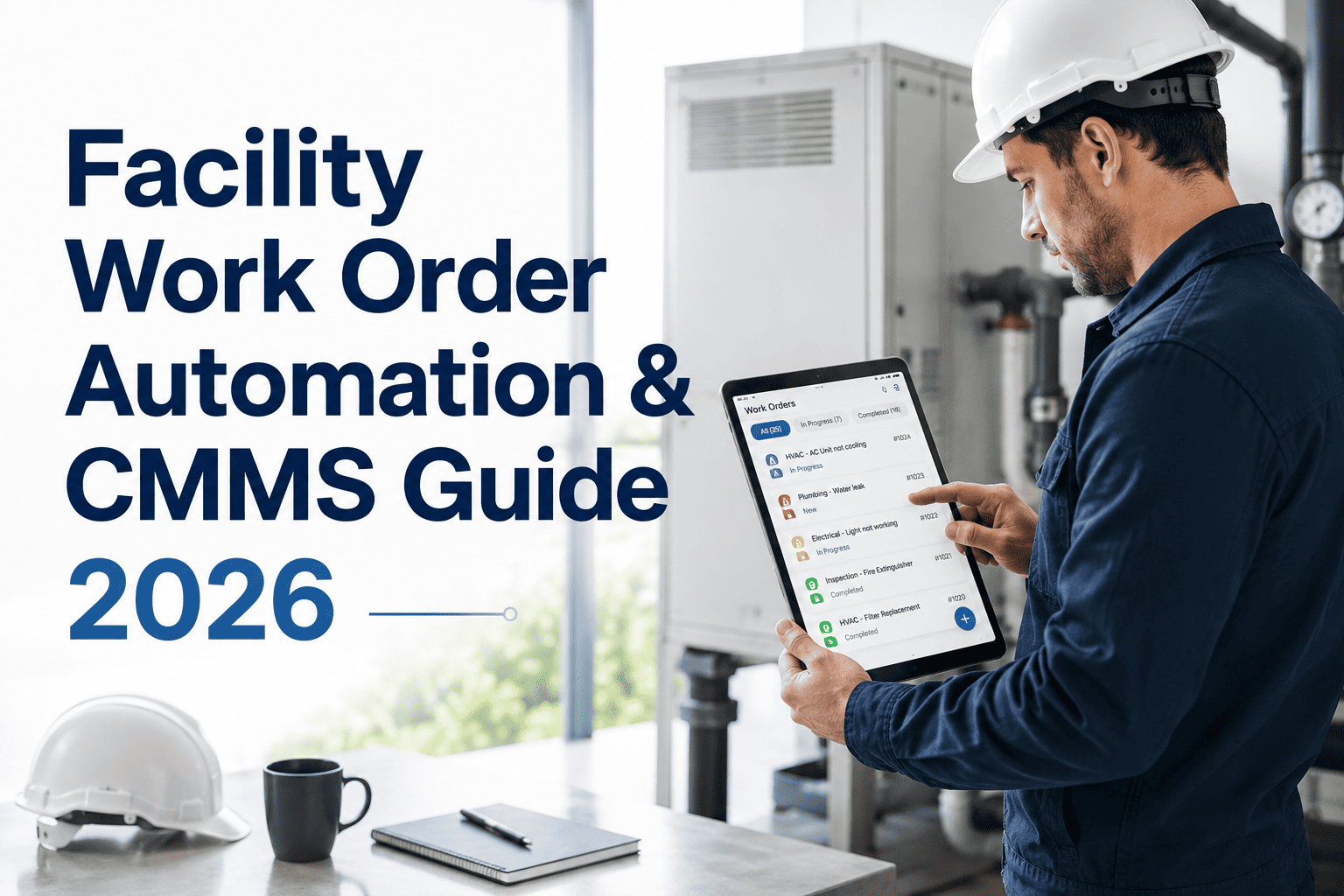
Only 24.5% of a maintenance technician's day is spent on actual hands-on repair work. The remaining 75.5% disappears into coordination overhead: chasing down work order details, waiting for assignments, deciphering incomplete requests, and documenting completions on paper that nobody enters into a system. In large facilities, 23% of work orders are duplicates or missing critical information. 38% of maintenance managers say poor communication causes most delays. And the average technician wastes 4.2 hours per week just trying to understand what they are supposed to be doing and when. The work order is the most executed document in facility management and the most poorly managed. Automating the full lifecycle from submission through assignment, execution, and resolution is the single highest-return operational investment most FM teams can make in 2026. The global Work Order Management market is projected to reach $29.8 billion by 2033 at 8.5% CAGR. The teams deploying automation now are widening the gap over those still running on email threads and spreadsheets. Sign up free to put Oxmaint's automated work order system to work in your facility today, or book a demo to see the full lifecycle configured for your facility type.
Every Request. Tracked. Assigned. Resolved. Automatically.
Oxmaint converts every maintenance request into a tracked, prioritised, and accountable work order the moment it is submitted. No lost tickets. No manual dispatch. No paper. Full mobile execution for every technician on every shift.
What Is Work Order Management in Facility Management?
Work order management is the structured process of capturing, classifying, assigning, tracking, and closing every maintenance request in a facility. A work order is the primary unit of accountability for all maintenance activity: it records what was requested, who was assigned, what was done, which parts were used, and when the job was completed. In 2026, effective work order management means automating the full lifecycle. Manual systems and email-based coordination create the 75.5% coordination overhead documented in industry research. Automated systems eliminate it.
Unplanned Breakdown Repairs
Generated when equipment fails or a tenant submits a complaint. Cost 4.8x more than planned work. Automated triage ensures reactive requests are captured from any channel, classified by urgency and asset criticality, and dispatched to the right technician in minutes, not hours.
Scheduled Preventive Maintenance
Auto-generated by PM schedules, meter readings, runtime hours, or sensor condition thresholds. Each planned work order arrives with checklist, parts list, and asset history pre-attached. Shifting from 60% planned to 92% planned ratio eliminates the majority of emergency cost premium.
The Work Order Lifecycle: Submission to Resolution
Every work order follows the same six-stage lifecycle. The gap between high-performing and low-performing FM teams is how much of this lifecycle runs automatically versus manually. Oxmaint automates every stage without removing manager oversight.
Requests arrive via tenant portals, QR code scans, mobile app, email, or BAS sensor alert. Oxmaint captures all channels into one system, deduplicates automatically, and creates a structured work order record from any source.
AI classifies each work order by urgency, asset criticality, SLA obligations, and safety impact. High-priority items are escalated automatically. Routine requests are queued by workload and technician availability without manual triage.
Work orders assigned based on technician skill set, physical location, current workload, and shift schedule. 75% first-time fix rate improvement documented with AI assignment versus manual dispatch. No dispatcher bottleneck for routine work.
Technician receives the work order on mobile with full asset maintenance history, standard job plan, parts list, and safety procedures pre-attached. No return to desktop. No phone call to the parts room. Complete context before touching equipment.
Technician completes required fields, attaches photos, and captures digital signature on mobile. All measurement data, parts consumed, and technician notes recorded automatically against the asset record at closure. Zero paper. Zero manual data entry.
Closed work order updates the asset maintenance history, triggers parts reorder if inventory dropped below threshold, and records SLA compliance or breach automatically. Portfolio-level SLA dashboards updated in real time without any manual report compilation.
Six Pain Points Killing Work Order Performance in 2026
Service requests arrive via phone calls, sticky notes, emails, and hallway conversations. None create an auditable, prioritised, automatically routed maintenance record. The result is 23% duplicate or missing-information work orders in large facilities. No system means no accountability and no SLA tracking.
A failure at 11 PM Friday may not reach a technician until 8 AM Monday through a manual process. Every routine work order waits for a manager to classify, assign, and communicate it. Response time is gated by human availability around the clock. Emergency repairs absorb the 4.8x cost premium.
A technician arriving at a compressor repair without the asset's last three work orders, the correct parts, and the standard job plan will take longer, may make a repeat visit, and will generate an incomplete record. First-time fix rates stay below 60% without pre-populated job context delivered on mobile.
Paper work orders are never fully complete. Required measurement fields skipped. Photos not taken. Follow-up tasks not linked. Reported compliance of 78% on paper typically reflects actual execution of 55% when audited against digital enforcement standards. Compliance gaps become regulatory exposure.
FM directors managing multi-site portfolios cannot see real-time SLA compliance without manual report assembly from each property's records. By the time a breach is visible, the tenant relationship cost is already incurred. SLA reporting that arrives weekly does not support the operational decisions that are made daily.
Most CMMS work order histories sit unused as data for capital decisions. Recurring failure patterns on the same asset, escalating repair costs on ageing equipment, and MTBF trends are all visible in the work order record but never surfaced for CapEx planning. The result is capital decisions made on guesswork, not asset condition data.
Manual vs Automated Work Order Management: The Operational Gap
| Performance Factor | Oxmaint Automated WOM | Manual or Spreadsheet WOM |
|---|---|---|
| Request Capture | All channels captured in one system. Duplicate detection removes redundant tickets. Structured work order created from any source without manual entry. | Requests via phone, email, and verbal report create no auditable record. 23% of work orders duplicated or missing critical information at the point of creation. |
| Response Time | Automated dispatch within minutes of submission regardless of time of day. 40% response time reduction documented. No dispatcher bottleneck for routine work orders around the clock. | Requests wait for manager availability to classify and assign. Overnight and weekend failures may wait 8 to 16 hours before reaching a technician. Each delay absorbs the 4.8x emergency cost premium. |
| Technician Productivity | Mobile work orders arrive with full asset context, job plan, and parts list pre-attached. 75% first-time fix rate improvement. Technicians spend wrench time, not coordination time, at the asset. | 4.2 hours per technician per week lost to coordination overhead. Technicians call the office for asset history, the parts room for availability, and the supervisor for priority guidance before starting work. |
| Compliance Documentation | Every closure generates timestamped, digitally signed records automatically. Required fields enforced before completion. Photo evidence captured at asset. Audit-ready in minutes from live data. | Paper compliance of 78% masks actual execution of 55% when digitally audited. Missing measurement fields, absent photos, and unlinked corrective tasks standard. Manual reconstruction required at inspection. |
| SLA Tracking | Real-time SLA compliance dashboards per property and portfolio. Breach alerts generated before SLA deadline, not after. Multi-site SLA reporting available on demand without manual compilation. | SLA tracking requires manual extraction from individual property records. Reports arrive weekly at best. Breaches discovered retrospectively after tenant relationship cost already incurred. |
| CapEx Intelligence | Every work order feeds asset condition scoring and MTBF trending automatically. Recurring failure patterns surfaced as CapEx risk flags. Rolling 5-year capital forecast driven by actual repair cost data. | Work order history never connected to capital planning. CapEx decisions made from vendor estimates and informal condition assessments. Budget variance 20% or more is standard in portfolios without data-driven planning. |
Stop Managing Work Orders. Start Automating Them.
Oxmaint automates work order capture, classification, assignment, execution, and reporting across your full facility portfolio. From the moment a request is submitted to the moment the asset record is updated at closure. No lost tickets. No manual dispatch. No paper compliance gaps.
Frequently Asked Questions: Work Order Management for Facilities
How does automated work order management reduce maintenance costs in commercial facilities?
Automated WOM cuts costs through three mechanisms: eliminating the 4.8x emergency repair premium by converting reactive failures into planned interventions; reducing the 4.2 hours per technician per week of coordination overhead with AI dispatch and mobile context delivery; and shifting the planned-to-reactive ratio from 60/40 to 92/8 so fewer emergency callouts occur. Sign up free to start automating today, or book a demo to model the cost reduction for your facility.
What is the difference between a work order management system and a CMMS?
A standalone work order system primarily captures requests, assigns work, and tracks completion. A CMMS is asset-based and connects work orders to full asset records, PM schedules, parts inventory, condition scoring, and CapEx forecasting. Oxmaint is a unified CMMS that includes full work order automation as a core capability, not a separate system. Book a demo to see the difference in a live walkthrough, or sign up free to explore the full platform.
How does Oxmaint handle SLA tracking across multiple facility sites?
Oxmaint tracks SLA compliance in real time per work order, per property, and across the full portfolio simultaneously. Breach alerts are generated before the SLA deadline, not after. Portfolio-level SLA dashboards update automatically from live work order data without any manual report compilation. Sign up free to configure your SLA rules, or book a demo to see multi-site SLA reporting for your portfolio size.
Can work order data in Oxmaint be used for CapEx planning and asset replacement decisions?
Yes. Every work order closure in Oxmaint feeds the asset's condition score, MTBF calculation, and repair cost record automatically. Recurring failure patterns are surfaced as CapEx risk flags. The rolling 5-year CapEx forecast is built from actual work order cost trends, not manufacturer estimates. Book a demo to see CapEx forecasting built from your work order history, or sign up free to start building your asset data foundation today.
Every Maintenance Request Deserves a Structured Path From Submission to Completion.
Oxmaint gives every work order that path automatically. Multi-channel capture. AI classification. Intelligent assignment. Mobile execution with full asset context. Digital sign-off. SLA tracking. CapEx intelligence. All in one platform. Free to start. Live in 5 days. No implementation consultants needed.