Air compressor and pneumatic system failures are the leading cause of commercial vehicle brake system deficiencies — responsible for 29% of all brake-related out-of-service violations during DOT roadside inspections. A failed air compressor does not just disable the brakes; it disables the entire pneumatic chain that operates spring brakes, air suspensions, cab controls, and auxiliary systems. Oxmaint tracks every compressor, air dryer, moisture trap, and air tank as individually scheduled components with mileage-based and time-based PM triggers. If your fleet's air system maintenance is limited to "check the air pressure gauge," start a free trial or book a demo to see component-level air system PM in action.
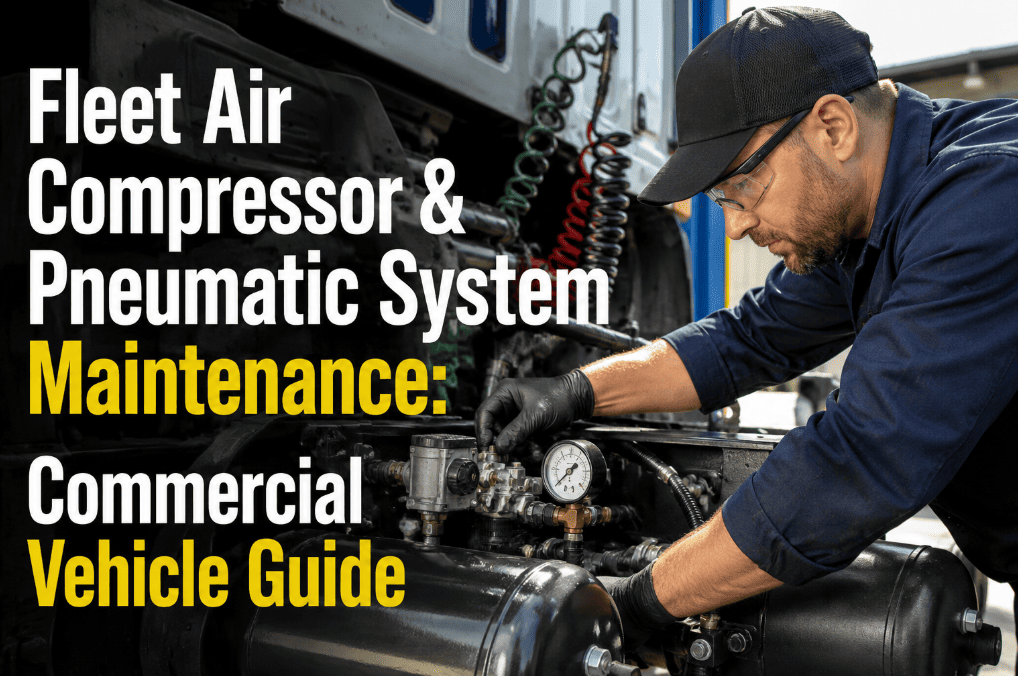
Fleet Air Compressor and Pneumatic System Maintenance: Commercial Vehicle Guide
Air system failures cause 29% of brake-related OOS violations. Component-level PM for compressors, air dryers, moisture traps, and tanks prevents the cascading pneumatic failures that put vehicles out of service at roadside.
Your Brakes Are Only as Reliable as the Air System That Powers Them
A brake system does not fail because the brake pads wore out — it fails because the air compressor that delivers 120 psi of system pressure degraded to the point where it could not maintain pressure under demand. Every air system failure is an upstream PM failure that was preventable with scheduled compressor service, dryer cartridge replacement, and systematic leak testing. Oxmaint tracks every air system component independently. See the full air system PM workflow — start a free trial or book a demo to configure it for your fleet.
The Six Air System Components That Require Separate PM Schedules
A commercial vehicle air system is not a single unit — it is a chain of six interdependent components, each with different failure modes, different service intervals, and different consequences when it fails. CMMS-managed air system maintenance treats each component as a separately tracked asset.
Engine-driven pump generating 120–135 psi system pressure. Service includes inlet filter replacement, carbon buildup removal, head gasket inspection, and discharge valve testing. Output degradation is gradual and often undetected until build-up time exceeds FMCSA limits.
Removes moisture from compressed air before it enters the storage tanks and brake circuits. Desiccant cartridge saturation causes moisture pass-through, leading to frozen valves, corroded tanks, and brake chamber failures in cold weather. The most frequently missed air system service item in commercial fleets.
Regulates compressor cut-in and cut-out pressures — typically 100 psi cut-in and 125 psi cut-out. Governor malfunction causes either continuous compressor operation (overheating and premature wear) or failure to maintain minimum system pressure. Testing requires a calibrated gauge, not a visual inspection.
Store compressed air for brake application, suspension, and auxiliary systems. Tanks accumulate moisture, oil, and carbon contaminants that must be drained daily and inspected for internal corrosion at scheduled intervals. Tank corrosion failures are catastrophic — the tank splits under pressure with no warning.
Control air distribution to individual brake chambers. Sticking relay valves cause uneven braking, dragging brakes, and premature lining wear on specific axles. Valve response time testing is required during annual brake inspection — but should be checked at each PM-B service for early detection of degradation.
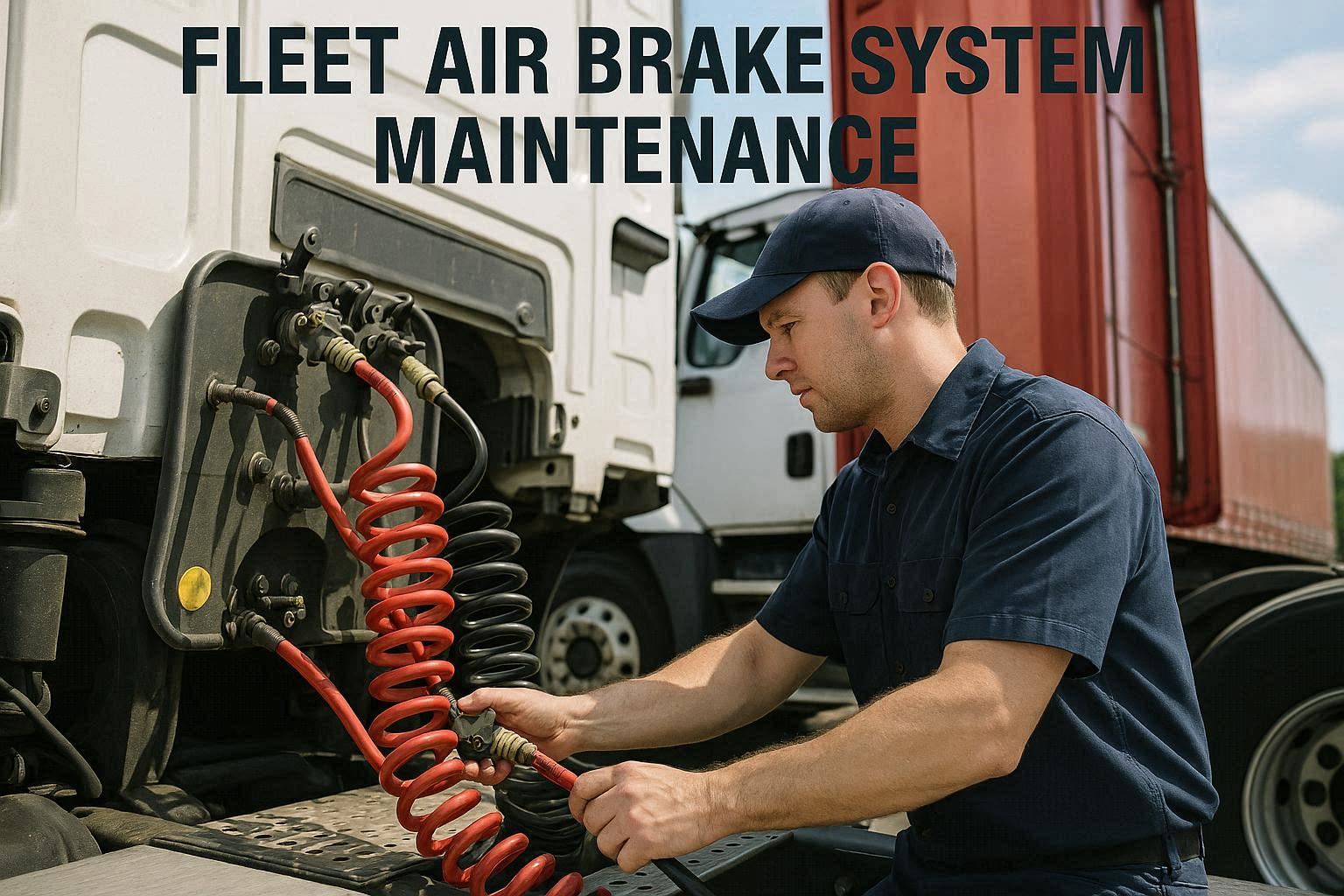
Rubber and nylon lines connecting all system components. Lines degrade from heat, abrasion, and UV exposure. Fittings loosen from vibration. Gladhands on combination vehicles wear from coupling cycles. A single pinhole leak can reduce system pressure enough to trigger a low-air warning and eventual spring brake activation.
Air System PM Intervals for Class 6–8 Commercial Vehicles
| Component | Service Action | Interval | Severe Duty | CMMS Trigger |
|---|---|---|---|---|
| Air compressor | Inlet filter, carbon check, discharge valve test | 100,000 mi | 60,000 mi | Mileage PM |
| Air compressor | Build-up time test (0–100 psi) | Every PM-B | Every PM-A | PM checklist |
| Air dryer cartridge | Desiccant replacement | 150,000 mi / annually | 100,000 mi | Mileage or calendar |
| Governor valve | Cut-in/cut-out pressure calibration | Every PM-B | Every PM-B | PM checklist |
| Air tanks | Manual drain | Daily driver check | Daily | DVIR checklist |
| Air tanks | Internal corrosion inspection | Annually | Annually | Annual PM |
| Brake relay valves | Response time and leakage test | PM-B + annual | Every PM-B | PM checklist |
| Air lines and fittings | Visual inspection + soap test for leaks | Every PM-A | Every PM-A | PM checklist |
Six Air System Failures That Ground Vehicles at Roadside
FMCSA requires system pressure to build from 50 to 90 psi within 3 minutes at governed RPM. Compressor output degrades gradually as inlet filters clog, discharge valves wear, and carbon deposits accumulate — but most fleet PM programs do not include a timed build-up test, so degradation is undetected until the vehicle fails a roadside inspection or cannot release its spring brakes after a service stop.
A saturated air dryer cartridge passes moisture directly into the air tanks and brake circuits. In temperatures below 32F, that moisture freezes in brake valves, air lines, and relay valves — causing complete brake lockup or failure to release. Air dryer cartridge replacement is the single highest-ROI air system PM task, yet 44% of fleets replace dryer cartridges only when symptoms appear.
Governor valves drift from calibration over time, causing the compressor to cut out at lower-than-specified pressure (leaving insufficient reserve) or to run continuously (overheating and accelerating compressor wear). Governor calibration drift is undetectable without a calibrated gauge test — and most PM-A checklists do not include governor testing.
Air tanks that are not drained daily accumulate water, oil, and carbon contaminants. Internal corrosion weakens the tank wall over years of service until the tank fails catastrophically under normal operating pressure — a 120 psi burst event that is both a safety hazard and an immediate OOS condition. Annual internal inspection or ultrasonic thickness testing detects thinning before failure.
The FMCSA air loss test allows no more than 3 psi loss per minute with brakes applied and 2 psi per minute with brakes released. Most fleets perform this test only during annual brake inspections — not at regular PM intervals. A slow leak that develops between inspections draws down system pressure overnight, causing low-air warnings at morning startup and spring brake activation during route stops.
Brake chamber diaphragms flex with every brake application and deteriorate from moisture exposure when the upstream air drying system is not maintained. A ruptured diaphragm causes immediate loss of brake force on that wheel — an OOS condition that is directly traceable to air dryer maintenance failure. Diaphragm condition is inspectable during PM but requires deliberate checking, not incidental observation.
How Oxmaint Manages Air System PM Across Your Fleet
Oxmaint tracks every air compressor, air dryer, governor valve, air tank, and brake valve as a separately scheduled component within each vehicle's asset record. Service intervals trigger by mileage, hours, or calendar — whichever threshold is reached first. Fleets ready to eliminate air system roadside events can start a free trial or book a demo.
Compressor, dryer, governor, tanks, valves, and lines — each registered with its own PM schedule, service history, and replacement forecast within the vehicle hierarchy.
Air dryer cartridge at 150K miles or 12 months. Compressor service at 100K miles. Governor test at every PM-B. The first threshold reached triggers the work order — no service falls through the gap between mileage and calendar cycles.
Air system-specific checklist items prompt technicians for timed build-up test results, governor cut-in/cut-out pressure readings, and air loss rate — with pass/fail recording and auto-escalation on failure.
Driver-reported low-air warnings, slow build-up, and air leak observations convert to diagnostic work orders with vehicle air system service history attached — giving technicians component-level context before the vehicle enters the bay.
Annual brake inspection records link to the air system PM history — showing the DOT inspector that compressor output, dryer service, and leak testing were performed at required intervals throughout the year, not just at inspection time.
For fleets operating in cold climates, Oxmaint generates pre-winter air dryer service reminders — ensuring desiccant cartridges are replaced before freezing temperatures expose any moisture contamination that a saturated cartridge allowed to pass through.
Basic Air Check vs. Component-Level Air System PM
Fleet Air System Outcomes After Component-Level PM
Scheduled compressor service, dryer replacement, and leak testing prevent the cascading failures that cause roadside spring brake activation
Average cost of air system roadside failure eliminated through in-shop PM costing $180–$340 per component service cycle
Build-up time, leak rate, and governor calibration tested at scheduled intervals — violations detected and resolved in-shop, not at roadside
Properly maintained air drying systems prevent moisture contamination that causes diaphragm deterioration — extending brake chamber life by 40–60%
Frequently Asked Questions
How often should air compressor build-up time be tested?+
What is the most cost-effective air system PM investment for fleets?+
Can Oxmaint track daily air tank drain compliance through DVIR?+
How does Oxmaint handle air system diagnostics when a driver reports slow pressure build?+
Your Brake System Is Only as Good as the Air Behind It
Component-level air system PM prevents the 29% of brake violations that trace to pneumatic failures. Oxmaint schedules every compressor service, every dryer replacement, and every leak test — first air system PMs generated in week one.