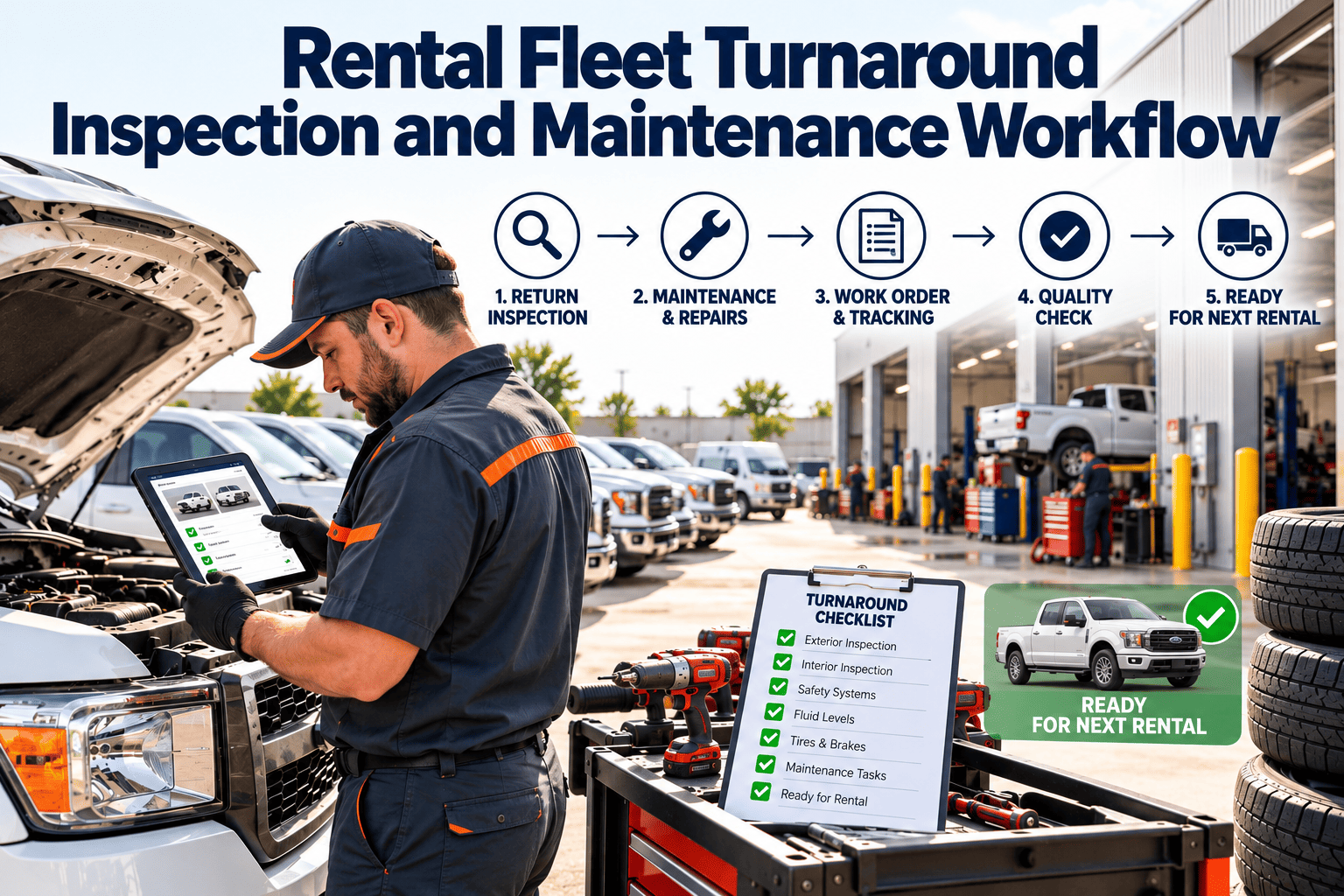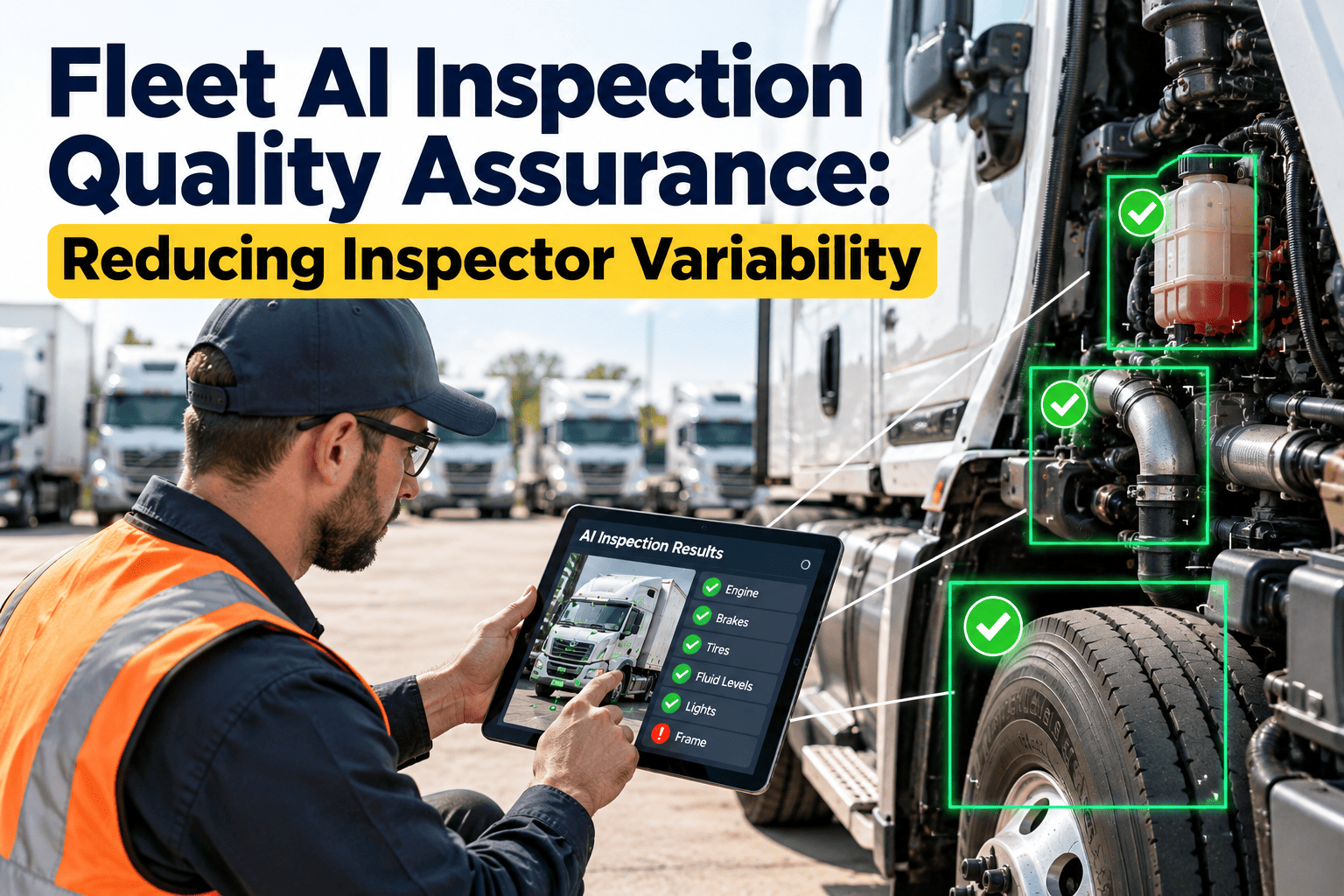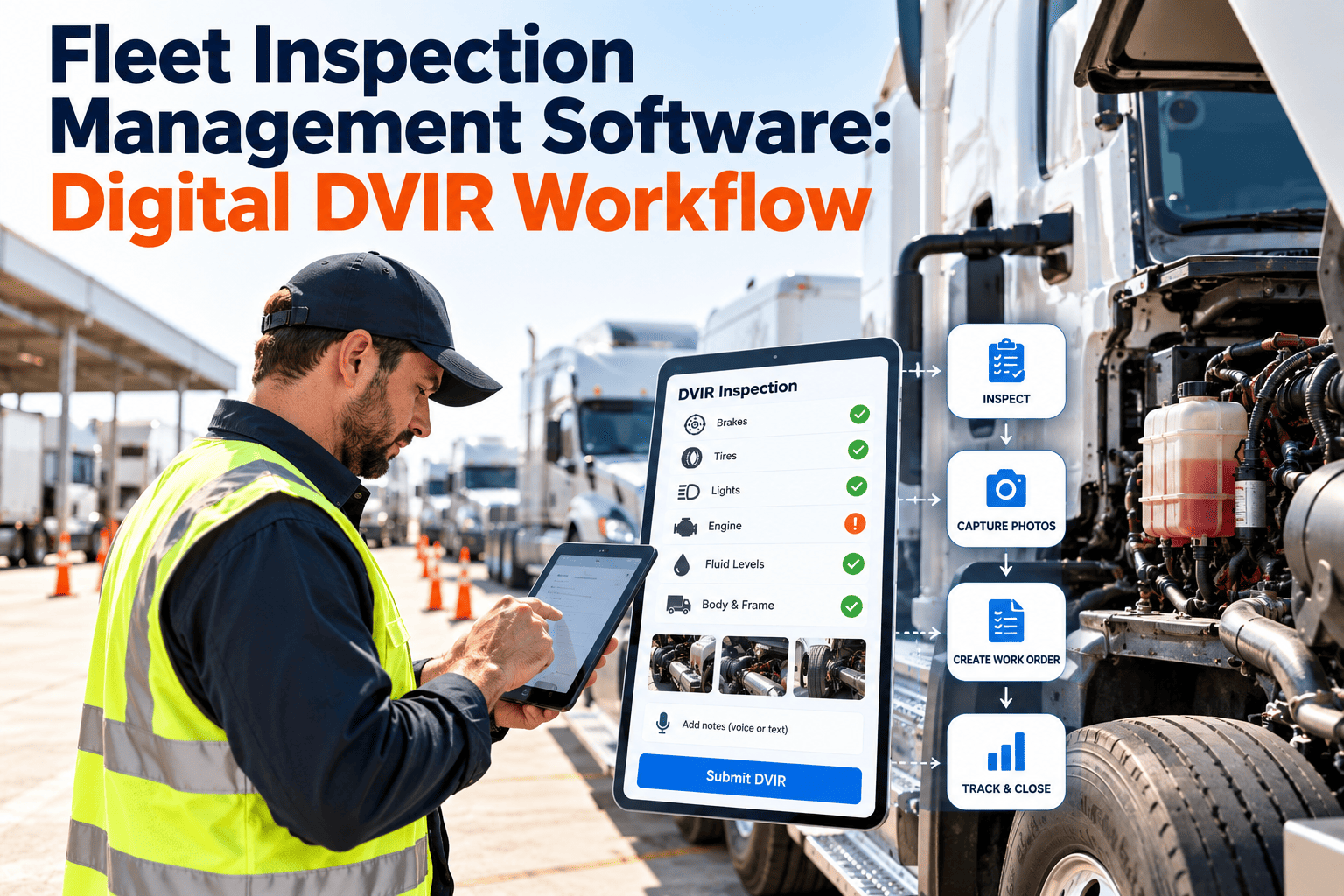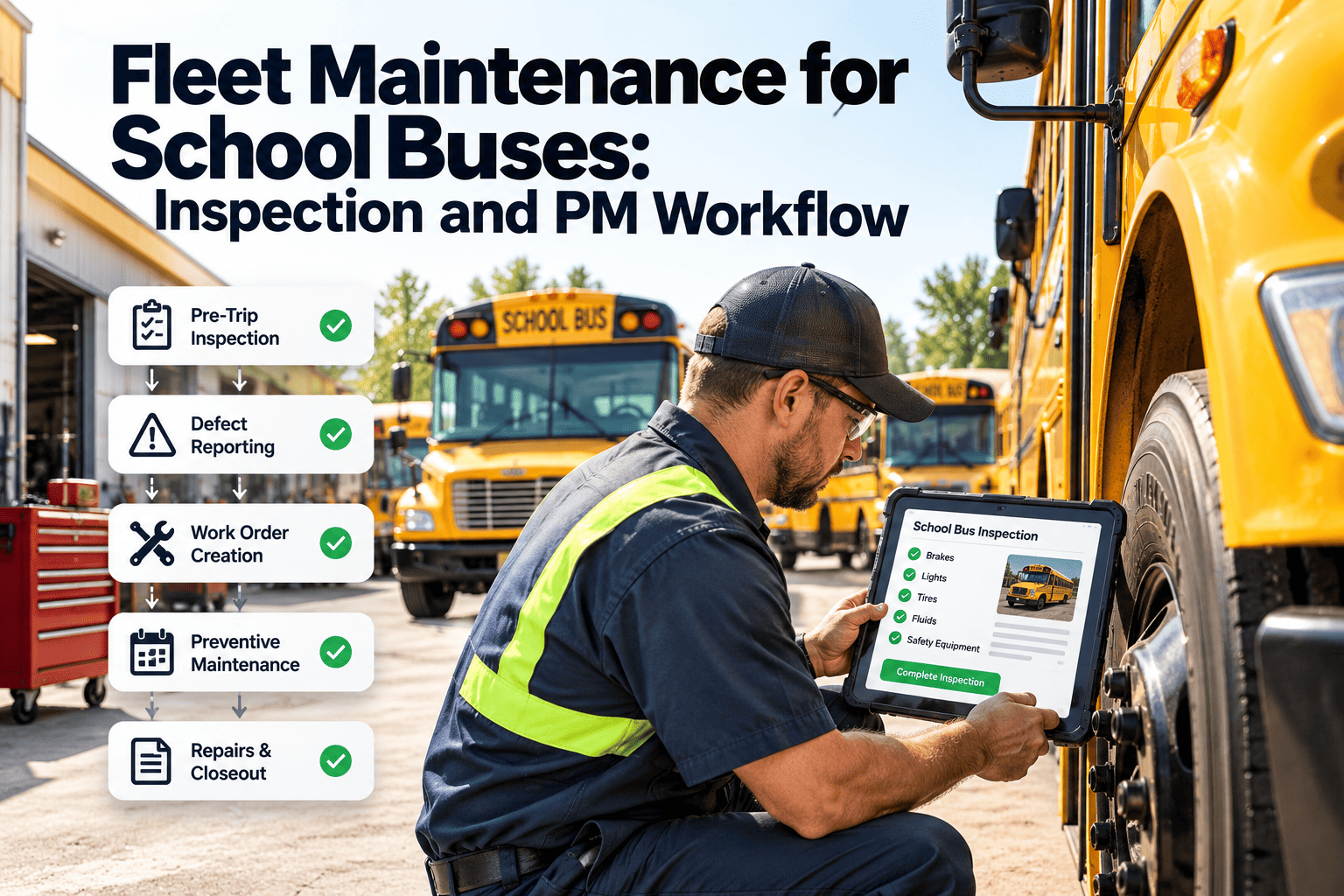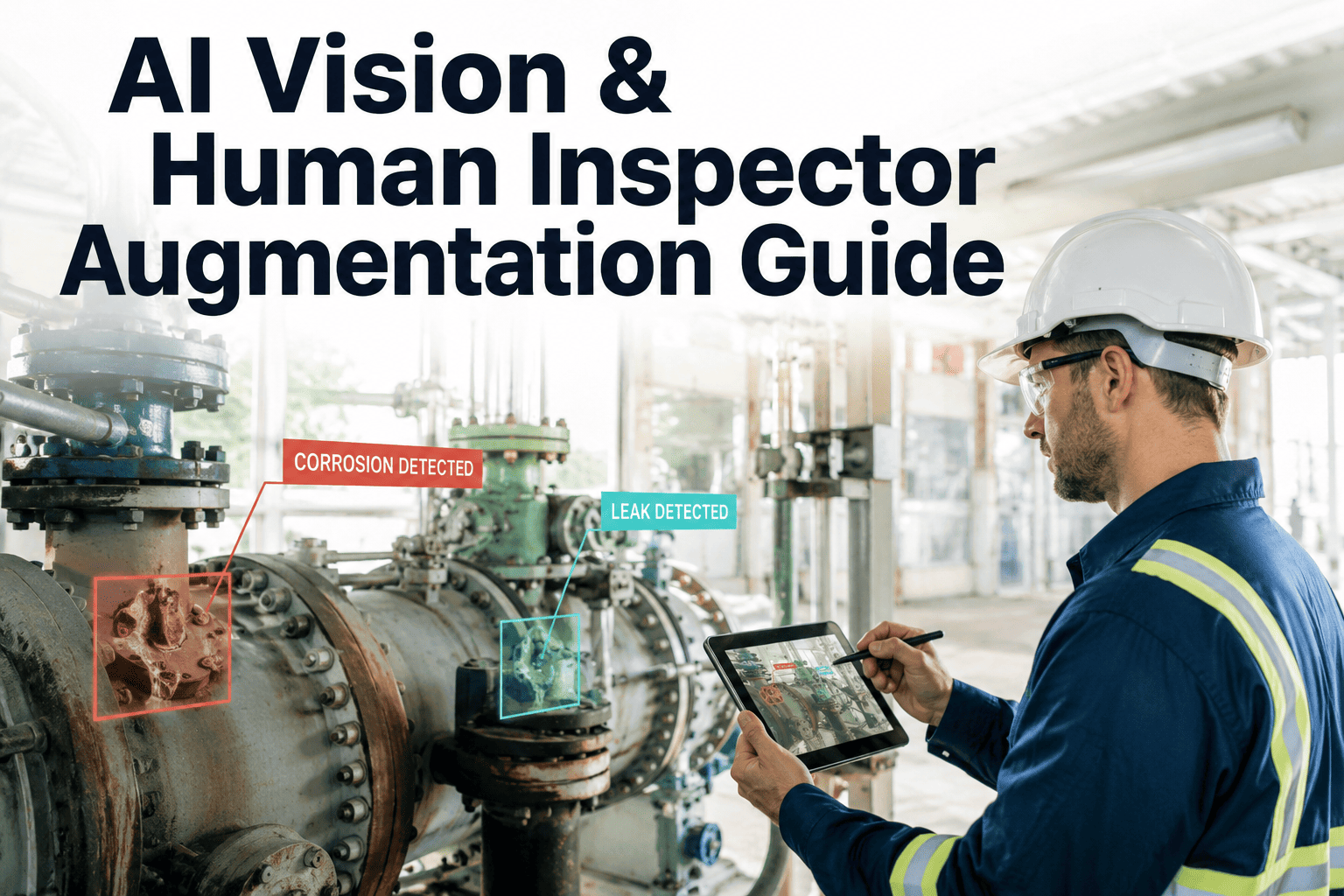
AI human inspector augmentation is the operating model that consistently produces the best fleet inspection quality: AI vision catches the defects humans miss, while human inspectors catch the edge cases AI cannot classify. An AI augmented inspection workflow routes computer-vision flags into a prioritized review queue so technicians spend their time on confirmed risk, not routine walk-arounds. Fleets that pair AI assisted inspection with their existing CMMS typically cut missed defects 30–50% and reduce inspector hours per vehicle by 20–40%. OxMaint maintenance management software makes this human-AI inspection fleet workflow production-ready — AI-flagged review queues, inspector workflow integration, quality-assurance tracking, and the analytics layer that turns AI augmented fleet inspection into a measurable productivity win. Start Free Trial to see it on your assets today.
AI + HUMAN INSPECTION
What if every inspector knew exactly where to look first?
AI vision scans every asset and surfaces the highest-risk findings; your human inspectors confirm, classify, and act. Together they catch more defects in less time — and neither works alone.
WHY AUGMENTATION BEATS EITHER ALONE
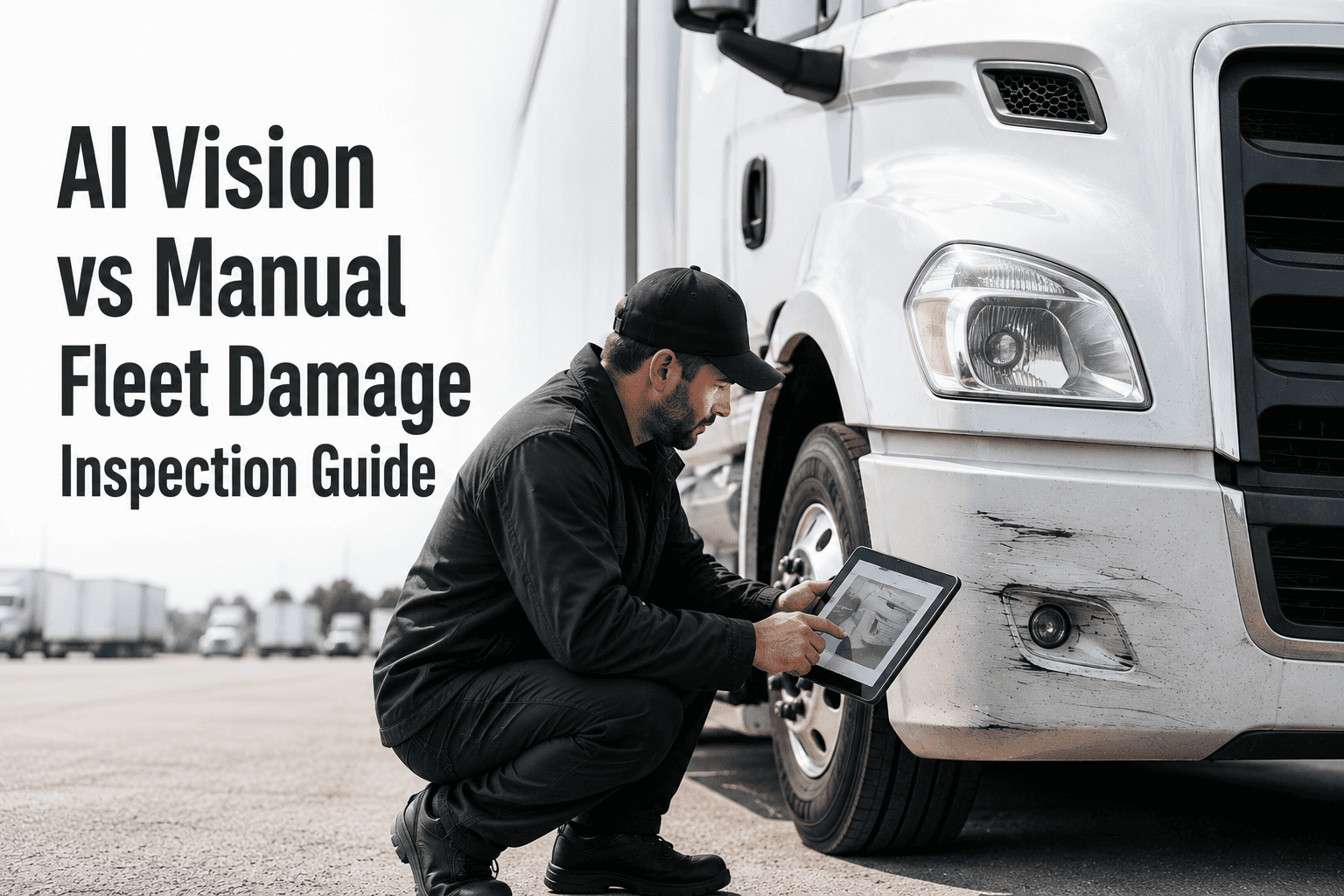
AI human inspector augmentation: the workflow that beats AI-only or human-only
A 2024 analysis of 12,000 heavy-duty fleet inspections found that AI-only vision flagged 23% false positives on ambient lighting changes, while human-only walk-arounds missed 1 in 6 brake and tire defects under time pressure. The AI augmented inspection workflow — where AI triages and humans confirm — cut miss rates to under 4%.
AI vision strengths
- Scans 100% of assets every pass — no fatigue, no skipped units
- Detects micro-cracks, fluid seeps, and tread depth to the millimeter
- Flags trends across thousands of images in seconds
- Never rushes a walk-around to meet a quota
Human inspector strengths
- Classifies ambiguous damage AI has never seen before
- Applies regulatory context — out-of-service criteria, local variance
- Reads operator behavior and hears abnormal sounds
- Makes the go/no-go repair decision with accountability
Augmented workflow
- AI triages every asset, ranks risk, routes flags to inspector queue
- Inspector confirms, reclassifies, or dismisses each flag
- Confirmed findings auto-create work orders in the CMMS
- QA loop retrains vision models on inspector corrections
"AI doesn't replace inspectors — it points them where risk is highest. The fleets winning on inspection quality are the ones that let AI triage and humans decide."
— Composite finding from 3 FMCSA-compliant fleet maintenance operations, 2024
STEP-BY-STEP WORKFLOW
How to build an AI augmented inspection workflow for your fleet
Rolling out AI assisted inspection fleet-wide takes 4–8 weeks when the CMMS is already in place. Here is the proven 5-step path from pilot to production.
Baseline your current inspection miss rate
Pull 90 days of DVIRs, post-trip inspections, and road-call records. Calculate missed-defect rate (defects found on road call that should have been caught at inspection). Most fleets land between 8–18%.
Deploy AI vision on one bay or one yard lane
Mount cameras at the entrance/exit gate or drive-through bay. Point AI at high-frequency defect zones: tires, brakes, lights, glass, body. Let it run in shadow mode for 2 weeks — flagging but not blocking.
Connect AI flags to inspector review queue in the CMMS
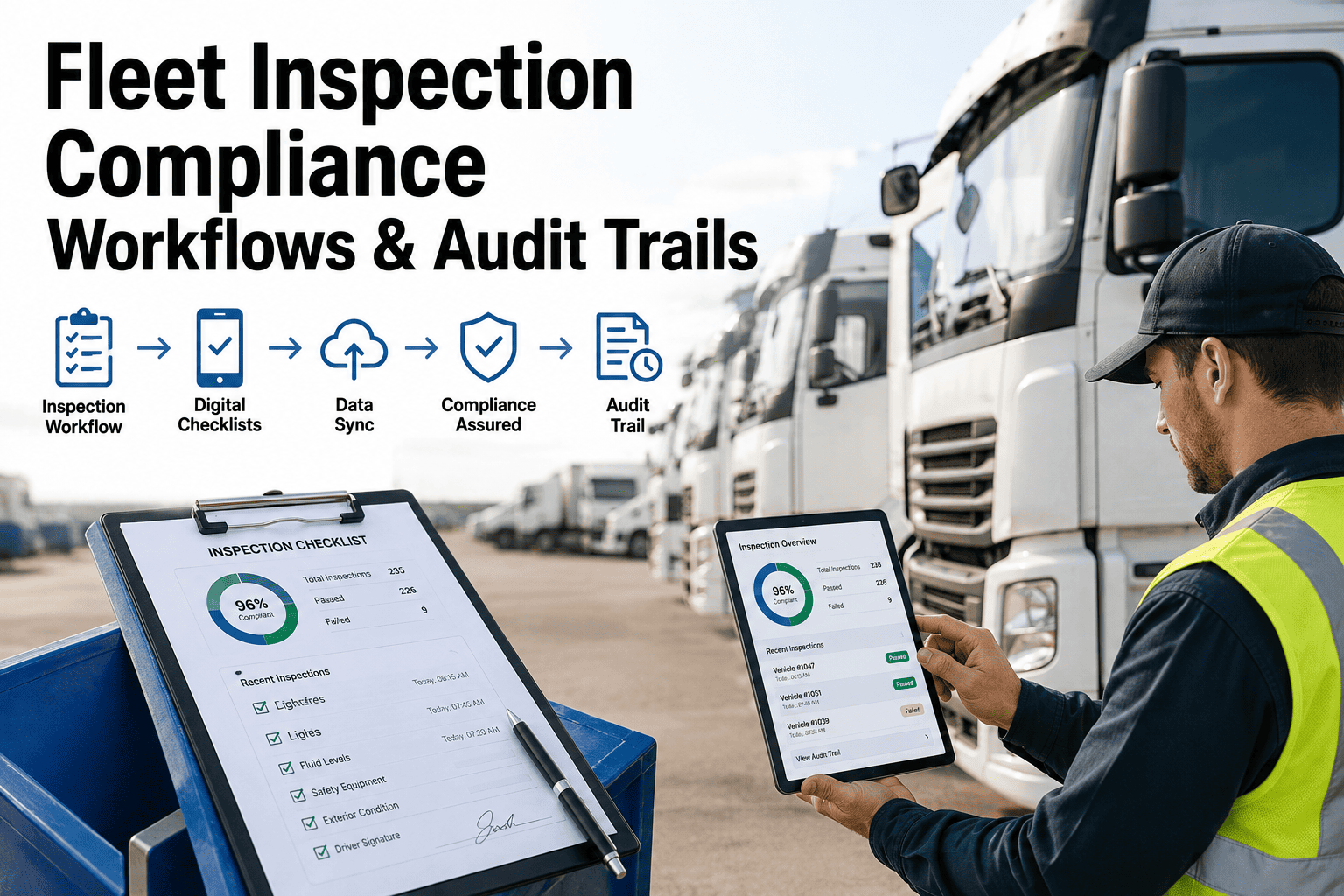
Each AI flag becomes a queued item in OxMaint with photo, asset ID, defect type, and confidence score. Inspectors see a prioritized list — highest-risk first — instead of walking every unit blind.
Inspector confirms, reclassifies, or dismisses
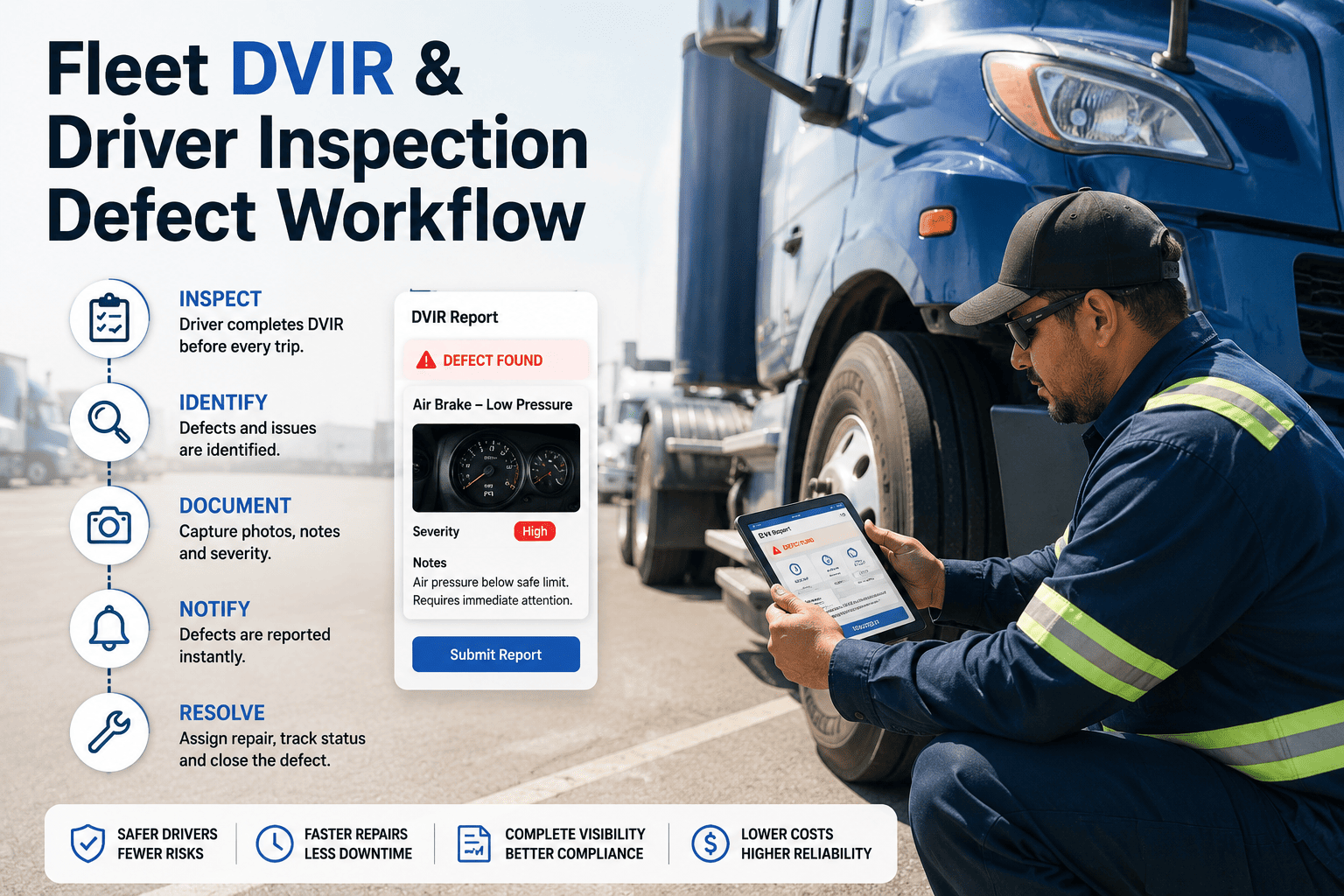
The human inspector is the decision-maker. Confirm → auto-generates a work order. Reclassify → updates the model. Dismiss → logged for QA review. This is where human AI inspection fleet quality compounds.
Measure, retrain, and scale to every lane
After 30 days, compare miss rate, inspector minutes per vehicle, and false-positive rate against baseline. Retrain the model on inspector corrections. Scale to additional bays or yards once miss rate drops below 5%.
REAL-WORLD IMPACT
A 220-truck regional fleet cut inspection miss rate from 14% to 3.2%
A regional less-than-truckload carrier running 220 power units across 3 terminals was spending $48K/year on rework and road calls traceable to missed inspections. Here is what happened in the first 90 days of AI augmented fleet inspection.
The fleet installed drive-through camera arrays at each terminal exit. AI vision flagged tire wear, lighting failures, body damage, and fluid leaks. Every flag routed to an OxMaint review queue. Inspectors confirmed or dismissed each item on a tablet, and confirmed flags auto-generated work orders. The 6% of flags inspectors reclassified or dismissed were fed back as training data. Within 90 days, the model's false-positive rate dropped from 19% to under 4%, inspector time per vehicle fell 36%, and road-call incidents tied to inspection misses dropped 71%.
HOW OXMAINT HELPS
OxMaint capabilities that make AI plus human inspection a quality win
OxMaint is the CMMS layer that connects AI vision output to inspector workflow, work orders, and maintenance analytics. These are the four capabilities that turn AI inspector assist fleet data into measurable ROI.
AI-flagged review queues
Every AI vision flag lands in a prioritized inspector queue inside OxMaint — sorted by asset, defect severity, and confidence score. Inspectors stop walking every unit blind and start with confirmed risk.
Outcome: 30–50% fewer missed defects, 20–40% less inspector time per vehicle.
Inspector workflow integration
Inspectors confirm, reclassify, or dismiss each AI flag on mobile or tablet. Confirmed findings auto-generate work orders with photos, asset history, and parts availability attached — no double entry.
Outcome: eliminate paper DVIRs and cut work-order creation time by 60%.
Quality-assurance tracking
Every inspector correction — reclassify or dismiss — is logged and fed back to the vision model. OxMaint tracks false-positive rate, inspector agreement rate, and defect-recurrence trends over time.
Outcome: model accuracy improves weekly; audit-ready QA trail for FMCSA and DOT compliance.
Maintenance analytics & ROI
OxMaint dashboards tie inspection findings to downstream metrics: road-call rate, mean time to repair, unplanned downtime, and cost-per-mile. You see exactly how much AI augmented inspection is saving.
Outcome: quantify payback in weeks, not guesses — typical ROI under 90 days.
See OxMaint on your assets — book a 30-min demo
Watch AI-flagged review queues, inspector workflow, and QA tracking live on a fleet like yours. Bring your toughest inspection-quality question.
COST OF INACTION
What missed inspections actually cost a fleet
A single missed tread-depth flag becomes a road-call blowout at $800–$2,400. A missed brake leak becomes a DOT violation at $1,000–$7,000. Here is what the status quo costs a typical mid-size fleet every year.
| Missed defect type | Avg. cost per incident | Annual incidents (50-truck fleet) | Annual cost |
|---|---|---|---|
| Tire / tread failure | $1,200 | 18 | $21,600 |
| Brake system leak | $3,500 | 9 | $31,500 |
| Lighting failure (citation) | $650 | 24 | $15,600 |
| Fluid leak (downtime) | $2,800 | 7 | $19,600 |
| Total annual cost of missed inspections | $88,300 |
AI augmented fleet inspection typically catches 30–50% of these defects before the vehicle leaves the yard. For a 50-truck fleet, that is $26K–$44K in avoided cost per year — before counting reduced CSA scores, lower insurance premiums, and fewer driver hours lost to breakdowns. The OxMaint platform pays for itself in under 90 days for most operations of this size.
FREQUENTLY ASKED
AI human inspector augmentation: questions fleet managers ask
Does AI vision replace human fleet inspectors?
No. AI human inspector augmentation means AI triages every asset and flags risk, while human inspectors confirm, classify, and make the repair decision. AI catches what humans miss under fatigue; humans catch what AI cannot classify. Together they beat either alone — miss rates drop to under 4% versus 8–18% human-only.
How long does it take to deploy AI augmented vehicle inspection?
Most fleets run a shadow-mode pilot in 2 weeks (cameras up, AI flagging but not blocking), then go live with inspector review queues in weeks 3–4. Full production across multiple bays or terminals typically takes 4–8 weeks, especially when the CMMS — like OxMaint — is already in place. Book a Demo to see the deployment plan for your yard.
What defect types can AI vision detect on fleet vehicles?
Current AI vision models reliably detect tire wear and tread depth, brake-pad visibility, lighting failures, glass damage, body dents and scratches, fluid leaks, and missing or loose components. Accuracy exceeds 90% on well-lit drive-through bays; edge cases like ambient-light false positives are where human inspector confirmation adds the most value.
How does OxMaint connect AI flags to work orders?
Each AI flag becomes a queued item in OxMaint with photo, asset ID, defect type, and confidence score. When an inspector confirms the flag, OxMaint auto-generates a work order with asset history, parts availability, and priority attached. No double entry, no paper DVIR, no lost flags. Dismissed or reclassified flags feed back into the vision model for retraining.
What ROI can a fleet expect from AI assisted inspection?
A 50-truck fleet typically spends $80K–$90K/year on rework and road calls traceable to missed inspections. AI augmented inspection workflow catches 30–50% of those defects pre-departure, saving $26K–$44K/year. Inspector time per vehicle drops 20–40%. Most fleets see payback in under 90 days. Start Free Trial to model the numbers on your operation.
Stop missing what AI can see
Let AI vision triage every asset, let your inspectors confirm and decide, and let OxMaint turn it all into work orders, QA data, and ROI you can measure.
Free 14-day trial · No credit card