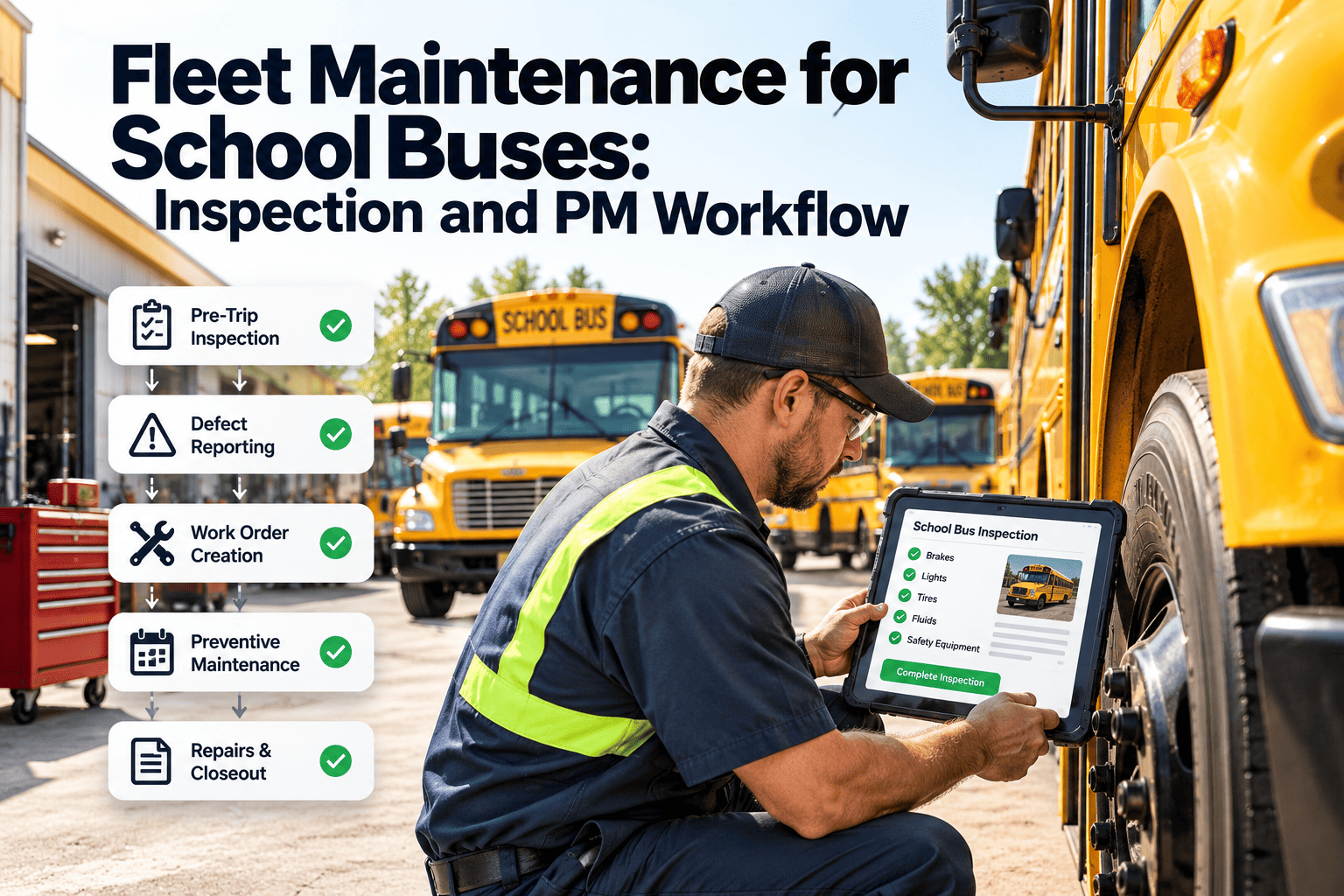
A school bus has a fixed departure time, a full load of children and no room for a "we'll fix it later" defect. Every morning, the fleet has to prove that dozens of safety systems work before the first stop, and every afternoon it has to do it again. That daily pressure makes inspections and preventive maintenance the backbone of pupil transportation, and paper logs make it hard to see what is late or repeating. This guide sets out a practical inspection and PM workflow, and shows how Oxmaint maintenance management software can keep the records in one place.
Fleet Maintenance for School Buses: Inspection and PM Workflow
Connect daily pre-trip checks, defect repairs and scheduled service so every bus is safe, documented and ready before the bell.
Why school buses need a different maintenance approach
The duty cycle is unusual, and so are the consequences of a miss.
Operating pressures
- Fixed morning and afternoon windows leave little room for late repairs.
- Frequent stops put heavy wear on brakes, doors and stop-arm systems.
- Long idling affects engine hours more than mileage suggests.
- Buses sit unused in summer, then return to full service at once.
- Fleets mix ages, engines and fuel types, including diesel, propane and electric.
Maintenance consequences
- Defects must be judged fast: run, repair or park.
- Passenger-specific equipment such as lifts and exits needs its own checks.
- Records must satisfy state, district and insurer reviews.
- Spare bus availability depends on knowing which units are truly ready.
- Drivers, mechanics and dispatchers all need one shared status.
The school-year maintenance calendar
Workload is seasonal, so schedule PM around the calendar instead of only around mileage.
Major repairs, annual state inspections, tire replacement, HVAC service, lift servicing and deferred defects.
Return-to-service checks, driver walk-arounds, emergency equipment audit and route-specific readiness.
Cold-start prep, batteries, heaters, defrosters, wipers, tires and air system moisture control.
Brake and suspension review, trip-heavy field-trip use, and planning summer work from the year's defect history.
Daily pre-trip inspection: zone by zone
A structured walk-around is faster and more consistent than a memory-based one. Requirements differ by state and district, so confirm the exact checklist with your pupil transportation authority.
| Zone | What the driver checks | Example defect | Typical response |
|---|---|---|---|
| Exterior lights and signals | Headlights, brake lights, turn signals, red warning lights and amber lights | Inoperative red flasher | Do not run until repaired |
| Stop arm and crossing arm | Extends and retracts, no damage or binding | Arm sticks partway | Repair before use |
| Tires and wheels | Inflation, tread, sidewall damage, lug nuts | Cut sidewall | Replace before use |
| Brakes and air system | Air build-up, leak test, pedal feel, parking brake | Slow pressure build | Take out of service |
| Engine bay and fluids | Oil, coolant, belts, hoses, leaks | Coolant seep | Repair same day or monitor per severity |
| Doors and emergency exits | Service door, emergency door and windows, warning buzzers | Exit will not release | Repair before use |
| Interior and seating | Seats, floor, aisle, handrails, mirrors | Loose seat frame | Repair per severity |
| Safety equipment | Fire extinguisher, first aid kit, reflective triangles, body fluid kit | Extinguisher expired | Replace before use |
| Wheelchair lift and securement | Lift cycle, latches, restraint straps | Lift stalls | Tag and route to qualified repair |
Defect triage: three lanes for every reported issue
Clear rules stop debates at 6:15 a.m. Define these categories with your safety officer and apply them consistently.
Out of service
Safety-critical failures such as brakes, steering, exits, stop-arm, warning lights or fuel leaks. The bus is tagged, a spare is assigned and a work order opens immediately.
Repair before next run
Defects that should not carry into the next route but do not stop the current one, such as a failed interior light or a worn wiper blade.
Monitor until next PM
Minor cosmetic or low-risk items. The defect is logged, assigned to the next service and reviewed if it repeats.
Post-trip inspection and the end-of-route check
Walk the interior
Check every seat and the floor for left-behind children or belongings. Many states require this check, and some buses have a rear-of-bus verification device.
Record defects seen during the route
Drivers note noises, warning lights, door issues and handling changes while they are fresh.
Report fuel or charge level
Fuel, propane or battery state is logged so the next shift starts ready.
Submit and hand over
The report goes straight to maintenance so mechanics can plan overnight work.
Move school bus inspections off clipboards
Capture driver defects, assign repairs and keep PM history for every bus in one system.
Preventive maintenance tiers for a school bus fleet
A tiered PM plan keeps short services frequent and deeper inspections planned. Intervals below are structural guidance only. Set actual mileage, hour and time intervals from the manufacturer manual, your engine type, duty cycle and state rules.
| PM tier | Purpose | Common tasks | Where it is done |
|---|---|---|---|
| A service | Frequent light check | Oil and filter (as specified), fluid levels, lights, belts, visual brake and tire check | Garage bay, short downtime |
| B service | Intermediate inspection | A service plus brake measurements, air system, steering, suspension, lift function test | Garage bay, planned window |
| C service | Comprehensive inspection | B service plus deeper drivetrain, cooling and exhaust checks, emergency exit testing | Summer or scheduled shutdown |
| Annual or state inspection | Regulatory verification | State-specified inspection items and documentation | Approved inspection process |
| Component-based PM | Targeted upkeep | Lift service, camera and stop-arm checks, HVAC service, battery testing | Bay or specialist vendor |
Before and after: paper logs versus a CMMS workflow
Paper and spreadsheets
- Driver forms get lost, illegible or filed weeks later.
- Mechanics hear about defects verbally, sometimes after the route.
- PM due dates are tracked on a wall chart.
- Audit preparation means searching binders.
- Repeat defects are hard to spot across buses.
CMMS-based workflow
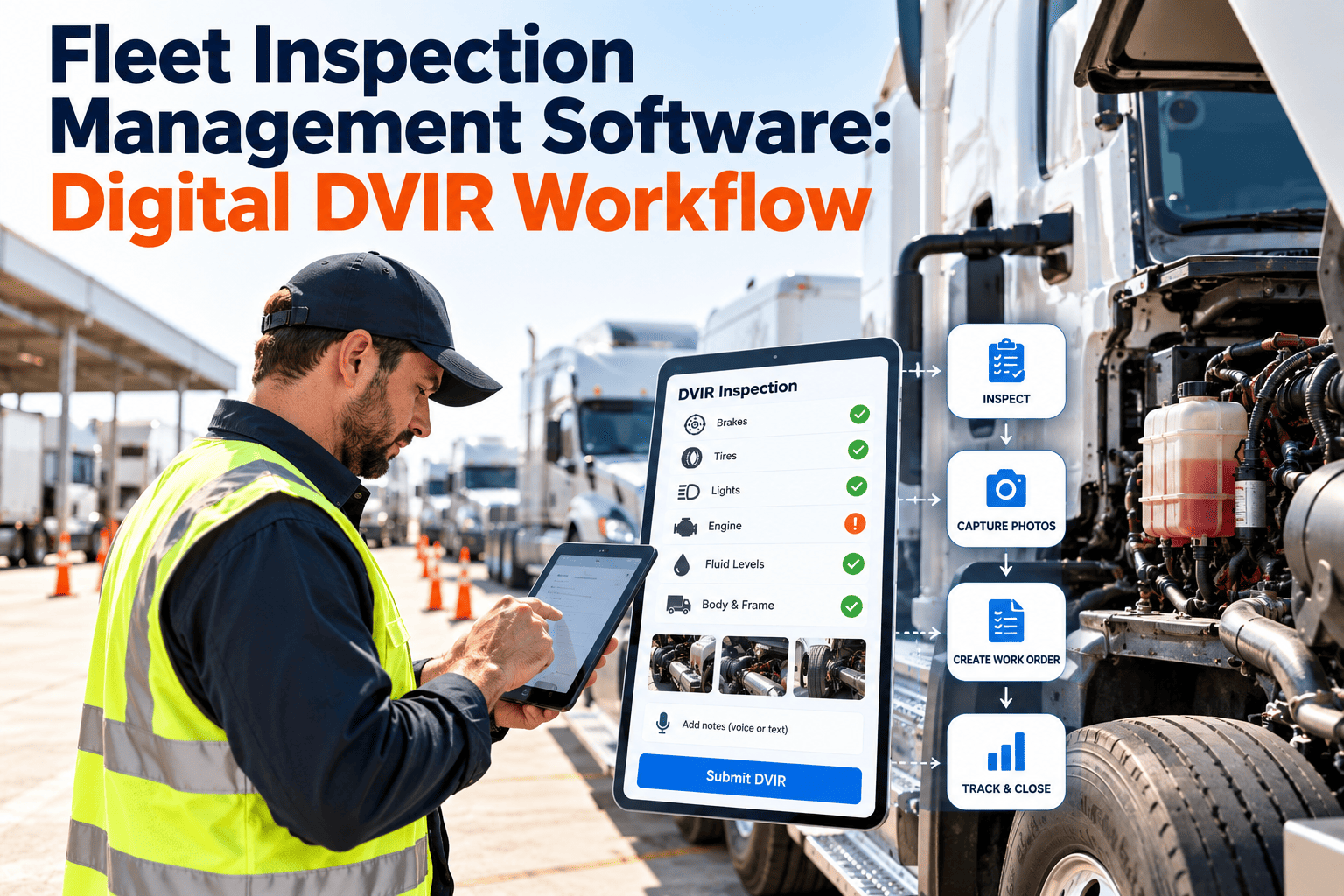
- Inspections are completed on a phone or tablet and time-stamped.
- A failed item creates a work order with priority and a bus status.
- PM schedules generate automatically from mileage, hours or dates.
- Records are searchable by bus, defect, date or technician.
- Repeat failures show up in reports before they become breakdowns.
Records to keep for audits and insurance reviews
Required documents vary by state and district. This checklist covers what most reviewers ask to see.
Special systems that need their own PM tasks
| System | Why it needs attention | Workflow suggestion |
|---|---|---|
| Air brakes | Moisture and leaks degrade stopping ability | Drain checks, leak tests and pushrod stroke measurement at each service |
| Wheelchair lifts | Failure strands students who rely on them | Cycle test on every inspection, scheduled specialist service |
| Stop-arm and warning lights | Critical to loading zone safety | Daily driver test with a repair path that removes the bus from service if failed |
| Cameras and monitoring | Supports incident review and behaviour issues | Monthly functional check and storage verification |
| Heating and defrost | Visibility and comfort in cold weather | Pre-winter test campaign in autumn |
| Electric bus batteries and charging | Range, thermal and charger faults affect routes | Battery and connector inspection tasks, charge session notes and OEM-specific procedures |
Parts and inventory for a fleet on a tight schedule
Waiting for a common part turns a same-day repair into a lost route.
Stock the repeat items
Review work order history to identify bulbs, belts, filters, brake components and door parts used most.
Set reorder points
Track quantities so the shop reorders before it runs out ahead of the busiest weeks.
Link parts to work orders
Recording parts against each bus helps identify parts that keep failing and supports warranty claims.
KPIs that show whether the program works
Inspection completion rate
Share of buses with pre-trip and post-trip reports completed before and after each run.
PM on-time rate
Scheduled services completed inside their due window.
Defect-to-repair time
Hours or days between a reported defect and verified completion.
Road calls
Roadside breakdowns during routes, tracked by cause.
Repeat defects
Same fault returning on the same bus, indicating a missed root cause.
Spare bus usage
How often spares cover for buses pulled from service.
Setting up the workflow in Oxmaint
Oxmaint supports the maintenance side of this process: bus asset records, inspection checklists, work orders, preventive schedules, parts and reports. If you want to see it applied to a school fleet, you can schedule a walkthrough with your own inspection form.
Add each bus with its number, VIN, model year, engine type, seating and equipment such as lifts.
Build pre-trip and post-trip checklists with pass, fail and defect note fields.
Define A, B and C PM templates with tasks, parts and time estimates.
Set defect rules so severe failures create urgent work orders and out-of-service status.
Review dashboards weekly and adjust intervals from real repair history.
Frequently asked questions
How often should school buses be inspected?
Drivers inspect daily, and formal inspections follow your state and district schedule. PM tiers add mechanic checks between them.
What should happen when a driver reports a defect?
Classify it, tag the bus if needed, and create a work order. You can try this workflow in Oxmaint.
Can PM follow both mileage and time?
Yes. Many fleets use whichever comes first, because summer downtime adds age without adding miles.
How do I prepare for a state inspection?
Keep inspection reports, repairs and PM records searchable by bus, and book a demo to see report options.
Does this work for mixed fleets?
Yes. Diesel, propane and electric buses can use separate PM templates within one asset register.
Start every route with a bus you can prove is ready
Bring inspections, defects, PM schedules and repair history into one maintenance record for your whole fleet.