Two inspectors can look at the same worn brake or cracked hose and record different results. That inconsistency undermines safety decisions, hides developing faults and weakens audit evidence. Reducing it takes clear criteria, calibrated people and a quality review loop, with AI used to check completeness and flag anomalies rather than replace judgment. A vehicle inspection platform holds those standards in one place so every inspector works from the same rules.
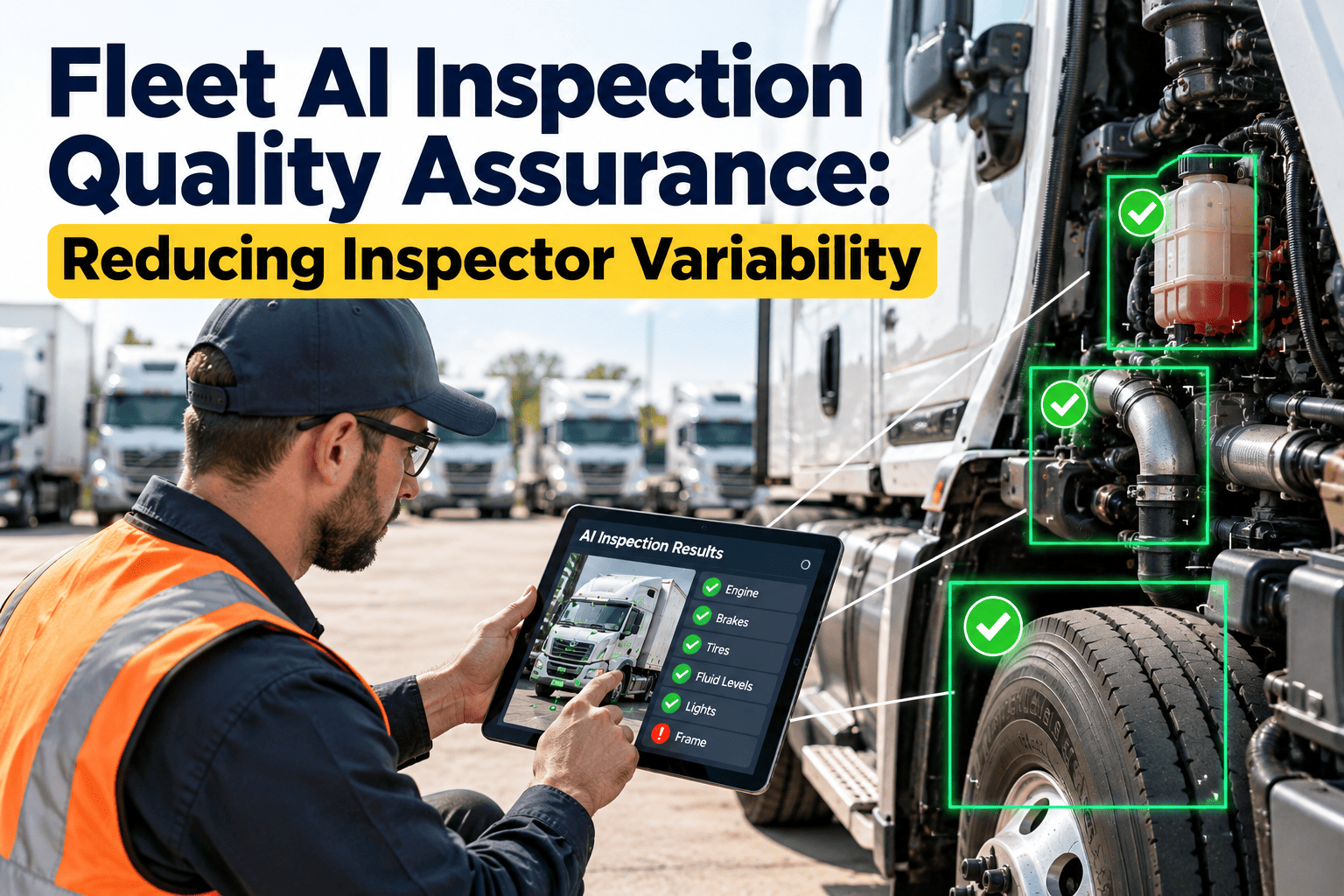
Fleet AI Inspection Quality Assurance: Reducing Inspector Variability
Standardize what a pass, a minor defect and a failure look like, then use review and AI-assisted checks to keep every inspection consistent.
Where inspector variability comes from
Vague criteria
Items like "worn" or "damaged" with no measurable limit invite personal interpretation.
Experience gaps
New and veteran inspectors notice and tolerate different things.
Time pressure
Rushed walkarounds skip items or default to pass.
Inconsistent forms
Different depots and vehicle types use different checklists.
No feedback
Inspectors rarely learn how their calls compare with others.
Weak evidence
Missing photos make later review and disputes difficult.
The quality assurance loop
- Variability falls when standards, capture, review and coaching operate as one cycle rather than separate efforts.
Define
Write measurable pass, monitor and fail criteria with reference photos.
Capture
Use mobile forms with required fields, readings and photos.
Check
Automated rules flag missing items, impossible values and unusual patterns.
Review
A supervisor samples inspections and compares them with shop findings.
Coach
Share patterns, recalibrate criteria and retrain where gaps appear.
Replace opinion with a scoring rubric
- Use the example below as a starting format. Set limits from manufacturer guidance and your regulator, not from this table.
| Inspection item | Pass | Monitor | Fail |
|---|---|---|---|
| Tire tread | Above your monitor limit | Between monitor and legal limit | At or below legal limit, or visible damage |
| Brake lining | Above minimum with even wear | Approaching minimum or uneven wear | At minimum, contamination or leak |
| Hoses and lines | Dry, no cracking | Surface cracking, no seepage | Leak, bulge or chafing through |
| Lights | All functional | Cosmetic lens damage | Any required light inoperative |
| Fluid levels | Within marks | Low, no visible leak | Empty or active leak |
What AI can and cannot do in inspection QA
Reasonable uses
- Detect incomplete or rushed inspections from timing and skipped items
- Flag photos that are blurry, repeated or unrelated to the item
- Compare an inspector's results with peers on similar vehicles
- Highlight items repeatedly passed that later failed in the shop
- Suggest priority for supervisor review
Limits to respect
- Accuracy depends on image quality and training data
- Safety-critical decisions need human sign-off
- Models can be wrong on unusual vehicles or lighting
- Regulatory duties remain with the operator
- Test any tool on your own vehicles before relying on it
Three kinds of variability to separate
- Between inspectors: two people rate the same condition differently. This is the most visible form and usually traces back to unclear criteria or different experience levels.
- Within one inspector: the same person rates similar conditions differently on a Monday morning than at the end of a double shift. Fatigue and workload drive this pattern.
- Between depots: one site treats minor seepage as a defect while another ignores it. Local habits form quietly, and only cross-site comparison exposes them.
- Each type needs a different remedy. Criteria and calibration address the first, workload and scheduling the second, and shared reporting the third.
Writing criteria that leave little room for opinion
Prefer measurements over adjectives
- Replace words like worn, loose or excessive with a gauge reading, a play limit or a visible reference. Where measurement is impractical, use a reference photograph of each grade.
- State the action tied to each grade. A monitor result should say when it must be rechecked, and a fail result should say whether the vehicle stays in service.
- Keep the item list short. Long checklists encourage box ticking, so focus on items that affect safety, compliance or costly secondary damage.
Adapt by vehicle type
- A tractor unit, a trailer, a delivery van and a bus have different critical items. Separate templates prevent inspectors from skipping questions that do not apply or missing ones that do.
- Version every change to a checklist so you can tell later which standard applied on a given date.
Training and onboarding new inspectors
Learn the standard
Walk through each item with reference photos and the reasoning behind its limit.
Shadow an expert
Inspect the same vehicle independently, then compare results and discuss differences.
Supervised solo work
Review all inspections from new staff for the first weeks, then move to sampling.
- Use real defects from your fleet as training cases. Examples from familiar vehicles stick better than generic manufacturer images.
- Track each new inspector's agreement with experienced colleagues so coaching targets the items where they diverge.
Photo and evidence standards
- Define the required shot for each failed or monitored item: distance, angle, a scale reference and the vehicle ID visible where practical.
- Require a photo for every fail and every monitor result. A pass needs one only for items your regulator or insurer expects to see documented.
- Reject unusable images at capture. A blurry or dark photo should prompt an immediate retake, not a review comment days later.
- Store evidence against the vehicle record so the next inspector can compare the current condition with the previous one and judge the rate of change.
Designing the supervisor review sample
- Review all inspections with critical fails, then sample the rest. Weight the sample toward new inspectors, high-mileage vehicles and items with a history of disagreement.
- Give reviewers a short form: complete, accurate, evidence adequate, follow-up correct. Consistent review criteria matter as much as consistent inspection criteria.
- Compare reviewed results with the technician's later findings. Where they differ, record why, because the explanation often reveals an unclear criterion.
- Rotate reviewers occasionally so one supervisor's preferences do not become the hidden standard.
Handling disagreements and fair comparisons
- Treat disagreement as information about the standard, not only about the person. If several inspectors differ on the same item, rewrite the item.
- Be careful with league tables. An inspector who finds more defects may be more thorough rather than less accurate, so compare against shop confirmation before drawing conclusions.
- Be open with staff about what data is collected and how it is used. Coaching works better than discipline when the goal is consistency.
- Where AI assistance is used, explain what it flags and make clear that the inspector and supervisor remain accountable for the final decision.
Make every inspection follow the same standard
Put checklists, photo evidence and defect follow-up in one workflow so results stay consistent across depots.
Calibration sessions that actually align people
- Gather inspectors quarterly and have each rate the same set of photos or a parked vehicle without conferring.
- Compare ratings, discuss disagreements against the written criteria and update the guidance where it proved unclear.
- Record the outcomes so new hires train on real examples from your own fleet.
Simple agreement check
- Select ten items and have three inspectors rate each.
- Count items where all three agree.
- Repeat after coaching and track the change over time.
Closing the loop with shop findings
- The best test of an inspection is what a technician finds later. Link inspection results to the work orders that follow.
Compliance and audit evidence
- Inspection rules vary by country and vehicle class, so confirm obligations with your regulator.
- Consistent records show who inspected, what was checked, when defects were raised and how they were closed.
- Photos, timestamps and sign-offs stored with the vehicle make audits faster and disputes easier to settle.
KPIs for inspection quality
How Oxmaint supports consistent inspections
- Configurable inspection checklists by vehicle type, with required fields, readings and photos.
- Mobile completion so inspectors record results at the vehicle, not later from memory.
- Failed items convert into defects and work orders with priority and assignment.
- Asset history and reports let supervisors compare inspections with repair outcomes.
- Stored records support compliance reviews and internal audits.
Rollout steps
- Start with the five items that cause the most disagreement.
- Add reference photos and measurable limits to each.
- Run a calibration session, then review a weekly sample.
Inspection quality assurance FAQs
Can AI replace the inspector?
No. It supports review by flagging gaps and anomalies, while qualified people make safety decisions.
How do we measure inspector variability?
Compare ratings on shared samples and track passed items that later fail in the shop.
How many inspections should supervisors review?
Use a regular sample weighted toward new inspectors and critical items, then adjust from results.
Where should we start?
Rewrite the most disputed checklist items with limits and photos. You can get started with those first.
Can we see this configured for our vehicles?
Yes. Book a demo and bring a sample checklist.
Practical checks that AI-assisted review can run
- Timing checks: an inspection completed in a fraction of the usual time for that vehicle type may indicate skipped items. Treat it as a prompt to review, not proof of poor work.
- Pattern checks: identical results across many consecutive vehicles, or the same note repeated word for word, can signal copy-paste habits.
- Consistency checks: a tire marked pass on Monday and fail with a larger measured wear on Tuesday is plausible, but a reverse trend suggests an entry error.
- Evidence checks: photos that do not match the item, show a different vehicle or repeat across inspections should be queued for human review.
- Outcome checks: compare passed items against defects found within the next service interval to estimate the missed defect rate per item.
- Every automated flag should show the reason, so reviewers can confirm or dismiss it quickly and the rule can be improved.
A sixty-day improvement plan
Days 1 to 10: baseline
Collect current checklists, a sample of recent inspections and the defects technicians later found. Note where they disagree.
Days 11 to 25: rewrite
Convert the most disputed items to measurable criteria with reference photos, and publish a single version.
Days 26 to 40: calibrate
Run the first calibration session, record agreement and fix wording where inspectors still differ.
Days 41 to 60: review and repeat
Start weekly sampling, compare with shop findings and schedule the next calibration.
- Measure agreement and missed defect rate at the start and end so the effect of the changes is visible rather than assumed.
Common pitfalls in inspection quality programs
- Adding more checklist items instead of clarifying existing ones, which increases fatigue and reduces attention to critical points.
- Using AI scores as a replacement for supervision rather than a way to focus it.
- Reviewing only failures, which hides over-passing. Sample passes as well.
- Skipping feedback to inspectors, so the same errors continue unnoticed.
- Leaving defect follow-up outside the system, so a good inspection still ends in a delayed repair.
Choosing which items need the strictest control
- Rank inspection items by consequence of a miss: safety impact, regulatory exposure and the cost of secondary damage. Apply the tightest criteria and highest review rate to the top group.
- Items such as brakes, steering, tires, couplings and lighting usually sit at the top. Cosmetic and comfort items can use simpler pass or fail wording.
- Revisit the ranking after each quarter using defect history, roadside inspection findings and any incidents, so effort follows real risk.
- Where a failed item can cause an immediate hazard, define the stop-work rule in the checklist itself so the inspector does not need to improvise.
Reporting that supervisors and managers can use
- Show agreement and missed defect rates by item, not only by person, so criteria problems are separated from individual coaching needs.
- Trend inspection completion quality by depot and shift to find where time pressure or tooling is the real cause.
- Report the delay between a failed item and a closed work order, because fast detection is wasted if repairs wait.
- Share findings with inspectors regularly. People improve faster when they see how their results compare with shop outcomes.
- Keep reports short and consistent so they are read each month rather than filed.
Keeping the standard alive
- Review criteria after every recurring dispute, regulatory change or new vehicle type, and publish a dated revision so everyone works from the same version.
- Rotate calibration photos so inspectors cannot memorize answers, and add new examples from recent shop findings.
- Recognize inspectors whose reports consistently match shop outcomes, and use them as peer trainers.
Consistent inspections start with one shared standard
Give inspectors clear criteria, evidence capture and fast defect follow-up, and review quality with real shop data.