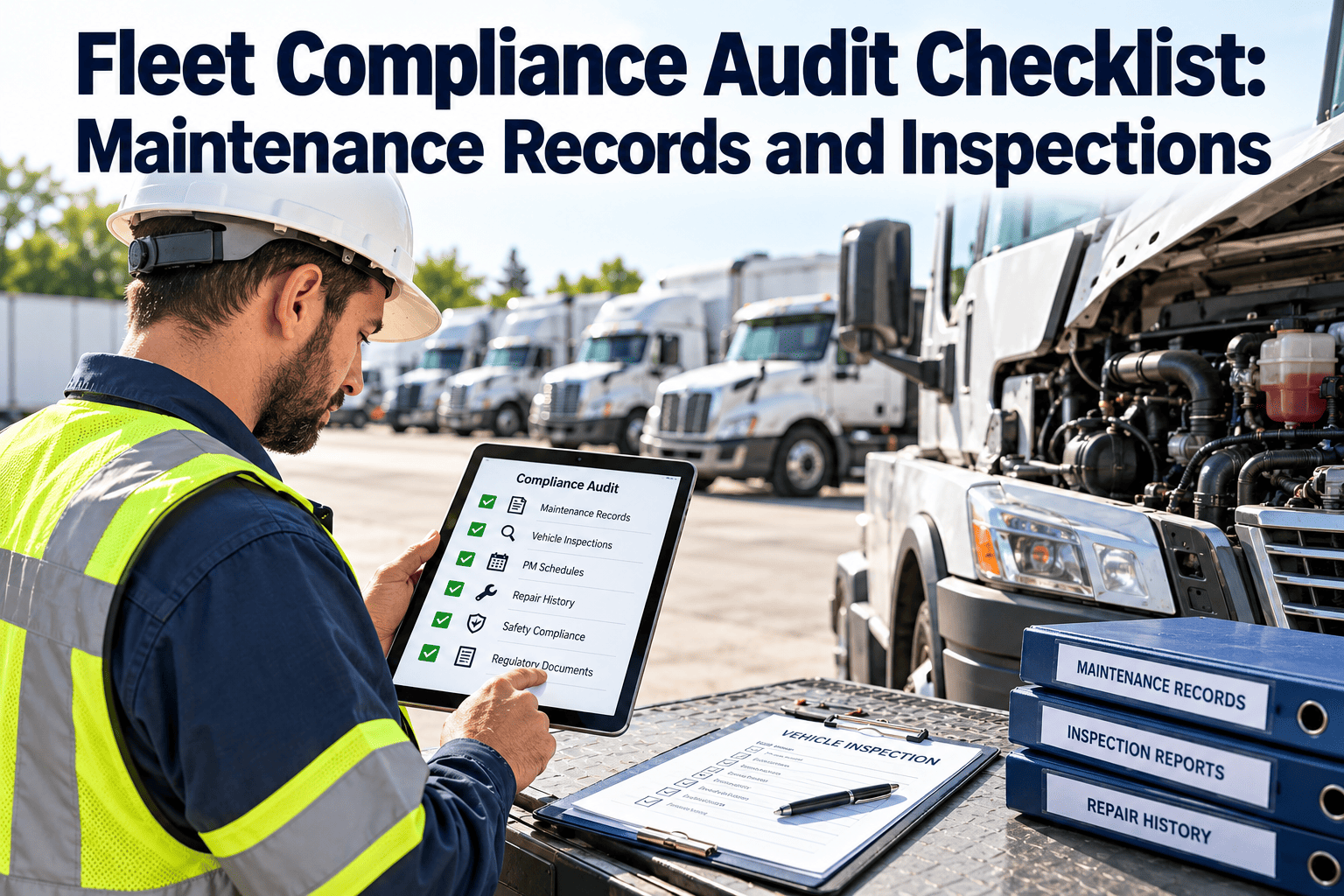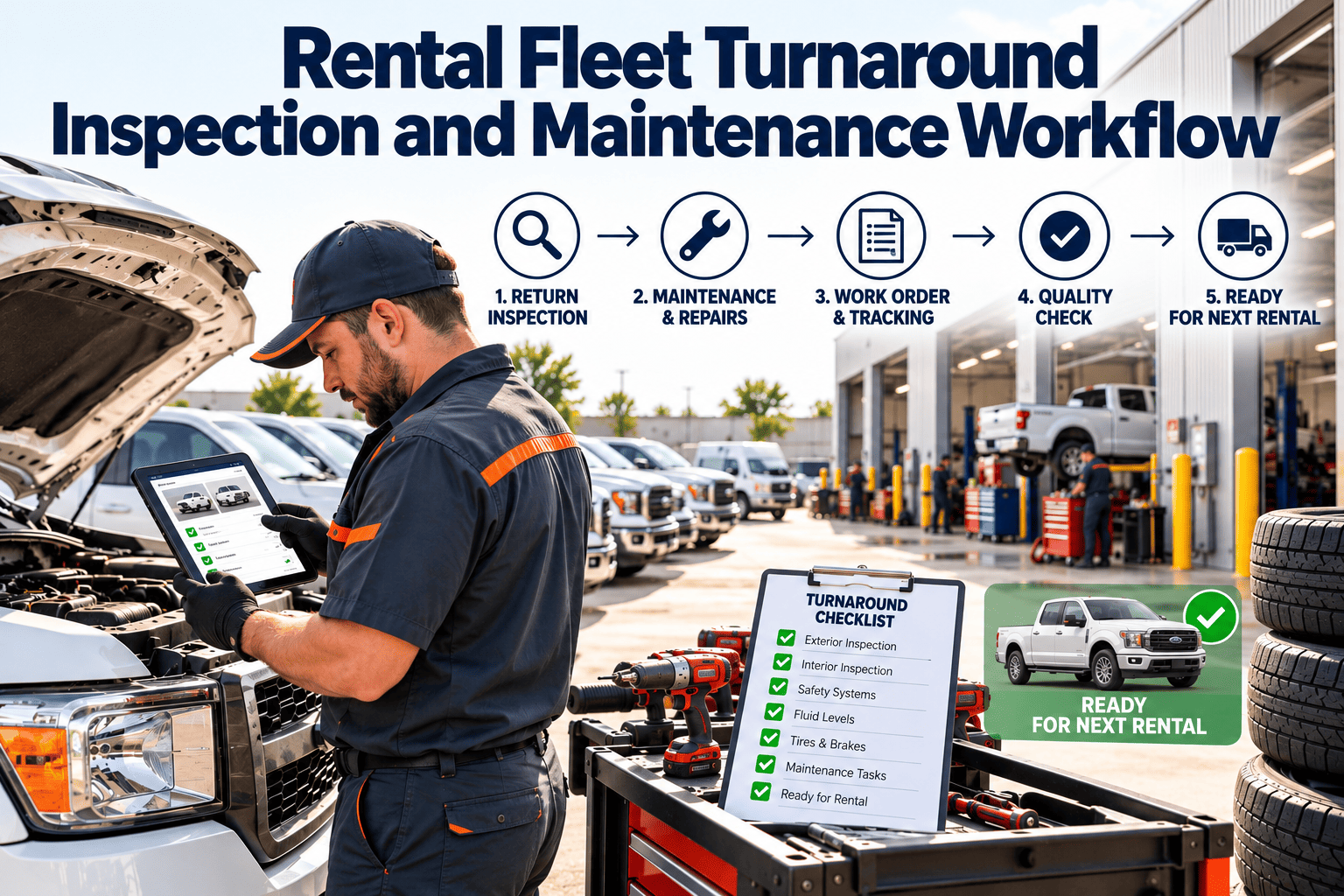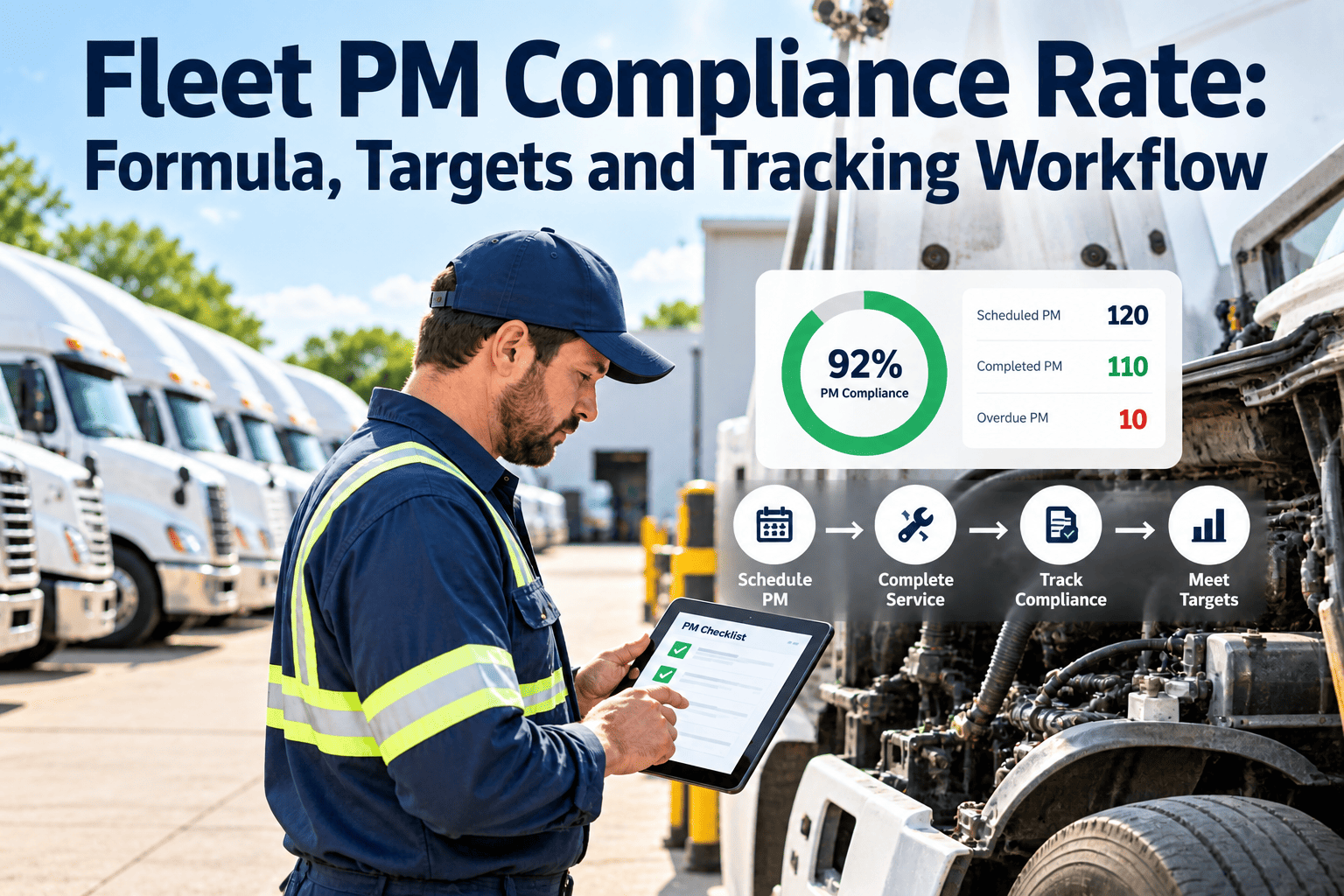
Fleet inspection compliance workflows and audit trails are where DOT audit outcomes either hold up under scrutiny or collapse on paperwork gaps. A single missing signature on a Driver Vehicle Inspection Report, a defect that was never certified as repaired, or a maintenance record that cannot be produced on request is enough to turn a routine compliance review into a conditional safety rating. FMCSA examines DVIR records in the vast majority of compliance reviews it conducts, and industry data shows only a small fraction of carriers pass a focused review without a single citation. With electronic DVIRs now formally authorized under 49 CFR 396.11 and 396.13 as of March 2026, the fleets pulling ahead are the ones building an inspection workflow that produces a defensible audit trail automatically. See how OxMaint structures DVIR workflows, repair certification, and record retention into one audit-ready system — start a free trial today.
Does your inspection paperwork survive a DOT audit — or fall apart under one?
Most carriers assume their daily inspections are compliant until an auditor asks for the signature chain behind a single defect. FMCSA now checks DVIR records in nearly every compliance review, and with electronic DVIRs formally cleared in March 2026, the paper-based fleets are the ones left exposed.
The 11 components every DVIR is legally required to cover
A Driver Vehicle Inspection Report is not a general walk-around note — it must address these 11 specific parts and accessories, and any defect affecting safe operation or likely to cause a breakdown has to be documented before the vehicle is redispatched.
The single most cited defect in roadside inspections — auditors check that brake defects were caught, logged, and certified as repaired before the next dispatch.
Often skipped on quick walk-arounds, but a non-functioning parking brake on a loaded trailer is treated as an out-of-service condition on the spot.
Covers excessive play, worn linkage, and power-steering fluid leaks — defects that rarely announce themselves until they fail at speed.
Headlamps, tail lamps, turn signals, and reflective tape all count — this is the defect category most likely to trigger a nighttime roadside stop.
Tread depth, sidewall damage, and mismatched dual tires must all be logged — tire violations remain a leading cause of preventable roadside downtime.
A small item that is easy to overlook, but a missing or inoperative horn is still a documented defect under the same 396.11 standard as brakes.
Blade condition and wiper motor function matter most in adverse-weather claims, where visibility becomes a central question in litigation.
Cracked, missing, or misaligned mirrors are flagged the same way as brake defects, since they directly affect a driver's ability to operate safely.
Fifth wheels, kingpins, and safety chains are inspected for wear and secure engagement — a coupling failure is one of the costliest crash categories.
Cracks, missing lug nuts, and rim damage are documented separately from tires, since a wheel failure can occur even on a tire in good condition.
Fire extinguisher, warning triangles, and spare fuses or fuses list must be present and functional, or the report must note what is missing.
A consistent record of "no defect" reports is itself evidence during an audit that inspections are genuinely being performed every day.
Most audit findings are not about a missing part — they are about a missing record. A defect that was fixed but never certified in writing is, on paper, a defect that was never fixed at all.
The three-signature trail auditors and plaintiff attorneys look for first
A DVIR is only as strong as its chain of custody. Under 49 CFR 396.13, a defect cannot simply be logged — it has to move through three confirmations before the truck rolls again, and every gap in that chain is a citation waiting to happen.
Driver inspects and reports
At the end of each operating day, the driver documents any defect discovered or reported that could affect safe operation, and signs the report.
Carrier certifies the repair
A mechanic or authorized carrier official certifies that the defect was corrected, or documents in writing why the repair was determined unnecessary.
Next driver reviews and signs
Before operating the vehicle, the next driver reviews the prior report and the certification, and signs to confirm the chain is complete.
Stop reconstructing audit trails after the auditor asks for them
See how OxMaint captures every signature, certification, and retention date automatically — so your inspection workflow is audit-ready every single day, not just the day before a review.
How long fleet inspection records must actually be kept
Retention rules differ by document type, and mixing them up is one of the most common findings in a focused compliance review. Here is the retention schedule an audit-ready fleet actually follows.
| Document Type | Minimum Retention | Where It Lives |
|---|---|---|
| Daily DVIR with defect noted | 3 months from inspection date | Driver app / carrier file |
| Annual periodic inspection report | 14 months | Vehicle maintenance file |
| Maintenance and repair records | Life of vehicle plus 6 months | CMMS repair history |
| Electronic DVIR audit log (OxMaint) | Retained indefinitely, searchable instantly | OxMaint cloud record |
How OxMaint keeps every inspection audit-ready by default
OxMaint replaces scattered paper DVIRs and disconnected repair logs with one workflow that produces the audit trail as a byproduct of doing the inspection — not a separate task afterward.
Digital DVIR Workflow
Drivers complete a mobile checklist mapped to all 11 mandated components, and any flagged defect routes straight to the maintenance queue with no re-entry.
Automated Chain Of Custody
Driver signature, mechanic certification, and next-driver acknowledgment are captured in sequence inside one record, so no link in the chain can be skipped.
Audit-Ready Retention
DVIRs, annual inspections, and repair histories are retained per FMCSA-required timelines automatically and stay searchable by unit, date, or driver.
CSA BASIC Risk Visibility
Open defects and expiring inspections are flagged before they age into points on the Vehicle Maintenance BASIC, now split into two scored categories.
Fleet inspection compliance workflow — frequently asked questions
What is a fleet inspection compliance workflow?
It is the structured process a carrier follows from the moment a driver inspects a vehicle through defect repair, certification, and record retention. A strong workflow, like the one inside OxMaint's CMMS platform, leaves no step undocumented.
What must every DVIR document under FMCSA rules?
Under 49 CFR 396.11, a DVIR must cover 11 specific components — brakes, steering, tires, lights, horn, wipers, mirrors, coupling devices, wheels, and emergency equipment — plus any defect found or a statement that none exist.
Are electronic DVIRs legal in 2026?
Yes. A final rule effective March 23, 2026 explicitly authorizes fully electronic DVIRs under 396.11 and 396.13, confirming what many carriers were already doing under the 2018 electronic records rule.
How long must inspection records be retained?
Daily DVIRs with a defect must be kept at least 3 months, annual periodic inspections for 14 months, and maintenance records for the life of the vehicle plus 6 months after disposal.
What happens if a DVIR audit trail has gaps?
A missing signature or uncertified repair is treated as a violation, and repeated gaps push a carrier's Vehicle Maintenance BASIC score toward a conditional rating. Book a demo to see how OxMaint closes those gaps automatically.
Build an inspection audit trail that never needs to be reconstructed
Digital DVIR workflows, automated chain-of-custody, and audit-ready retention — all in one AI-powered CMMS built for fleets that can't afford a documentation gap.
Free 14-day trial · No credit card