Your CAT 980 loader sits idle at the quarry—front tire shredded, rim damaged. The parts room has filters and belts, but no $6,200 replacement tire. Your tire vendor promises delivery "sometime tomorrow." Meanwhile, the concrete batch plant waits, trucks queue up, and the project manager calculates losses: $527 per hour, multiplying with every passing minute.
Construction fleets consume parts and destroy tires at rates that would bankrupt a highway trucking operation. Rocks, overloading, extreme grades, and round-the-clock schedules demand vendor relationships built on accountability—not promises. This guide delivers a complete vendor performance scorecard framework for construction fleet parts inventory and tire programs, with the analytics infrastructure to hold suppliers accountable for every dollar spent. Sign up free for Oxmaint CMMS to start tracking vendor performance with real data.
$527/hr
Avg equipment downtime cost
34%
Downtime from parts delays
$74,000
Annual tire cost per haul truck
2.4x
ROI from vendor scorecards
Accelerate Fleet Management Response Time Through Condition Monitoring
Waiting for equipment to fail before ordering parts is the most expensive inventory strategy in construction. IoT sensors and condition monitoring shift the equation—detecting degradation patterns 3-4 weeks before failure gives you time to source parts, schedule vendorsand plan maintenance windows that don't halt production.
| Asset |
Component |
Current Reading |
Status |
Action Required |
| CAT 950M Loader #2847 |
Transmission |
Temp +18°F above baseline |
Critical |
Service within 48 hours |
| Volvo A40G Hauler #1923 |
Hydraulic Filter |
78% restriction |
Warning |
Order filter, schedule PM |
| Komatsu WA470 #0892 |
Front Tires |
Pressure 12% below spec |
Warning |
Inspect and inflate |
| CAT 336 Excavator #0456 |
All Systems |
Within normal parameters |
Normal |
Next PM in 127 hours |
← Swipe to see more →
Temperature Monitoring
Transmission, hydraulic, and engine temps tracked continuously. Deviations from baseline automatically trigger diagnostic work orders in Oxmaint CMMS.
Early Warning:
3-4 weeks before failure
Pressure Sensors
Tire pressure, hydraulic system pressure, and air system monitoring. Under-inflation alerts prevent 60% of tire failures before they strand equipment.
Cost Prevention:
$8,400 avg per incident avoided
Vibration Analysis
Bearing wear, shaft imbalance, and structural fatigue detection. Identifies component degradation patterns invisible to visual inspection.
Detection Rate:
89% of pending failures
Fluid Analysis
Oil condition, contamination levels, and wear metal tracking. Scheduled sampling combined with real-time sensors provides complete fluid health picture.
Extended Life:
25-40% longer component life
Construction Fleet Tire Programs: Cost-Per-Hour Analysis
Tires represent the second-largest operating expense for construction fleets after fuel—yet most operations evaluate tires by purchase price rather than cost-per-operating-hour. A $4,800 tire lasting 2,800 hours costs $1.71/hour. A $6,200 tire lasting 4,500 hours costs $1.38/hour. That $0.33/hour difference equals $2,640 in savings over the tire's life. Your maintenance software fleet management system should calculate these metrics automatically.
| Equipment Type |
Tire Size |
Avg Cost/Tire |
Expected Life |
Cost/Hour |
Annual Cost (Fleet Avg) |
| Wheel Loader (5 yd) |
26.5R25 |
$4,800 |
3,200 hrs |
$1.50 |
$12,000 |
| Articulated Hauler (40T) |
29.5R25 |
$6,200 |
4,500 hrs |
$1.38 |
$13,200 |
| Motor Grader |
17.5R25 |
$2,400 |
5,000 hrs |
$0.48 |
$3,840 |
| Scraper (20 yd) |
33.25R29 |
$9,500 |
2,800 hrs |
$3.39 |
$54,300 |
| Rigid Haul Truck (100T) |
27.00R49 |
$28,000 |
6,000 hrs |
$4.67 |
$74,700 |
← Swipe to see more →
Under-Inflation
Reduces life by 25-40%
Heat buildup causes sidewall separation and internal damage. TPMS sensors with real-time alerts prevent the majority of pressure-related failures.
Overloading
Reduces life by 20-35%
Exceeding load ratings accelerates wear and increases failure risk. Payload monitoring systems identify chronic overloading patterns by operator and route.
Speed vs. Application
Reduces life by 15-30%
Running tires above rated speed generates excessive heat. Telematics data identifies speed compliance issues before they become tire replacements.
Haul Road Conditions
Reduces life by 10-50%
Sharp rocks, poor drainage and inadequate maintenance destroy tires. Tracking tire failures by location identifies problem areas for road crew attention.
Vendor Performance Scorecard Framework
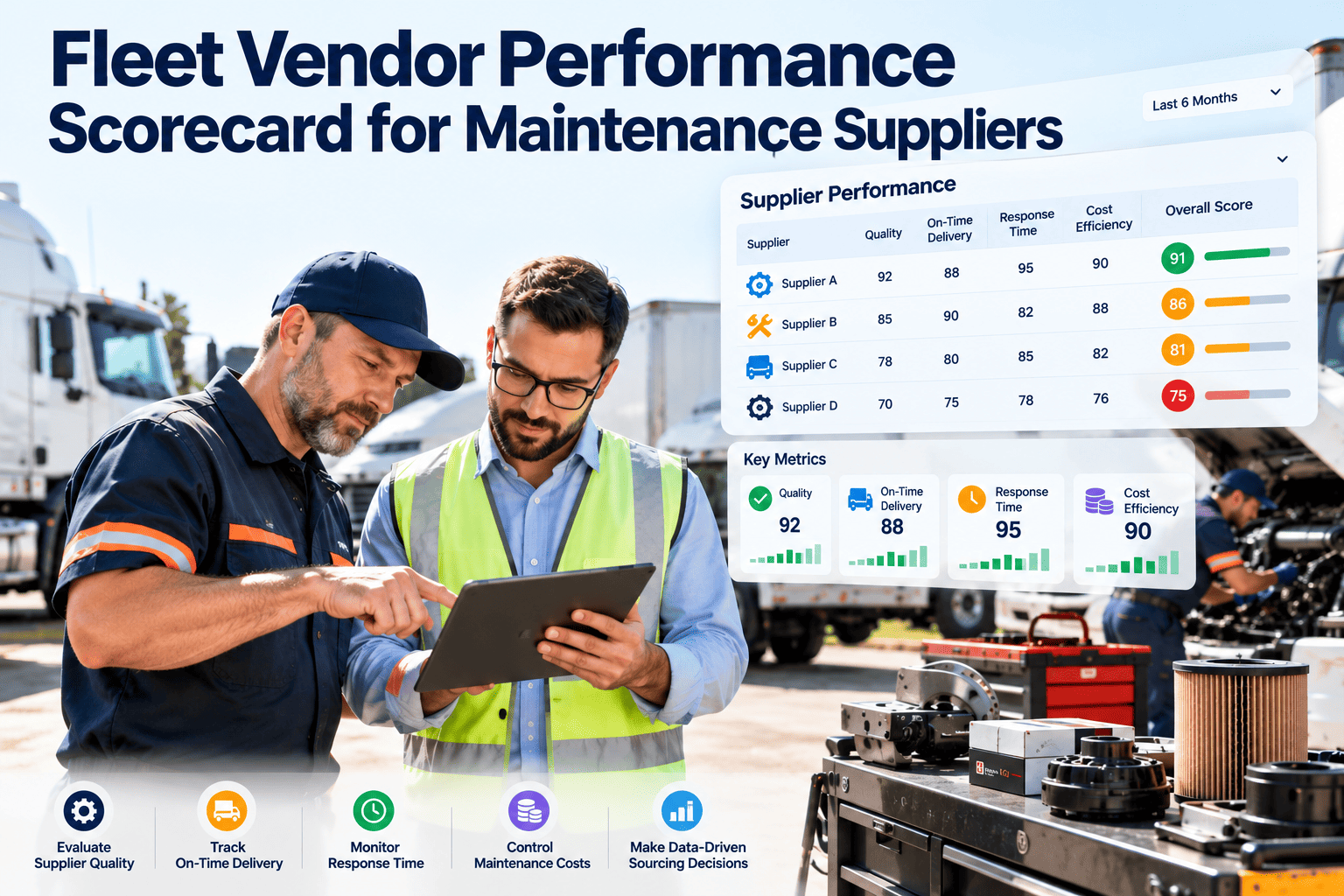
Gut feelings don't cut it when tire and parts vendors control millions in equipment uptime. This scorecard framework quantifies vendor performance across the metrics that actually impact construction operations—with SLA reporting that holds suppliers accountable to contractual commitments.
1
Rocky Mountain Tire & Service
Primary Tire Vendor
94
Response Time
2.1 hrs
First-Fix Rate
91%
Parts Availability
96%
2
Western Equipment Parts
OEM Parts Supplier
87
Response Time
3.8 hrs
First-Fix Rate
88%
Parts Availability
92%
3
QuickFix Mobile Repair
Emergency Service Provider
68
Response Time
5.4 hrs
First-Fix Rate
71%
Parts Availability
78%
| Metric |
Weight |
Why It Matters |
Target Benchmark |
| Response Time |
25% |
Every hour of delay costs $527+ in lost productivity |
<4 hrs emergency, <24 hrs standard |
| First-Time Fix Rate |
20% |
Return visits double downtime and frustration |
85%+ for parts, 90%+ for tire service |
| Parts Availability |
20% |
Stock-outs turn 2-hour repairs into 2-day delays |
95%+ critical items, 85%+ overall |
| Quality & Warranty |
15% |
Defective parts cause repeat failures and safety risks |
<2% defect rate, 48-hr warranty processing |
| Documentation Quality |
10% |
Incomplete records create audit trail gaps |
100% digital records with timestamps |
| Pricing Accuracy |
10% |
Invoice surprises destroy budgets and trust |
98%+ invoice accuracy vs. quotes |
← Swipe to see more →
Sign up for Oxmaint free to automate vendor scorecard tracking with SLA reporting or book a demo to see the scorecard dashboard in action.
Standardizing Compliance at Scale — A Fleet Management Operating Model with Analytics
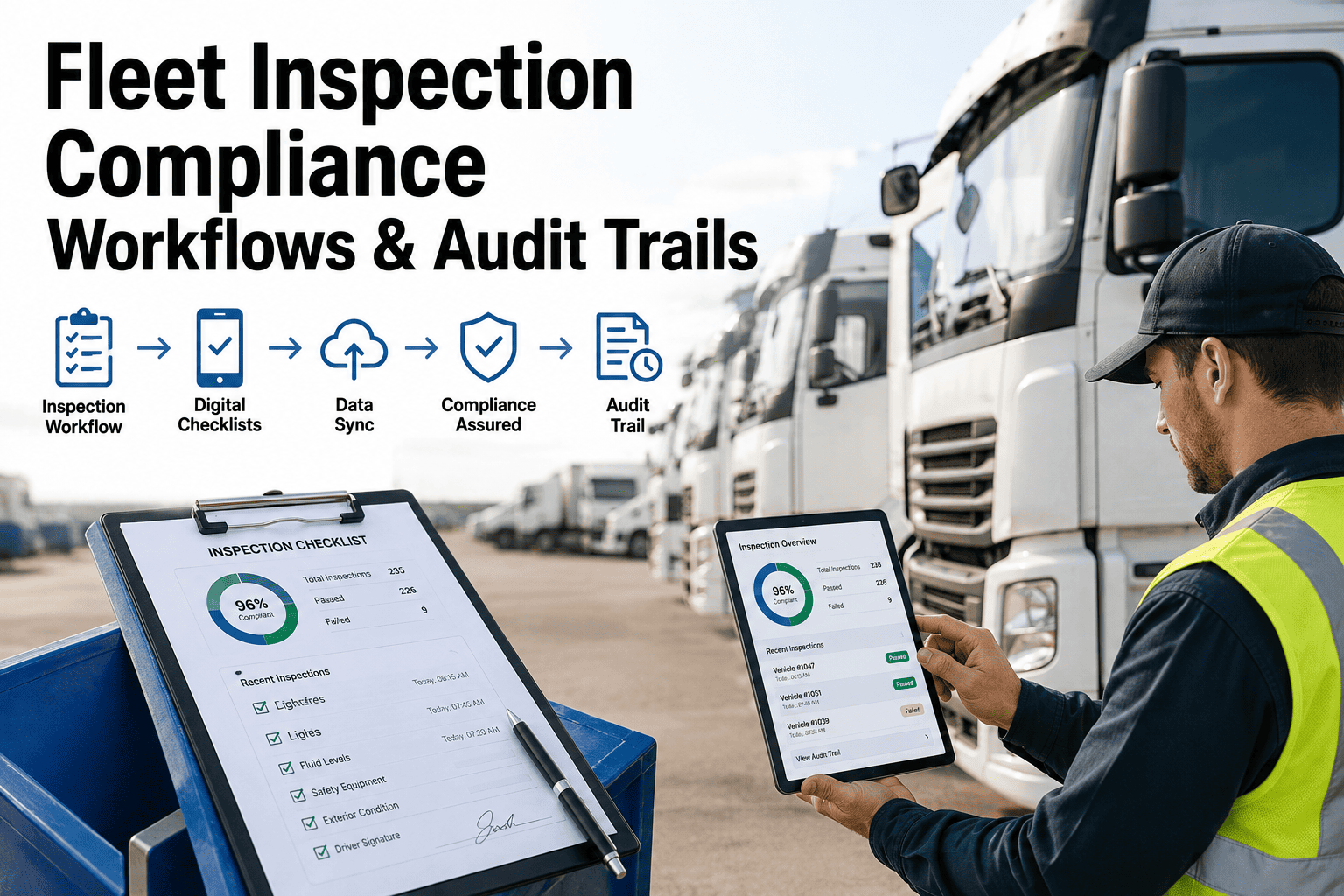
Construction fleets face overlapping compliance requirements from OSHA, DOT, EPA, and project-specific safety mandates. Your audit trail must document every inspection, every parts replacement, every certification renewal—and prove it all during surprise audits. Manual record-keeping fails at scale; analytics-driven compliance tracking succeeds.
Annual crane inspections with certified examiner
Operator qualification documentation
Load testing records and certifications
Safety device verification logs
Annual safety inspections for road-legal units
Driver qualification files and CDL verification
Hours of service documentation
Pre/post-trip inspection records (DVIRs)
Tier 4 engine maintenance documentation
DEF system service records
Fuel consumption and energy management logs
Idle reduction compliance tracking
Site-specific equipment certifications
Client safety audit documentation
Incident and near-miss reporting
Corrective action tracking and closure
Complete Audit Trail in 60 Seconds
When OSHA, DOT, or client auditors arrive, export comprehensive compliance documentation instantly—every inspection, every repair, every certification with timestamps and digital signatures. No file room searching, no missing records, no compliance gaps.
Digital signatures on all work orders
Photo documentation with GPS stamps
Parts traceability with vendor records
Certification expiration alerts
Barcode/QR scanning for asset tracking
One-click PDF compliance reports
60 sec
Audit report generation
100%
Digital record completeness
Zero
Missing documentation findings
Parts Inventory Strategy for Construction Sites
Construction sites are often remote, and equipment failures don't wait for overnight shipping. Strategic parts inventory planning—driven by asset tracking fleet management data and failure history—determines whether repairs take 30 minutes or 3 days.
| Part Category |
Examples |
Why Critical |
| Hydraulic Components |
Hoses, fittings, couplings, seals |
Most common failure, immediate production impact |
| Filters |
Oil, fuel, hydraulic, air filters |
High-frequency PM items, low cost to stock |
| Belts & Tensioners |
Serpentine belts, fan belts, idlers |
Dust exposure accelerates wear dramatically |
| Electrical |
Fuses, relays, switches, connectors |
Common failure, difficult to source locally |
← Swipe to see more →
| Part Category |
Examples |
Stocking Strategy |
| Tires (Common Sizes) |
26.5R25, 29.5R25, 23.5R25 |
Vendor-managed inventory with guaranteed availability |
| Brake Components |
Pads, rotors, calipers, drums |
Safety-critical items with predictable wear patterns |
| Starters & Alternators |
OEM and remanufactured units |
Rebuildable cores reduce lead time |
| Sensors & Electronics |
Temp sensors, pressure switches, ECM modules |
Model-specific items requiring vendor expertise |
← Swipe to see more →
| Part Category |
Examples |
Planning Approach |
| Major Components |
Hydraulic pumps, motors, cylinders |
Condition monitoring predicts need 3-4 weeks ahead |
| Undercarriage |
Track links, rollers, idlers, sprockets |
Wear measurement scheduling determines timing |
| Specialty Tires |
27.00R49, 33.25R29, unusual sizes |
Long lead times require advance planning |
| Engine/Transmission |
Overhaul kits, major assemblies |
Scheduled rebuilds with planned downtime windows |
← Swipe to see more →
Fleet Management CMMS Best Practices
01
Implement Barcode/QR Asset Tracking
Tag every machine, attachment, and critical component with durable barcode or QR codes. Technicians scan to access complete maintenance history, vendor contacts, parts lists and OEM documentation. One scan replaces 10 minutes of searching through filing cabinets and spreadsheets.
02
Configure Preventive Maintenance Fleet Management Schedules
Set PM triggers based on hours, miles, and calendar intervals—whichever threshold hits first generates the work order. Construction equipment operates irregularly; hour-based triggers catch machines running 16-hour days while calendar triggers catch seasonal equipment sitting idle.
03
Connect IoT Sensors to Work Order Automation
When sensors detect abnormal temperature, pressure, or vibration readings, Oxmaint CMMS automatically generates work orders with diagnostic context and recommended parts. The system monitors 24/7 so nothing falls through the cracks during shift changes or weekends.
04
Track Every Vendor Interaction with SLA Reporting
Every service call logs automatically—response time, completion time, parts used, costs, and outcome. Quarterly scorecard reviews backed by data, not opinions. When contract renewal comes, you negotiate from a position of documented performance history.
05
Maintain Complete Audit Trail for Compliance
Every maintenance action, parts installation, and certification renewal creates a permanent, timestamped record in Oxmaint. When OSHA, DOT, or client auditors arrive, export comprehensive documentation in seconds—with confidence that nothing is missing or incomplete.
06
Review Analytics Weekly for Continuous Improvement
Track fleet availability, cost-per-hour, vendor scores, and parts usage trends. A 5% improvement in availability across 50 machines equals $650,000+ in annual productivity gains. The data reveals opportunities invisible to traditional management approaches.
"We implemented Oxmaint's vendor scorecard system after discovering our tire vendor was charging 23% above market rate with only a 71% first-time fix rate. Within six months, we renegotiated contracts with data-backed leverage, improved average tire life by 340 hours, and reduced unplanned downtime by 41%. The ROI paid for the entire CMMS implementation in the first quarter."
Robert Chen
Fleet Director, Pacific Northwest Heavy Civil Contractors
Ready to Transform Your Parts & Tire Program?
Join construction fleets using Oxmaint for vendor scorecards, parts optimization, and audit-ready fleet management compliance requirements tracking
1
Measure Cost-Per-Hour, Not Cost-Per-Unit
A premium tire lasting 4,500 hours costs less than a budget tire lasting 2,800 hours. Apply total-cost-of-ownership thinking to every parts and vendor decision.
2
Quantify Vendor Performance Monthly
Response time, first-fix rate, and parts availability directly impact your bottom line. Measure them, review them, and hold vendors accountable with documented data.
3
Invest in Condition Monitoring
IoT sensors that detect problems 3-4 weeks early pay for themselves with a single prevented catastrophic failure. The ROI math is undeniable for construction equipment.
4
Build Compliance Into Daily Operations
Real-time audit trail documentation prevents scrambling before inspections. Continuous compliance is easier and cheaper than periodic compliance fire drills.
How do I start tracking vendor performance without historical data?
Begin with a clean baseline today. Configure Oxmaint CMMS to log every vendor interaction going forward—response times, completion quality, and costs. Within 90 days, you'll have statistically meaningful data to compare performance and negotiate contracts from a position of knowledge.
Sign up free to start building your vendor performance database.
What's the ROI on IoT sensor installation for construction equipment?
Most construction fleets see 200-400% ROI within 12 months. One prevented catastrophic failure—like a $45,000 transmission rebuild avoided through early temperature warning—typically covers sensor costs for 10+ machines. The payback period shortens dramatically for larger fleets.
Book a demo to calculate your specific ROI potential.
How should I structure tire vendor contracts for accountability?
Include performance guarantees tied to scorecard metrics: response time SLAs, first-fix rate minimums, and cost-per-hour guarantees. Structure pricing around tire life outcomes, not just purchase price. Vendors confident in their product quality will accept performance-based terms.
Sign up free to generate the data you need for contract negotiations.
Can Oxmaint integrate with existing telematics and equipment systems?
Yes. Oxmaint CMMS integrates with major OEM telematics platforms including John Deere JDLink, CAT Product Link, Komatsu KOMTRAX, Volvo ActiveCare, and Hitachi ConSite. Equipment data flows directly into maintenance workflows, triggering work order automation based on hour meters and sensor alerts.
Book a demo to see your specific integrations.
What fleet management compliance requirements should construction fleets prioritize?
Start with OSHA equipment certifications (cranes, hoists, pressure vessels), then DOT compliance for road-legal units, followed by EPA Tier 4 engine documentation. Project-specific requirements vary by client and location—but a robust CMMS handles all of them with the same audit trail infrastructure.
Sign up free to configure your compliance tracking.