
Battery failures remain one of the leading causes of roadside breakdowns for commercial fleets. Under federal regulations, specifically 49 CFR Part 396, the Federal Motor Carrier Safety Administration (FMCSA) requires all commercial motor vehicles to be maintained in safe and proper operating condition at all times. This includes the electrical system and battery components that power everything from starting systems to critical safety equipment. Start your free trial today to automate your compliance tracking.
For fleet managers operating vehicles over 10,001 pounds, understanding battery compliance isn't just about avoiding breakdowns—it's about maintaining your CSA scores, passing DOT inspections, and keeping your operating authority intact. A single out-of-service violation for electrical system defects can cost your operation thousands in fines and lost revenue. Book a demo to see how OxMaint prevents costly violations.
What FMCSA Requires for Battery Maintenance
The FMCSA doesn't have a standalone regulation specifically for batteries, but battery systems fall under the broader vehicle maintenance requirements in 49 CFR 396.3, which states that parts and accessories shall be in safe and proper operating condition at all times. During roadside inspections and annual DOT inspections, officers check electrical components including batteries as part of the overall vehicle safety evaluation. Sign up free to streamline your inspection process.
Every commercial motor vehicle must undergo an annual inspection by a qualified inspector who has training or certification to inspect and maintain commercial motor vehicles per CFR 396.17. Additionally, drivers must complete Driver Vehicle Inspection Reports (DVIRs) at the end of each driving day, documenting any defects including electrical system issues. Schedule a demo to learn about automated DVIR management.
Battery Inspection Requirements
What DOT inspectors evaluate during roadside and annual inspections
Physical Condition
- Case integrity (no cracks or bulging)
- Terminal corrosion levels
- Secure mounting and hold-downs
- Electrolyte levels (serviceable types)
Electrical Connections
- Cable condition and insulation
- Tight, clean connections
- Proper grounding
- No exposed wiring
Performance Testing
- Voltage under load
- Charging system output
- Alternator functionality
- Starting system reliability
Automate Your Battery Compliance
OxMaint helps fleet managers track battery inspections, generate audit-ready reports, and receive automated maintenance alerts—all in one platform.
Recommended Battery Maintenance Schedule
Follow these intervals to stay DOT compliant and avoid unexpected failures. Get started free to automate your maintenance scheduling.
Pre-Trip Check
Visual inspection of battery compartment, check warning lights, verify starting system operates normally
Terminal Inspection
Check battery terminals for corrosion, verify cable connections are tight, inspect battery charge indicator
Deep Inspection
Clean terminals, test voltage levels, check electrolyte (if applicable), inspect mounting hardware
Load Testing
Perform battery load test, check alternator output, verify charging system, document battery health
DOT Annual Inspection
Comprehensive inspection by qualified inspector per 49 CFR 396.17, full electrical system evaluation
Audit-Ready Documentation
Essential records you must maintain for compliance. See it in action with a personalized demo.
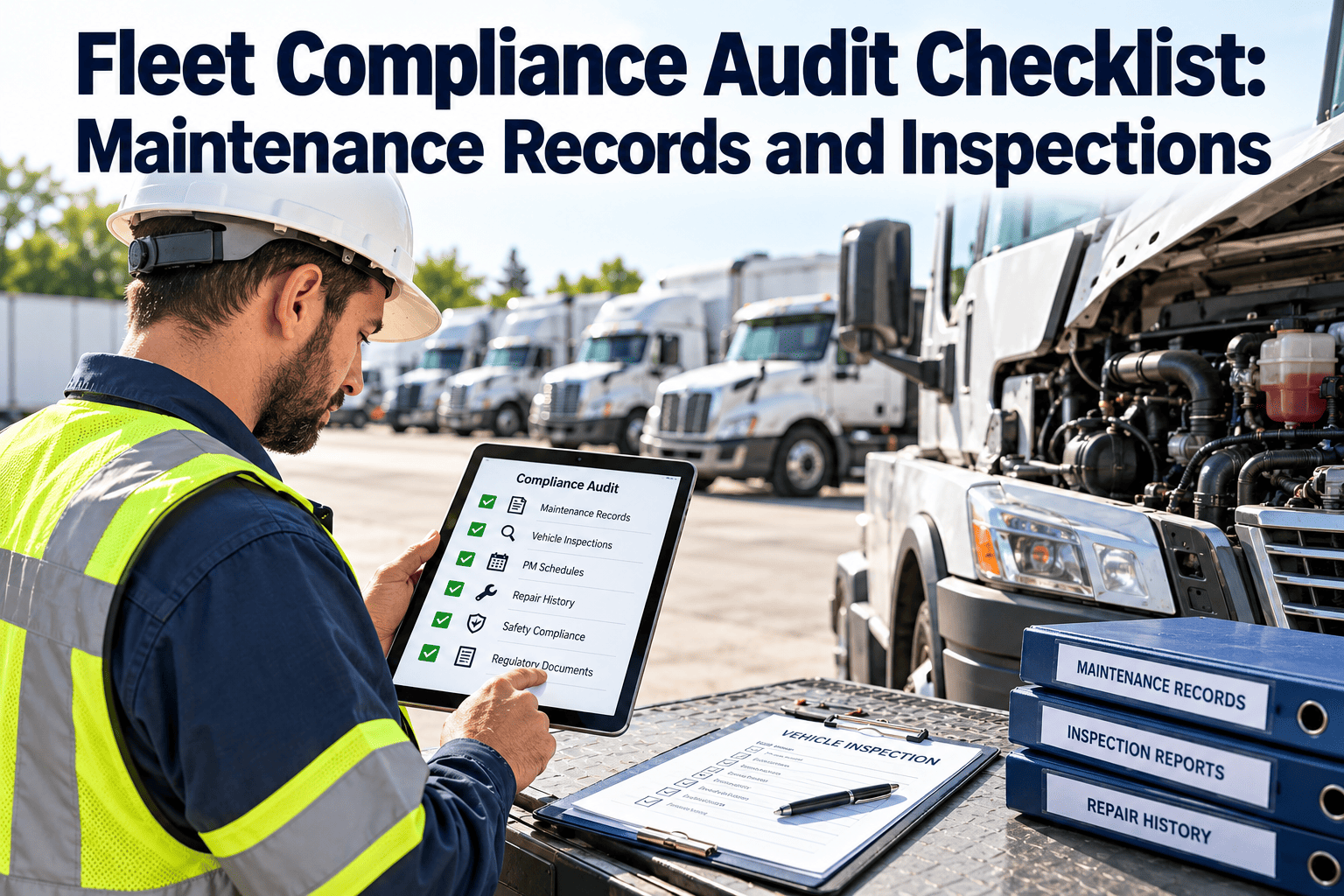
DVIR Records
Driver Vehicle Inspection Reports documenting battery condition at end of each day. Retain for minimum 90 days.
Annual Inspection
Qualified inspector certification per CFR 396.17
Maintenance Logs
Complete repair history with dates, parts, and technician details
PM Schedules
Preventive maintenance calendars showing planned inspections
Common Battery Violations to Avoid
Corroded Terminals
Excessive corrosion preventing proper electrical contact—OOS violation
Loose Mounting
Battery not securely fastened, risk of movement or damage
Damaged Cables
Frayed, cracked, or exposed wiring creating electrical hazards
Missing Documentation
No annual inspection sticker or DVIRs available for review
Frequently Asked Questions
How often must batteries be inspected under FMCSA regulations
While FMCSA requires annual inspections by qualified inspectors, daily pre-trip inspections should include visual battery checks. Drivers must report any defects in their DVIR at the end of each driving day.
What battery conditions can put a vehicle out of service
Severely corroded terminals, unsecured batteries, damaged cables with exposed wiring, or any condition that prevents the vehicle from starting or operating safely can result in an out-of-service order.
How long must battery inspection records be retained
DVIRs must be retained for at least 90 days (3 months). Annual inspection records should be kept for the duration of ownership plus 6 months. Maintaining longer records is recommended for audit protection.
Who can perform annual DOT inspections
Only qualified inspectors with proper training or certification per CFR 396.19 can perform annual inspections. This includes Federal or State-sponsored training program graduates or those with at least 1 year of relevant experience.
Can electronic DVIRs replace paper reports
Yes, electronic DVIR systems are permitted and encouraged by FMCSA. Digital records must contain all required information and be readily accessible during inspections or audits.
What happens if a battery defect is found during inspection
The defect must be documented in the DVIR. The motor carrier must repair the defect before the vehicle is dispatched again and certify in writing that repairs were completed or were unnecessary.
Take Control of Your Fleet Compliance Today
Join thousands of fleet managers who trust OxMaint to keep their vehicles compliant, their documentation audit-ready, and their operations running smoothly.



.png)