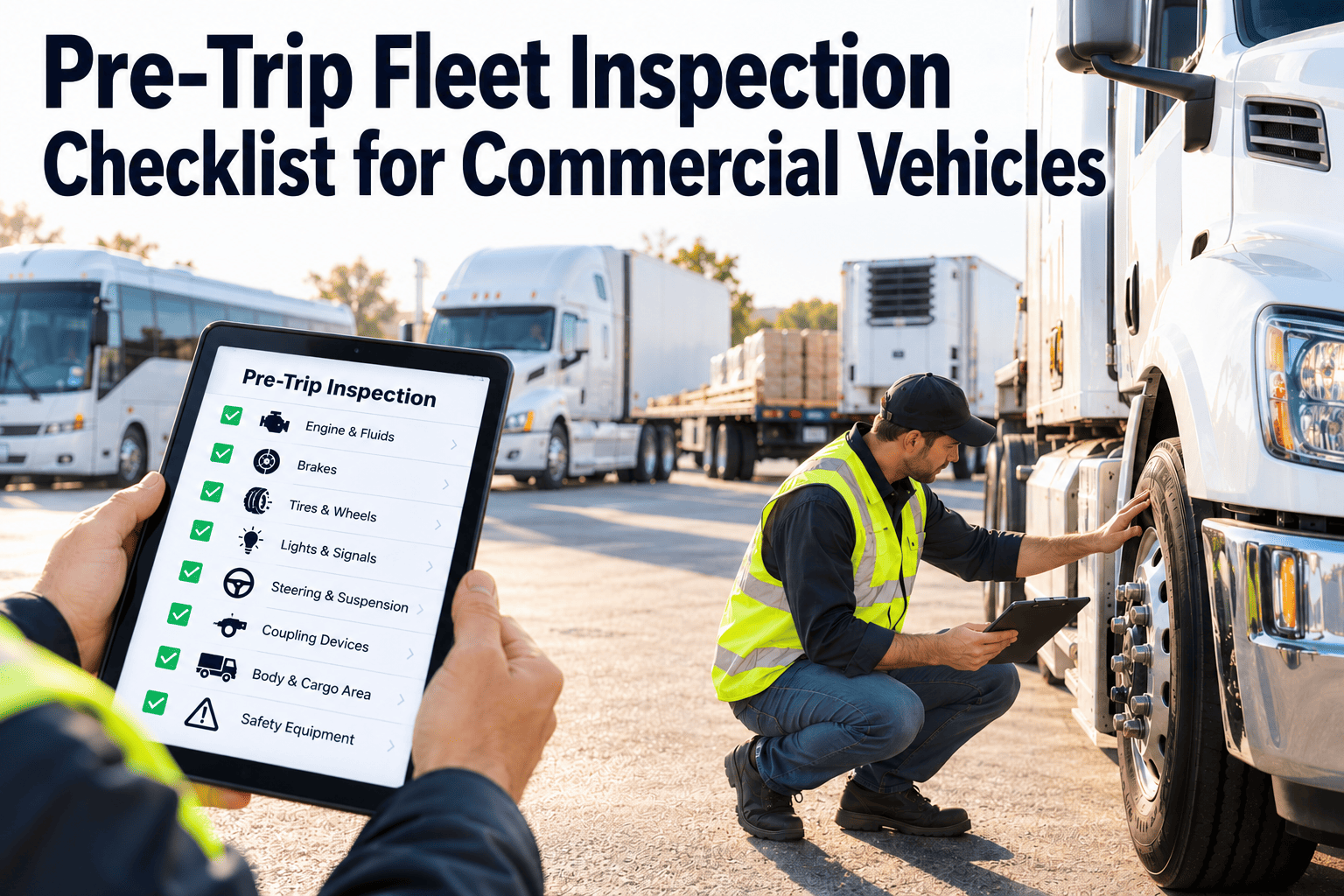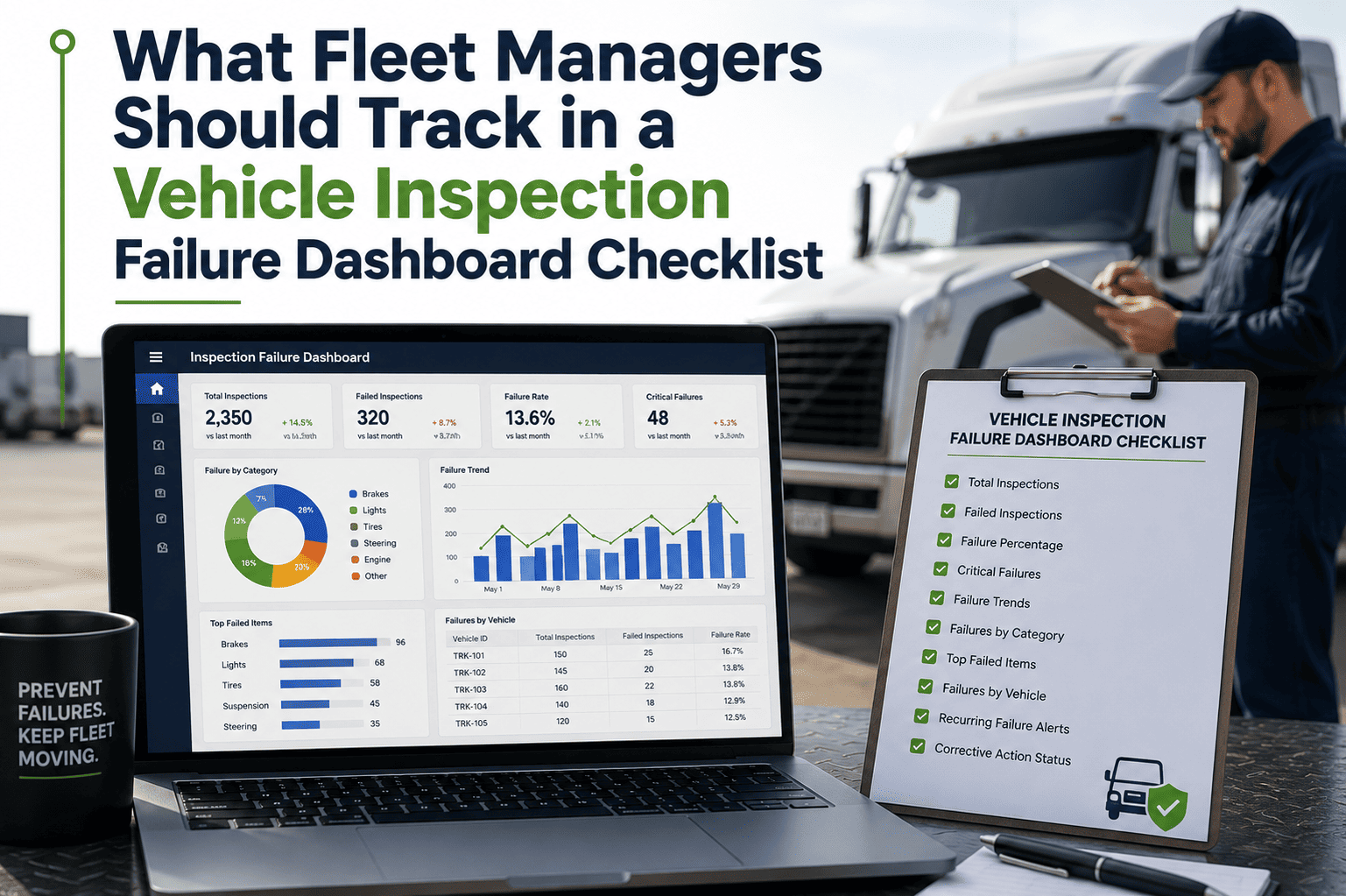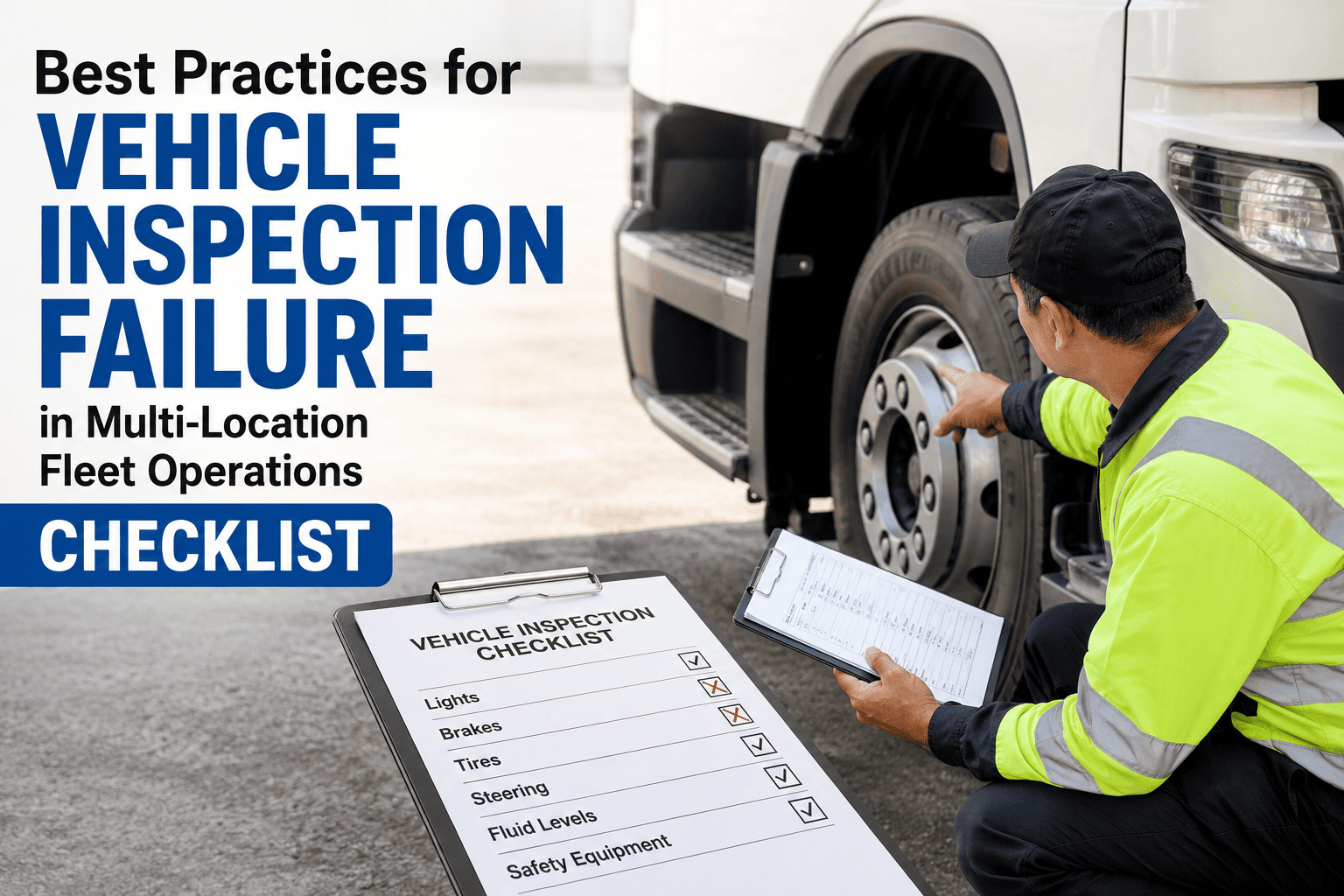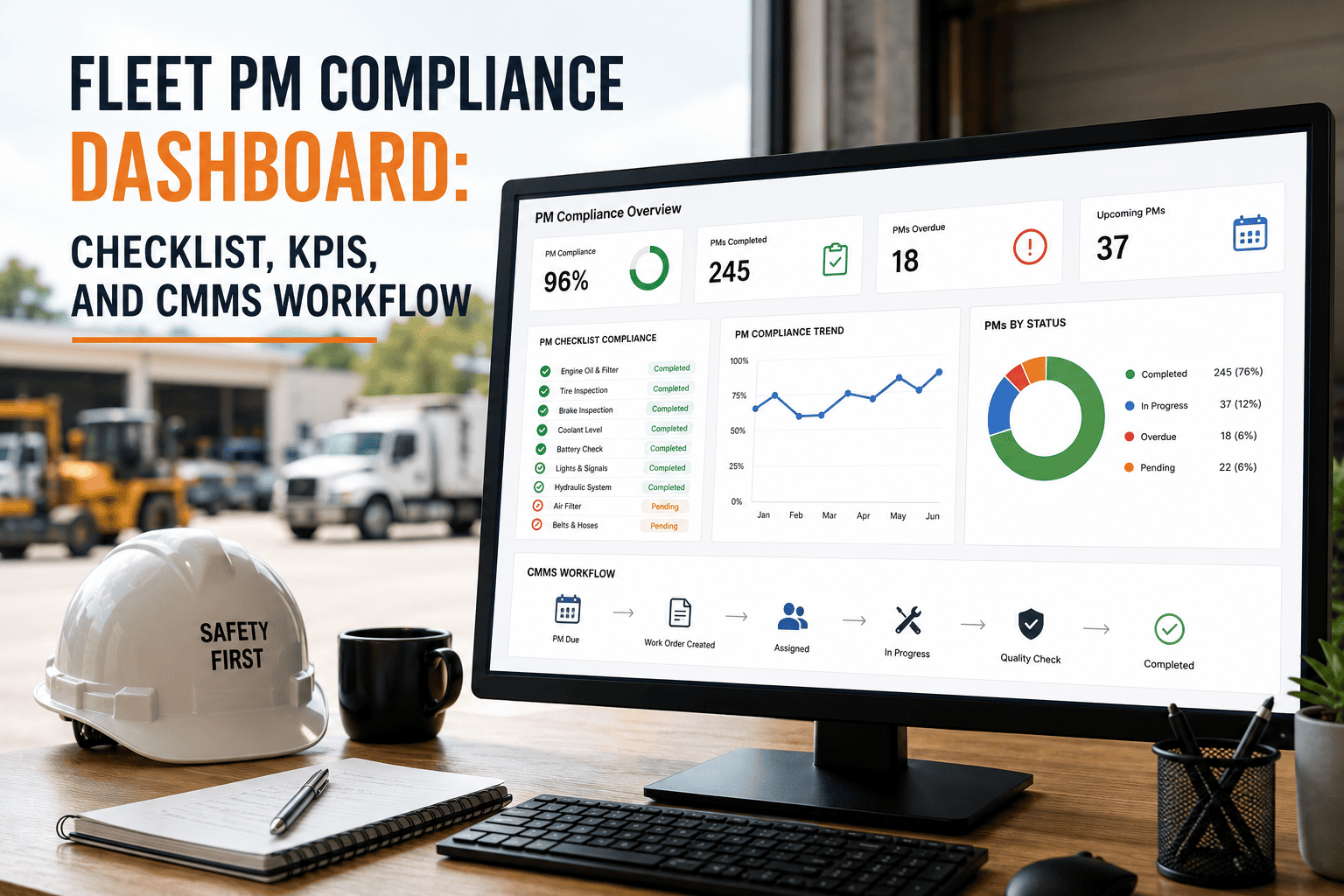
Roadside inspections are not random sampling — every commercial vehicle stopped at a weigh station or pop-up site goes through the same standardized procedure, and recent national inspection data shows close to one in five vehicles checked is pulled out of service before it can finish its route. Brake systems and tires together account for well over half of all vehicle out-of-service violations, which means most failures trace back to a short list of preventable maintenance gaps rather than sudden mechanical surprises. For a maintenance team, that is useful news: the failure points are predictable, the inspection criteria are published every year, and a structured pre-trip and PM checklist can catch nearly all of them before an officer does. Book a demo to see how OxMaint turns this checklist into a recurring, trackable inspection workflow across your fleet.
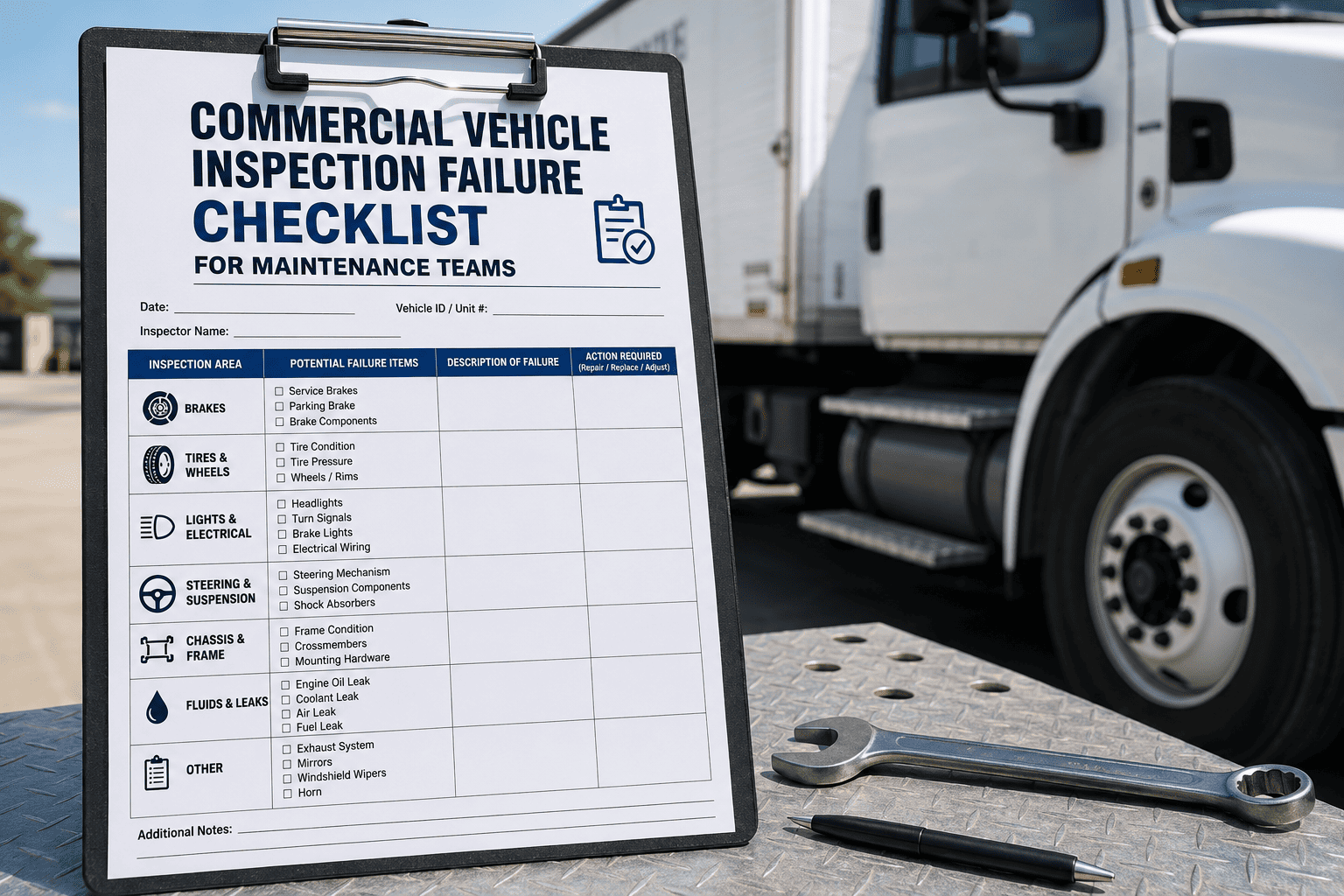
Commercial Vehicle Inspection Failure Checklist for Maintenance Teams
Brakes, tires, lighting, coupling, cargo securement and driver documentation — the exact categories inspectors check, organized into a checklist a maintenance team can run before every dispatch.
Brake & Air Systems — Where Most Inspections Fail
Brake-related defects are consistently the single largest cause of vehicle out-of-service orders. Most of them are not sudden failures — a worn lining, a slow air leak, or an out-of-adjustment chamber develops over weeks and is fully visible to anyone running a real inspection rather than a glance under the trailer.
Tires & Wheels — The Second-Largest Failure Point
Tire condition has been a recurring national inspection focus area, and for good reason — a single defective tire can take a vehicle out of service instantly, with no allowance to drive to a nearby shop for repair. Tread, inflation, and visible damage are the three checks that catch nearly every tire-related defect.
OxMaint schedules brake and tire checks on a recurring cycle, logs every measurement against asset history, and flags vehicles approaching their wear limits before a roadside officer does.
Lighting & Electrical — Fast to Fail, Fast to Fix
Lighting defects are among the most common findings on routine inspections, mostly because a burned-out bulb or a loose connector is easy to miss in a five-minute walk-around. They are also the cheapest category on this entire checklist to correct.
Coupling & Cargo Securement — A Growing Enforcement Priority
Cargo securement and coupling devices have moved into the national spotlight as a dedicated annual enforcement focus, with tens of thousands of violations logged for loose tie-downs and unsecured equipment in a single year. These checks take minutes and prevent some of the most serious roadway incidents.
Cargo securement and coupling checks close out the same way every other checklist item does in OxMaint — logged, time-stamped, and attached to the asset's full inspection record.
Driver Credentials & Documentation
A mechanically sound vehicle can still be placed out of service over paperwork. Credential and log checks cost nothing in parts or labor, which makes them the easiest category on this list to get to zero failures.
Where Vehicles Actually Fail — OOS Violation Share by Category
| Category | Share of Vehicle OOS Violations | Most Common Defect Found |
|---|---|---|
| Brake Systems | 40%+ combined | Worn linings, audible air leaks, out-of-adjustment chambers |
| Tires | ~21% | Tread below minimum, low inflation, sidewall damage |
| Cargo Securement | Top focus area | Loose tie-downs, unsecured equipment |
| Lighting & Electrical | Frequent minor finding | Non-functioning lamps, damaged wiring |
| Coupling Devices | Steady minority share | Unlocked fifth wheel, kingpin wear |
What Fleet Maintenance Professionals Say
Maintenance teams that treat the pre-trip inspection as a formality are the ones who get surprised at the scale. Brake and tire defects do not appear overnight — they are visible days before an inspector finds them, if anyone is actually looking.
Fleet Maintenance Director, Multi-State Trucking OperationAn out-of-service brake violation almost never happens alone. By the time an inspector finds an out-of-adjustment chamber, there are usually two or three other deferred items on that same truck.
Certified Diesel Technician, DOT Compliance TrainerOxMaint gave our shop one place to see which trucks were due for inspection and which had open defects. Before that we relied on paper forms, and trucks were slipping through with issues nobody remembered to close.
Shop Foreman, Regional LTL CarrierFrequently Asked Questions
What is the difference between a Level I and Level II roadside inspection?
A Level I inspection is the most thorough roadside check, covering driver credentials plus a full walk-around of brakes, tires, lights, coupling, and cargo securement. A Level II covers the same items but skips anything requiring the inspector to go underneath the vehicle.
How often do inspection out-of-service rules change?
The out-of-service criteria used by inspectors are updated annually, with changes published well ahead of the effective date. A checklist built once and never revisited can fail on a rule that has since changed. Book a demo to see how OxMaint keeps inspection checklists current.
Can a vehicle be placed out of service for paperwork alone?
Yes. A missing medical certificate, an invalid license, or inaccurate duty status logs are all out-of-service violations even when the vehicle is mechanically sound. Documentation failures are some of the most preventable items on this entire list.
Do brake and tire issues really cause most failures?
Across recent national inspection data, brake and tire defects combined account for well over half of all vehicle out-of-service violations. See how OxMaint schedules recurring brake and tire checks automatically.
What should a team do right after an out-of-service order?
The vehicle cannot move under its own power until the cited defect is corrected, documented, and in most cases re-inspected. Faster logging and dispatch of the repair directly reduces the revenue-generating time that event costs the fleet.
Every Item On This Checklist Is a Roadside Failure Waiting To Happen — Or a Work Order Already Closed
OxMaint turns this entire inspection checklist into a recurring, assigned, trackable workflow — brakes, tires, lighting, coupling, cargo, and driver files, all logged against the asset's history before the vehicle ever leaves the yard.