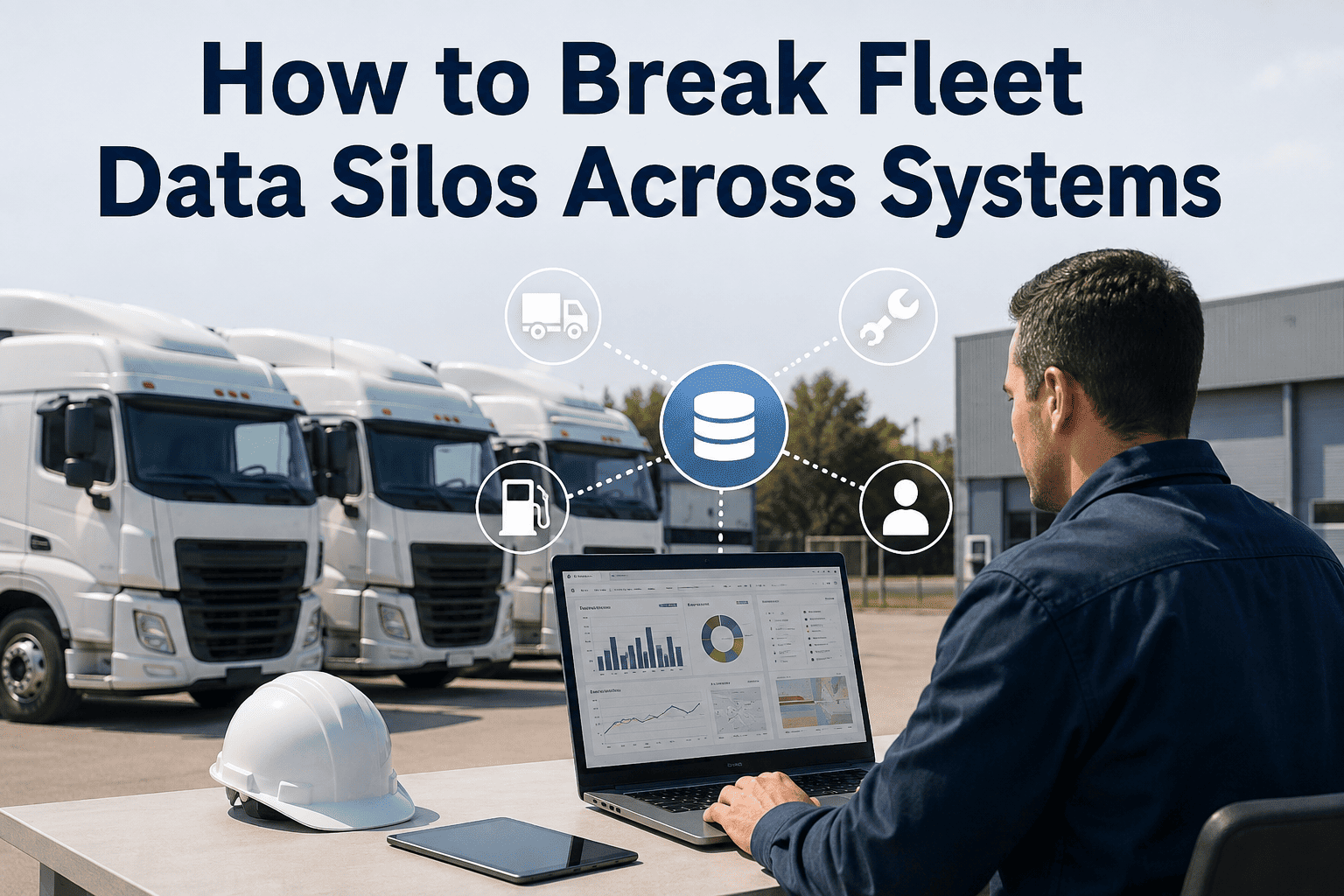
Fleet data silos across CMMS, telematics, GPS, and fuel card systems are the single biggest reason fleet analytics never deliver their promised value — and breaking them is a solvable architecture problem, not an endless IT project. When your maintenance records live in one tool, engine diagnostics in another, fuel transactions in a third, and dispatch schedules in a fourth, every decision is made on a fraction of the picture. Fleets that unify these disconnected systems typically recover 15–25% in maintenance cost efficiency within the first year, because they finally see the full asset story in one place. This guide walks through exactly how to break fleet data silos — the integration architecture, master data governance, and cross-system reporting that turn fragmented data into operational intelligence. If you want to see what unified fleet data looks like in practice, Start Free Trial and connect your first data source in under an hour.
Why do 73% of fleets still make maintenance decisions with incomplete data?
Because their CMMS, telematics, fuel cards, and dispatch tools don't talk to each other. The average fleet runs 4–7 disconnected systems — and every gap between them is a missed failure prediction, a duplicated work order, or a cost report nobody trusts.
How much do disconnected fleet systems actually cost you?
Fleet data fragmentation isn't an abstract IT inconvenience — it shows up as real dollars. Industry benchmarks put the cost of poor data integration at 15–25% of total fleet maintenance spend, through duplicated effort, missed predictions, and decisions made on stale or partial information.
Consider a 120-vehicle regional delivery fleet spending $1.8M per year on maintenance. Their telematics platform flags a DPF regeneration fault on Truck #47. But the alert sits in the telematics dashboard — it never reaches the CMMS, so no work order is created. Three weeks later the truck is on the side of I-75 with a seized aftertreatment system: $14,200 in repairs, $3,800 in towing and rental, and two days of missed deliveries. The data to prevent this existed. It was just trapped in a silo.
Where do fleet data silos come from — and why do they persist?
Fleet system silos aren't created by bad decisions — they accumulate through organic growth. Each tool was bought to solve a specific problem, and each one works well in isolation. The failure is architectural: nobody designed the connections between them.
Point-solution procurement
Telematics was bought for ELD compliance. The fuel card came from the bank. The CMMS was chosen by the maintenance manager. Dispatch software came with a routing contract. Each purchase made sense individually — but no one owned the integration layer, so the systems were never connected.
Inconsistent asset identifiers
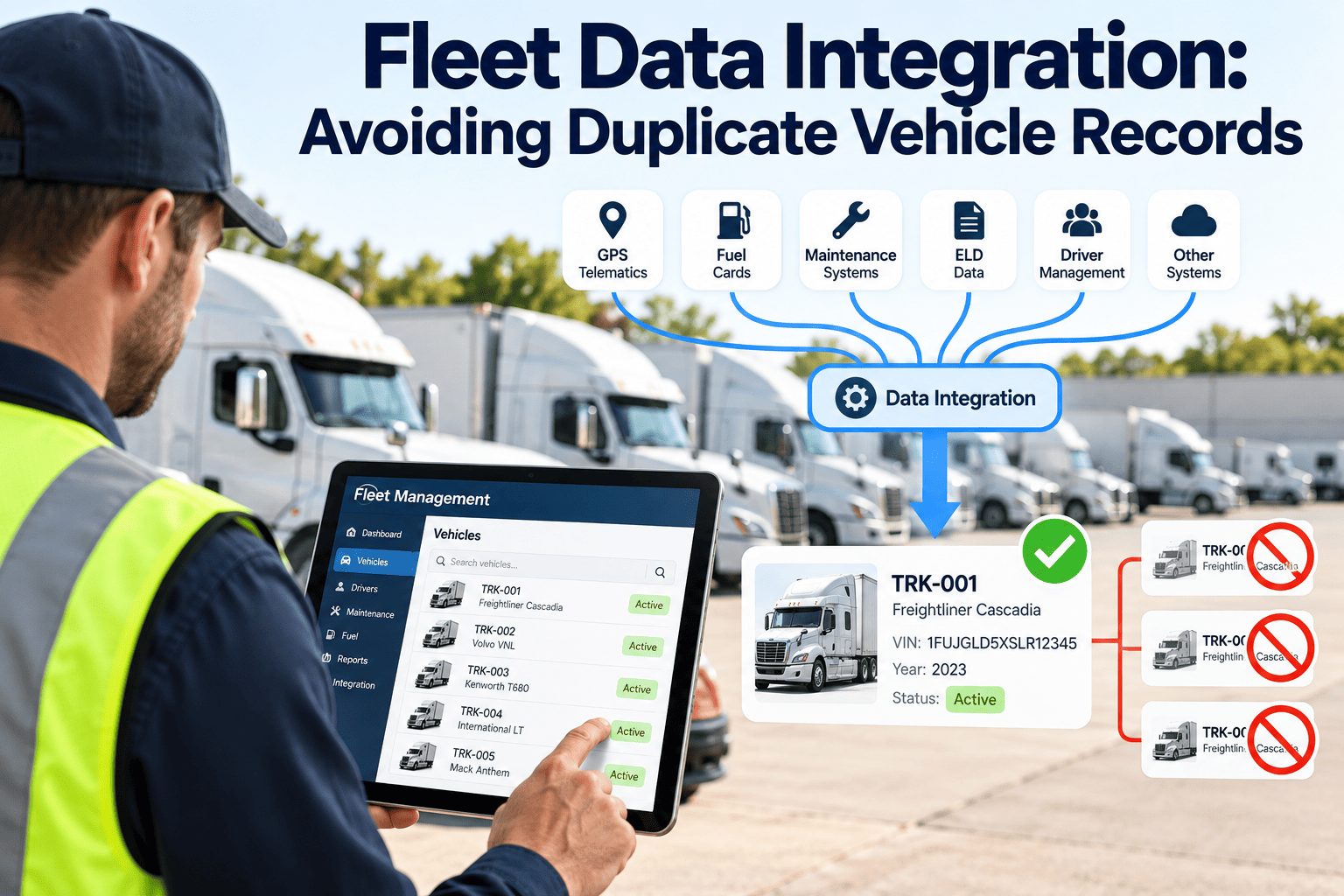
Truck #47 is "Unit 0047" in the CMMS, "VEH-47-D" in telematics, and "47" on the fuel card. Without a master data standard that maps every system to a single asset ID, automated integration is impossible — every data join requires manual lookup.
Legacy systems without APIs
Older on-premise CMMS platforms and proprietary telematics hardware often lack modern REST APIs or webhook support. Data can only be extracted via CSV exports or custom database queries — making real-time integration a manual, error-prone process.
Organizational ownership gaps
Maintenance owns the CMMS. Operations owns dispatch. Finance owns the fuel card. IT owns the servers. But nobody owns the question "how does data flow between these systems?" — so it never gets answered. Fleet data unification requires a named owner with cross-functional authority.
A 4-phase roadmap to break fleet data silos in 90 days
Breaking fleet data silos doesn't require ripping out your existing tools. It requires a deliberate integration architecture built in phases — each delivering standalone value while laying the groundwork for the next.
Phase 1: Audit & Map Your Data Landscape
Catalog every system that touches fleet data: CMMS, telematics, GPS tracking, fuel cards, dispatch, ERP, parts inventory, and spreadsheets. For each, document what data it holds, what format it's in, how it's identified (asset ID scheme), and whether it has an API. Most fleets discover 2–3 systems they forgot about — and at least one critical data flow that runs entirely through email or a shared spreadsheet.
Phase 2: Establish Master Data Governance
Create a single asset master record — one canonical ID per vehicle that every system references. Define naming conventions, data ownership rules, and update workflows. This is the unglamorous step that makes everything else possible. Without it, you're building integrations on quicksand. Fleets aligned to ISO 55000 asset management principles already have a head start here.
Phase 3: Connect Your Highest-Value Integration First
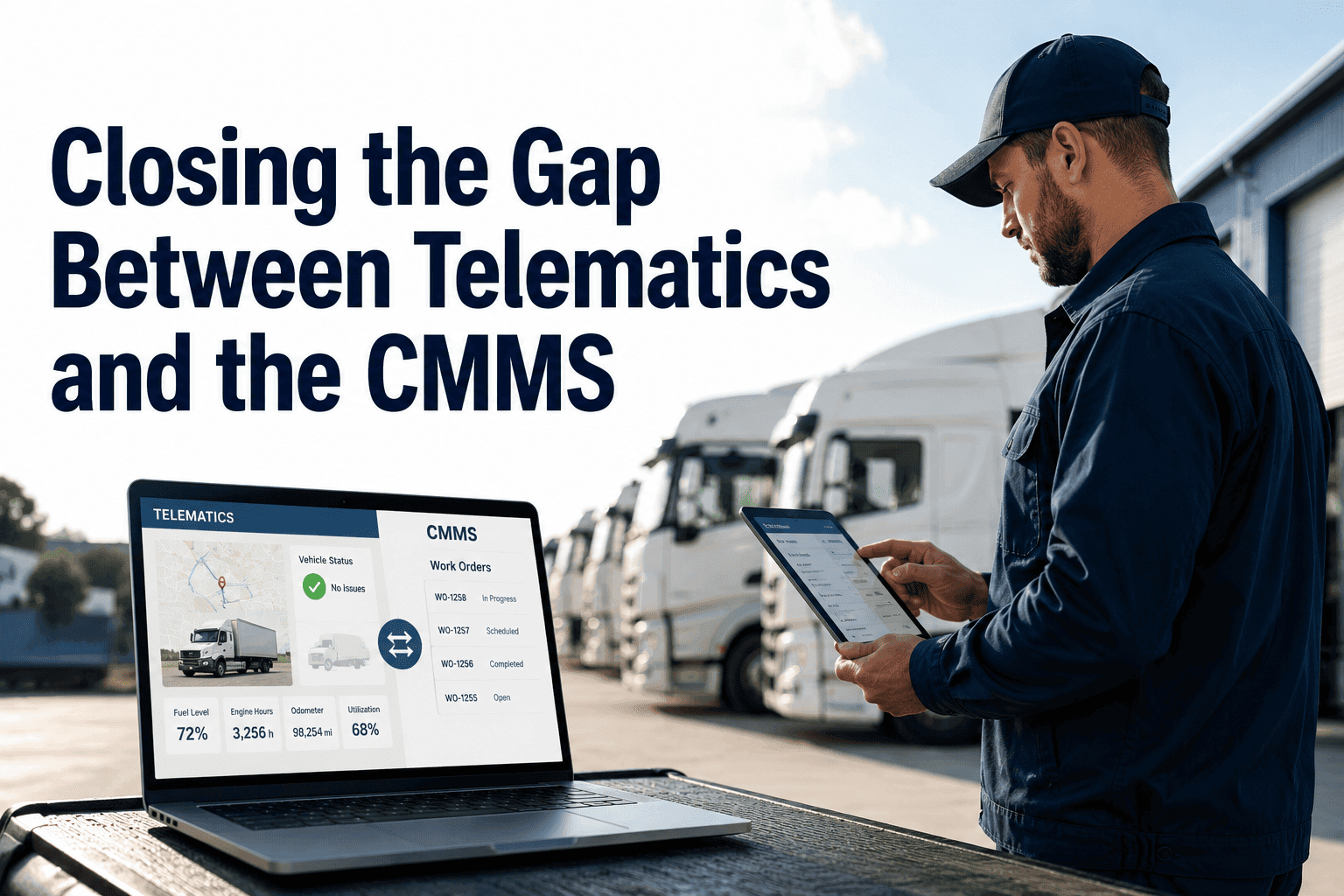
Don't try to connect everything at once. Start with the integration that eliminates the most manual work or prevents the most expensive failures. For most fleets, that's telematics-to-CMMS: engine fault codes and odometer readings flowing automatically into work order creation and PM scheduling. This single connection typically eliminates 60–70% of manual data entry and catches failures 2–3 weeks earlier.
Phase 4: Build Cross-System Reporting
With data flowing between systems, build unified dashboards that answer questions no single tool can: cost per mile by vehicle (fuel + maintenance + depreciation), PM compliance rate correlated with breakdown frequency, and total cost of ownership by asset class. This is where fleet data connectivity stops being an IT project and starts being a competitive advantage.
See what unified fleet data looks like on your assets
OxMaint connects telematics, fuel, and maintenance data into one platform — so your team stops reconciling spreadsheets and starts preventing failures. Book a 30-minute demo and we'll map your current systems live.
What changes when fleet data silos are eliminated?
The difference between fragmented and integrated fleet data isn't incremental — it's transformational. Here's what the same fleet looks like before and after breaking down system silos.
| Capability | With Data Silos | With Unified Data |
|---|---|---|
| Fault code response | Telematics alert sits unread; failure discovered at breakdown | Fault code auto-creates CMMS work order within minutes |
| PM scheduling | Calendar-based or manual odometer entry; 15–20% of PMs late | Odometer/hour-meter data auto-triggers PMs at exact intervals |
| Cost per mile | Calculated quarterly from 3+ spreadsheets; often 60+ days stale | Real-time dashboard combining fuel, maintenance, and utilization |
| Audit readiness | 2–3 weeks pulling records from multiple systems | One-click compliance reports with complete asset history |
| Failure prediction | Impossible — no single system has enough context | AI models trained on combined telematics + repair history |
| Manager time | 11+ hrs/week on manual data reconciliation | Under 2 hrs/week — data flows automatically |
How OxMaint breaks fleet data silos — without replacing your existing tools
OxMaint is an AI-powered CMMS + EAM platform designed to be the central hub that connects your fleet's disconnected systems. Rather than asking you to rip out telematics or fuel card providers, OxMaint sits at the center and makes them all work together.
Open API + Pre-Built Integrations
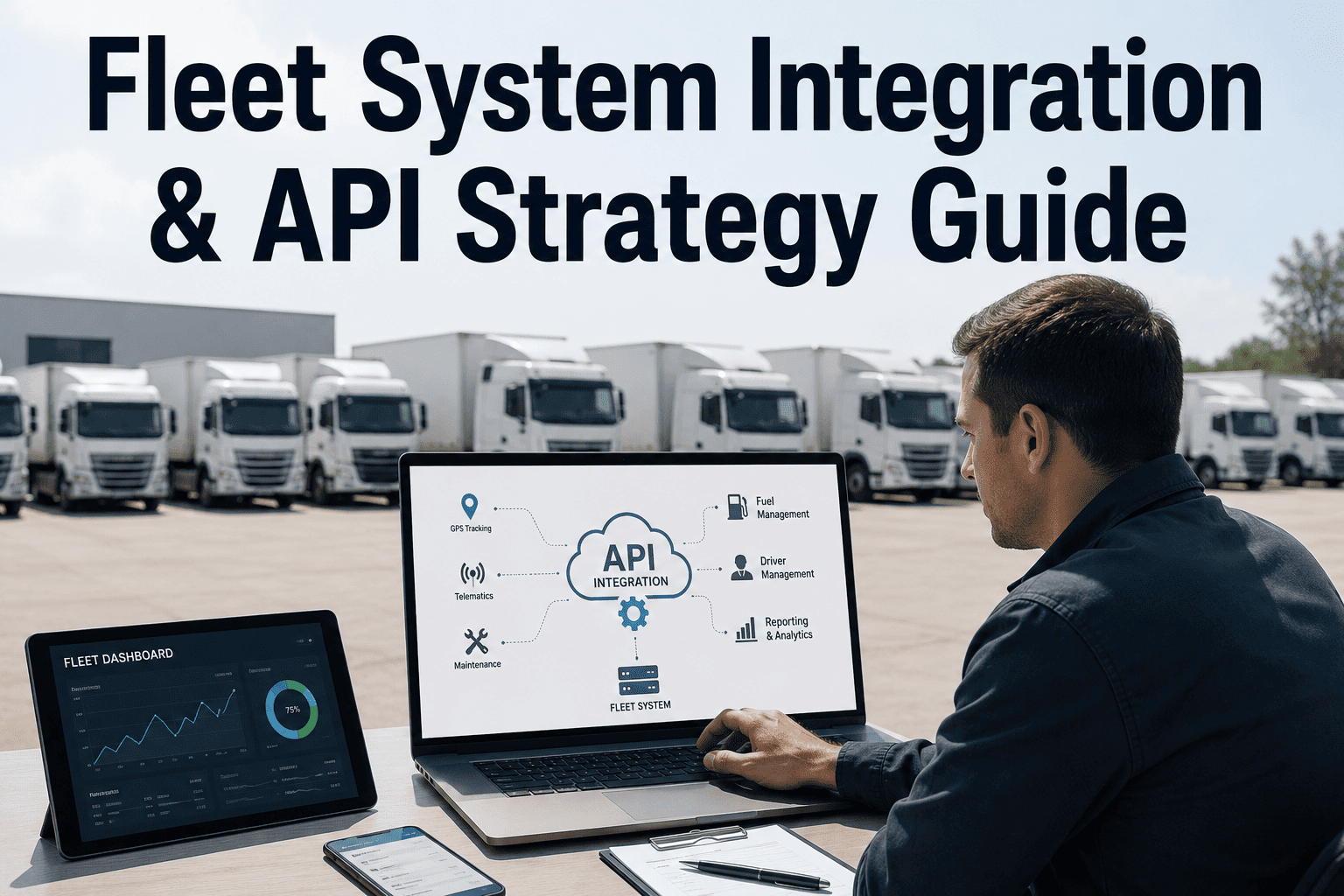
Native connectors for major telematics providers (Geotab, Samsara, Verizon Connect), fuel card platforms, and ERP systems — plus a full REST API for custom connections. Engine fault codes, odometer readings, and fuel transactions flow directly into asset records and work orders. Outcome: eliminate 60–70% of manual data entry in the first month.
Unified Asset Master Records
Every vehicle gets one canonical profile that aggregates data from all connected systems — maintenance history, telematics diagnostics, fuel transactions, inspection records, and documents. No more cross-referencing three dashboards to answer "what's going on with Truck #47?" Outcome: complete asset history in one view, audit-ready in seconds.
AI-Powered Predictive Maintenance
OxMaint's AI engine analyzes the combined dataset — telematics fault patterns, repair history, operating conditions, and part failure rates — to predict failures before they happen and auto-generate work orders with the right parts and procedures. Outcome: 30–50% reduction in unplanned downtime within 6 months.
Cross-System Analytics Dashboards
Pre-built and custom dashboards that combine data across every connected source: cost per mile by vehicle, PM compliance vs. breakdown correlation, fuel efficiency trends by driver and route, and TCO by asset class. Outcome: fleet managers reclaim 8–10 hours per week previously spent on manual reporting.
5 fleet data integration mistakes that keep silos alive
Most fleet data integration projects don't fail because the technology doesn't work — they fail because of avoidable strategic mistakes. Here are the five most common, and how to avoid each.
Trying to integrate everything at once
A "big bang" integration project that tries to connect all 7 systems simultaneously will take 12+ months and collapse under its own complexity. Start with one high-value connection (usually telematics-to-CMMS), prove the value, then expand. Each successful integration builds organizational momentum for the next.
Skipping master data governance
Connecting systems without standardizing asset IDs first is like building a bridge without aligning the two sides. If Truck #47 has three different identifiers across three systems, every integration will produce mismatched records. Spend the 2–3 weeks on data governance — it saves months of cleanup later.
Treating integration as an IT-only project
IT can build the pipes, but only maintenance and operations teams know what data matters and how it should drive decisions. The most successful fleet data unification projects are co-led by a maintenance/reliability champion and an IT partner — with clear executive sponsorship.
Choosing a CMMS without integration capabilities
If your CMMS can't accept API connections, webhook triggers, or automated data imports, it becomes the bottleneck that keeps every other system siloed. When evaluating CMMS platforms, integration architecture should be a top-3 selection criterion — not an afterthought. Book a Demo to see how OxMaint's open API handles this.
Measuring integration success by "systems connected" instead of outcomes
Connecting five systems means nothing if technicians still create work orders from paper and managers still build reports in spreadsheets. Define success by operational metrics: reduction in manual data entry hours, PM compliance rate improvement, decrease in unplanned breakdowns, and time-to-insight for cost decisions.
Frequently asked questions about fleet data silos
What are fleet data silos and why are they a problem?
Fleet data silos occur when maintenance records, telematics diagnostics, fuel transactions, GPS tracking, and dispatch data are stored in separate systems that don't share information. They're a problem because every decision — from PM scheduling to vehicle replacement — is made with incomplete data, leading to 15–25% higher maintenance costs and preventable breakdowns.
How do I integrate fleet telematics with my CMMS?
The fastest path is choosing a CMMS with pre-built telematics connectors or an open API. OxMaint connects natively with major telematics platforms, automatically pulling fault codes, odometer readings, and engine hours into asset records — and auto-creating work orders when diagnostic thresholds are triggered. Most fleets complete this integration in 1–2 weeks. Start Free Trial to test the connection with your own telematics data.
What is fleet master data governance?
Master data governance is the practice of establishing a single, authoritative record for each fleet asset — one canonical vehicle ID, naming standard, and data ownership policy that every system references. Without it, the same vehicle appears under different identifiers in different systems, making automated integration impossible and every report unreliable.
How long does it take to break down fleet data silos?
A focused, phased approach delivers measurable results in 90 days: 3 weeks for a data audit, 3 weeks for master data governance, 4 weeks for your first high-value integration, and 3 weeks for initial cross-system reporting. Full integration across all systems typically takes 6–12 months, but each phase delivers standalone ROI from day one.
Can I break fleet data silos without replacing my existing software?
Yes — in most cases you should keep your existing telematics, fuel card, and dispatch tools. The key is adding a central platform (like OxMaint) that connects them via API and serves as the single source of truth for asset data. You only need to replace a tool if it fundamentally lacks integration capability — which is common with legacy on-premise CMMS platforms but rare with modern cloud-based systems.
Stop reconciling spreadsheets. Start preventing failures.
OxMaint unifies your telematics, fuel, maintenance, and dispatch data into one AI-powered platform — so your fleet team spends less time chasing data and more time keeping vehicles on the road.
Free 14-day trial · No credit card required · Connect your first data source in under an hour