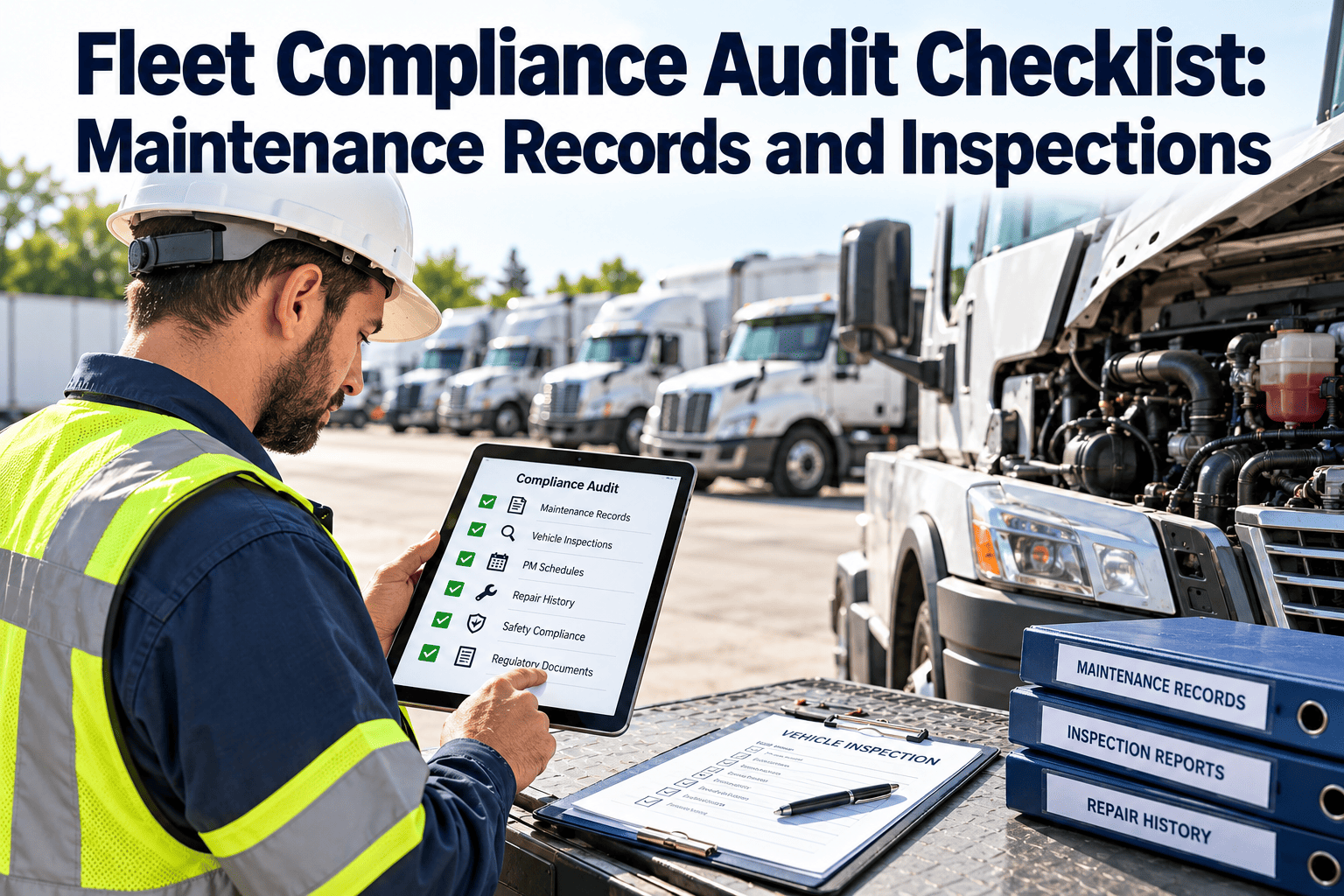
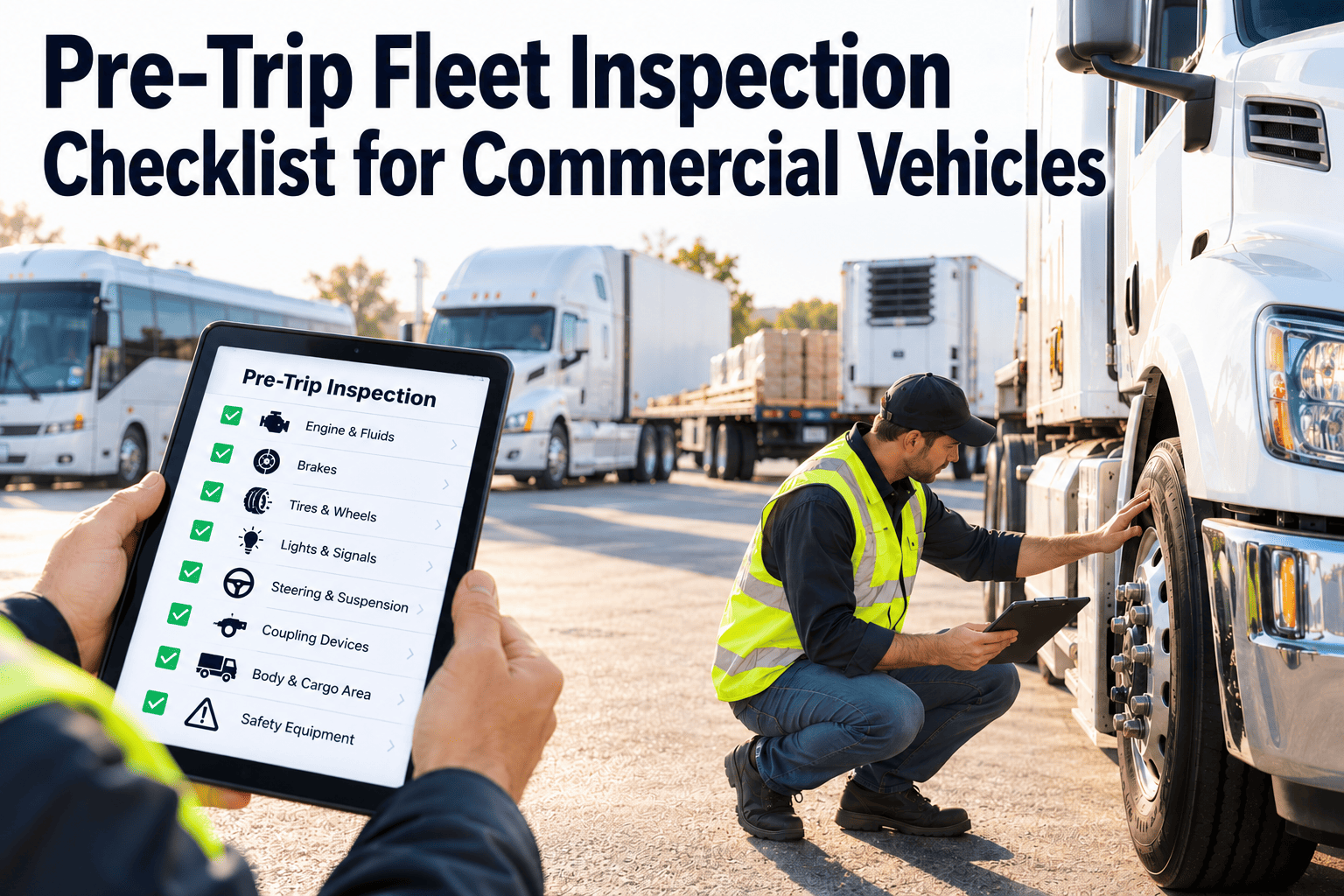
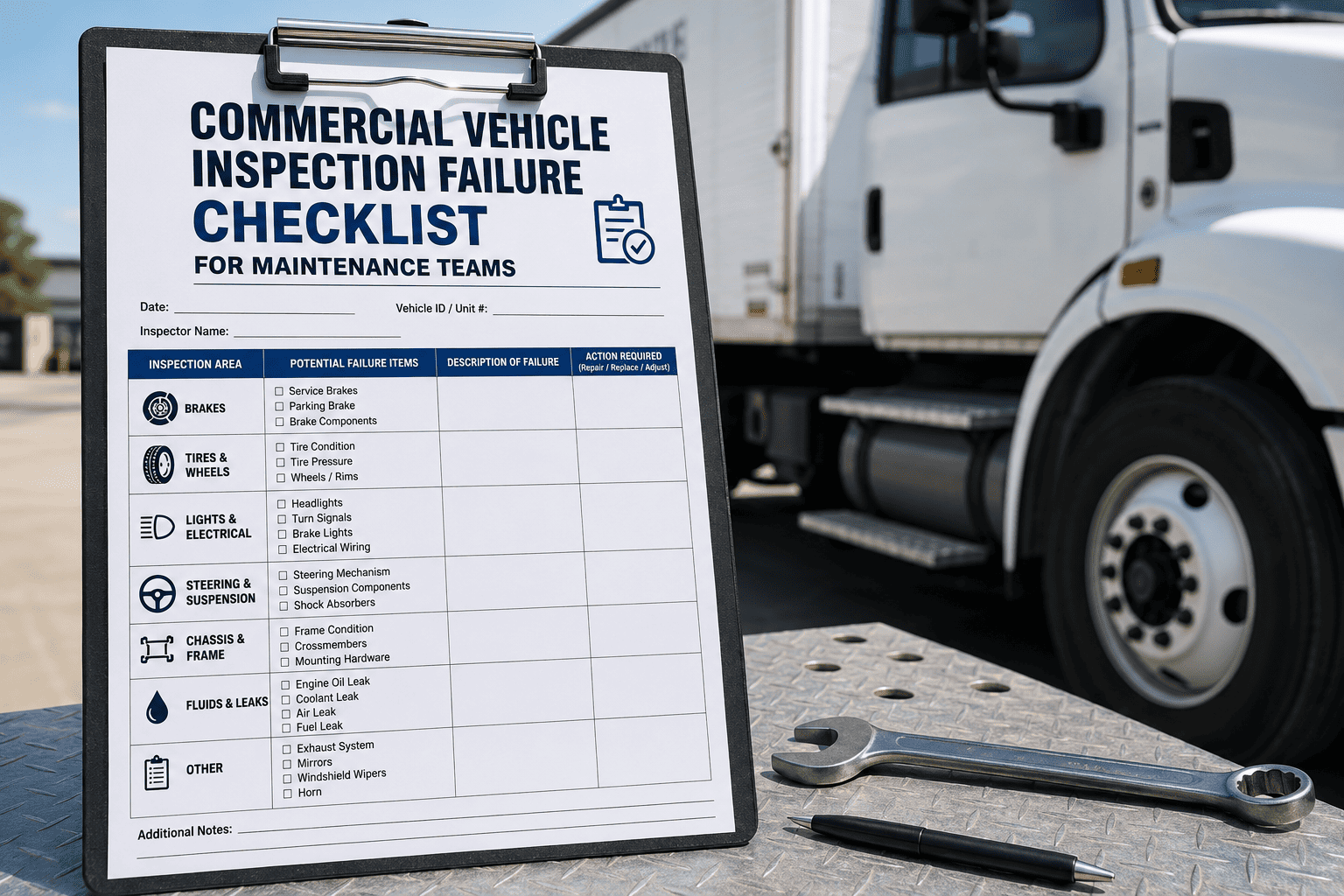
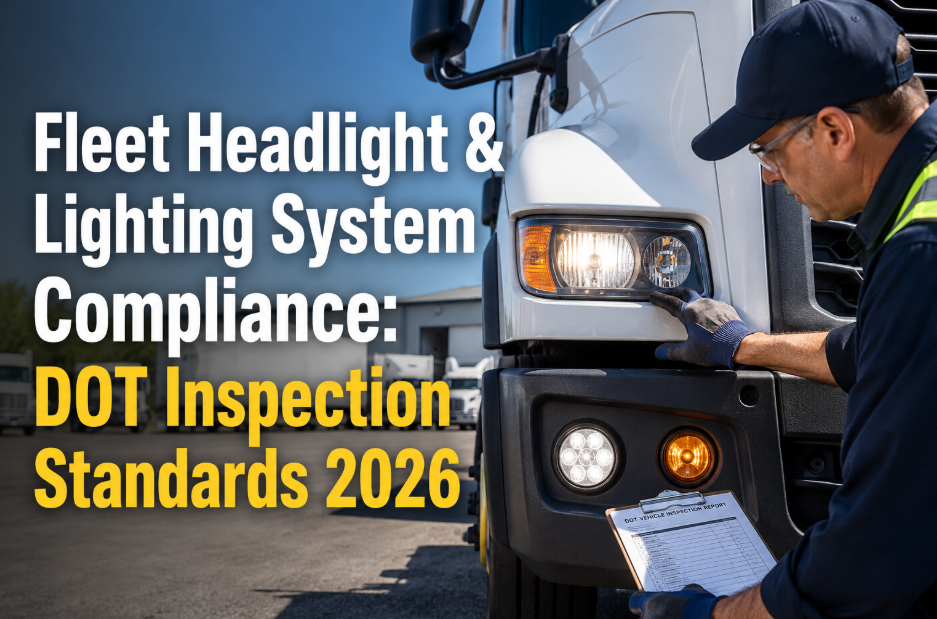
Navigating the rigorous landscape of DOT and FMCSA regulations is a primary challenge for fleet managers. Maintaining compliance is not just about passing a roadside inspection — it is about ensuring the structural and mechanical integrity of your engine assets through documented, audit-ready maintenance logs. Failing to meet these standards can result in high-severity CSA scores, heavy fines ranging from $5,000 to $15,000 per violation, and out-of-service orders that halt your operations entirely. Transitioning to a digital Asset Master strategy ensures that every engine inspection is logged with precision, providing an immutable audit trail that satisfies federal auditors and keeps your drivers safe. If your fleet still relies on paper forms and filing cabinets for compliance documentation, now is the time to sign up for OxMaint and build a digital compliance framework that protects your business.
DOT / FMCSA Compliance for Engine Maintenance & Inspections
The essential protocol for commercial fleet thermal and mechanical compliance. Secure your operation against audits with standardized Asset Master reporting and digital documentation.
Achieving Audit Readiness with Standardized Engine Reports
FMCSA regulation 396.3 requires every motor carrier to systematically inspect, repair, and maintain all motor vehicles under its control. For engine systems, this means documented evidence of cooling integrity, lubrication maintenance, exhaust compliance, and fuel system safety. Relying on disorganized paper files is a liability in a modern audit environment where inspectors expect organized, searchable records that demonstrate a systematic approach to vehicle safety.
The regulation specifically requires that maintenance records include the identifying number or description of the vehicle, the date of service, the nature of each inspection, repair, or maintenance performed, and who performed it. These records must be retained for at least one year at the location where the vehicle is housed or maintained. A single missing record during an audit can trigger a deeper investigation that uncovers additional deficiencies and compounds your violation exposure. To ensure your fleet is always prepared for an unannounced DOT intervention, sign up for OxMaint to centralize your compliance logs and automate your vehicle service records.
Is Your Fleet Audit-Ready Today
Do not wait for a DOT intervention. Implement a digital compliance framework for your drivetrain maintenance and eliminate the risk of failed audits, OOS orders, and five-figure fines.
The Economic Value of Proactive Compliance
Maintaining DOT compliance is not just a legal obligation — it is a financial strategy. Vehicles that undergo systematic engine inspections have 22% fewer roadside breakdowns and maintain higher resale values through verifiable maintenance histories. The cost difference between proactive compliance and reactive penalties is staggering, and fleets that invest in digital documentation systems consistently outperform those that treat compliance as an afterthought.
Consider the full cost of a single failed roadside inspection: the immediate fine (often $1,000 to $5,000 per violation), the out-of-service downtime while the vehicle sits waiting for repair, the cost of emergency roadside service at premium rates, the missed delivery or contract penalty, and the long-term CSA score impact that increases future inspection frequency and insurance premiums. A single serious engine violation can cascade into $15,000 or more in total costs. Compare that to the cost of a digital CMMS platform that automates PM scheduling, tracks every inspection, and ensures your fleet is always audit-ready. Want to see the ROI calculation for your specific fleet size? Book a demo and walk through our compliance dashboard with real numbers.
CSA Scores and Drivetrain Maintenance Trends
Maintenance violations are the leading contributor to high CSA (Compliance, Safety, Accountability) scores. The FMCSA's Vehicle Maintenance BASIC category tracks every maintenance-related violation detected during roadside inspections, and these points remain on your record for 24 months. A poor CSA score increases the frequency of future roadside inspections — creating a compounding cycle where one violation leads to more inspections, which uncover more issues, which further degrade your score.
For engine-specific violations, the severity weights are particularly high. An exhaust leak under the cab carries a severity weight of 8 out of 10. An active fuel leak is weighted at 7. Missing DVIRs (Driver Vehicle Inspection Reports) carry a weight of 4 but are the most frequently cited violation because they are the easiest for inspectors to verify — either you have the paperwork or you do not. Professional fleet operators sign up for OxMaint to bridge the gap between their technicians and the regulatory requirements, ensuring that every engine fault identified in the yard is repaired and documented before it ever reaches a weigh station.
Exhaust Leak under Cab
Immediate out-of-service condition. Carbon monoxide exposure creates an extreme safety hazard for the operator. Severity weight: 8/10.
Active Fuel or Oil Leak
Violation of 396.3(a)(1). Any leak that creates a road hazard or fire risk results in immediate grounding. Severity weight: 7/10.
Missing 396.11 DVIR
Failure to maintain daily vehicle inspection reports for engine faults. Most frequently cited violation. Severity weight: 4/10.
ROI Analysis: Audit Fines vs. Digital Prevention
The financial comparison between maintaining a digital compliance system and paying regulatory penalties makes the investment decision straightforward. Here is what the numbers look like for a typical fleet operation.
Maintaining engine compliance is about building a verifiable culture of safety. An auditor does not just want to know that you fixed a leak — they want to see the inspection report that found it, the work order that authorized the repair, the parts receipt that documents what was installed, and the sign-off that confirms the vehicle was returned to service in safe operating condition. That chain of documentation is what separates a compliant fleet from a vulnerable one. OxMaint builds this chain automatically with every work order. Book a demo and see how our digital inspection logs protect your business from the $15,000 mistakes of non-compliance.
Achieve 100% DOT Compliance Today
Join the ranks of high-compliance fleets using OxMaint to digitize inspections and secure their federal safety ratings. Get audit-ready in less than 30 minutes.
Frequently Asked Questions
What are the specific FMCSA requirements for engine maintenance records
Regulation 396.3 requires that you maintain a record of all inspections, repairs, and maintenance for each vehicle. This record must include the vehicle identification number or description, the date of service, the nature of each inspection or repair performed, and the next scheduled inspection date. These logs must be kept for at least one year at the place where the vehicle is housed or maintained and must be available for review upon request by an authorized federal or state inspector.
How can digital logs help during a roadside DOT inspection
Digital logs provide organized, timestamped, and professional evidence of maintenance that is often more trusted by officers than handwritten notes on loose paper. OxMaint allows drivers to instantly display or transmit up-to-date maintenance records from their mobile device, proving the vehicle is in a state of continuous compliance. This can mean the difference between a clean inspection and an out-of-service order when an officer questions whether a reported issue was actually repaired.
What is the most common engine violation cited during audits
Failure to maintain records (missing or incomplete DVIRs) is the most frequently cited violation because it is the easiest for inspectors to verify. For hardware-specific violations, exhaust system leaks and fuel system leaks are the highest-frequency citations that lead to out-of-service orders due to the immediate safety hazard they pose. These violations carry severity weights of 7 to 8 out of 10 in the CSA scoring system.
How does a CMMS improve my CSA scores
A CMMS prevents violations by ensuring that scheduled inspections actually happen on time, every time. Automated PM reminders and guided checklists ensure that small mechanical issues are caught and documented in the yard — not discovered on the road by a DOT officer. Fewer violations mean lower CSA scores, which in turn reduce the frequency of future roadside inspections and can lower your insurance premiums. Fleets using structured CMMS workflows report an average 35% reduction in CSA point accrual within the first year.
What is the penalty for failing a DOT compliance audit
Penalties vary by violation severity but can range from $1,000 to $16,000 per individual violation. Systemic failures — such as a complete lack of maintenance records across multiple vehicles — can result in fines exceeding $50,000 and potential suspension of your operating authority. Out-of-service orders halt the affected vehicle immediately, and repeated violations can trigger a comprehensive federal investigation of your entire operation.
How long does it take to implement a digital compliance system
With OxMaint, most fleets complete initial setup in under 30 minutes. Asset registration, PM schedule configuration, and checklist templates can be deployed on the same day. Full adoption — including technician training and workflow integration — typically takes 2 to 4 weeks. Many fleets begin generating audit-ready records within the first week of implementation, providing immediate compliance protection while the broader workflow matures.