AI-Driven Predictive Maintenance for Fleet Engines
By Oxmaint on January 2, 2026
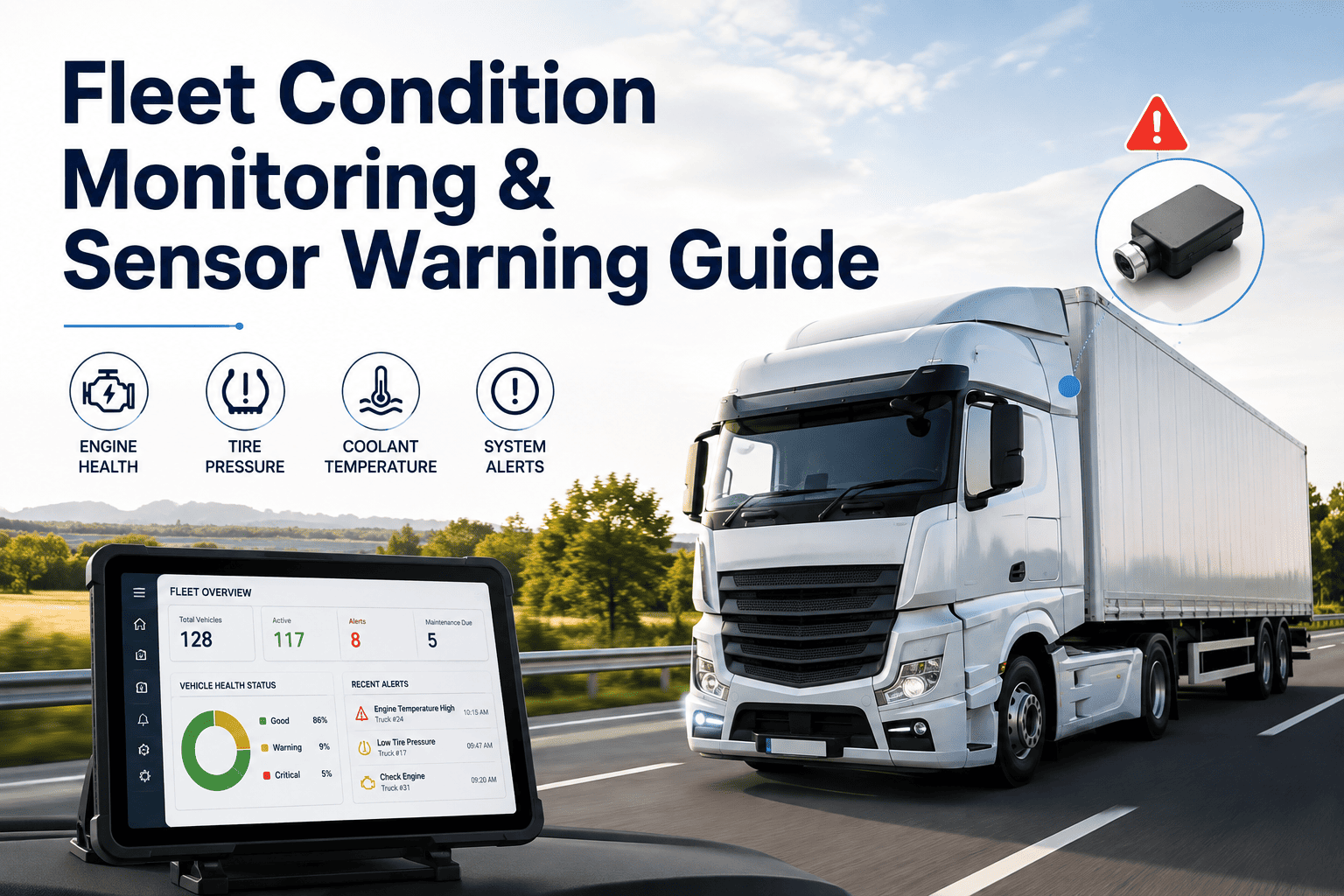
Your engine is talking. Every vibration pattern, temperature fluctuation, and pressure reading tells a story about what's happening inside—and what's about to happen. The difference between fleets that experience roadside breakdowns and those that don't isn't luck. It's whether anyone is listening. AI-driven predictive maintenance transforms the constant stream of engine data into actionable intelligence, identifying the subtle signatures of developing problems weeks before they become failures. With the predictive maintenance market projected to grow from $10.93 billion in 2024 to $70.73 billion by 2032, the technology has moved from experimental to essential. Yet only 27% of fleets currently use predictive maintenance—leaving the majority paying the reactive maintenance tax of emergency repairs, unplanned downtime and preventable breakdowns.
The Predictive Maintenance Revolution
27%
Currently Using PdM
65%
Plan AI by 2026
73%
Increasing Investment
$10.93B$70.73Bby 2032
How AI Reads Your Engine's Vital Signs
Traditional maintenance operates on assumptions—change the oil every 10,000 miles whether it needs it or not. AI-powered predictive maintenance operates on evidence, analyzing real-time data from dozens of sensors to understand actual component condition. Fleet operations that start with free predictive monitoring discover that their engines have been telling them exactly what they need—they just weren't equipped to listen.
Engine Data Points AI Monitors Continuously
Real-time sensor inputs that power predictive analytics
Temperature
Coolant, oil, exhaust, intake air, turbo
Detects: Cooling failures, combustion issues
Vibration
Bearing frequency, shaft alignment, imbalance
Detects: Bearing wear, misalignment, looseness
Pressure
Oil, fuel, boost, crankcase, coolant system
Detects: Pump failures, leaks, blockages
ECM Data
Fault codes, fuel trim, timing, load %
Detects: Injector issues, sensor drift, derates
Fluid Analysis
Oil particulates, viscosity, contamination
Detects: Internal wear, coolant intrusion
Emissions
NOx, soot load, DPF differential, DEF quality
Detects: Aftertreatment issues, regen needs
The Prediction-to-Action Workflow
Raw sensor data means nothing without intelligence to interpret it and workflows to act on it. AI algorithms compare current readings against learned baselines, identify deviation patterns, calculate remaining useful life, and trigger automated responses. The entire cycle—from anomaly detection to scheduled repair—happens without manual intervention. Fleet managers ready to book a platform demo can see this closed-loop workflow in action.
From Sensor Signal to Scheduled Service
1
Sensors Collect
Continuous real-time data from engine components
2
AI Analyzes
Pattern recognition against learned baselines
3
Anomaly Flagged
Deviation detected, severity calculated
4
Work Order Created
Automatic generation with parts list
5
Scheduled Repair
Optimal timing, zero unplanned downtime
See AI Predictions in Real Time
Watch how sensor data transforms into actionable maintenance intelligence with automated work order generation.
The business case for predictive maintenance isn't theoretical—fleets implementing AI-driven engine monitoring report consistent, measurable improvements. One fleet reduced their maintenance budget from $620K to $410K annually after implementation. Another achieved 73% reduction in hydraulic failures and 18% extension in equipment life. The pattern is clear: fleets that sign up for predictive analytics stop paying the reactive maintenance premium.
Fleet Performance: Before vs. After AI Predictive Maintenance
Before AI
39
Hours downtime/month
42
Monthly incidents
$620K
Annual maintenance cost
4.5
Days between failures
After AI
27
Hours downtime/month
-31%
25
Monthly incidents
-40%
$410K
Annual maintenance cost
-34%
28
Days between failures
+522%
Expert Perspective: Making the Shift
Industry Insight
Predictive maintenance 2.0 isn't about collecting more data—it's about turning that data into automatic decisions, closed-loop workflows, and measurable business outcomes. The fleets that operationalize predictive maintenance will run older trucks longer, reduce maintenance budgets by 25-40%, and achieve higher uptime. The fleets that wait will keep paying the reactive maintenance tax.
3-12 mo
Typical ROI Timeline
1st Failure
Often Pays for System
25-40%
Maintenance Budget Reduction
Your Implementation Path
Implementing AI-driven predictive maintenance doesn't require replacing your entire fleet or hiring data scientists. Modern platforms integrate with existing telematics, aggregate data from mixed-age fleets, and deliver value from day one. The key is starting focused—monitor your highest-value or highest-failure assets first, prove ROI, then expand. Fleet managers ready to begin can schedule an implementation consultation to identify their optimal starting point.
90-Day Implementation Roadmap
Week 1-2
Connect & Baseline
Install sensors on priority assets
Integrate existing telematics data
Establish normal operating baselines
Week 3-6
Learn & Detect
AI learns fleet-specific patterns
First anomalies detected and flagged
Prediction accuracy improves daily
Week 7-10
Automate & Act
Connect predictions to work orders
Auto-schedule repairs during downtime
Parts forecasting flows to procurement
Week 11-12
Measure & Expand
Document ROI from prevented failures
Expand to additional fleet assets
Refine models with accumulated data
The technology is proven. The ROI is documented. Most fleets see their first prevented breakdown within 45 days, often paying for the entire system investment. The only remaining variable is whether your fleet captures the competitive advantage—or continues paying for emergency repairs while competitors don't. Create your free account and start transforming engine data into predictive intelligence today.
Stop Reacting. Start Predicting.
Join the 65% of fleets adding AI-powered maintenance by 2026. See how predictive analytics transforms your engine data into scheduled repairs.
How does AI predict engine failures before they happen?
AI algorithms analyze continuous data streams from engine sensors—temperature, vibration, pressure, oil condition, and ECM fault codes. The system learns normal operating baselines for each vehicle and identifies subtle pattern deviations that indicate developing problems. For example, specific vibration frequency changes signal bearing wear weeks before audible symptoms appear. Machine learning models trained on thousands of failure patterns recognize these signatures and calculate remaining useful life, giving maintenance teams advance warning to schedule repairs.
What sensors are needed for predictive engine maintenance?
Most modern fleet vehicles already have onboard sensors through the ECM and OBD-II systems that provide temperature, pressure, and fault code data. For enhanced prediction accuracy, additional sensors may monitor vibration patterns, oil quality, and exhaust characteristics. Wireless sensors can be installed on older vehicles without existing telematics. The platform aggregates data from multiple sources—OEM telematics, aftermarket devices, and additional sensors—into a unified dashboard regardless of vehicle age or make.
How long until we see ROI from predictive maintenance?
Most fleets see positive ROI within 3-12 months, with many reporting that the first prevented breakdown pays for the entire system. High-intensity operations with expensive assets typically see the fastest returns. A single prevented engine failure that would cost $8,000-$18,000 in repairs and lost productivity can justify annual platform costs. Beyond avoided failures, ROI accumulates from extended equipment life (18-40% longer), reduced parts waste from right-time maintenance, and more efficient technician allocation.
Can small fleets benefit from AI predictive maintenance?
Absolutely. Smaller fleets often see higher percentage ROI because one prevented failure or 10% fuel reduction has immediate impact on tight margins. Modern platforms start at $15/unit/month, making the technology accessible regardless of fleet size. Small fleets also benefit from the aggregated learning—AI models trained on data from thousands of similar vehicles across multiple fleets provide accurate predictions even before accumulating extensive fleet-specific data.
What's the difference between predictive and preventive maintenance?
Preventive maintenance follows fixed time or mileage intervals—change the oil every 10,000 miles regardless of actual condition. This approach either services components too early (wasting money) or too late (allowing damage). Predictive maintenance monitors actual component condition and schedules service at the optimal moment—when intervention is needed but before damage occurs. This "right-time" approach reduces both unnecessary maintenance and unexpected failures, optimizing the entire maintenance spend.