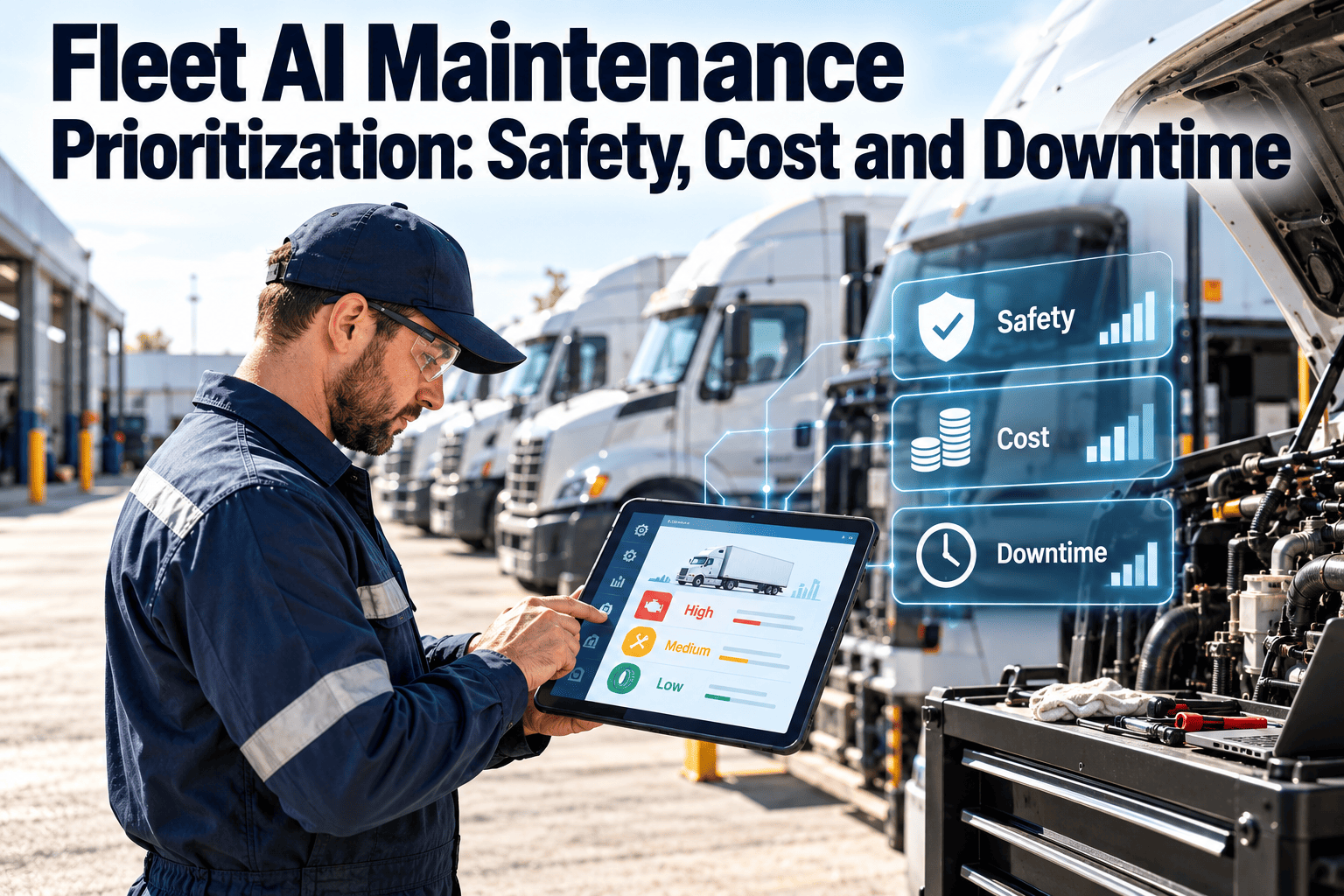
Every fleet shop has more open work than bays and technicians to handle it. Defects come in from inspections, drivers, telematics, and preventive maintenance at the same time, and someone has to decide what gets a vehicle first. Too often that decision rests on who shouts loudest. AI-assisted prioritization scores each job on safety risk, cost exposure, and downtime impact so the queue reflects real consequences, and it works best on the clean asset and work order history of a fleet maintenance platform.
Fleet AI Maintenance Prioritization: Safety, Cost and Downtime
Rank open defects and scheduled work by consequence, not by who called first. Keep technicians and planners in control while software does the sorting.
Why Manual Prioritization Breaks Down
First Come, First Served
- Minor cosmetic items block critical defects
- Urgency depends on the caller, not the risk
- Planners juggle spreadsheets and messages
- Repeat defects are treated like new ones
Consequence-Based Ranking
- Safety and compliance items rise automatically
- Cost of delay is visible before the decision
- Routes and vehicle criticality shape the order
- Planners review a ranked list, not a pile
A Simple Priority Matrix
Combine likelihood of failure with consequence. Software can calculate the position, and a planner confirms it.
What the Scoring Model Needs as Input
| Factor | Data Source | How It Affects Rank |
|---|---|---|
| Defect severity | Driver inspections, technician findings | Brake, steering, tire, and lighting defects rank above minor items |
| Regulatory status | Compliance records, inspection due dates | Items that risk out-of-service or audit findings move up |
| Failure history | Asset work order history | Repeat or worsening faults gain weight |
| Vehicle criticality | Route, contract, or duty assignment | Revenue-critical units get earlier slots |
| Parts availability | Inventory levels and lead times | Jobs with parts on hand can be sequenced first |
| Condition signals | Telematics fault codes, meter readings | Early warning raises likelihood before failure |
Build a Work Queue That Ranks Itself
Start with clean assets, defect records, and work orders. Prioritization is only as good as the data behind it.
From Signal to Scheduled Work
Capture
Inspections, driver reports, telematics alerts, and PM due dates land as records against the asset.
Score
Rules or models weigh severity, history, compliance, and criticality into a priority value.
Review
A planner confirms or overrides the ranking, especially for safety-critical or unusual jobs.
Schedule
Work orders are assigned by bay, skill, parts availability, and vehicle downtime window.
Learn
Outcomes feed back so scores improve as failures and repairs are recorded.
Guardrails That Keep AI Useful
Human override
Safety decisions stay with qualified people, and overrides are logged with a reason.
Explainable scores
Show which factors drove a rank so technicians trust and challenge it.
Data quality first
Missing meters, vague notes, and duplicate assets weaken any model.
Rules before models
Start with clear rules for safety and compliance, then add predictive signals.
Measuring Whether Prioritization Helps
How Oxmaint Supports Prioritized Maintenance
- Mobile inspections capture defects with severity and photos at the source
- Work orders carry priority, asset, parts, and technician assignment
- Preventive maintenance schedules keep predictable work off the emergency list
- Inventory tracking shows whether parts are ready before scheduling
- Dashboards and reports track backlog, downtime, and completion by priority
AI Prioritization Questions
Do we need machine learning to prioritize work?
Can AI decide what is safe to drive?
What data do we need to begin?
How do we build trust with technicians?
Can we see this in our own workflow?
Put the Right Repair First, Every Time
Bring inspections, work orders, and asset history together so safety, cost, and downtime drive what gets fixed next.