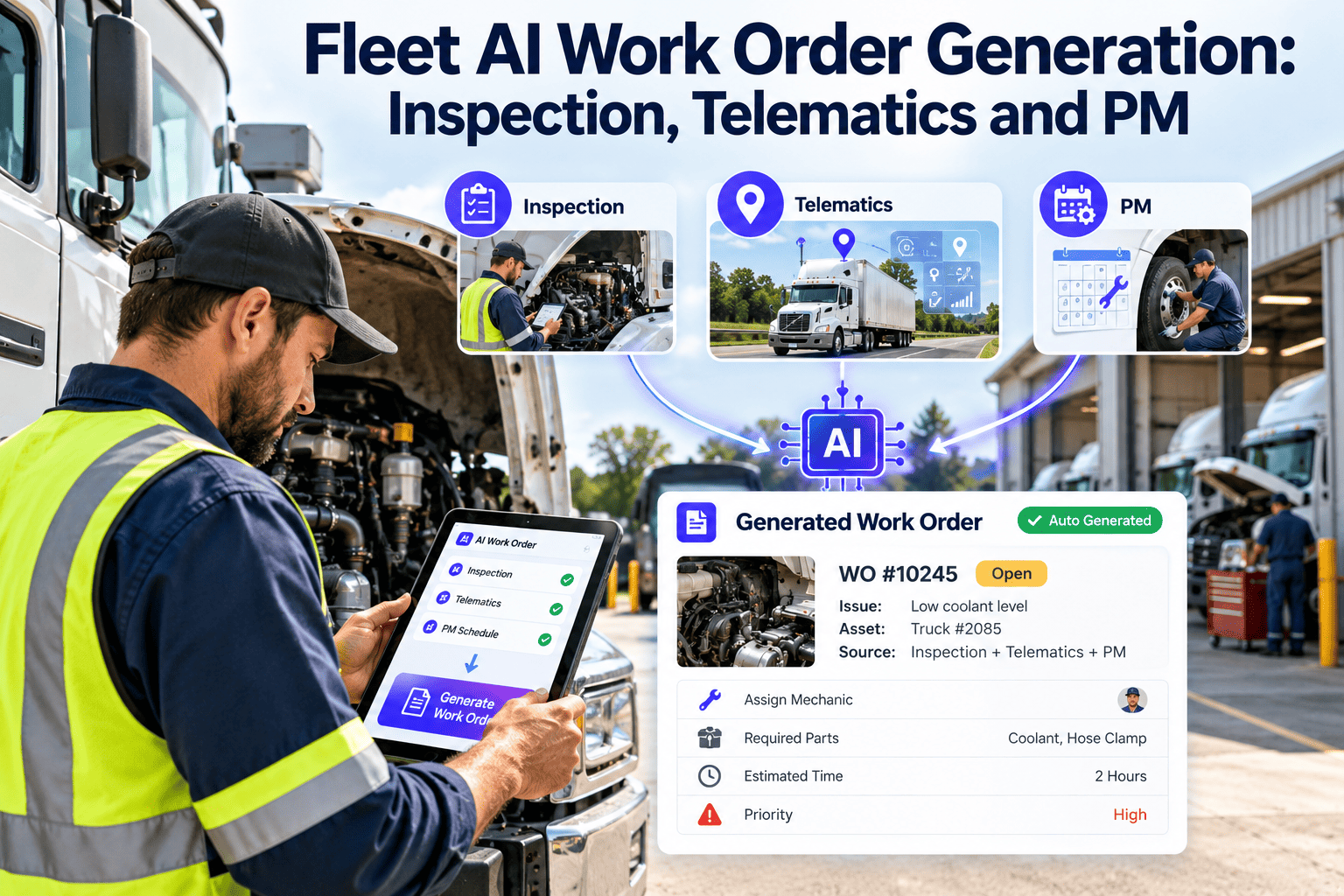
Most fleet work orders still begin with a person noticing something, writing it down, and hoping it reaches the right planner. Inspection defects, telematics fault codes, and preventive maintenance due dates all describe the same asset, yet they often live in separate places. AI-assisted work order generation connects those signals, filters the noise, and creates actionable jobs with the right context. Here is how to design it safely, using maintenance management software as the control point for every generated job.
Fleet AI Work Order Generation: Inspection, Telematics and PM
Turn driver defects, engine fault data, and PM schedules into one prioritized work order queue without flooding planners with duplicates or false alarms.
Inspection defects
Telematics faults
PM due triggers
Rules and AI review: match, de-duplicate, prioritize
One work order per real problem
Three signal sources, three different strengths
| Source | Strength | Weakness | Typical work order |
|---|---|---|---|
| Driver inspection | Catches visible and audible defects such as leaks, tires, lights, and noises | Subjective, inconsistent wording, sometimes skipped | Corrective repair |
| Telematics and fault codes | Objective, continuous, early warning on engine and emissions systems | Noisy, codes need interpretation, severity varies | Diagnostic or inspection job |
| PM schedule | Predictable, tied to mileage, hours, or time | Fixed intervals may ignore real condition | Preventive service |
No single source is complete. The value comes from combining them on the same asset record.
Why manual work order creation falls short
Delayed entry
Defects reported on paper reach the system hours or days later.
Duplicates
A driver, a code alert, and a PM can all describe the same issue.
Weak detail
Vague notes force planners to chase missing information.
Missed patterns
Repeat faults go unseen without a combined history.
From signal to work order in seven steps
1
Ingest
Receive a defect, fault code, or PM trigger tied to a specific unit.
2
Validate
Confirm the asset, meter reading, and timestamp are valid.
3
Match history
Check open work orders and recent repairs for the same system.
4
De-duplicate
Merge related signals into one job instead of creating three.
5
Prioritize
Rank by safety impact, compliance risk, and operational need.
6
Enrich
Attach photos, code details, suggested tasks, and likely parts.
7
Review and dispatch
A planner approves, adjusts, or rejects before the job goes to a technician.
See signals become work orders on your own fleet
Bring inspections, fault data, and PM schedules into one queue your planners can trust.
Using inspection data to generate better jobs
- Structured checklists produce cleaner data than free-text notes
- Pass, fail, and needs-attention options let rules decide what creates a work order
- Photo evidence helps planners judge severity without a site visit
- Safety-critical items such as brakes, steering, and tires should always escalate
- Minor cosmetic items can be batched into a later visit
Regulated fleets should keep inspection and repair records in line with local rules. In the United States, 49 CFR Part 396 addresses driver vehicle inspection reports and maintenance records.
Using telematics without drowning in alerts
Act now
Fault codes tied to safety, derate conditions, or imminent breakdown risk.
Plan soon
Recurring or worsening faults that should be diagnosed at the next service window.
Monitor
Informational codes tracked for patterns, with no work order until they repeat.
Tiering faults before they reach the work order queue prevents alert fatigue, which is the fastest way to lose planner trust.
Making PM smarter with condition data
Fixed-interval PM
- Triggered by mileage, hours, or date
- Simple to audit
- May service too early or too late
Condition-informed PM
- Intervals adjusted by duty cycle and fault history
- Pulls tasks forward when risk rises
- Needs reliable data and periodic review
Start with fixed intervals, then adjust only where completed work order data proves a pattern.
Guardrails for AI-generated work orders
A human approves safety-critical jobs before dispatch
Every generated job shows which signal created it
Duplicate rules are tested against real history
Planners can override priority and record why
False alarms are logged so rules can be tuned
Asset data and meter readings are checked regularly
AI should recommend and organize. Accountability for repairs and compliance stays with your maintenance team.
Common pitfalls and how to avoid them
- Poor asset data: duplicate unit numbers or wrong meters break matching, so clean the register first
- Creating work orders from every code: apply severity tiers and repeat thresholds
- No feedback loop: record technician findings so rules improve
- Ignoring parts: link common faults to likely parts to avoid repeat visits
- Skipping training: drivers and technicians must know why entries matter
KPIs to prove the workflow is working
Defect-to-WO time
How fast a report becomes an assigned job.
Duplicate rate
Share of jobs merged or rejected as duplicates.
Planner override rate
How often humans change AI priority.
Repeat repairs
Same fault returning within a defined window.
PM on-time rate
Services completed by their due point.
Roadside events
In-service failures over time.
How Oxmaint supports the workflow
- Inspection checklists that create or trigger corrective work orders
- Preventive maintenance schedules by meter, mileage, or calendar
- Work orders with labor, parts, photos, and notes
- Asset history so planners see earlier repairs before approving a job
- Mobile access for technicians and drivers
- Dashboards and reports for backlog, PM compliance, and repeat failures
Frequently asked questions
Can AI create work orders automatically?
Yes, with rules and review. Safety-critical jobs should still be approved by a planner.
Should every fault code become a job?
No. Tier codes by severity and repeat count to avoid alert fatigue.
How do we avoid duplicate work orders?
Match new signals to open jobs by asset and system. Try Oxmaint to see this in action.
Does this replace driver inspections?
No. Inspections catch defects sensors miss and support compliance records.
Where should we start?
Clean asset data and inspections first. Book a demo for a rollout plan.
Create fewer, better work orders from every signal
Connect inspections, fault data, and preventive schedules in a maintenance system your team controls.