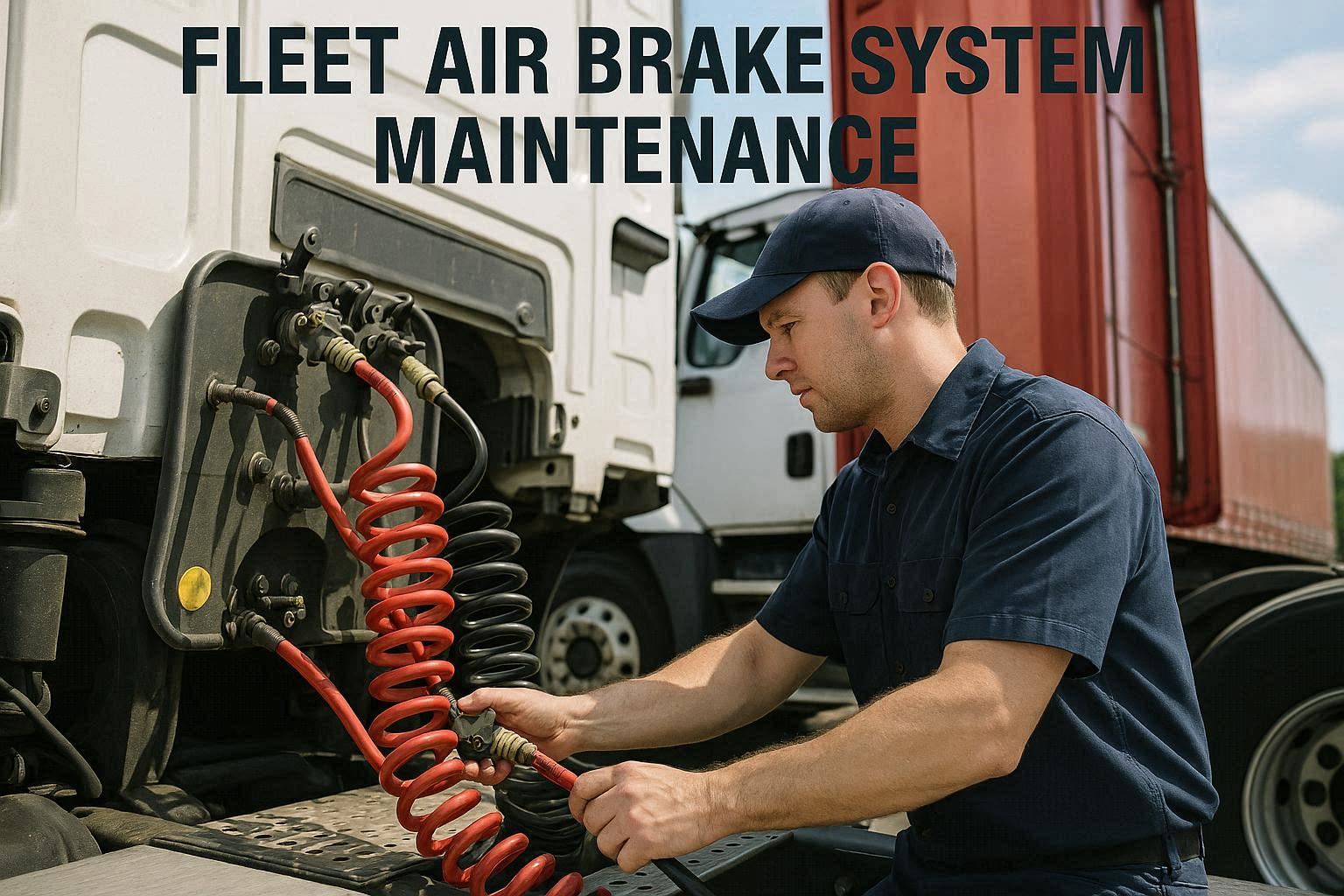
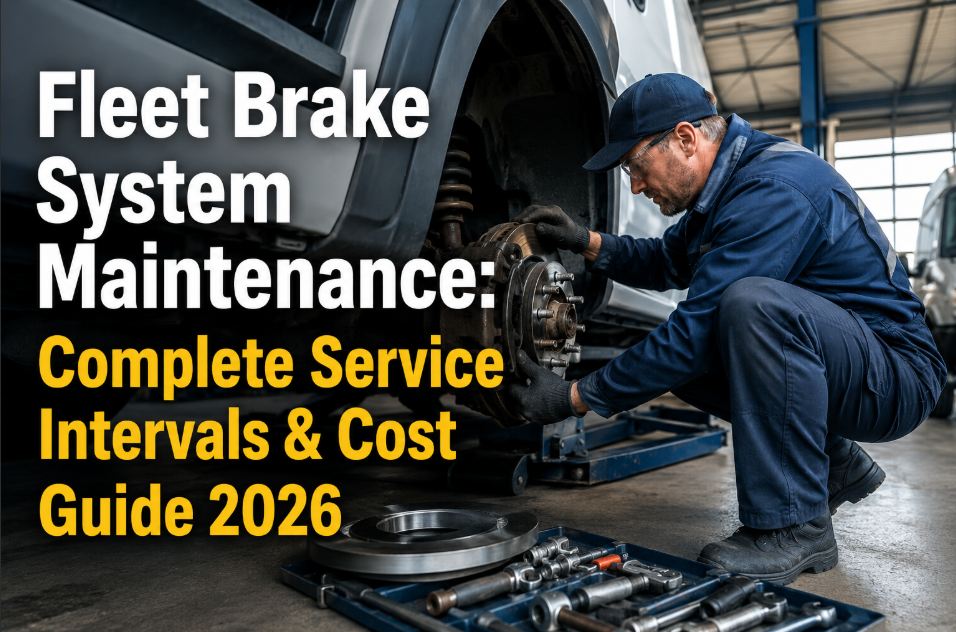
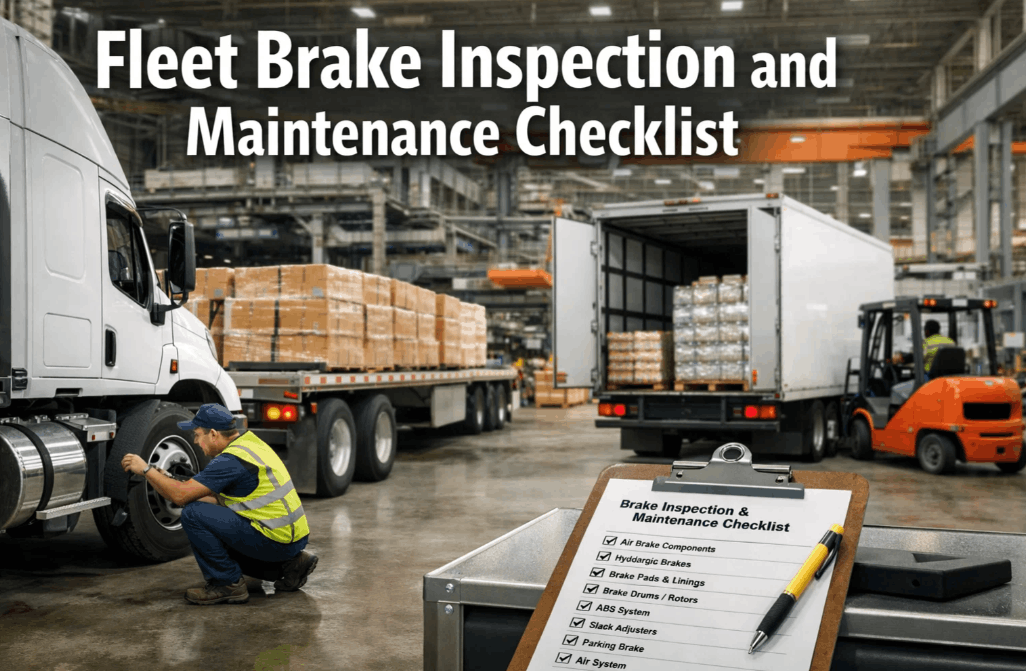
A safety director at a regional flatbed carrier in Charlotte pulled a vehicle out of service after a roadside DOT inspection in September revealed a 47 psi air leak at the service brake chamber on the right rear axle — a leak that had developed gradually over three weeks while the OBD system showed no fault codes, the driver had not reported any DVIR brake concerns, and the PM cycle showed the truck as 18,000 miles from its next scheduled brake inspection. The air system had been leaking long enough to measurably reduce the braking reserve pressure available for an emergency stop — and nothing in the fleet's maintenance programme had detected it. Air brake systems on commercial vehicles fail gradually, not catastrophically, and gradually failing systems often produce no driver-perceptible symptoms until the pressure loss is severe enough to trigger the low-air warning buzzer. By that point, the service brakes are already compromised. The 10% buildup time test — from 85 to 100 psi in under 45 seconds — and the leakdown test — no more than 4 psi per minute with brakes released — are the diagnostic procedures that reveal developing leaks before they affect stopping distance. OxMaint fleet air brake management schedules these tests at every PM interval, tracks results against FMCSA-specified tolerances, and generates pre-failure alerts when air system performance trends toward the regulatory limit before the formal test date arrives.
Air Brake System Management · FMCSA Compliance · OxMaint Fleet Safety Platform
Air Brakes Fail Gradually. Gradually Failing Systems Produce No Driver Symptoms Until the Reserve Pressure Is Already Compromised. The Diagnostic Tests That Catch This Are Scheduled Quarterly — OxMaint Makes Sure They Happen and That Results Are Trended.
OxMaint schedules air brake buildupand leakdown tests at every PM interval, tracks results against FMCSA tolerances, trends performance over successive tests, and generates alerts when air system health is declining before the formal test detects a regulatory failure.
47 psi
Air leak at Charlotte carrier — developed over 3 weeks with no OBD fault, no DVIR report, 18,000 miles from next scheduled brake inspection
4 psi/min
FMCSA maximum acceptable air loss rate with brakes released — 49 CFR 393.55; above this is a roadside out-of-service violation
30%
Of commercial vehicle roadside brake violations involve air system defects — leaking chambers, faulty check valves, failed air dryers (CVSA data)
Zero
FMCSA air brake violations at OxMaint-managed fleets with quarterly buildup and leakdown testing enabled — missed tests are automatically escalated
49 CFR
393.55 specifies the air brake performance standards that every commercial vehicle must meet. Buildup time: 85 to 100 psi in under 45 seconds with engine at governed speed. Leakdown: no more than 4 psi per minute with engine off and brakes released; no more than 8 psi per minute with brakes applied. These tests are not complex — any qualified technician with a calibrated gauge can perform them. The challenge is ensuring they are performed consistently at the correct interval, results are recorded against the vehicle, and trends are analysed before a gradual deterioration crosses the regulatory limit at a roadside inspection rather than in a maintenance bay.
Six Air Brake System Components OxMaint Tracks and Maintains
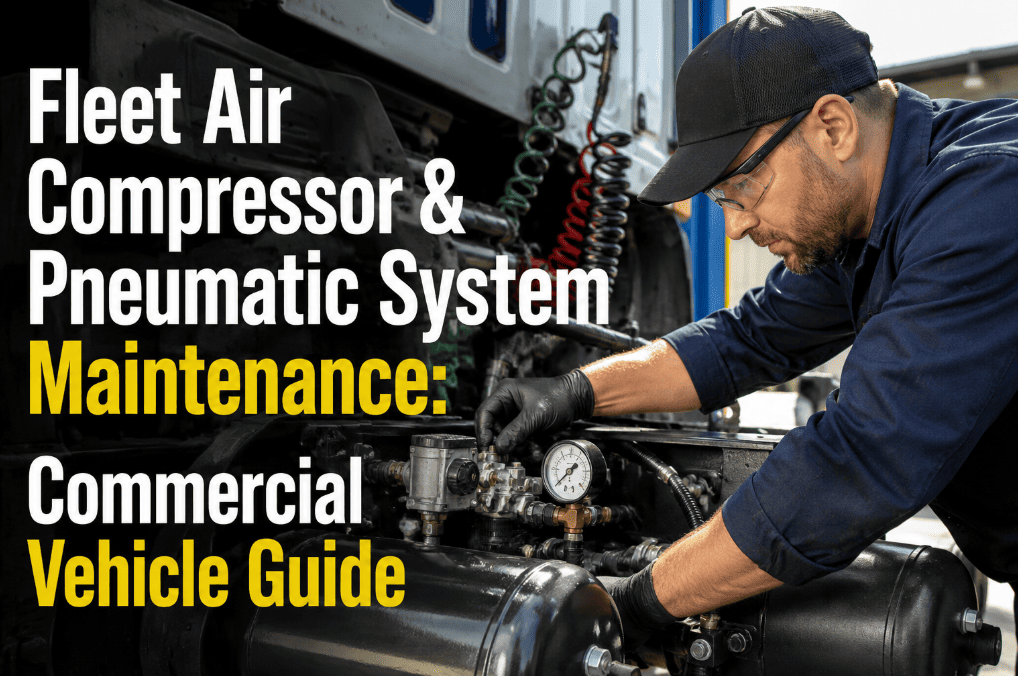
Air Compressor Performance
Compressor output — buildup rate from 85 to 100 psi — is the foundational air system health metric. OxMaint schedules compressor output tests at every PM interval and trends the buildup time across successive tests. A compressor that takes 38 seconds one quarter and 44 seconds the next is still within tolerance — but the trend is actionable before the 45-second limit is reached.
Brake Chamber Inspection
Service brake chambers, spring brake chambers, and combination chambers require periodic inspection for diaphragm condition, pushrod travel measurement, and mounting hardware integrity. OxMaint generates chamber inspection work orders at each PM interval with FMCSA-specified pushrod travel limits embedded in the checklist — technicians record measurements rather than checking a box.
Slack Adjuster and Brake Stroke Monitoring
Automatic slack adjusters should maintain pushrod stroke within FMCSA limits without manual adjustment. When stroke measurements trend toward the 1.75-inch warning threshold on a 20-degree chamber, OxMaint generates a pre-out-of-service alert before the measurement reaches the 2-inch OOS limit. Manual adjustment of an automatic slack adjuster is a diagnostic indicator — OxMaint flags repeated manual adjustments as a slack adjuster replacement trigger.
Air Dryer and Moisture Management
Air dryer desiccant cartridge replacement and automatic purge valve testing are among the most commonly deferred air system maintenance items — and moisture-contaminated air systems cause brake system corrosion, valve sticking, and freeze events in cold-climate operations. OxMaint schedules desiccant replacement at OEM-specified intervals and includes purge valve functional testing in every quarterly air system PM event.
Air Lines, Fittings, and Glad Hands
Air line deterioration — cracking, chafing, and fitting corrosion — is the most common source of the gradual air leaks that fail leakdown tests. OxMaint includes full air line inspection in the annual brake PM checklist, with specific inspection points for under-chassis routing areas subject to heat, abrasion, and road debris. Glad hand seal replacement is scheduled annually regardless of visible wear — seals that appear serviceable often fail leakdown testing.
Check Valves, Reservoir Drains, and Safety Valves
One-way check valves, wet and dry reservoir drain valves, and safety pressure relief valves are safety-critical components that require periodic functional testing rather than visual inspection alone. OxMaint includes functional valve tests in the quarterly PM work order — drain valve cycling, check valve backflow testing, and safety valve set-pressure verification — with results recorded against the vehicle's air system maintenance record.
OxMaint Air Brake PM Cycle — From Scheduled Test to Compliance Record
Step 1 · Schedule
PM Work Order Generated
Air brake PM work order auto-generated at configured mileage or calendar interval with buildup test, leakdown test, stroke measurement, and component inspection checklists
→
Step 2 · Test and Record
Results Captured In Field
Technician records buildup time, leakdown rate, pushrod strokes per axle, and component inspection findings in OxMaint mobile — measurements, not checkboxes
→
Step 3 · Trend and Alert
Performance Trending
OxMaint trends results across successive tests — generating alerts when performance is declining toward FMCSA limits before the next formal test, not at the roadside inspection
OxMaint · Air Brake Compliance Platform
Schedule the Tests. Record the Measurements. Trend the Results. Catch the Leak in the Bay, Not at the Scale.
Air compressor output, brake chamber stroke, slack adjusters, air dryers, line inspection, and valve testing — all PM-scheduled, all trended, all in OxMaint.
Air Brake PM Frequency by Duty Cycle and Climate
Duty Cycle · Standard
OTR and Regional Linehaul
Quarterly air brake PM including buildup test, leakdown test, pushrod stroke measurement per axle, and air dryer drain valve cycling. Annual comprehensive inspection including air line routing, chamber condition, and check valve functional testing. Desiccant cartridge replacement annually.
Quarterly
buildup + leakdown
Duty Cycle · Severe
Vocational and Off-Road Fleets
Every 30 days or 10,000 miles — whichever occurs first — for brake system inspections on construction, mining, and aggregate hauling fleets. More frequent desiccant replacement (every 6 months) due to contaminated air environments. Glad hand seal replacement at every 6-month inspection due to connector cycling frequency.
Climate · Cold
Northern USA, Canada, UK, Germany
Pre-winter air dryer performance verification — ensuring full desiccant function before moisture freeze events begin. Additional air line inspection for corrosion at October PM event for fleets operating in salt-treated road environments. Spring inspection for salt-related fitting and brake chamber corrosion.
Pre-winter
dryer verification
FMCSA Air Brake Performance Standards — Limits OxMaint Tests Against
30%
of commercial vehicle roadside brake violations involve air system defects — leaking chambers, faulty check valves, failed dryers (CVSA annual inspection data)
Zero
FMCSA air brake out-of-service violations at OxMaint fleets with quarterly buildup and leakdown testing enabled and results trended
3 weeks
Charlotte carrier air leak development time — no OBD fault, no driver symptom, until the leakdown test caught what no other monitoring method detected
A 47 psi air leak that develops over three weeks produces no driver symptoms, no OBD fault codes, and no telematics alert. Only a leakdown test catches it. OxMaint makes sure that test happens — every quarter, on every truck, with results trended against FMCSA limits.
Air brake PM is not complex. The challenge is making sure it is consistently performed and consistently documented. OxMaint automates both.
Frequently Asked Questions — Fleet Air Brake System Maintenance
Does OxMaint record air brake test results as measurements — or just pass/fail checkboxes?
OxMaint records air brake test results as measurements — buildup time in seconds, leakdown rate in psi per minute, and pushrod stroke in inches per axle position. Measurement recording rather than pass/fail checkboxes enables the trend analysis that identifies gradual performance decline before the regulatory limit is reached. A fleet running quarterly tests with OxMaint builds a per-vehicle air system performance history that supports both maintenance decision-making and DOT compliance documentation.
How does OxMaint trigger an alert when air brake performance is trending toward FMCSA limits before the next test?
OxMaint calculates the performance trend slope from the last three test results per metric per vehicle — if leakdown rate is increasing by 0.8 psi per quarter, OxMaint projects when the 4 psi limit will be reached and generates an alert to the fleet maintenance manager before that test date, prompting an unscheduled inspection. The alert threshold and trend window are configurable per fleet.
Can OxMaint generate DOT-ready air brake inspection records for FMCSA compliance reviews?
Yes — OxMaint exports air brake maintenance records in the format required for 49 CFR Part 396 maintenance records documentation — each vehicle's inspection history, test results, component replacement records, and technician credentials per inspection. The export is available for any date range and can be generated for individual vehicles or entire fleet for FMCSA audit response.
Does OxMaint integrate with electronic brake monitoring systems like Haldex or Bendix?
Yes — OxMaint integrates with Bendix ACom, Haldex InfoLink, and Meritor-Wabco electronic brake monitoring systems via API. Fault codes from electronic brake systems are automatically linked to the vehicle's brake maintenance record in OxMaint, creating a work order when brake system faults are detected. Electronic fault data supplements the periodic physical testing programme rather than replacing it — OBD faults detect electrical failures; leakdown tests detect mechanical air losses.
How does OxMaint handle air brake records for trailers separately from tractors?
OxMaint maintains separate air brake maintenance records for tractors and trailers — each trailer in the fleet has its own air system inspection history, leakdown test record, and brake chamber stroke measurements. Trailer brake PM is scheduled by calendar interval (typically semi-annual) rather than mileage, since trailer odometer data is often unavailable. DVIR trailer brake defect reports are linked to the trailer asset record automatically when submitted through OxMaint mobile.
The Air Leak That Will Fail Your Next Roadside Inspection Is Already Developing. Schedule the Test That Catches It First.
OxMaint schedules, records, and trends every air brake performance test across your entire fleet — so gradual air system deterioration is caught in the maintenance bay, not at a weigh station inspection that puts your vehicle out of service on the roadside.