A fleet brake maintenance program is the set of inspections, measurements, repairs, and records that keeps every vehicle able to stop within its design limits. Brakes wear on every trip, so the program cannot depend on memory or a folder of paper checklists. It needs a clear path from the first noted defect to a verified repair, with the evidence saved on the unit. This guide walks through that path for air and hydraulic brake systems, from driver reports to road tests. Fleets that manage the whole cycle in fleet maintenance software spend less time chasing paperwork and more time fixing brakes correctly.
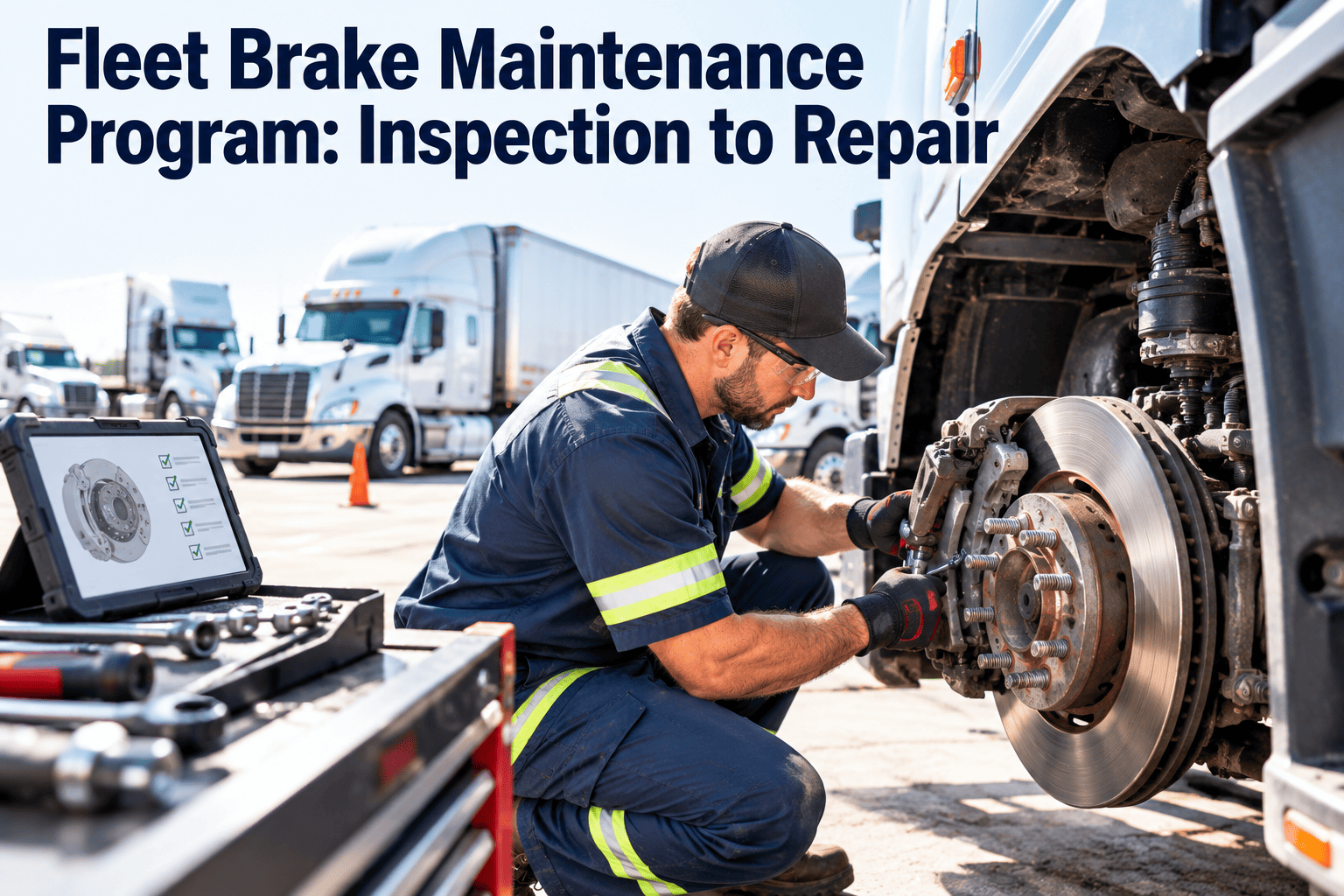
Fleet Brake Maintenance Program: Inspection to Repair
Turn brake findings into ranked, tracked, and verified repairs so no defect is noted once and forgotten.
Why brakes deserve their own program
Brake defects are among the most common reasons commercial vehicles are placed out of service at roadside. They also carry the highest consequence when missed.
Reduced stopping ability raises crash risk, injury exposure, and liability after an incident.
Roadside brake violations can hurt inspection results and carrier safety scores.
Unplanned brake repairs take a truck off the road at the worst time, often with a load aboard.
Ignored wear turns a lining job into drums, rotors, chambers, and tow charges.
Know the system you are maintaining
Inspection points differ by brake type, so build separate checklists for each system in your fleet.
| System | Typical vehicles | Key inspection points | Common failure signs |
|---|---|---|---|
| Air drum brakes | Tractors, trailers, straight trucks | Pushrod stroke, lining thickness, drum condition, slack adjusters, air leaks | Out-of-adjustment brakes, cracked drums, contaminated linings |
| Air disc brakes | Newer tractors and trailers | Pad thickness, rotor wear and cracks, caliper slide, boots | Uneven pad wear, seized slides, torn boots |
| Hydraulic disc brakes | Vans, pickups, medium-duty trucks | Pads, rotors, fluid level and condition, hoses, calipers | Soft pedal, pulling, fluid leaks, pulsation |
| Parking and emergency brakes | All classes | Spring brake function, cable travel, hold test | Rollaway, weak hold, slow release |
Three inspection tiers, one connected record
Brake checks happen at different depths. The program works when all three feed the same asset history.
Driver pre-trip and post-trip
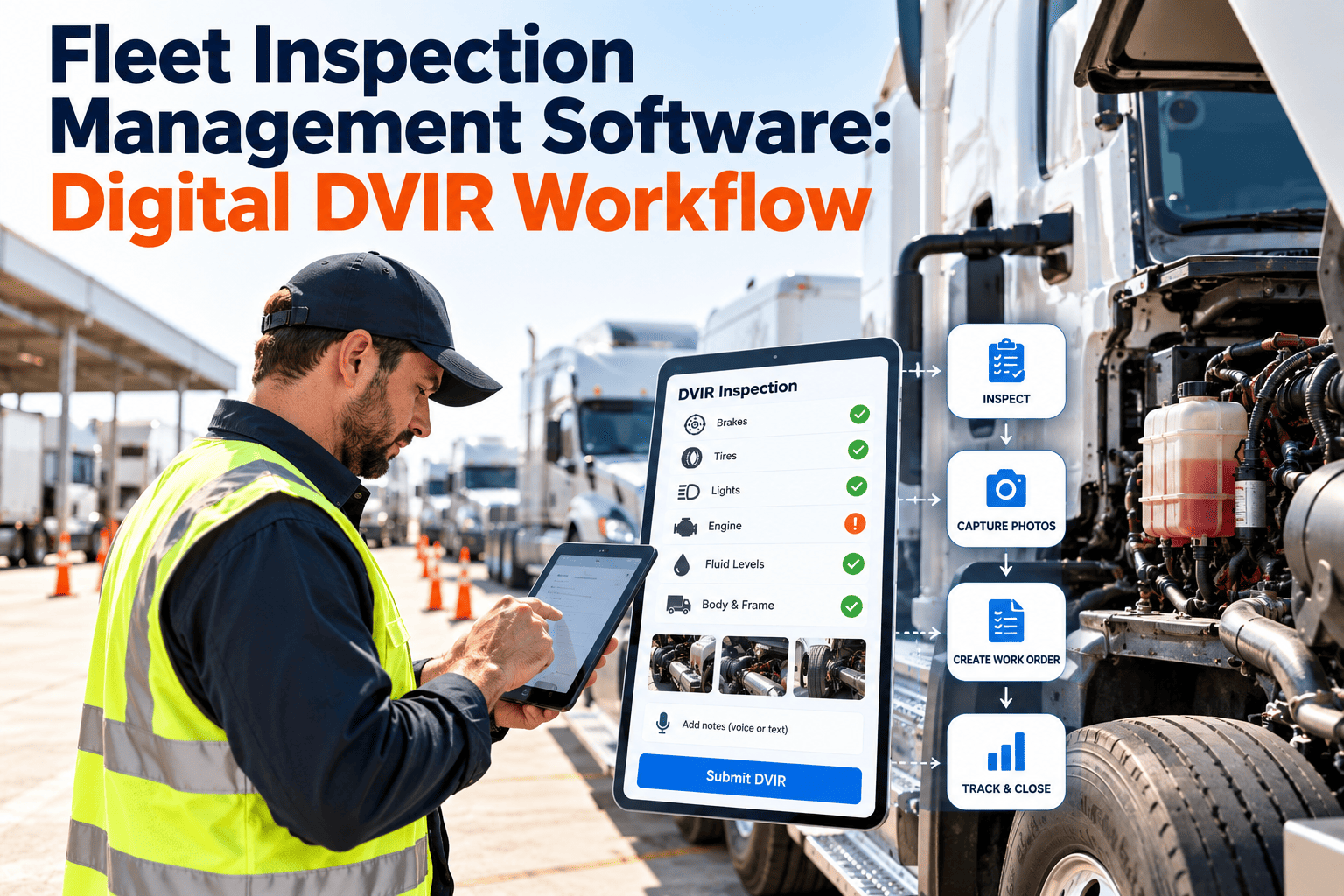
Drivers check air pressure build-up, leaks, pedal feel, and visible damage, then report defects on the vehicle inspection report.
Preventive maintenance brake check
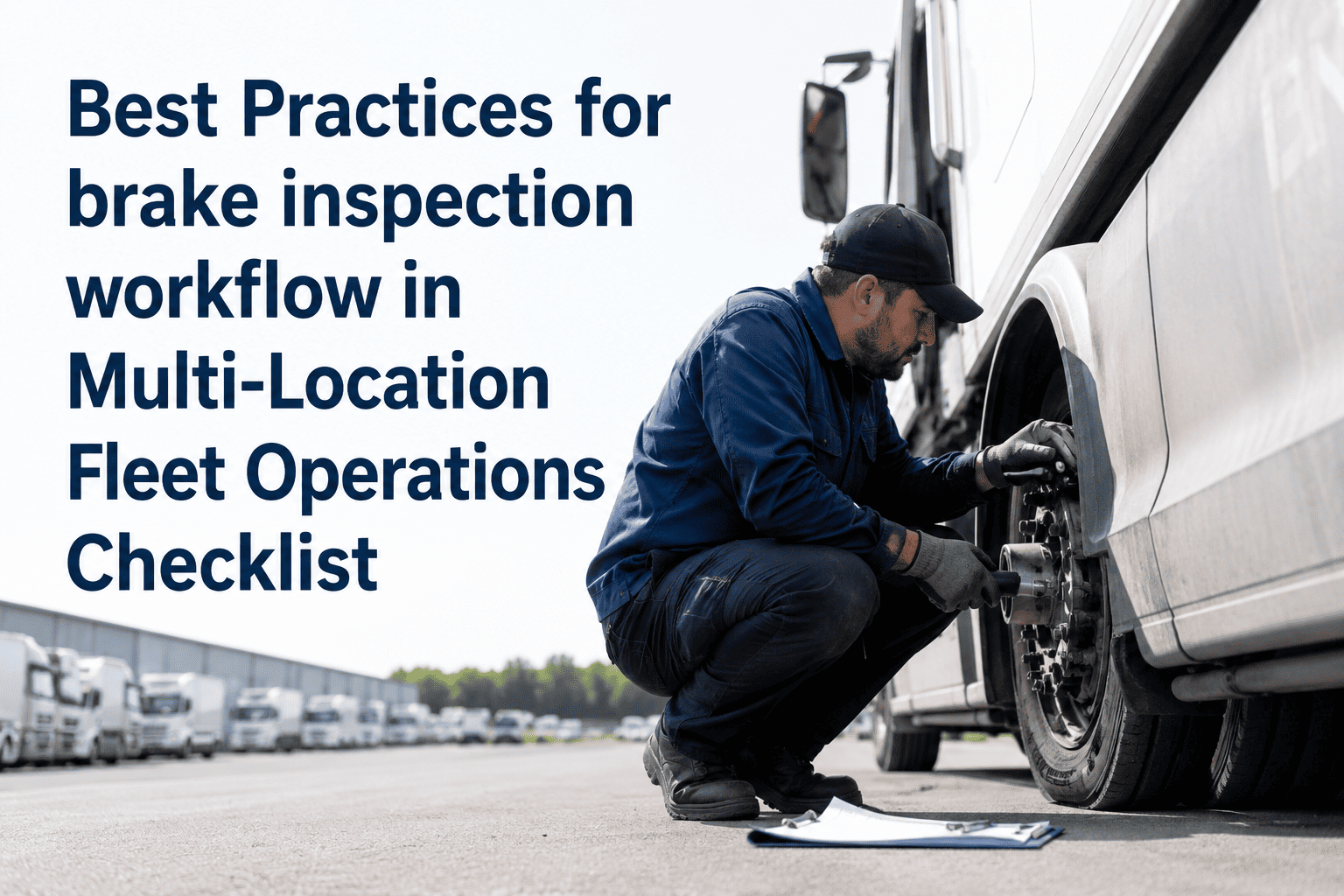
Technicians measure lining or pad thickness, pushrod stroke, rotor and drum condition, and lubrication points on a fixed interval.
Periodic and annual inspection
A qualified inspector completes a documented review to meet the minimum periodic inspection standards for brakes.
Rank every defect before scheduling the repair
Not every finding needs the same response. A simple severity matrix keeps critical units off the road and routine wear in the planned schedule.
| Severity | Example finding | Vehicle status | Target action |
|---|---|---|---|
| Critical | Cracked drum or rotor, failed parking brake hold, major air leak, brake out of adjustment beyond limit | Remove from service | Repair and verify before release |
| Major | Lining or pads near minimum, uneven wear across an axle, leaking chamber | Restrict or schedule urgently | Repair at next available bay |
| Minor | Worn boot, dry slack adjuster, cosmetic corrosion | Keep in service | Combine with next PM |
| Monitor | Wear trending toward limit | Keep in service | Recheck at set interval |
Set the exact measurement limits from OEM specifications and current roadside out-of-service criteria, then load them into your inspection templates.
Stop losing brake findings between the driver and the shop
Route every defect to a ranked work order with parts, labor, and verification in one place.
The inspection-to-repair workflow
Each hand-off below is a place where information is usually lost. Close the gap with a work order that follows the defect.
-
1
Capture the defect
Record the report from the driver or technician with unit number, brake position, description, and photos where possible.
-
2
Create a linked work order
The defect opens a corrective work order on the asset, so the finding cannot be closed without a repair record.
-
3
Diagnose and measure
The technician records actual readings, such as thickness and stroke, instead of a simple pass or fail.
-
4
Reserve parts
Reserve pads, linings, drums, rotors, chambers, and hardware against the work order before the unit enters the bay.
-
5
Repair by axle set
Replace friction components in axle sets and follow torque and adjustment steps from the service procedure.
-
6
Verify before release
A second check confirms adjustment, leak tests, and a road or roller test result before the vehicle returns to service.
-
7
Close with evidence
Attach readings, parts used, labor time, and sign-off to the unit history for audits and warranty claims.
Before and after a structured brake program
- Defects reported verbally or on paper that never reach the shop
- Pass or fail notes with no measurements to trend
- Brakes replaced only after a roadside violation or complaint
- Parts ordered after the truck is already down
- Records scattered across binders and email
- Every defect creates a tracked work order with an owner
- Actual wear readings logged at each PM
- Replacement planned from wear trends before limits are reached
- Common brake kits stocked against forecast demand
- Complete history available by unit in seconds
Brake parts and inventory control
Brake jobs stall more often on parts than on labor. Plan stock around the components you replace most.
Stock by fleet mix
Keep pads, linings, hardware kits, and slack adjusters that match the axles actually in your fleet.
Standardize suppliers
Fewer part numbers and approved vendors reduce mismatches and speed up ordering.
Track returns and cores
Log drums, rotors, and warranty returns so credits are not lost.
Set reorder points
Use past work orders to set minimums rather than guessing what the shop needs.
Compliance records that support the program
US motor carriers should confirm requirements with their compliance team. These sections of the Federal Motor Carrier Safety Regulations commonly apply.
| Reference | What it addresses | Record to keep |
|---|---|---|
| 49 CFR 393.47 | Brake actuators, linings, drums, and rotors requirements | Component measurements and repair details |
| 49 CFR 396.3 | Systematic inspection, repair, and maintenance with records | Service history by vehicle |
| 49 CFR 396.11 | Driver vehicle inspection reports and defect certification | Reported defect and certified repair |
| 49 CFR 396.17 | Periodic inspection at least every 12 months | Inspection report and inspector qualification |
Brake KPIs worth tracking
How Oxmaint supports brake maintenance
Oxmaint links inspections, work orders, parts, and history so brake information stays with the vehicle.
- Digital inspection checklists with brake-specific items and photo attachments
- Preventive maintenance schedules triggered by mileage, hours, or calendar date
- Corrective work orders created directly from inspection defects
- Mobile work orders for readings, notes, and sign-off in the bay
- Inventory tracking for brake components and reorder alerts
- Asset history and reports for audits, warranty, and trend review
Fleet brake maintenance FAQs
How often should fleet brakes be inspected?
Daily by drivers, at every PM by technicians, and at least annually in a documented periodic inspection.
Should brake readings be recorded or just pass or fail?
Record readings. Numbers let you predict replacement timing, and you can log them digitally at each service.
What is the best way to track brake defects?
Tie each defect to a work order so it stays open until a repair is verified and signed off.
Why replace brakes in axle sets?
Uneven friction across an axle causes pulling and uneven wear, so paired replacement is standard practice.
Can I see a brake workflow before committing?
Yes. Book a demo to review inspection templates and work order flow for your fleet.
Build a brake program you can prove on paper and on the road
Track every inspection, defect, part, and repair on one platform designed for maintenance teams.