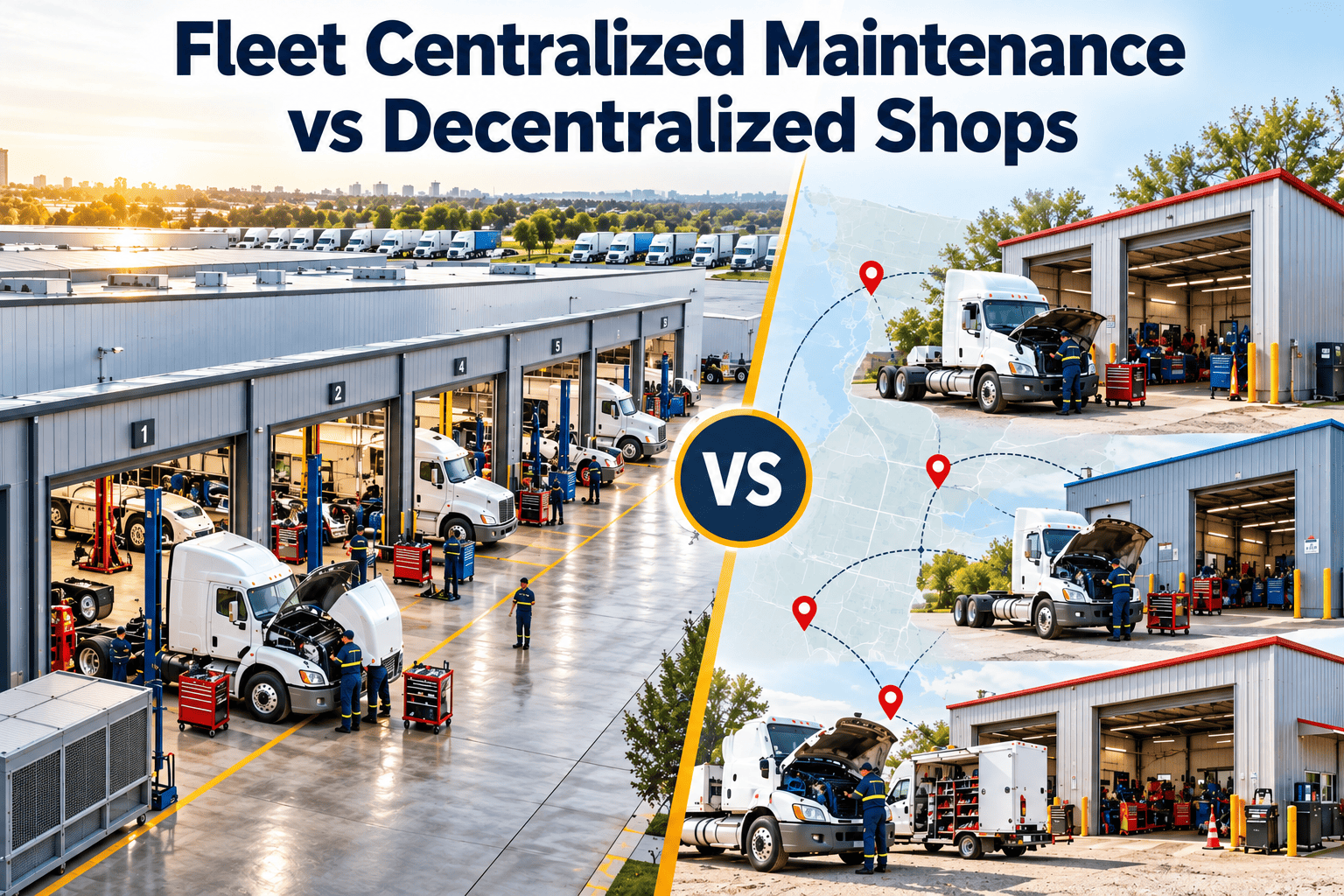
Fleets with more than one yard eventually face the same question: should every repair flow through one central shop, or should each depot keep its own technicians and bays? Neither answer is automatically right, because cost, uptime, and compliance all depend on how well work is planned and recorded. This guide compares both models using real shop-floor trade-offs and shows how a shared system of record changes the outcome. If you are evaluating tools, start with fleet maintenance software that works across every location.
Fleet Centralized Maintenance vs Decentralized Shops
Choose a shop model by measuring turnaround, repeat repairs, and parts cost per unit, not by habit. A maintenance-first CMMS gives every location the same work order, inspection, and asset history standard.
Centralized Hub
- One main facility
- Specialist technicians
- Single parts room
- Units travel to the shop
VS
Decentralized Shops
- Depot-level bays
- Generalist technicians
- Local parts stock
- Work happens near the route
What the centralized versus decentralized decision really controls
- Technician utilization and specialist skill coverage
- Deadhead miles and time a vehicle spends off the road
- Parts duplication, shrink, and emergency purchasing
- Consistency of inspection, repair quality, and documentation
A fleet maintenance strategy is an operating model for routing work. The building is secondary to the rules that decide where each job goes.
Side-by-side comparison of the two shop models
| Factor | Centralized | Decentralized |
|---|---|---|
| Technician skill depth | Strong. Specialists handle diagnostics, electrical, and major component work. | Variable. Depends on hiring in each location. |
| Vehicle downtime | Can rise when units travel long distances to reach the shop. | Often lower for routine work done close to the route. |
| Parts inventory | One stock room, better visibility, fewer duplicates. | Multiple stock rooms, higher carrying cost and shrink risk. |
| Process consistency | Easier to enforce one standard. | Drifts unless standards are actively managed. |
| Tooling and equipment | Invest once in lifts, scanners, and alignment gear. | Repeated capital spend or uneven equipment. |
| Local responsiveness | Slower queue when many depots compete for bays. | Faster reaction to roadside and same-day needs. |
| Compliance records | Naturally consolidated. | Scattered unless one system holds everything. |
Where each model breaks down
Centralized pain points
- Bay queues grow as the fleet expands
- Drivers lose shifts shuttling units
- Remote depots feel unserved and delay reporting defects
- One facility outage stalls repairs across the network
Decentralized pain points
- Each shop invents its own PM checklist
- Repeat repairs go unnoticed across locations
- Parts are bought at different prices from different vendors
- Audit prep means collecting paperwork from every yard
Hub-and-spoke work routing in six steps
1
Capture the defect
Driver inspections and technician findings enter one queue with photos and meter readings.
2
Classify severity
Safety-critical, repair-soon, or monitor. Severity decides how fast the job moves.
3
Apply routing rules
Routine PM stays local. Complex diagnostics and major components go to the hub.
4
Reserve parts and bay
Check stock at both locations before dispatching the unit.
5
Complete and document
Labor, parts, and findings close out on the work order, regardless of location.
6
Review the history
Compare cost and repeat failures per asset, per shop, and per technician group.
Why a single system of record matters more than the shop model
Most fleet maintenance problems blamed on structure are really data problems. If a unit visits three shops and each keeps separate records, no one sees the pattern behind a recurring failure.
What a unified asset history makes visible
- Repeat repairs on the same component across different locations
- Labor hours and parts cost per vehicle, regardless of where work occurred
- Overdue preventive maintenance by depot
- Technician workload and backlog by location
- Warranty-eligible repairs that would otherwise be missed
Oxmaint keeps asset records, work orders, and inspection history in one place, so a decentralized fleet can run with centralized visibility.
Compare your depots on one set of maintenance data
See how shared work orders, inspections, and asset history expose the real cost of each shop model.
Metrics that settle the debate
Turnaround
Hours from defect report to unit returned to service, by shop.
Repeat Repairs
Same failure within a defined window on the same asset.
PM Compliance
Services completed on time against due, per location.
Cost per Mile
Labor and parts divided by distance or hours of use.
Backlog Age
Open work orders by age and severity.
Parts Fill Rate
Jobs started with every needed part on hand.
The hybrid model most mature fleets land on
Many fleets end up with a hybrid: depots handle PM, tires, and light repairs, while a hub takes diagnostics, engine, transmission, and body work.
Keep local
- Scheduled PM services
- Tire and brake checks
- Fluid, filter, and lighting work
- Roadside response
Send to the hub
- Advanced diagnostics
- Powertrain and electrical faults
- Warranty and campaign work
- Pre-sale reconditioning
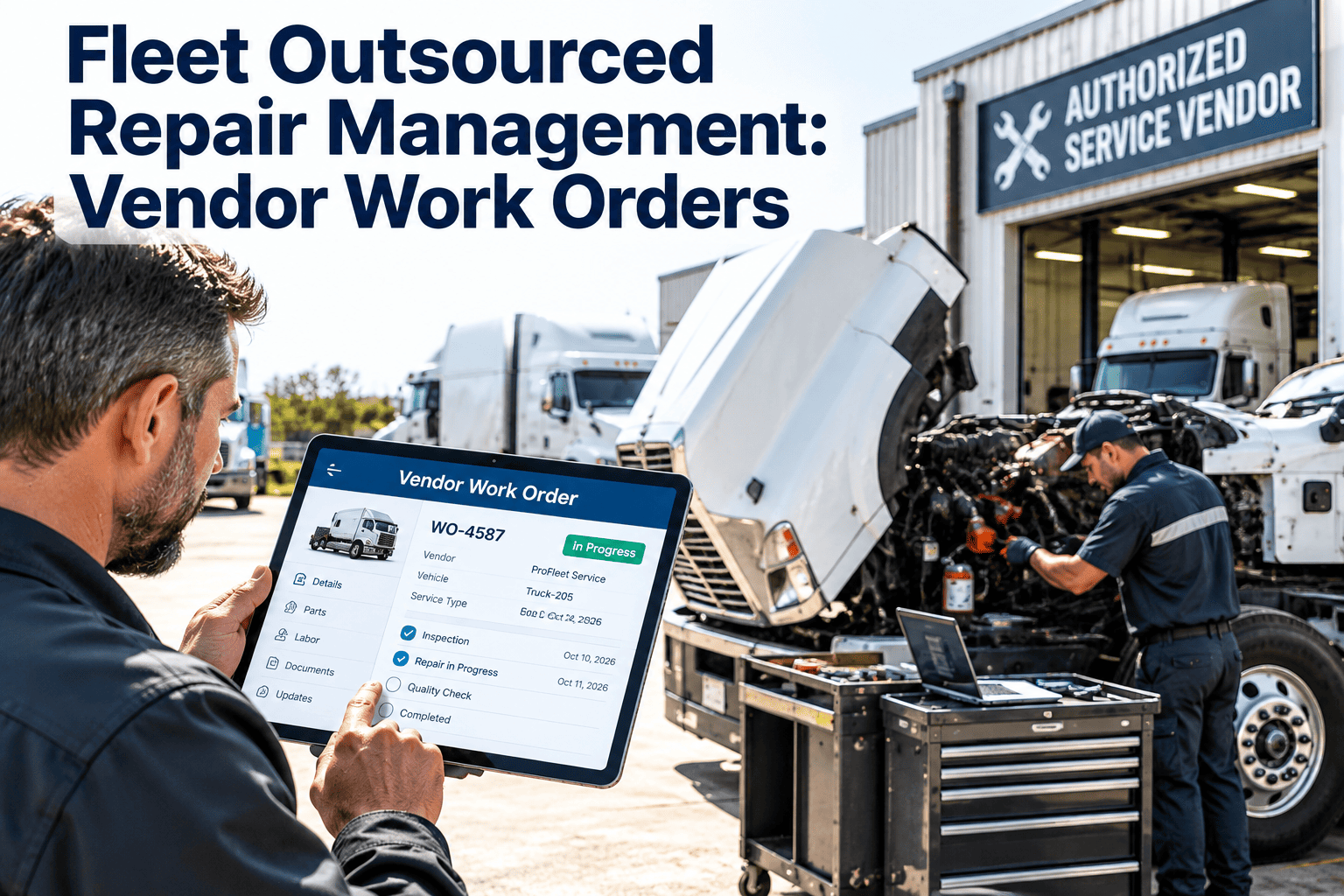
Outsource
- Specialty equipment
- Overflow during peak season
- Work requiring unique certification
Review routing rules each quarter using turnaround and repeat-repair data. Rules should change as the fleet and its duty cycles change.
Compliance across multiple shops
Regulated fleets must keep inspection, repair, and maintenance records for each vehicle. In the United States, 49 CFR Part 396 covers driver vehicle inspection reports, periodic inspections, and record retention. Confirm local rules for your operation.
- Use one inspection template so every depot records defects the same way
- Require a closed work order for every reported defect
- Keep annual inspection evidence attached to the asset
- Control who can close safety-related work orders
- Export records by vehicle, date range, or location for audits
Shop model decision checklist
Do vehicles lose more than a shift travelling to the shop?
Are specialist skills too thin to spread across every depot?
Is parts stock duplicated or frequently out of stock?
Can you compare repair cost by location today?
Do all depots follow the same PM intervals?
Can an auditor retrieve any unit's history in minutes?
If you answered no to the last three, fix the data first. The right shop model becomes much easier to see.
How Oxmaint supports either model
- Preventive maintenance schedules by mileage, hours, or calendar for every location
- Work orders with labor, parts, notes, and photos
- Mobile workflows so technicians update jobs at the vehicle
- Inventory visibility to reduce duplicate stock and emergency buying
- Dashboards and reports for backlog, PM compliance, and cost trends
- Asset history that follows each unit between shops
Frequently asked questions
Is centralized fleet maintenance cheaper?
Not always. It can reduce tooling and stock costs but add travel and downtime. Compare total cost per unit.
When do decentralized shops work best?
When depots are far apart and routine work dominates, provided standards are shared through one system.
Can one CMMS run several shops?
Yes. Try Oxmaint to manage work orders and assets across locations.
How do we stop PM drift between depots?
Use shared PM templates and track on-time completion by location.
What should we measure first?
Start with turnaround, repeat repairs, and PM compliance. Book a demo for a walkthrough.
Run every shop to the same maintenance standard
Bring work orders, inspections, parts, and asset history together so your shop model is based on evidence.