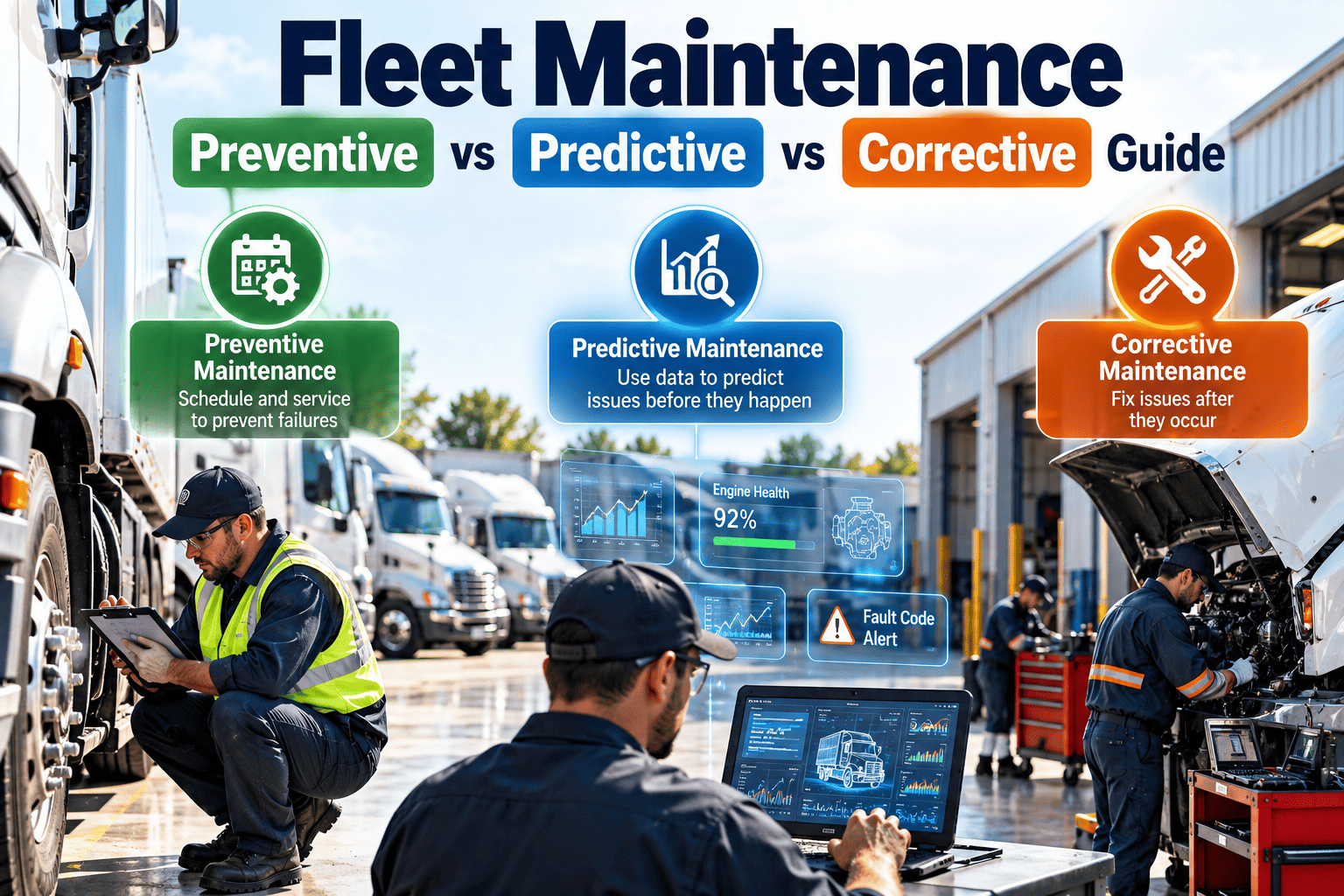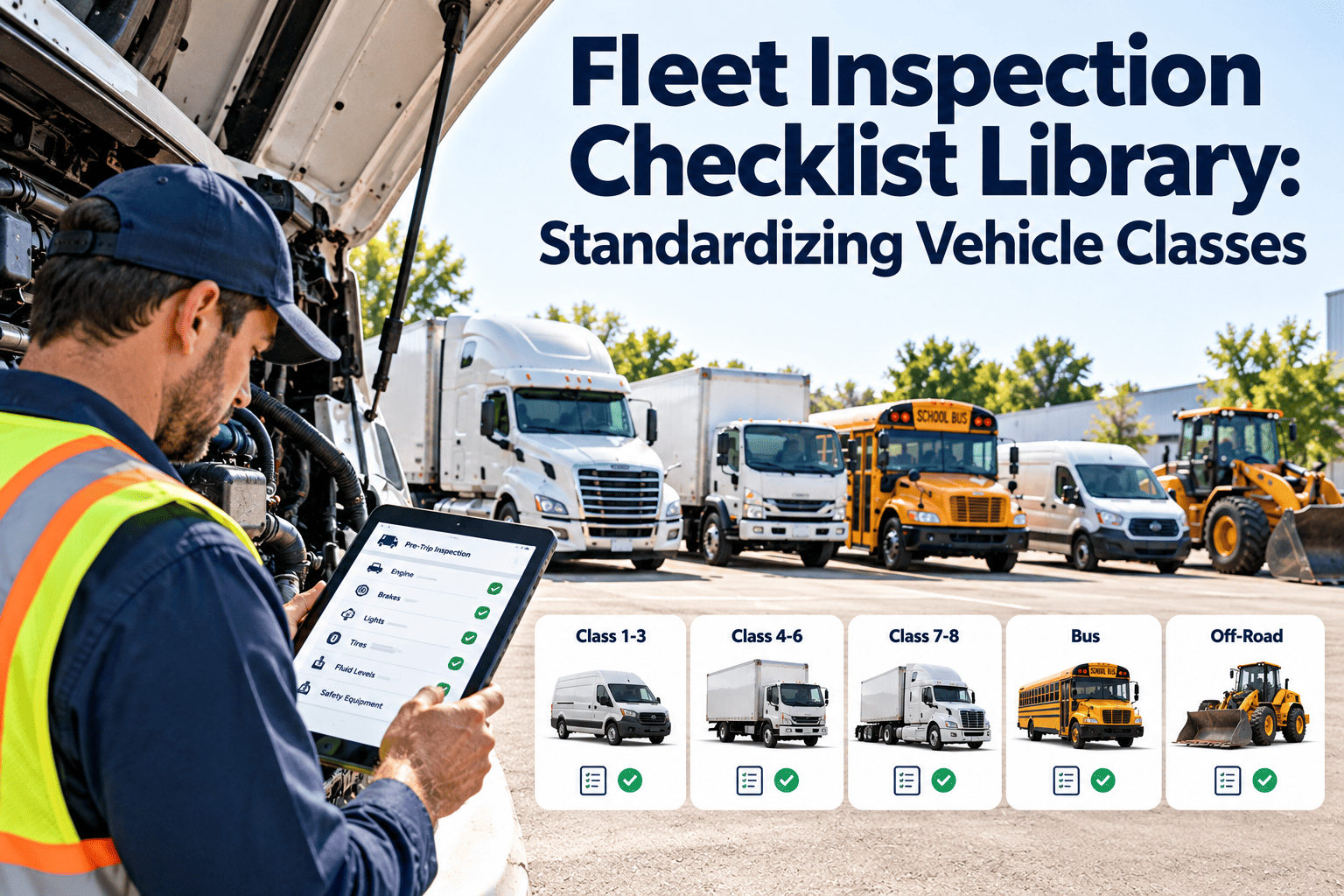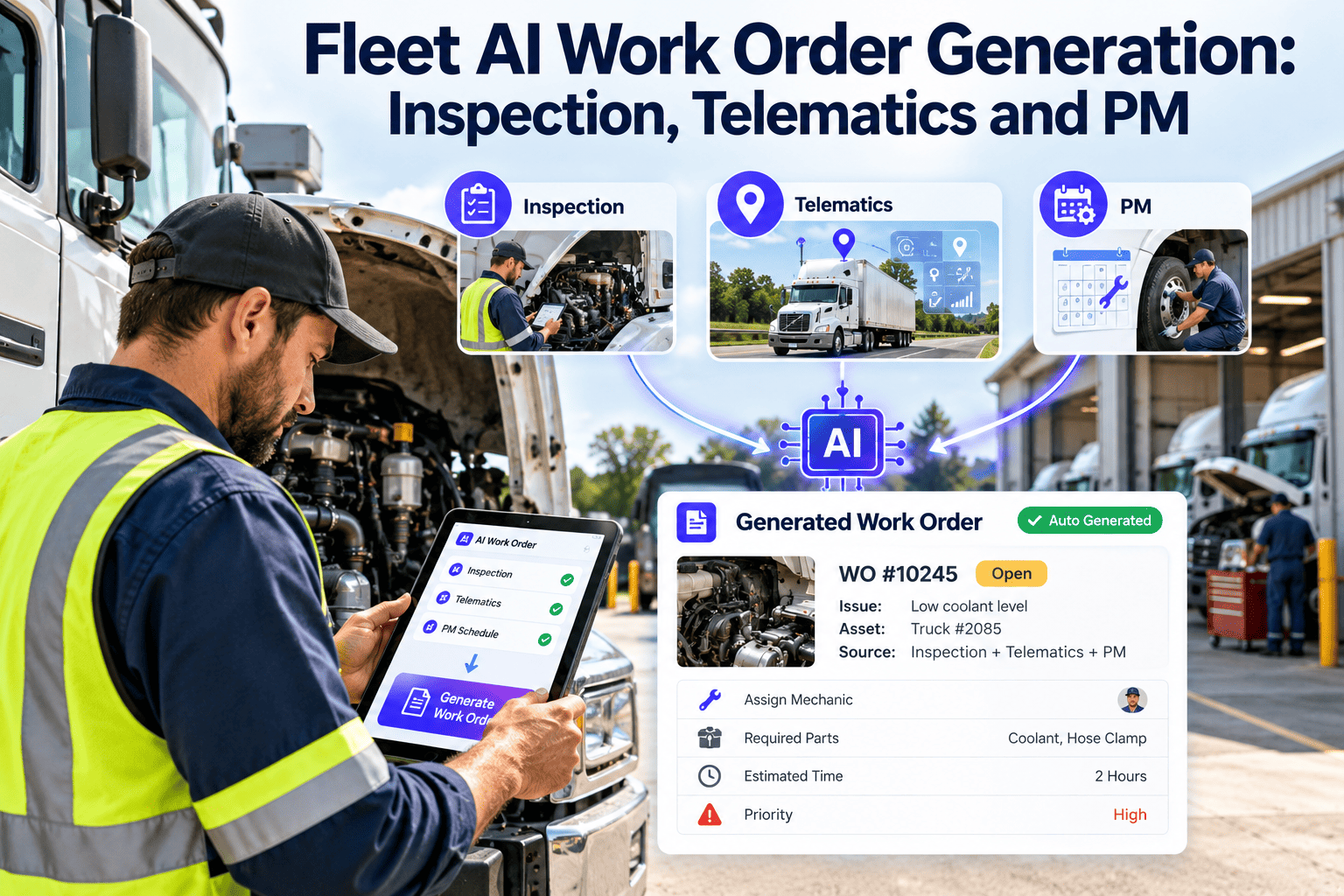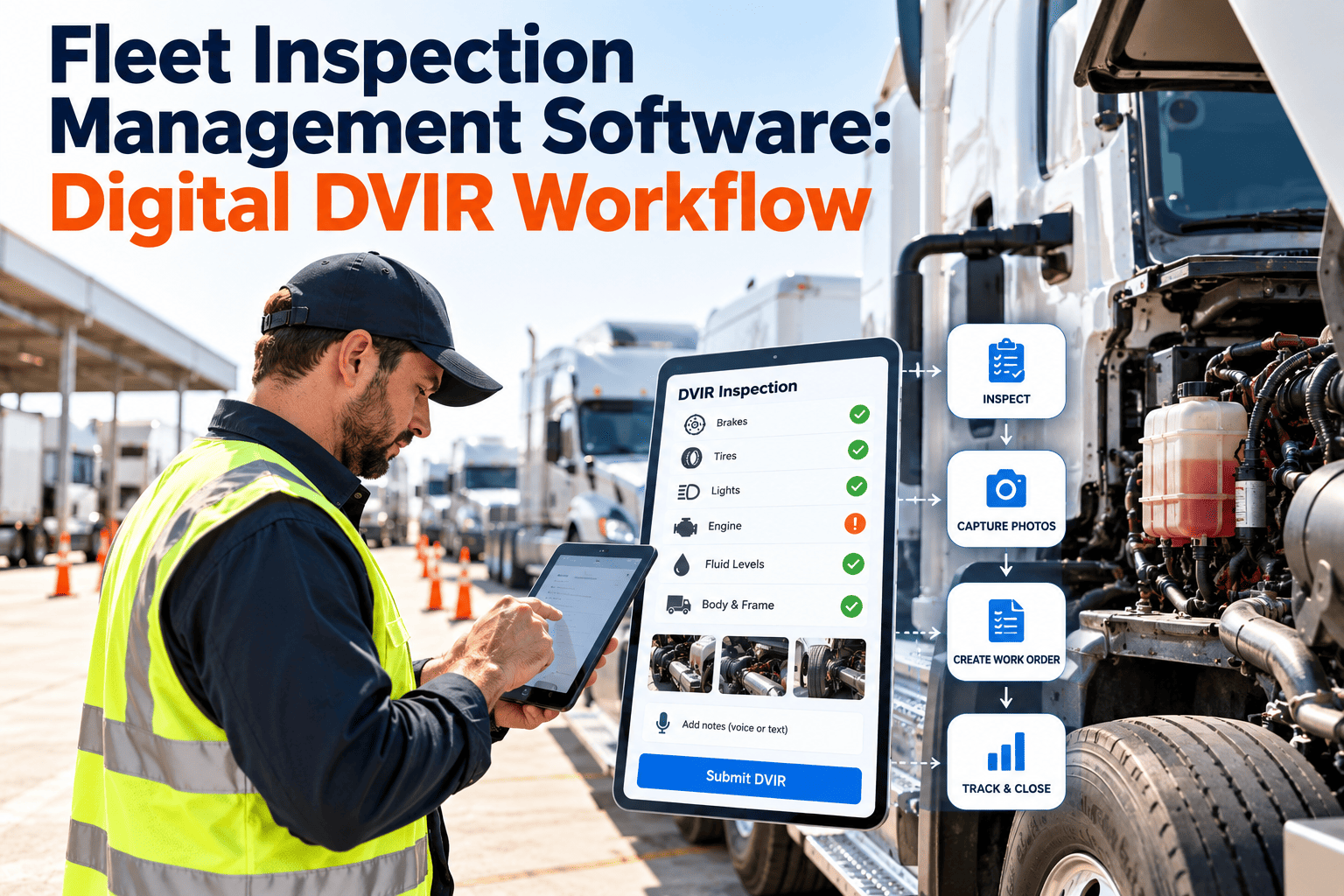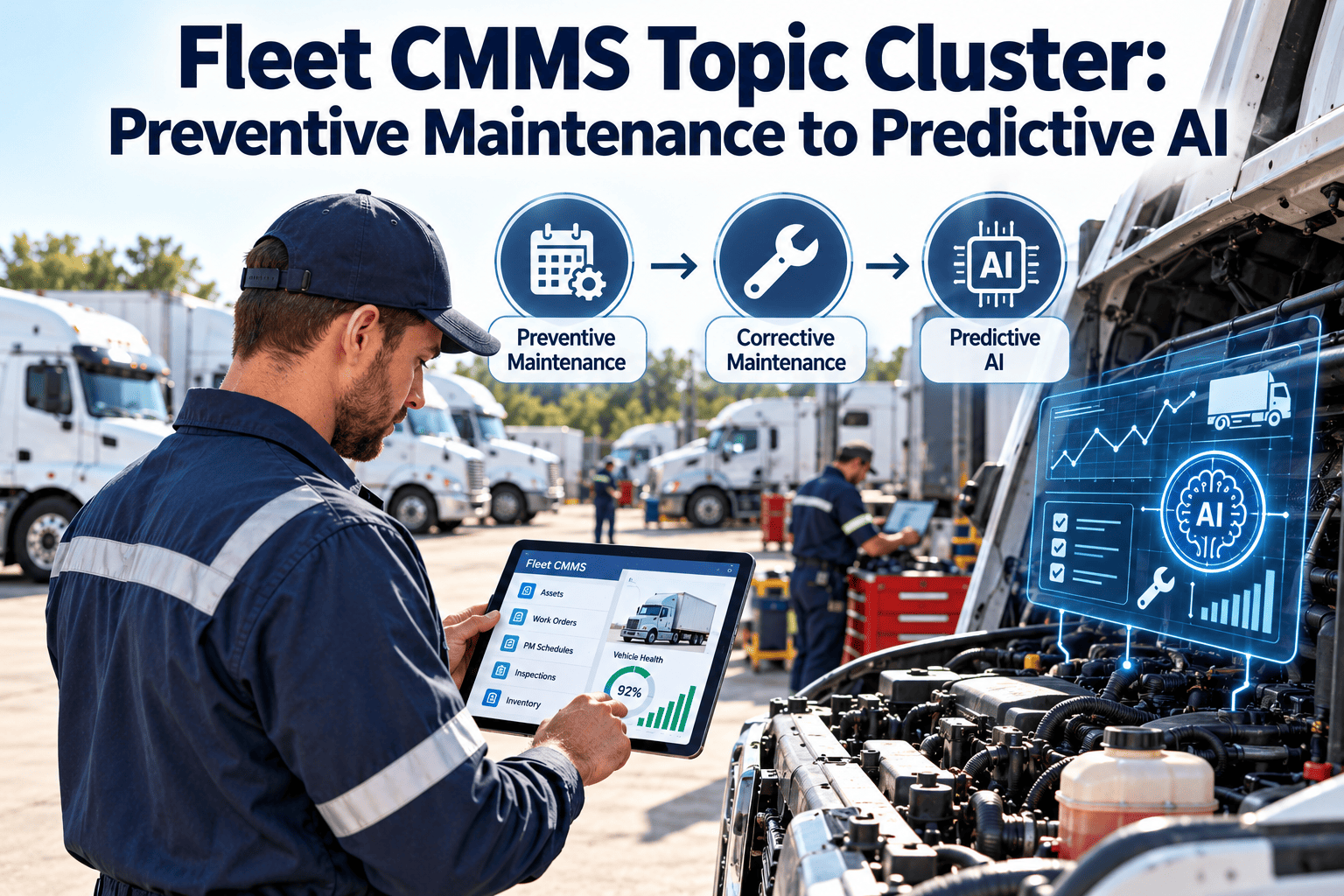
Fleet maintenance does not jump from breakdowns to artificial intelligence in one step. It grows through connected stages: reliable asset records, disciplined work orders, scheduled preventive maintenance, consistent inspections, condition-based triggers, and finally data-assisted insight. This topic cluster maps those stages and the questions behind each one. It also shows how a fleet CMMS such as Oxmaint supports the journey from preventive maintenance toward predictive, AI-assisted decisions.
Fleet CMMS Topic Cluster: Preventive Maintenance to Predictive AI
Understand every stage of the maintenance journey, from scheduled service to data-assisted prediction, and see what each stage needs before the next one can work.
The fleet CMMS topic cluster at a glance
Think of fleet maintenance software as one pillar supported by three connected groups of topics. Each group depends on the one before it.
Foundation
- Asset and vehicle records
- Work orders and repair history
- Parts and inventory control
- Users, roles, and approvals
Prevention
- Preventive maintenance schedules
- Vehicle and driver inspections
- Compliance and service records
- Scheduling and workload planning
Insight
- Condition-based workflows
- Reports, dashboards, and KPIs
- Failure and cost analysis
- AI-assisted pattern detection
Five stages from reactive to AI-assisted maintenance
Most fleets sit in more than one stage at once, with some systems managed reactively and others on schedules. Use the stages to find the next step for each asset group.
Stage 1: Reactive repairs
Work starts after a failure or driver report. The priority is a reliable work order and a complete repair history for every vehicle.
Stage 2: Scheduled preventive maintenance
Recurring services are triggered by dates, mileage, or hours. The priority is on-time completion and accurate meter readings.
Stage 3: Inspection-driven work
Driver and technician inspections find defects early and create corrective work orders. The priority is consistent capture and fast follow-up.
Stage 4: Condition-based triggers
Readings, fault codes, and test results open tasks when thresholds are crossed. The priority is trustworthy data and a clear response owner.
Stage 5: AI-assisted insight
Models or analytics help find patterns across history, faults, and repairs. The priority is quality data, review by people, and measured results.
What each stage requires
Moving forward depends on the capabilities and data of the stage before it. This table shows what to confirm before you advance.
| Stage | Core capability | Data needed | Typical output | Common blocker |
|---|---|---|---|---|
| Reactive repairs | Work order management | Vehicle, defect, labor, parts | Repair history | Repairs done without records |
| Scheduled preventive maintenance | PM scheduling by date or meter | Meter readings, service intervals | Planned work orders | Stale or missing meter data |
| Inspection-driven work | Mobile inspections and defect routing | Checklist results and photos | Corrective tasks from defects | Inspections skipped or unreviewed |
| Condition-based triggers | Threshold rules and alerts | Readings, fault codes, test results | Condition work orders | Alerts with no owner |
| AI-assisted insight | Analysis across history and signals | Clean, consistent, linked history | Ranked risks and suggestions | Poor data and unreviewed outputs |
Foundation first: the data checklist
Prediction is only as good as the history behind it. Check these items before investing in advanced analysis.
Asset and work data
- Every vehicle and major component is registered
- Meter readings are updated regularly
- Work orders record cause, labor, and parts
- Repair categories are consistent
- Closed jobs include findings and outcomes
Process and quality data
- Preventive tasks are completed and closed on time
- Inspection defects are linked to repairs
- Fault codes are logged against vehicles
- Parts used are tied to the vehicle
- Failures are defined the same way across shops
Strengthen the foundation before adding prediction
Start with clean asset records, preventive schedules, and inspections, then build condition-based and data-driven workflows on top.
What AI can and cannot do in fleet maintenance
AI is a tool for finding patterns and prioritizing attention. It does not replace maintenance planning, technician judgment, or inspection requirements.
Where AI-assisted analysis can help
- Spotting repeat failures across vehicles and parts
- Highlighting vehicles with rising repair cost or fault frequency
- Suggesting inspection or service priority from history
- Summarizing work order notes for review
- Supporting interval review with real failure data
Where human judgment remains essential
- Deciding whether a vehicle is safe to operate
- Meeting regulated inspection and record requirements
- Confirming a diagnosis before parts are replaced
- Approving interval changes and budget decisions
- Reviewing outputs when data is incomplete or unusual
Readiness signals for predictive and AI-assisted work
Use this matrix to check whether your data supports advanced use. Where readiness is low, fix the data before adding analysis.
| Data area | Ready when | Warning sign | Risk if ignored |
|---|---|---|---|
| Asset records | Complete, current, and unique | Duplicate or retired vehicles still active | High |
| Meter readings | Updated at each service and inspection | Long gaps and manual guesses | High |
| Defect and fault capture | Recorded consistently with dates | Free-text notes only | Medium |
| Repair outcomes | Cause and fix recorded at closure | Jobs closed with no findings | High |
| Parts data | Parts linked to vehicle and job | Parts bought but not tied to repairs | Medium |
| Preventive history | Completed on time with notes | Many overdue or backdated tasks | Medium |
A staged adoption roadmap
Advance one stage at a time and measure results before moving on. Each phase should leave the shop with something it uses daily.
Connect records
Register assets, standardize work orders, and capture repair cause and parts used.
Schedule and inspect
Launch preventive schedules and mobile inspections for priority vehicle groups.
Add triggers
Introduce condition-based tasks for selected components and assign alert owners.
Review and analyze
Use reports and analytics to review patterns, adjust intervals, and test AI-assisted tools.
KPIs for each stage of the journey
Choose measures that match your current stage. Add the next set only when the first set is reliable.
Work order completeness
Share of closed work orders with cause, labor, and parts. Foundation quality.
Preventive maintenance compliance
Scheduled tasks completed on time. Prevention discipline.
Inspection completion rate
Inspections completed and defects followed up. Early detection.
Unplanned work share
Portion of work that was not scheduled. Should fall as the program matures.
Alert response time
Time from condition alert to action. Shows whether triggers are used.
Repeat failure rate
Same failure returning on the same system. Tests root cause and intervals.
Guardrails for data-assisted decisions
Responsible use of analytics protects safety and trust. Set simple rules before any model or alert influences maintenance decisions.
Data guardrails
- Define which data sources are trusted and who maintains them
- Flag records that are missing key fields so they are excluded or corrected
- Keep a history of changes to thresholds and rules
Decision guardrails
- Require a qualified person to approve safety-related actions
- Treat suggestions as inputs to a work order, not as final decisions
- Record when a suggestion was accepted, changed, or rejected
Review guardrails
- Compare alerts and predictions with actual repair findings
- Track false alerts and missed failures
- Retire rules that do not prove useful
Operational impact of skipping the foundation
Jumping ahead without reliable records tends to waste effort and erode trust in the system.
Alerts nobody trusts
Thresholds built on bad readings create false alarms, and technicians soon learn to ignore them.
Reports that disagree
If work orders are incomplete, dashboards give different answers depending on who built them.
Analytics without context
Patterns found in messy data may reflect recording habits rather than real vehicle behavior.
Stalled adoption
Teams lose confidence when advanced features fail on weak data, and basic habits never take hold.
Trends shaping the path to predictive maintenance in 2026
Several developments are pushing fleets to treat maintenance data as a working asset rather than a record of the past.
More data from vehicles
Connected vehicles and onboard diagnostics provide more fault and usage data. Its value depends on matching each signal to a vehicle and a work order.
Mobile-first shop work
Technicians and drivers record inspections, photos, and findings on phones, which improves the timeliness and detail of maintenance data.
Interest in AI-assisted tools
Many fleets are testing analytics and assistants. The fleets that benefit most are those with complete, consistent history.
Pressure on cost and skills
Tight budgets and limited technicians make early warning and planned work more attractive than emergency repair.
How inspections feed every stage
Inspections link the stages together. They create defects for corrective work, confirm that preventive work held up, and supply condition data for triggers.
- Driver inspections find defects that become corrective work orders
- Technician inspections during service confirm the condition of nearby components
- Inspection results over time show wear trends for condition-based rules
- Failed items and repeat defects highlight where intervals need review
- Photos and notes become evidence for repairs, audits, and warranty claims
- Overdue or skipped inspections are an early sign that data quality will suffer in later stages
Who owns what across the cluster
Each stage involves different people. Clear ownership keeps data accurate and work moving.
A monthly cluster review
A short monthly review keeps every stage healthy and shows where to invest next.
Foundation and prevention checks
- Are new vehicles and components registered correctly?
- Are meter readings current for all active vehicles?
- Which preventive tasks are overdue and why?
- Which inspection defects remain unresolved?
Insight and improvement checks
- Which condition alerts led to real findings?
- Which failures repeated and what was the cause?
- Which intervals should be reviewed or tested?
- Which data gaps limit analysis this month?
A practical example of moving one system up the ladder
This illustration follows a single component, such as batteries, through the stages. Adapt it to your own vehicles and data.
Reactive
Batteries are replaced when a vehicle will not start. Work orders record the vehicle and replacement date.
- Capture battery age and installed date
- Record failures with the vehicle and season
Scheduled
Battery tests are added to routine service so weak units are found during planned visits.
- Add a test task to the preventive schedule
- Record test readings on the work order
Inspection and condition
Test results are trended, and a threshold opens a planned replacement before failure.
- Define the reading that triggers action
- Assign an owner for the resulting task
Data-assisted
History across vehicles shows which battery types and duty cycles fail early, guiding purchasing and intervals.
- Review failures by supplier and use
- Adjust replacement timing from results
How Oxmaint supports the journey
Oxmaint provides the maintenance building blocks each stage depends on, so fleets can advance without changing systems.
- Asset management for vehicles, components, and history
- Work orders for corrective repairs with labor, parts, and notes
- Preventive maintenance schedules by date, meter, or usage
- Inspections that route defects into work orders
- Inventory and parts control tied to repairs
- Condition-based workflows, reports, and dashboards for review
How it helps each team
- Technicians work from one mobile view of tasks and inspections
- Planners manage schedules and overdue work in one queue
- Managers review cost, downtime, and repeat failures by asset
- Finance sees cost by vehicle and repair type without rebuilding spreadsheets
- Safety and compliance staff find inspection and repair records in one place
Questions to answer before advancing a stage
Use these checks as a gate. If the answer is no, spend another cycle strengthening the current stage.
- Can we find the full repair history for any vehicle in under a minute?
- Are at least most preventive tasks completed on time with accurate meter readings?
- Do inspection defects reliably become work orders with an owner?
- Does every alert or rule have a named person who responds?
- Have we compared past rules or predictions with what technicians actually found?
- Do technicians trust the data enough to use it in daily decisions?
Common mistakes on the path to predictive maintenance
Most setbacks come from skipping steps or leaving them unowned.
| Mistake | Effect | Fix |
|---|---|---|
| Buying analytics before cleaning data | Unreliable results | Audit asset, meter, and repair data first |
| Treating preventive maintenance as finished | Intervals stay outdated | Review intervals against repair findings |
| No owner for condition alerts | Alerts pile up unanswered | Assign alert types to named roles |
| Measuring too many KPIs | Reviews lose focus | Track a few measures per stage |
| Ignoring technician feedback | Rules do not match shop reality | Collect feedback during every review |
Frequently asked questions
What is a fleet CMMS topic cluster?
It is a connected set of maintenance topics, from asset records and work orders to preventive schedules, inspections, and analytics.
Is predictive maintenance possible without preventive maintenance first?
It is difficult. Predictive work depends on reliable records, inspections, and repair history built by preventive practices.
What does predictive AI need from a fleet?
Clean asset data, accurate meter readings, consistent defect capture, and repair outcomes linked to each vehicle.
Does AI replace maintenance planners?
No. It supports prioritization, while people approve safety decisions. You can book a demo to see the workflow.
Where should a fleet begin?
Start with asset records, work orders, and preventive schedules. You can get started on one vehicle group.
Move from preventive maintenance toward predictive decisions at your own pace
Build the records, schedules, inspections, and reports that make condition-based and AI-assisted maintenance reliable.