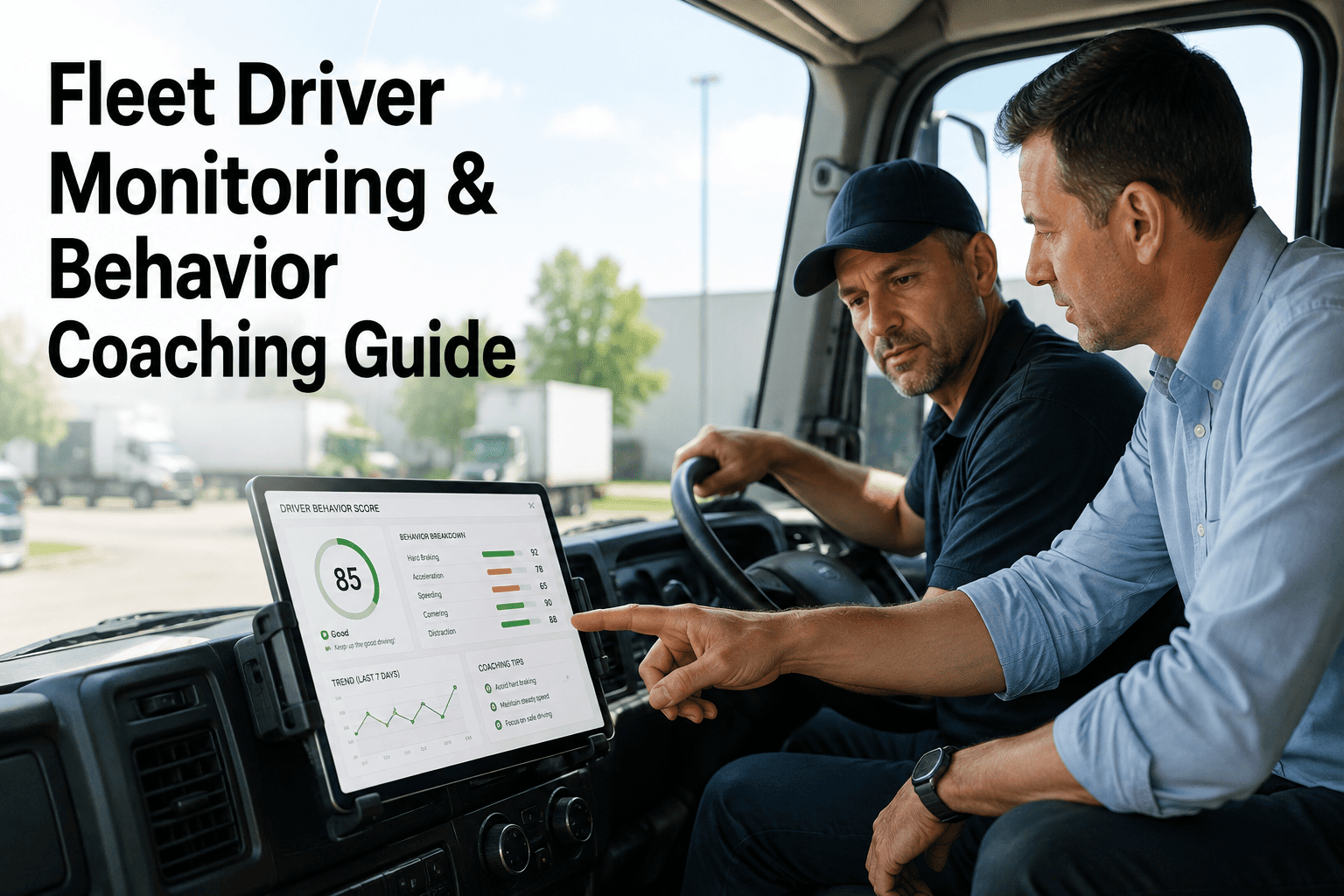
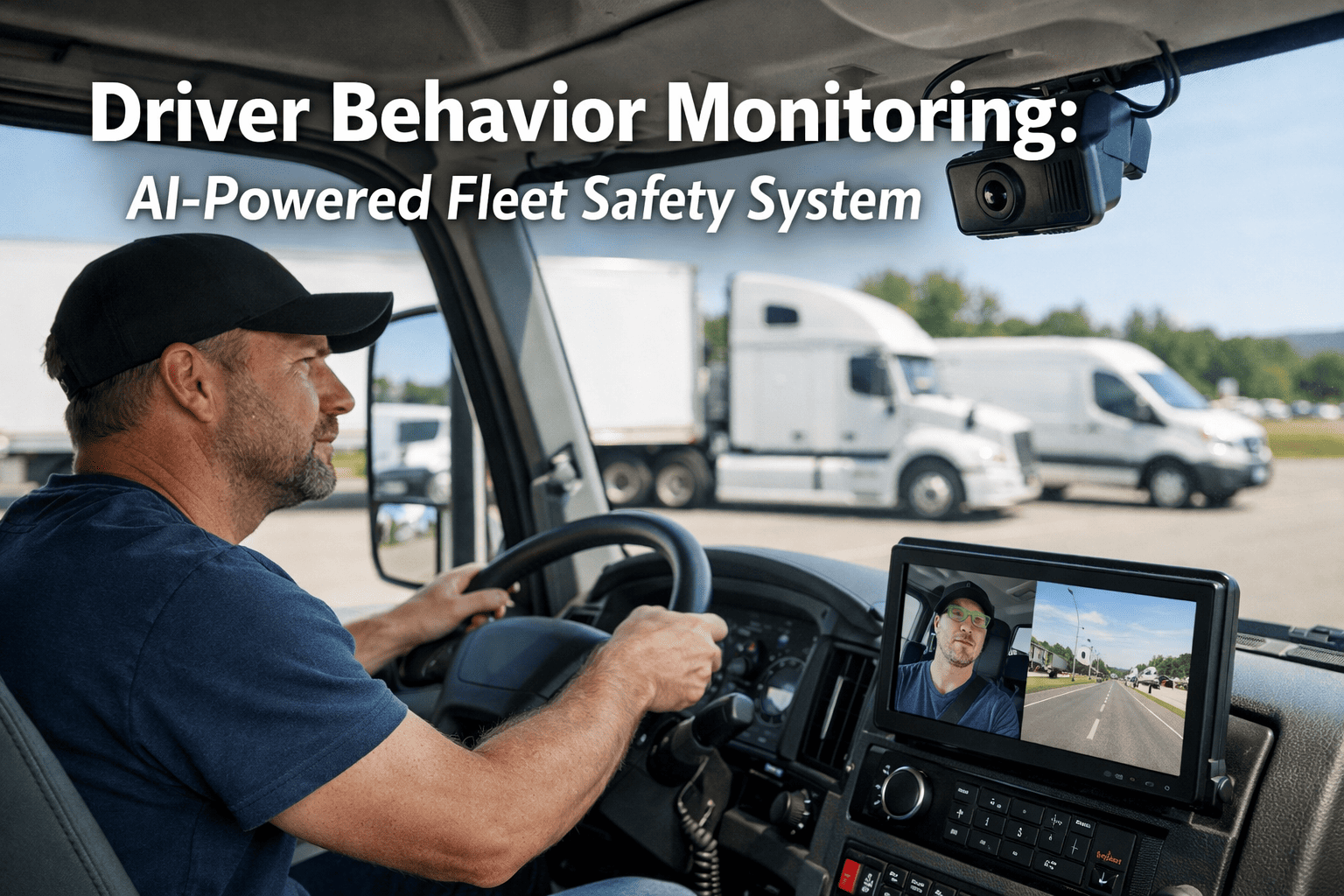
Telematics dashboards are full of data about harsh braking events, speeding incidents, and phone-handling alerts — yet many fleets see no measurable change in driving behavior month over month. That gap exists because monitoring only tells you what happened; it takes a coaching workflow to turn that data into a driver who brakes differently next week. The fleets that actually reduce incident rates pair every behavior signal with a coaching conversation, a documented follow-up, and a way to see if the behavior actually changed over time. Monitoring without coaching just produces a report nobody reads. See the closed-loop workflow by booking a demo.
DRIVER SAFETY · TELEMATICS · BEHAVIOR COACHING · FLEET RISK
Turning Driver Monitoring Data Into Behavior That Actually Changes
Alerts are cheap to generate and easy to ignore. The fleets that see fewer incidents are the ones that pair every signal with a coaching conversation and check whether it worked.
Monitoring Alone vs. Monitoring + Coaching
Incident rate reduction, monitoring only
6%
Incident rate reduction, with coaching
38%
Driver retention lift with coaching program
+21%
Composite figures from fleet safety programs · results vary by fleet size and route type
What The Data Is Actually Saying
Four Behavior Signals Worth Coaching On
Not every alert deserves a conversation. These four categories account for most preventable incidents, which is why they are where a coaching program should spend its attention first.
Harsh Braking & Acceleration
31% of flagged events
Usually a following-distance habit, not a one-off reaction. Coachable within one or two conversations when tied to specific trip playback.
Speeding By Road Type
26% of flagged events
Highway speeding and residential speeding are different problems with different fixes — route-aware alerts prevent coaching the wrong habit.
Distracted Driving
22% of flagged events
Phone handling detected by device motion or camera. The highest-severity category and the one drivers most often dispute without video proof.
Fatigue & Hours Patterns
21% of flagged events
Drift shows up in lane position and reaction time before a driver reports feeling tired — the earliest warning signal in the whole set.
The Closed Loop
The Five-Step Coaching Workflow That Closes The Gap
This is the actual sequence a signal has to move through before it becomes a behavior change instead of a dashboard entry.
1
Signal Detected
Telematics flags a harsh-brake, speeding, or distraction event and timestamps it against the trip.
2
Event Reviewed
A safety lead checks context — was this defensive braking or a following-distance problem — before it reaches the driver.
3
Micro-Coaching Conversation
A short, specific conversation tied to the actual clip — not a generic monthly safety reminder.
4
Follow-Up Logged
The conversation and any commitment made are recorded against the driver's profile, not left in someone's memory.
5
Trend Reviewed
The same signal is checked again in two weeks to confirm the behavior actually shifted, not just that a conversation happened.
One Platform For Behavior Data And The Coaching Workflow Around It
Oxmaint connects telematics behavior signals directly to a per-driver coaching record — flagged events, conversations, and trend history in one place, so nothing gets coached twice or missed entirely.
Program Comparison
Monitoring Only vs. Monitoring Plus Coaching, Metric By Metric
| Metric | Monitoring Only | Monitoring + Coaching |
|---|---|---|
| Incident rate change (90 days) | -6% | -38% |
| Repeat-event rate per driver | High, unchanged | Drops after 2nd coaching cycle |
| Driver awareness of own score | Low | High, discussed monthly |
| Coaching record retained | Not tracked | Logged per driver, per event |
| Insurance / audit readiness | Data only, no context | Documented behavior program |
90-Day Behavior Curve
What Coaching-Driven Behavior Change Looks Like Over A Quarter
Day 30
Awareness
Drivers start seeing their own scores and hearing specific feedback tied to real trips instead of generic reminders. Event volume often rises briefly as reporting catches up with reality.
Day 60
Habit Shift
Repeat events from the same driver on the same signal start dropping. Coaching conversations get shorter because the baseline behavior has already improved.
Day 90
Sustained Change
Incident rate reduction stabilizes in the 30-40% range and holds without constant manager intervention, because the coaching record keeps the loop self-sustaining.
Coaching Program FAQ
Common Questions On Driver Monitoring And Coaching
How is this different from just reviewing telematics alerts?+
Alerts alone tell you what happened. A coaching workflow adds the conversation, the follow-up, and the trend check that confirms behavior actually changed. Book a demo to see the full loop.
How much manager time does a coaching program add?+
Most micro-coaching conversations run under five minutes because they are tied to one specific clip, not a broad monthly review of every driver.
Do drivers push back on being monitored this closely?+
Pushback drops sharply once drivers see their own score and get specific, private feedback rather than a punitive report shared with the whole team.
Which telematics providers does this work with?+
Behavior data from standard telematics providers flows into the coaching workflow through existing integrations, so no separate hardware install is needed. Start a free trial to check your provider.
How long before we see a measurable drop in incidents?+
Early awareness effects show within 30 days, with the larger incident-rate reduction typically compounding by day 60 to 90 as habits shift.
Monitoring Tells You What Happened. Coaching Is What Changes It.
Oxmaint pairs telematics behavior signals with a structured coaching workflow — so every flagged event ends in a conversation, a record, and a measurable change, not just another line on a report.



.png)