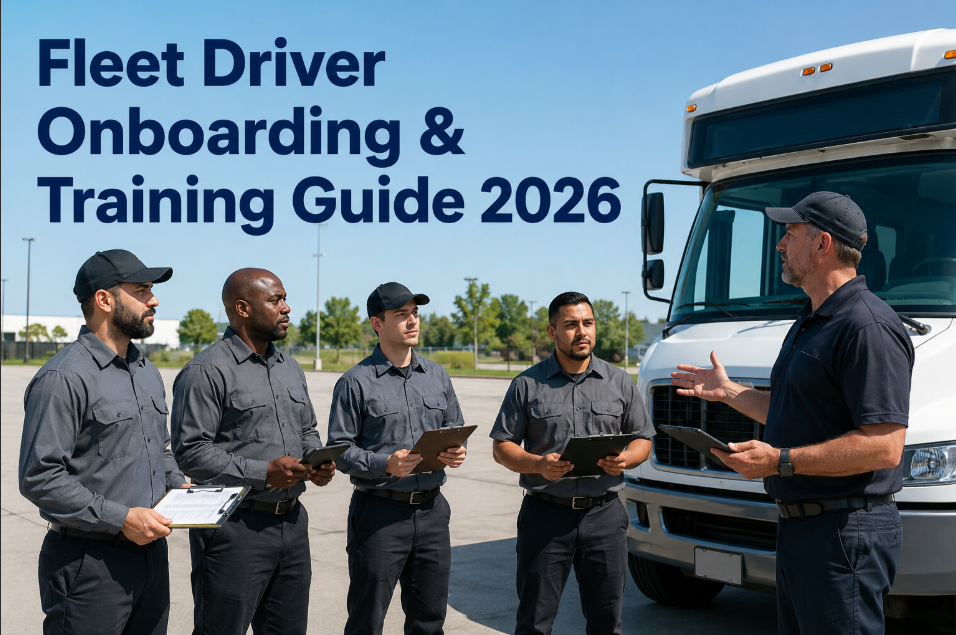
Driver turnover in commercial fleets hit 94% for large truckload carriers in 2025, and the cost of replacing a single driver now exceeds $12,000 when you factor in recruiting, training, lost productivity, and elevated accident risk during the first 90 days. Yet most fleet onboarding programs remain a patchwork of photocopied checklists, verbal instructions, and a hope that the new hire figures things out before something goes wrong. The fleets winning the retention battle in 2026 are the ones treating onboarding as a structured, documented, and measurable process — not a one-day orientation followed by keys to the truck. Digital platforms like OxMaint are increasingly central to this process, managing driver qualification files, vehicle assignment records, equipment inspection training, and maintenance reporting protocols from day one. Fleets with structured onboarding programs report 23% lower turnover in the first year and 40% fewer preventable accidents among new hires. This guide covers every component of a modern driver onboarding and training program — from MVR checks to simulator training to digital documentation — so your next hire is productive, compliant, and safe from their first shift.
Fleet Driver Onboarding and Training Program Guide 2026
How to build an efficient, compliant, and retention-focused driver onboarding program — covering MVR checks, safety orientation, simulator training, mentorship, digital documentation, and equipment familiarization.
What Makes a Complete Driver Onboarding Program?
A complete driver onboarding program goes beyond handing over keys and a handbook. It is a structured, multi-phase process that covers legal compliance, safety training, equipment familiarization, cultural integration, and ongoing performance monitoring. The FMCSA requires specific documentation in the Driver Qualification File (DQF) within 30 days of hire — and failure to maintain complete DQFs results in $16,000+ fines per violation in 2026.
The most effective programs run 2–4 weeks depending on fleet type and include both classroom and behind-the-wheel components. Digital platforms centralize all documentation, training records, and equipment assignments in a single system — eliminating the filing cabinets and spreadsheets that cause audit failures. Explore how OxMaint manages driver-to-vehicle assignment records and inspection training workflows — start a free trial or book a demo for a walkthrough.
The 4-Phase Driver Onboarding Framework
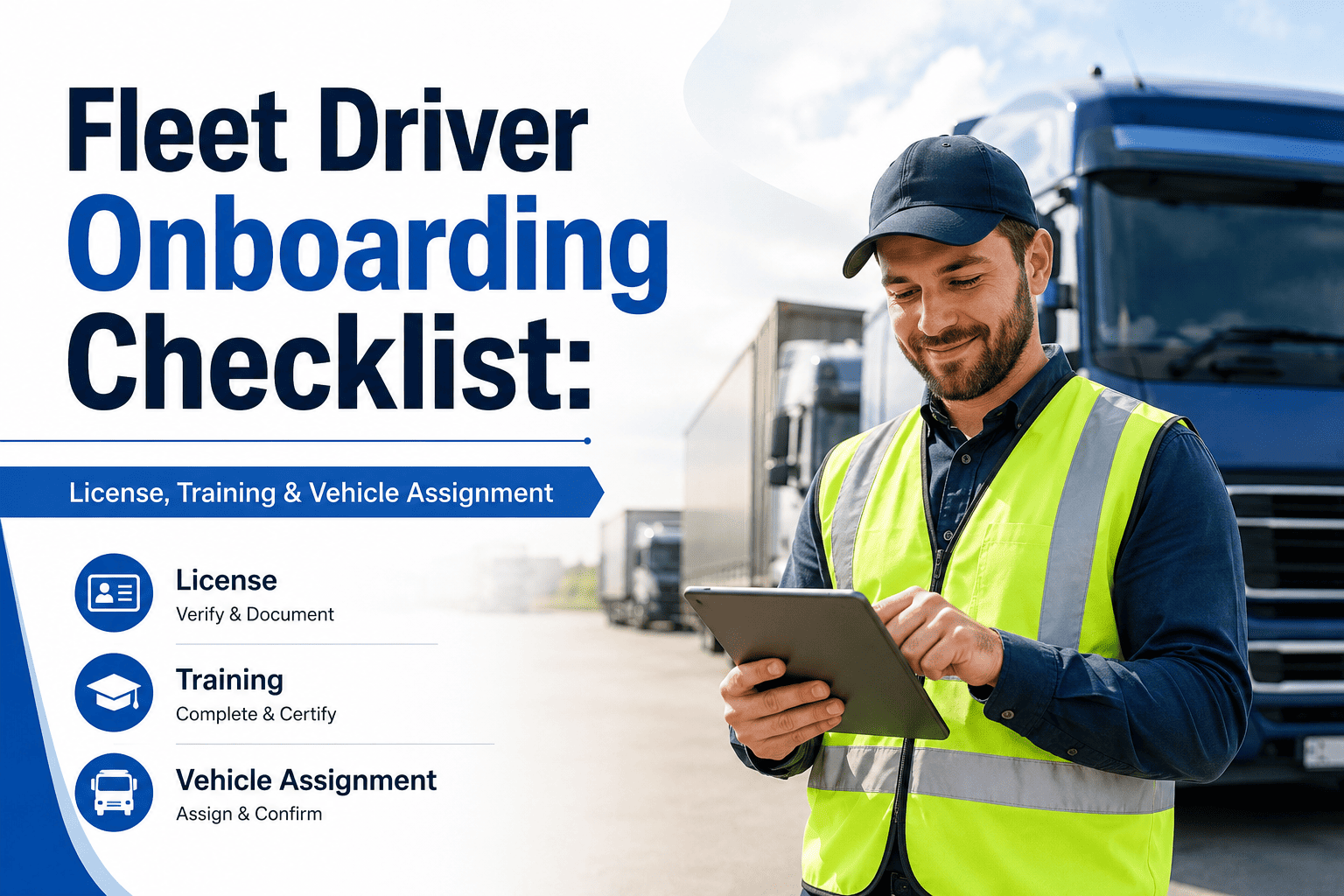
Successful onboarding follows a clear timeline. Each phase builds on the previous one, and skipping phases creates compliance gaps and safety risks that show up in the first 90 days.
Complete MVR check (minimum 3-year history), verify CDL status and endorsements, run FMCSA Pre-Employment Screening Program (PSP) report, conduct DOT drug and alcohol testing, and check the Drug and Alcohol Clearinghouse. Document everything in the DQF before the driver's first day.
Company policy review, safety protocols, HOS regulations, ELD training, accident reporting procedures, and cargo securement standards. Include defensive driving modules and hazmat awareness if applicable. All training completion must be documented with digital signatures.
Assign specific vehicles with documented condition at handover. Train on digital pre-trip and post-trip inspection procedures using the fleet's CMMS platform. Complete supervised road assessment (minimum 40 hours for new CDL holders). Include backing, coupling/uncoupling, and route navigation exercises.
Assign experienced driver mentor for first 30 days of solo operation. Conduct weekly check-ins on safety, HOS compliance, and vehicle condition reporting. Review telematics data for hard braking, speeding, and idle time. Complete 30/60/90-day performance reviews with documented feedback and goal setting.
Driver Qualification File (DQF) Checklist
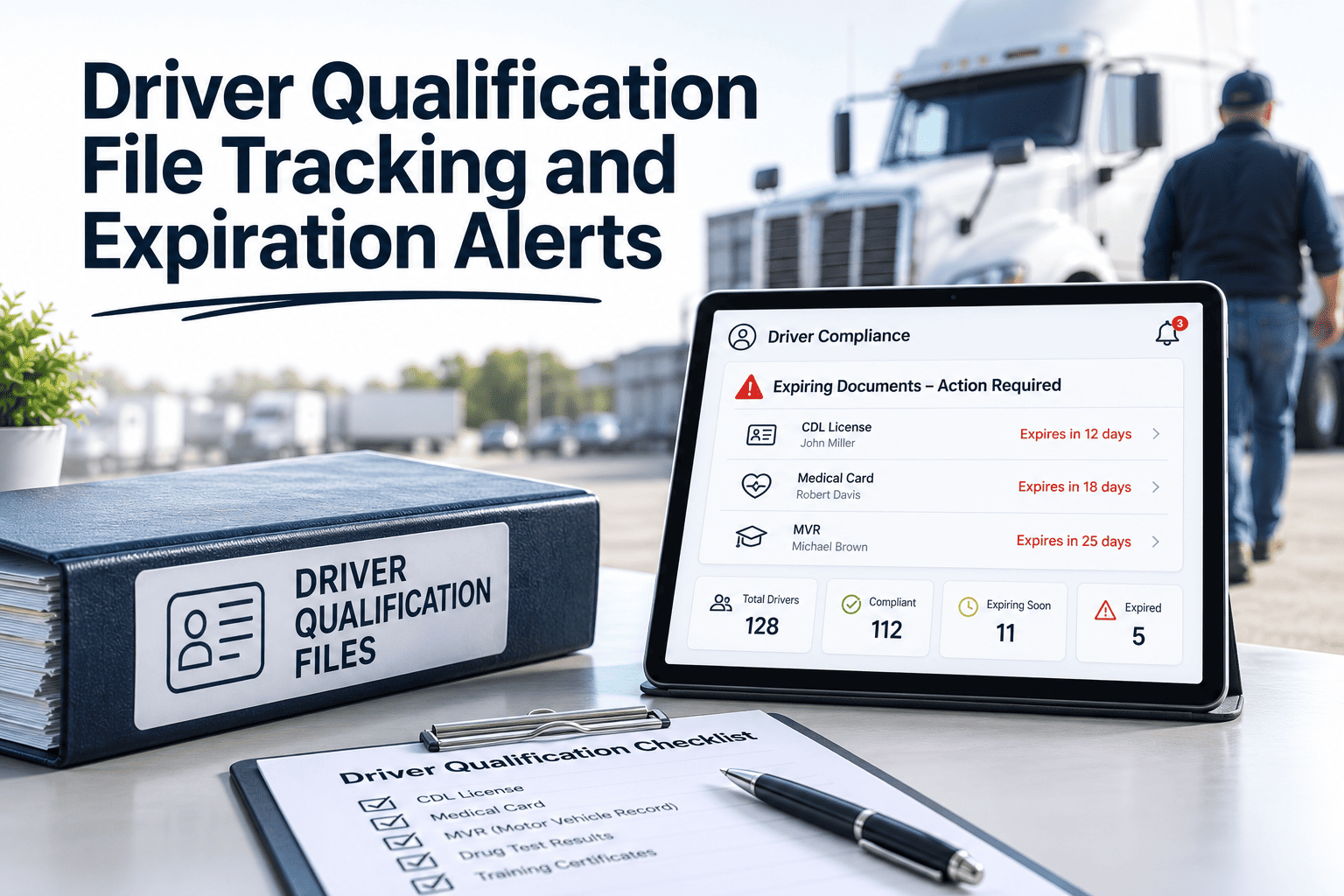
The FMCSA requires specific documents in every DQF. Missing even one item during an audit triggers a violation. Here is the complete checklist — and what a digital system like OxMaint automates.
How OxMaint Supports Driver Onboarding Operations
OxMaint is not an HR platform — it is the operational backbone that connects new drivers to the vehicles, inspections, and maintenance workflows they need to perform safely from day one.
Assign vehicles to drivers with documented condition at handover. OxMaint records the vehicle's condition score, maintenance history, and pending work at the time of assignment — creating accountability from the first key handoff.
New drivers complete their first digital pre-trip inspection on the OxMaint mobile app during orientation week. The guided checklist ensures they learn your inspection standards while generating a real compliance record from day one.
Trained drivers report defects via mobile with photo documentation. OxMaint auto-creates work orders from driver reports — meaning new hires see their defect reports get fixed, building trust in the maintenance process and encouraging continued reporting.
Track which drivers are completing pre-trip and post-trip inspections on time. OxMaint flags missed inspections within hours — not weeks — so fleet managers can intervene with coaching before it becomes a pattern or an audit finding.
Getting new drivers productive and compliant faster is a measurable outcome. See how OxMaint handles driver onboarding workflows for fleets of your size — start a free trial or book a demo for a guided walkthrough.
Weak Onboarding vs Structured Onboarding: Outcomes Compared
Frequently Asked Questions
What is the minimum legal onboarding requirement for CDL drivers?
How does OxMaint track driver inspection compliance?
What is the ROI of a structured onboarding program?
Can OxMaint manage both vehicle maintenance and driver-related documentation?
Your Next Hire Deserves a Better First Day
OxMaint gives fleet managers the tools to assign vehicles with documented condition, train drivers on digital inspections during orientation, and track compliance from day one. Most fleets have their first new driver completing digital pre-trips within the first week of implementation.


-compliance-checklist.png)
.png)