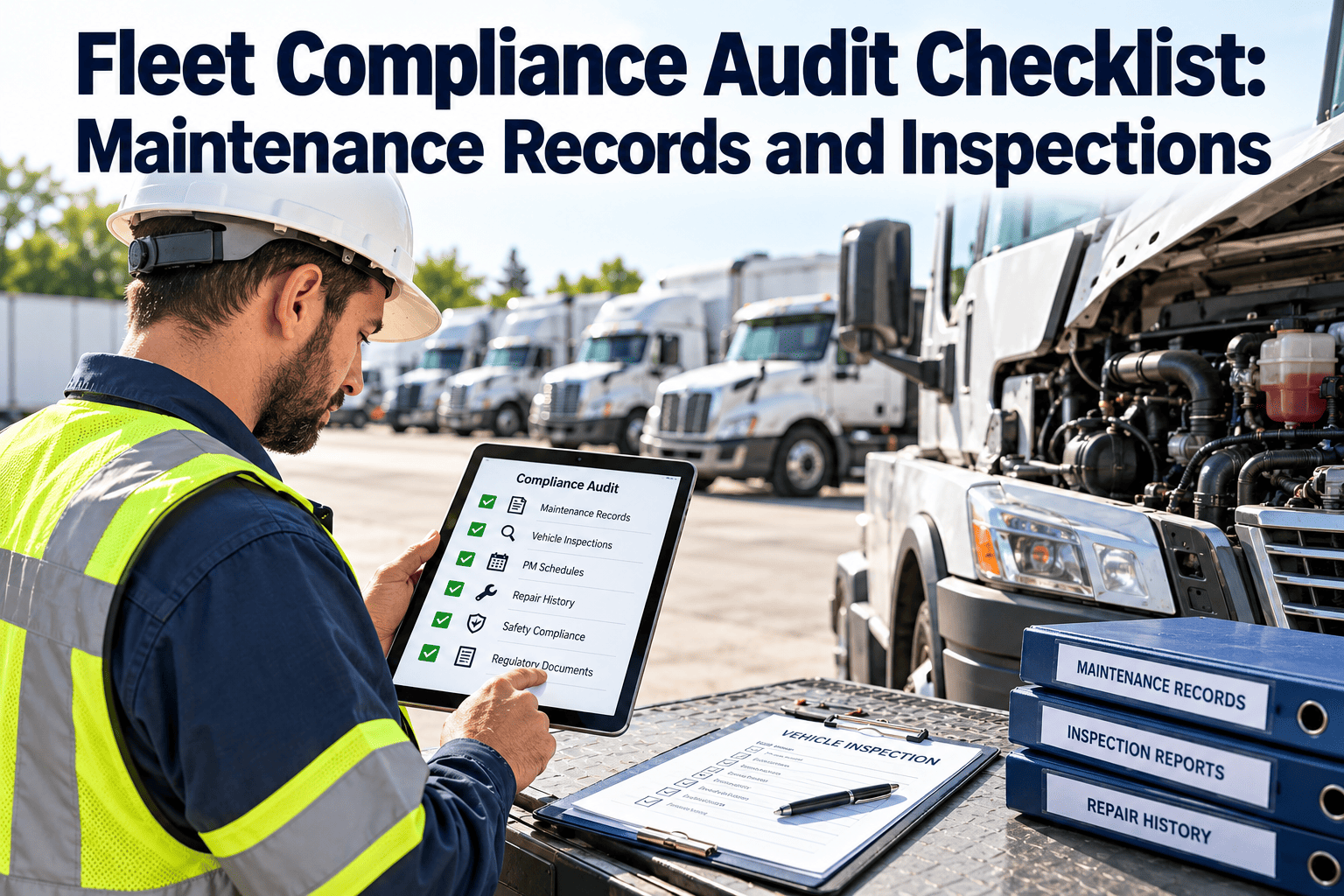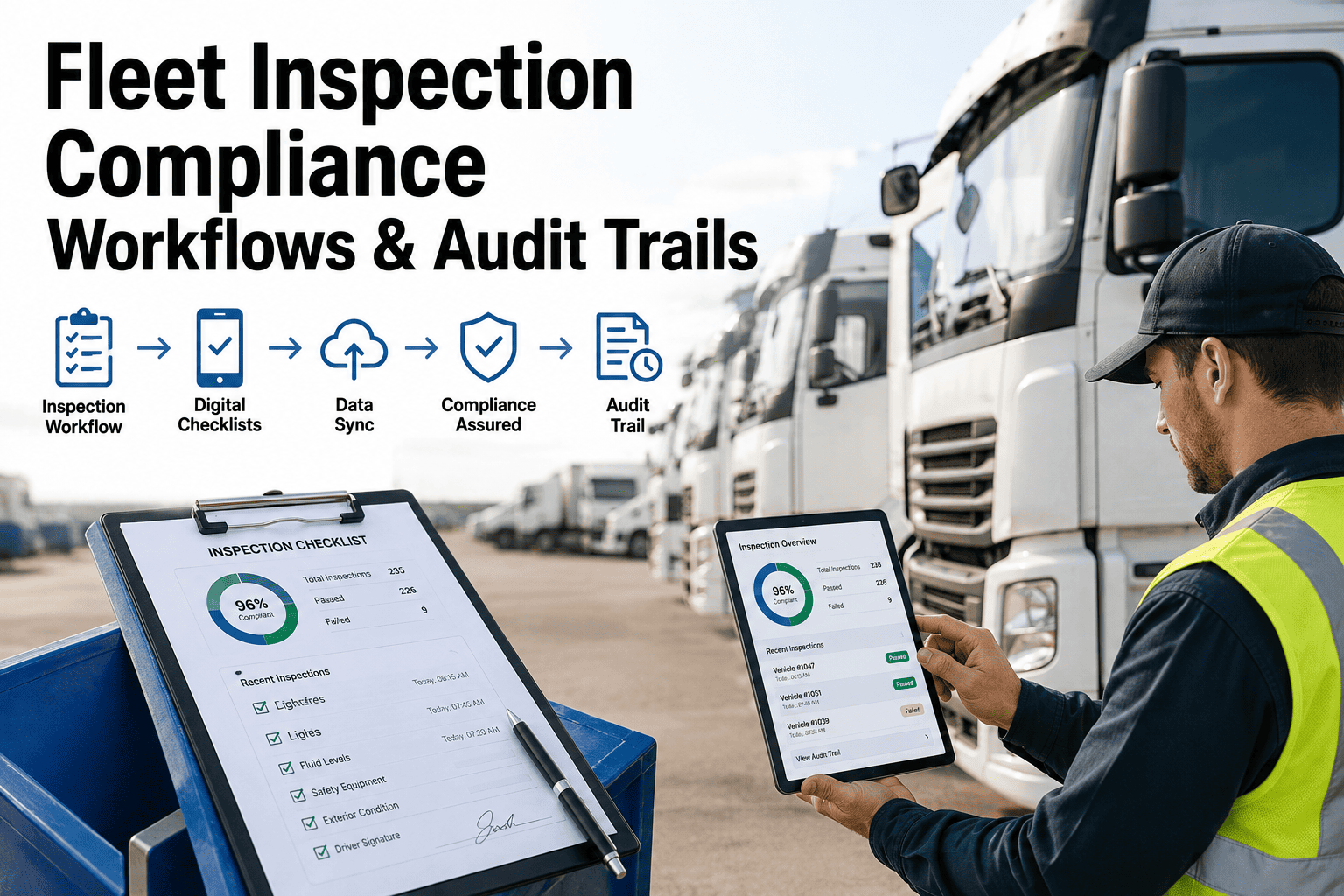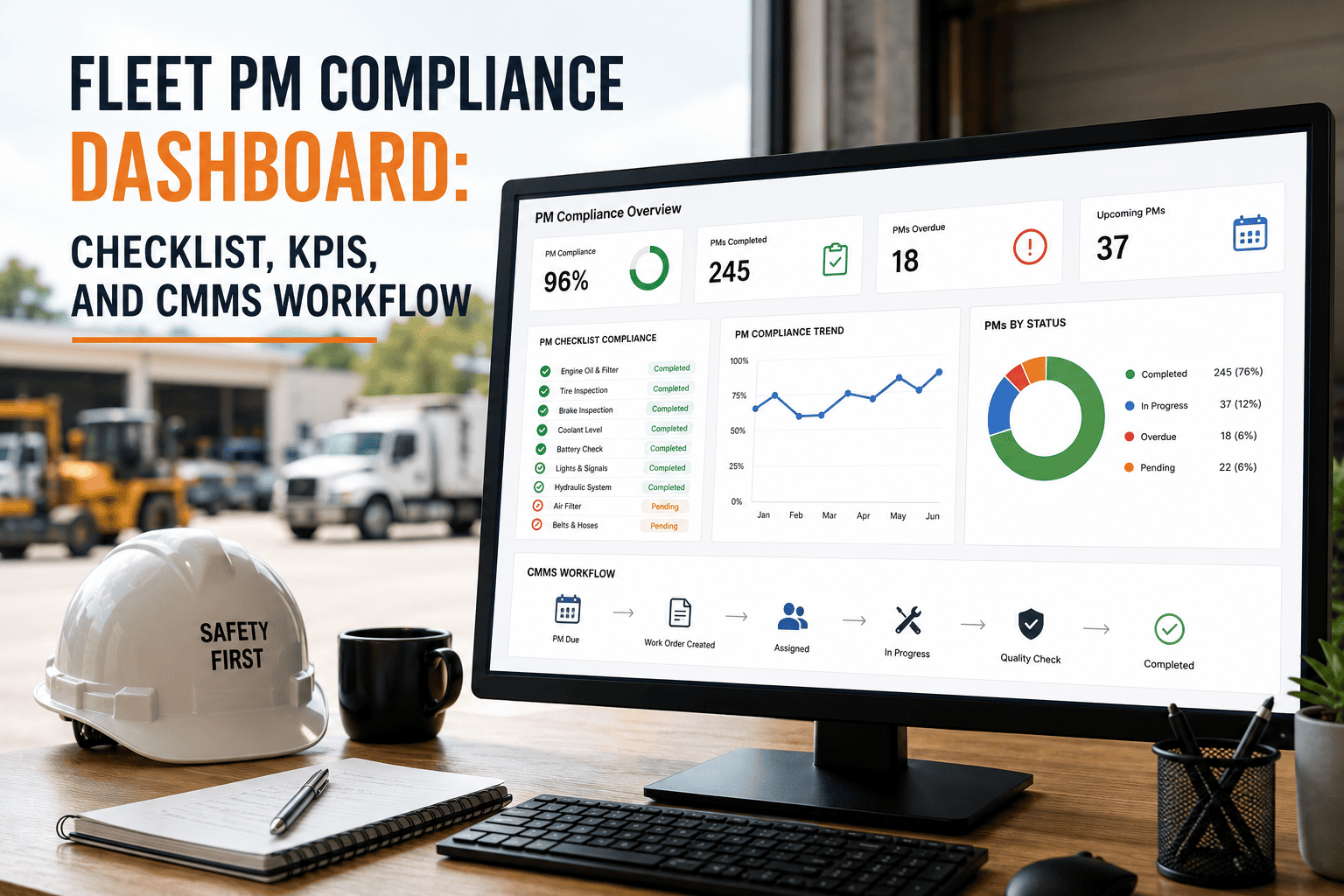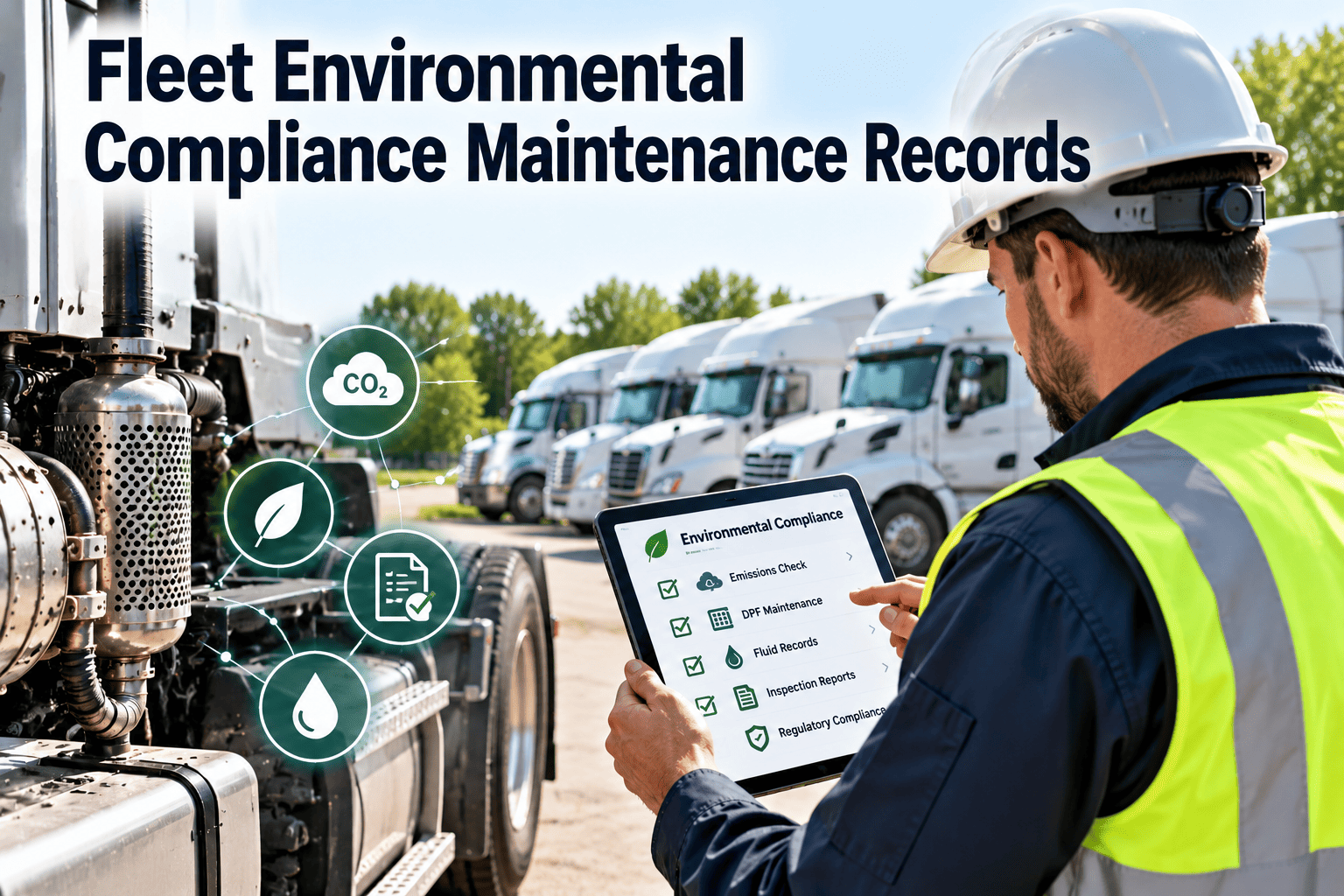
Environmental compliance in a fleet is rarely a single event. It is a long trail of small maintenance actions: an emissions-related repair, a diesel exhaust fluid system fix, a refrigerant service, a batch of used oil removed from the shop. When an inspector or auditor asks for proof, that trail has to be easy to produce. This guide explains which maintenance records support environmental compliance, how to structure them, and how a maintenance-first system like Oxmaint can keep them attached to each vehicle and work order.
Fleet Environmental Compliance Maintenance Records
Where maintenance meets environmental rules
Requirements depend on location, vehicle type and fuel. Confirm applicable rules with your compliance team, then build the record process around them.
Engine and exhaust emissions
Periodic emissions testing
Refrigerant systems
Used oil, filters and fluids
Fuel storage and spill control
What a defensible record contains
| Record element | Why an auditor cares | Where it lives |
|---|---|---|
| Vehicle ID, VIN and engine details | Links the work to the exact regulated unit | Asset record |
| Date, meter reading and technician | Shows when, at what usage and by whom | Work order |
| Reason for service | Shows whether it was a failure, a PM or an inspection finding | Work order, inspection |
| Parts used with part numbers | Confirms correct, non-defeating components were installed | Work order parts list |
| Fluids added or removed | Supports DEF, coolant, refrigerant and oil tracking | Work order, inventory |
| Photos, test results, certificates | Gives supporting proof beyond a note | Attached to work order |
| Completion sign-off | Closes the loop with accountability | Work order |
The record lifecycle: from event to audit-ready file
Capture
Act
Document
Retain
Retrieve
Be ready when the records request arrives
Records by maintenance activity
Emissions system service
- Fault code and the date it was found
- Diagnosis steps and test readings
- DPF cleaning or replacement details
- DEF system repairs and sensor replacements
- Verification that the fault cleared
Shop waste and fluids
- Used oil and filter quantities removed
- Hauler or recycler documents
- Coolant and battery disposal receipts
- Spill events and cleanup notes
- Inspection of storage areas and containers
Why environmental records go missing
Paper receipts in a drawer
Outside vendor repairs
Vague technician notes
Unclear retention period
Audit-readiness checklist
- Each regulated vehicle has a complete, correct asset record.
- Emissions-related repairs reference the fault code and the fix.
- Third-party repair invoices are attached to the vehicle history.
- Refrigerant service entries show the unit, date and technician.
- Waste disposal documents are filed by date and location.
- Retention periods are set per record type and reviewed yearly.
- Someone owns the process and a backup can find the files.
How preventive maintenance reduces environmental risk
Fewer emissions failures
Fewer leaks and spills
Better fuel efficiency
Emissions control systems and what to document
Modern diesel engines rely on several aftertreatment components. Each one fails differently, and each repair should leave a clear record behind.
Diesel particulate filter
Selective catalytic reduction and DEF
Exhaust gas recirculation
On-board diagnostics
Refrigerated transport and air conditioning service
Refrigeration units and cab air conditioning use refrigerants that are regulated in many countries. Service records help show who worked on the system and what was done.
- Record the unit identifier, refrigerant type and the reason for each service visit.
- Keep technician details and any certification information required where you operate.
- Note leak checks, repairs, recovered and added refrigerant amounts and test results.
- Attach vendor invoices when an outside specialist performs the work.
- Review recurring leaks on the same unit as a maintenance and cost issue.
Shop waste streams and the records behind them
Waste rules vary by jurisdiction and by how much a shop generates. Use the table as a starting list, then confirm the details with your compliance contact.
| Waste stream | Record to keep | Suggested owner |
|---|---|---|
| Used engine oil | Quantity removed, hauler name, pickup date, receipts | Shop supervisor |
| Used oil filters | Drainage method, container, disposal or recycling receipt | Parts clerk |
| Spent coolant | Quantity, handling method, recycler documents | Shop supervisor |
| Lead-acid and other batteries | Count, return or recycler receipt | Parts clerk |
| Solvents and parts-washer fluid | Product, quantity, service provider records | Shop supervisor |
| Tires | Count removed, hauler or retreader documents | Fleet manager |
| Absorbents and spill materials | Spill date, material used, disposal record | Safety lead |
Third-party and mobile service records
Outside vendors do a large share of fleet repair work, and their paperwork often never reaches the vehicle file.
Require from every vendor
- Unit identifier and meter reading at service
- Description of the work and the cause found
- Parts installed with part numbers
- Fluids added or removed
- Technician name and completion date
Do internally
- Open a work order before the vehicle leaves
- Attach the invoice and report on return
- Check that emission-related parts match specification
- Update asset history and next due dates
- Flag repeat issues for review
Electric and alternative-fuel vehicles add new records
Fleets adding electric or alternative-fuel vehicles keep the same compliance mindset but track different components.
Battery and charging
High-voltage safety
End-of-life handling
Preparing for an inspection or audit
The best preparation happens every day, not the week before. A short routine keeps the file ready at all times.
Define scope
Pull records
Check gaps
Fix and explain
Debrief
Who is responsible for which record
Complete the work order
Review and sign off
Track consumables and waste
Own the rules and retention
Retention and access rules for the file
- Set a retention period for each record type, based on the rule that applies to it.
- Keep records in a format that can be searched by vehicle, date, site and repair type.
- Control who can edit closed work orders and log any change made afterward.
- Back up records and test that older files can still be opened.
- Keep records after a vehicle is sold or retired for as long as rules require.
How Oxmaint helps keep the record trail complete
Oxmaint is built around the vehicle and the work order, which is where most environmental evidence is created.
Asset records
Inspections and work orders
Preventive maintenance
Inventory and reports
Common record gaps and how to close them
Most compliance trouble comes from small omissions repeated across many vehicles. These are the gaps that appear most often in fleet files.
| Gap | Why it happens | Practical fix |
|---|---|---|
| Work order closed with no cause entered | Technician is rushed or the field is optional | Make cause and repair fields required before closing |
| Fault code cleared with no repair noted | Code reset to release the vehicle | Require a diagnosis note and verification step |
| Vendor invoice stored in accounting only | Paperwork follows the payment path | Attach every invoice to the vehicle work order |
| Waste receipts filed by month, not by site | Admin sorts by date alone | Tag receipts by site, stream and date |
| Old vehicle records lost after a sale | Asset record is deleted | Archive records instead of deleting them |
Use inspections to catch environmental issues early
Pre-trip and periodic inspections are a low-cost way to spot leaks, warning lights and fluid problems before they become violations or breakdowns.
Add to driver inspections
- Visible fluid leaks under or around the vehicle
- Emissions or engine warning lights on the dash
- DEF level and any low-level or quality warnings
- Excessive smoke or unusual exhaust odor
Add to technician checks
- Condition of exhaust components, hoses and clamps
- Fuel system fittings, tank and lines
- Coolant, oil and hydraulic lines for seepage
- Tamper signs on emission controls or sensors
Why maintenance records protect against tamper claims
Rules in many places prohibit removing or disabling emission controls. Clear records show that repairs restored original function rather than defeated it.
- Record the part number and source of every emission-related component installed.
- Note the reason for each replacement, including the fault code or inspection finding.
- Keep verification results that show the system worked after the repair.
- Retain vendor statements for aftermarket or remanufactured components.
- Document any case where a component could not be repaired and why.
A simple monthly environmental records review
A fifteen-minute monthly review catches gaps while they are still easy to fix, long before an inspector asks for the file.
Open emissions faults
Closed work orders
Vendor paperwork
Waste documents
Action list
Training and procedures support the records
Software holds the record, but people create it. Short, repeated training keeps entries consistent across shifts and sites.
- Write a one-page standard for what every emissions-related work order must contain.
- Train new technicians on required fields during their first week, using real examples.
- Share anonymized examples of complete and incomplete work orders in shop meetings.
- Review procedures when a rule changes, a new vehicle type arrives or a site is added.
- Keep a list of approved vendors with their documentation expectations.
Questions to ask your compliance contact
Rules differ by region, vehicle type and operation. A short list of questions turns general guidance into a record plan that fits you.
- Which of our vehicles and sites fall under periodic emissions testing?
- Which repairs and parts must be documented, and in what detail?
- How long must each type of record be kept, and in what format?
- Who may sign off on emissions-related repairs and refrigerant work?
- What do we need to show if a regulator or customer requests our records?