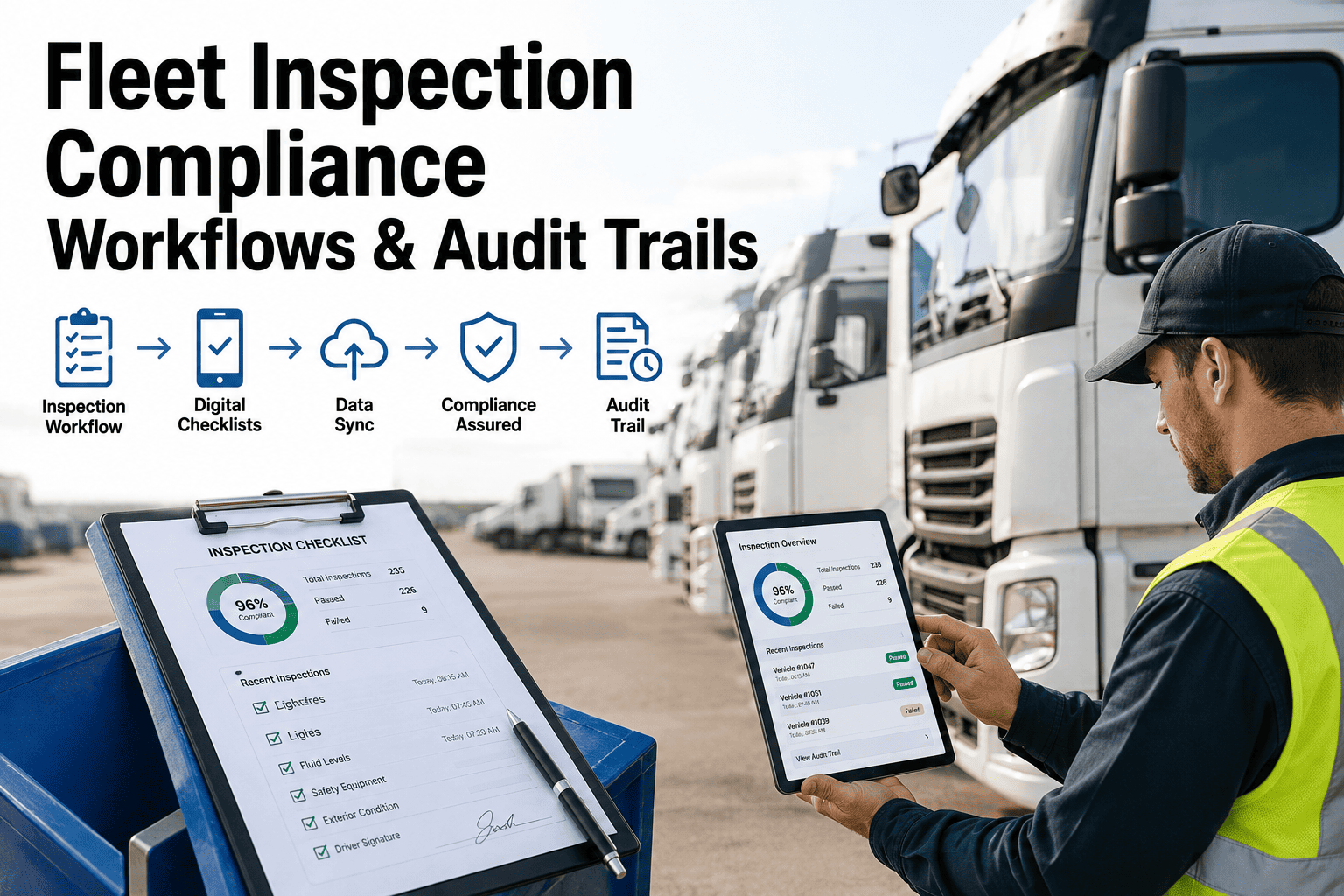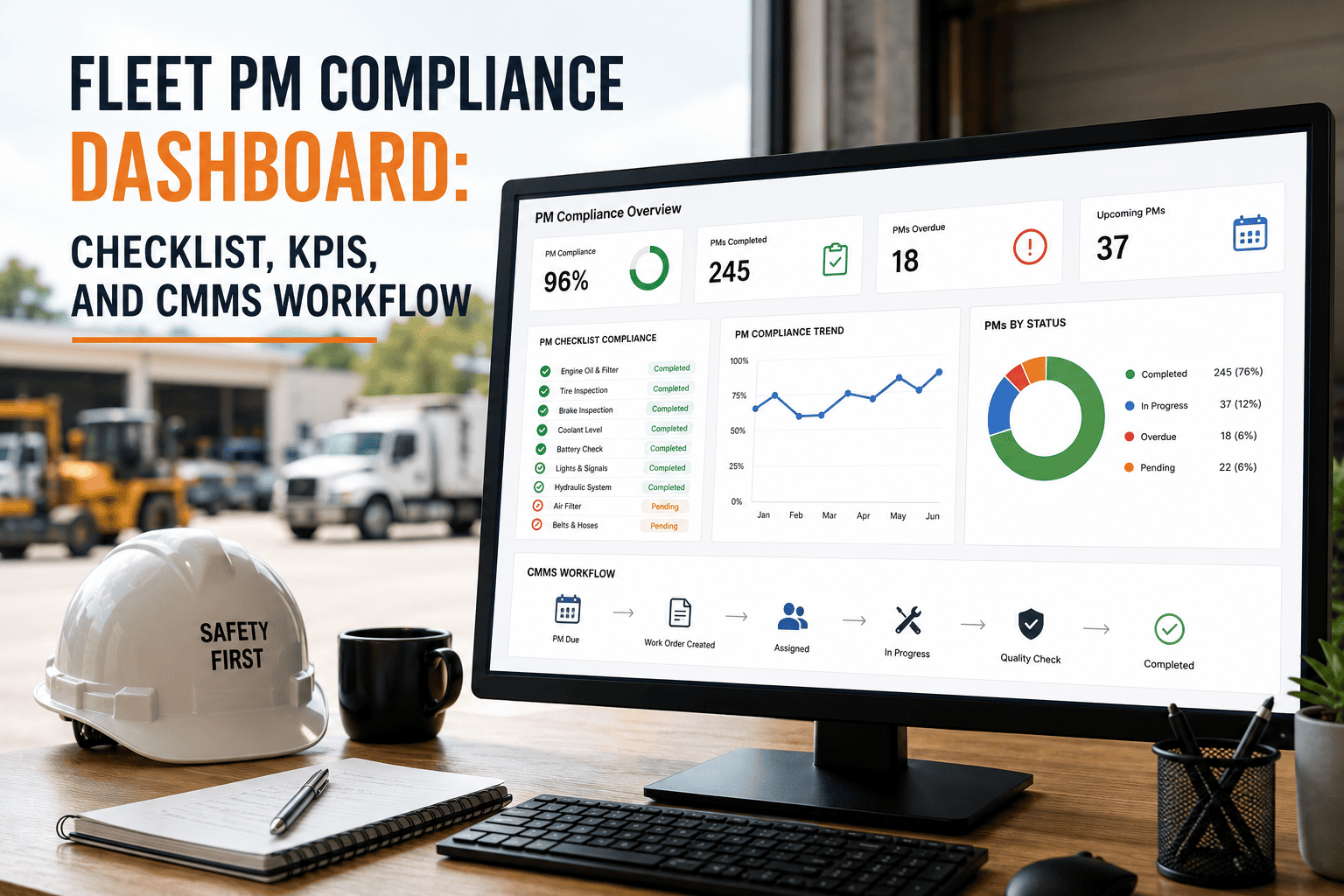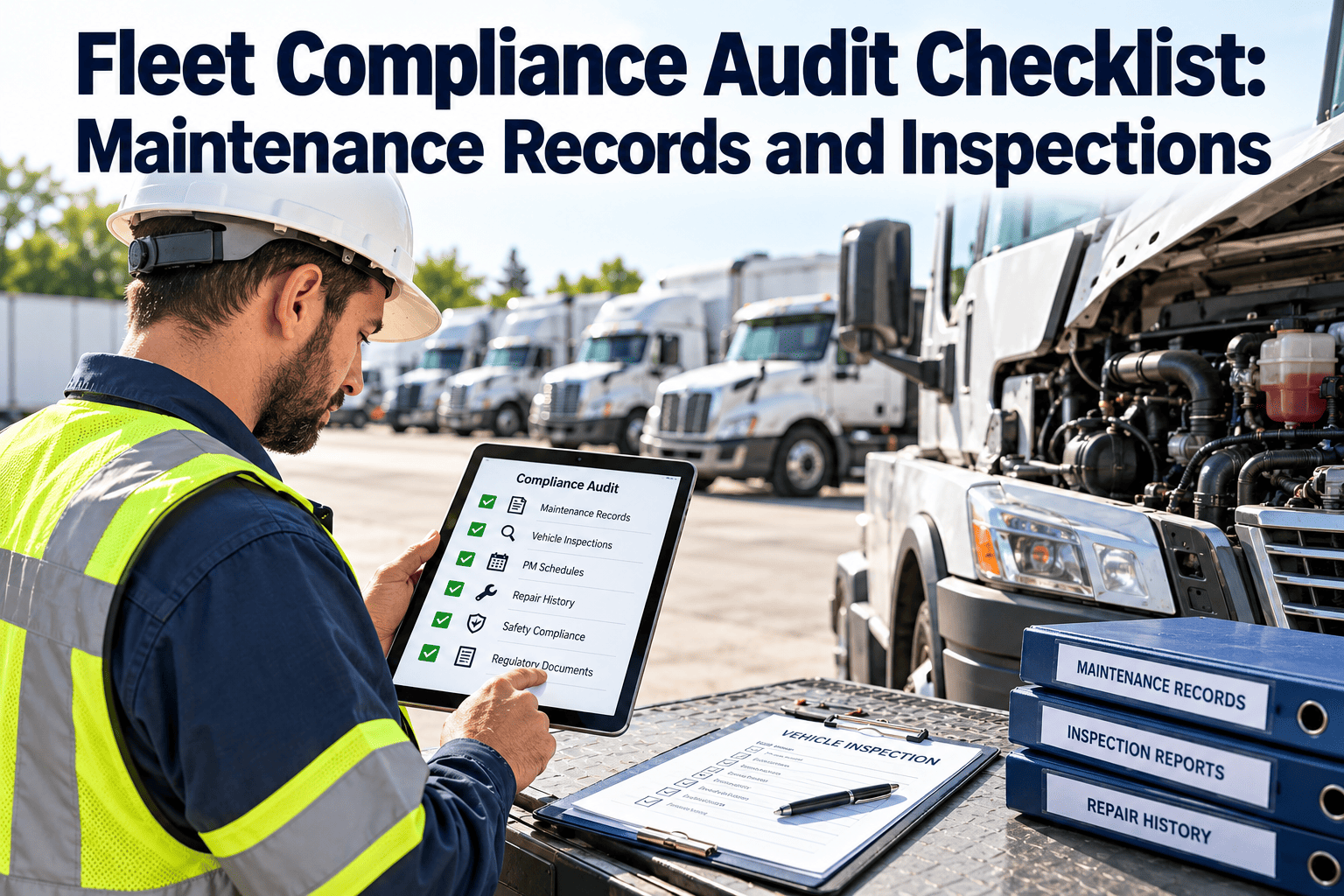
Most fleet audit findings are not about vehicles in bad condition. They are about records that cannot be found, inspections without sign-off, or repairs with no proof they were completed. A compliance audit tests whether your maintenance program can be shown on paper or on screen, vehicle by vehicle. This checklist helps fleet safety and maintenance teams review every record type, close gaps early, and keep audit evidence ready inside fleet maintenance software.
Audit Readiness Checklist
Fleet Compliance Audit Checklist: Maintenance Records and Inspections
A record-by-record review for fleets preparing for DOT, insurer, customer, or internal audits, covering vehicle files, inspection reports, repair history, and the evidence trail between a defect and its repair.
Six record areas an auditor can open at any time
What an Auditor Actually Asks For
Show methe file for this vehicle, including identification, ownership, and the schedule of required inspections.
Show methe last periodic inspection, who performed it, and proof that the inspector was qualified.
Show methe driver reports for a date range and what happened to every defect listed.
Show merepair and maintenance records with dates, nature of work, and who completed it.
Show mehow you know nothing is overdue today across the whole fleet.
Core Record Types and Retention Reference
| Record | Typical content | Reference | Retention noted in the rule |
|---|---|---|---|
| Vehicle maintenance file | Unit number, make, serial number, year, tire size, owner if not the carrier, inspection and maintenance schedule, repair and maintenance entries | 49 CFR 396.3 | 1 year where the vehicle is housed, plus 6 months after it leaves your control |
| Driver vehicle inspection report | Defects reported, driver signature, repair certification | 49 CFR 396.11 | 3 months from the report date |
| Periodic inspection report | Inspection date, inspector, vehicle details, items inspected and results | 49 CFR 396.21 | 14 months |
| Annual inspection qualification | Inspector training or experience documentation | 49 CFR 396.19 | Duration of employment plus 1 year |
| Brake inspector qualification | Training or experience for brake work and inspection | 49 CFR 396.25 | Duration of employment plus 1 year |
Retention periods and record requirements can change and may differ by state, province, or operation type. Verify current text with FMCSA or your regulator, and keep records longer if insurers or contracts require it.
Vehicle File Contents: What Each Unit Should Carry
Identity and ownership
- Company unit number and VIN
- Make, model, year, and registered plate
- Owner name where the unit is leased
- Tire size and axle configuration
- Assigned depot and asset class
Schedule and due dates
- Preventive maintenance intervals and next due
- Annual inspection due date
- Brake inspection interval
- Registration and permit expiry
- Recall and warranty items open
Work performed
- Date, mileage or hours, and nature of work
- Technician name and sign-off
- Parts used and part numbers
- Vendor invoices for outsourced work
- Photos or notes for major repairs
Inspection evidence
- Driver reports and any defect certifications
- Annual inspection report and decal record
- Brake measurement history
- Roadside inspection reports and responses
- Out-of-service releases and repair proof
Keep the Evidence Trail in One Place
Link inspections, defects, work orders, parts, and sign-offs to each vehicle so audit requests take minutes, not days.
The Defect-to-Repair Evidence Chain
ReportDriver or inspector records the defect with date, unit, and description.
ReviewMaintenance assesses severity and decides if the unit can operate.
OrderA work order is created and tied to the report.
RepairWork, parts, and labor are logged by the technician.
CertifyA responsible person confirms the repair or states why none was needed.
RetainThe full chain is stored and retrievable by unit and date.
An auditor who finds a break anywhere in this chain will usually ask for more records. A complete chain closes the question quickly.
Audit Checklist by Record Area
1. Driver reports and daily inspections
- Reports exist for the dates and units sampled, where defects were found
- Each report names the vehicle, driver, date, and the defects
- Defects marked repaired have a repair record and a certification
- Reports reviewed by maintenance within a defined timeframe
- Reports retained for the required period and retrievable on request
2. Periodic and annual inspections
- Every active unit has an annual inspection within the last 12 months
- Reports show the inspector, date, items inspected, and results
- Failed items have follow-up repair records
- Inspector qualification files are current and available
- Inspection decals or equivalent proof match the records
3. Preventive maintenance
- PM schedules defined for each asset class and applied to every unit
- PM completion dates fall within the planned interval
- Overdue PMs are listed, explained, and tracked to closure
- Checklists used during PM are saved with the work order
- Deferred work has an approval and a new due date
4. Brake and safety systems
- Brake inspections and adjustments recorded with measurements
- Brake work performed or supervised by qualified personnel
- Tire inspection and replacement history maintained
- Lighting, coupling, and steering repairs documented
- Out-of-service orders cleared with proof of repair
5. Parts, vendors, and outsourced work
- Vendor repair invoices attached to the matching work order
- Parts used are traceable by part number where practical
- Warranty claims recorded against the unit
- Recall notices reviewed, with completion dates recorded
- Vendors performing safety-critical work are qualified and listed
6. Governance and access
- Record owners assigned by depot and by record type
- Edits to records are logged with user and time
- Access controlled so unauthorized users cannot change entries
- Backups tested and retention periods applied consistently
- A named person can produce the full vehicle file on request
Gap Severity: How to Rank What You Find
| Severity | Example gap | Response |
|---|---|---|
| Critical | Unit operating with no valid annual inspection, or an open defect that affects safe operation | Remove from service or restrict use until corrected and documented |
| High | Repair completed but no sign-off, or inspection reports missing for a sampled period | Correct records promptly, add a control to prevent repeats |
| Moderate | PM done late without a recorded reason, or missing part numbers on work orders | Update procedures, retrain, and sample again next month |
| Low | Inconsistent naming, incomplete notes, or unlabeled photos | Standardize templates and review during routine audits |
A 90-Day Path to Audit Readiness
Days 1 to 30: Find the gaps
- Reconcile the asset list against registrations and insurance
- Sample 10 units per depot and review each file
- List missing records and rank by severity
- Confirm retention practices are consistent
Days 31 to 60: Fix the process
- Standardize inspection and work order templates
- Set required fields for sign-off and certification
- Assign owners for each record type
- Train drivers, technicians, and supervisors
Days 61 to 90: Prove it works
- Run a mock audit with a different reviewer
- Time how long it takes to produce a full vehicle file
- Track overdue items and close them
- Schedule the next internal audit on a regular cycle
Before and After: Paper and Spreadsheet Versus a CMMS
| Audit question | Scattered records | Centralized maintenance system |
|---|---|---|
| Where is this vehicle file? | Several binders, shared drives, and email threads | One asset record with linked history |
| Was this defect repaired? | Search reports, then ask the shop | Open the linked work order and sign-off |
| What is overdue today? | Manual spreadsheet review | A live overdue list by unit and due date |
| Who made this change? | Unknown or based on memory | User and timestamp on the record |
| Can we pull records for a date range? | Hours of sorting | A report filtered by unit, date, or type |
How Oxmaint Supports Audit Preparation
- Asset management keeps vehicle identity, ownership, and schedule data in one record per unit.
- Inspection templates capture driver reports, annual inspections, and brake checks with signatures, photos, and timestamps.
- Work orders link each defect to its repair, labor, parts, and sign-off, which builds the evidence chain automatically.
- Preventive maintenance scheduling shows what is due and what is overdue, with reminders ahead of due dates.
- Inventory and vendor records connect parts and outsourced work to the units they were used on.
- Reports and dashboards help safety managers pull records by unit, depot, or date range during an audit.
Different Audits, Different Emphasis
| Audit type | Usually focuses on | Prepare by |
|---|---|---|
| Regulatory review | Inspection, repair, and maintenance records, annual inspections, driver reports, and out-of-service history | Building a complete vehicle file for a sample of units and confirming retention |
| Insurer or broker review | Maintenance discipline, repeat defects, and how safety issues are controlled | Preparing trend reports on defects, repair times, and overdue work |
| Customer or shipper audit | Equipment condition, cleanliness, and proof of scheduled maintenance for dedicated units | Showing PM history and inspection records for the units assigned to the account |
| State or provincial inspection | Local equipment rules, registration, and periodic inspection requirements | Tracking jurisdiction-specific due dates by unit |
| Internal audit | Process adherence, consistency between depots, and corrective action closure | Sampling units at random and comparing records with physical condition |
Roadside inspection results feed the vehicle maintenance measures that regulators and insurers review. Repeat brake, lighting, and tire findings deserve early attention in your own audit.
Running a Mock Audit Day
- Pick a random sampleChoose units across depots and asset classes, including at least one leased unit, one older unit, and one recently repaired unit.
- Request the files without warningAsk the depot to produce vehicle files and measure how long each takes. Slow retrieval is itself a finding.
- Trace three defects end to endFollow each from driver report to work order, repair, certification, and storage, and note every missing link.
- Compare records with the vehicleWalk to the unit and check that tires, decals, and brake components match what the records say.
- Review overdue itemsLook at overdue PMs and annual inspections and ask for the reason and the plan on each.
- Write findings and ownersAssign each finding to a named owner with a due date, and re-test in 30 days.
Frequent Findings and How to Prevent Them
| Finding | Typical cause | Preventive control |
|---|---|---|
| Annual inspection overdue | Due dates tracked in a personal calendar or spreadsheet | Automated due dates with reminders ahead of expiry, reviewed weekly |
| Defect listed with no repair record | Repairs done verbally or recorded on loose paper | Work order required to close any reported defect |
| Repair with no sign-off | Technician finishes but the supervisor does not review | Required sign-off field and a daily list of unsigned jobs |
| Inconsistent PM intervals | Different depots using different schedules | Standard PM templates by asset class |
| Missing records for leased units | Records held by the lessor or vendor | Contract language and a routine request for service records |
| Brake work without proof of qualification | Qualification files kept separately from maintenance | Technician qualifications linked to work performed |
| Records edited after the fact | No edit history or access control | User permissions and an audit log on every record |
Who Owns Which Part of Audit Readiness
Drivers
- Complete inspections and report defects on time
- Review previous reports before driving
- Attach photos and describe defects clearly
Technicians
- Record work, parts, and findings on the work order
- Sign off completed repairs
- Flag related defects found during a job
Maintenance managers
- Own PM schedules and overdue lists
- Review open defects daily
- Approve deferrals and document reasons
Safety and compliance
- Run internal audits and track corrective actions
- Confirm retention and access controls
- Serve as the contact for outside auditors
Monthly Records Reconciliation
- Compare the active asset list with registration, insurance, and lease schedules to catch units missing from the maintenance program
- List every open defect older than the response target for its severity and confirm each has an owner and a date
- Review work orders closed without labor, parts, or notes, since thin records are the first to draw questions
- Check that annual inspection and brake inspection due dates for the next 60 days have been scheduled with a shop or inspector
- Confirm vendor invoices received this month are attached to the matching work orders and unit records
- Sample five driver reports and trace each reported defect to its repair or documented decision
- Review user access and recent edits to closed records, and investigate any change without a stated reason
Audit Readiness Metrics
| Metric | How to read it |
|---|---|
| Vehicle file completeness | Share of sampled units with every required record present |
| Defect closure rate | Reported defects with a certified repair or documented decision |
| Annual inspection currency | Active units within the 12-month window |
| PM compliance | Planned PMs completed within the allowed interval |
| Time to produce a vehicle file | Minutes needed to deliver a complete record on request |
| Open audit findings | Corrective actions still outstanding and their age |
Compliance Audit FAQs
How often should we run an internal audit?
Many fleets review a sample monthly and run a full review each year. Increase frequency after findings or growth.
Are electronic records acceptable?
Generally yes, if they are legible, retrievable, and protected from alteration. A maintenance management system adds timestamps and user logs.
What if a record is missing?
Do not recreate it with a backdate. Document the gap, correct the process, and record the correction with its actual date.
Do leased and owner-operator units need files?
Yes. The carrier is responsible for the equipment it operates, so keep records and ownership details for every unit.
Can we get help setting up audit templates?
Yes. You can schedule a demo to see how inspection and work order records are structured.
Be Ready Before the Audit Request Arrives
Centralize inspections, repairs, and compliance records so every vehicle file is complete and easy to produce.