Every hour a fleet vehicle idles, it burns fuel, adds engine hours, and moves no freight. Many managers treat idling as a driver habit, but a large share is driven by equipment: weak batteries, faulty cab heating and cooling, aftertreatment problems, and long waits for parts or service. This guide separates operational idling from maintenance-driven idling, and shows how a fleet maintenance CMMS can help remove the second kind for good.
Fleet Idle Time Reduction Maintenance Guide
Cut idle hours by fixing the equipment problems that cause them, then protect the gains with inspections and preventive maintenance.
One illustrative shift, by activity
The goal is to shrink the gold segment without cutting into productive time.
What idling really costs a fleet
Heavy-duty engines can burn roughly half a gallon to a gallon of fuel per idle hour, depending on engine size and accessory load. Multiply that across a fleet and a season, and the total is significant.
Fuel
Fuel burned with no miles or work in return.
Engine hours
Wear accumulates while the odometer stands still.
Emissions systems
Low exhaust temperatures can load particulate filters and EGR components.
Service intervals
Mileage-based PM underestimates real use.
Compliance
Local anti-idling rules can bring fines.
Operational idle versus maintenance-driven idle
Different causes need different fixes. Policy and coaching address the first group. Maintenance and inspection address the second.
Operational causes
- Waiting at docks, sites, or customer locations
- Dispatch gaps between jobs
- Warm-up habits and comfort idling
- Traffic and queueing
- Power take-off work on parked vehicles
Maintenance-driven causes
- Weak batteries and hard-start fears
- Failed cab heaters, air conditioning, or auxiliary units
- Charging system faults
- Aftertreatment problems and forced regeneration
- Vehicles waiting for repairs or parts while running
Fix the causes of idling, not just the symptoms
Track inspections, repairs, and service history for every unit so recurring idle problems stop recurring.
Idle cause to maintenance fix
| Idle cause | Underlying equipment issue | Maintenance action |
|---|---|---|
| Driver idles overnight to stay warm or cool | Inoperative bunk heater, auxiliary unit, or air conditioning | Inspect climate systems before each season and repair promptly |
| Engine left running to avoid a no-start | Aging batteries, corroded cables, or charging faults | Load test batteries and inspect terminals on a set schedule |
| Idling to keep systems warm | Coolant, thermostat, or block heater problems | Check cooling and block heaters before cold weather |
| Long regeneration or repeated derates | Sensor faults, injector issues, or short-trip duty cycle | Review fault codes and schedule diagnostics early |
| Idling to run lights, tools, or hydraulics | No auxiliary power or underpowered inverter | Evaluate battery-powered auxiliary options and electrical load |
| Running while waiting for the shop | Slow service turnaround or missing parts | Improve scheduling and keep common parts in stock |
Why idle hours distort your maintenance schedule
A vehicle can show a low odometer reading and still have a heavily worked engine. Mileage-only PM then lets services slip.
- Track engine hours and miles together. Use whichever interval arrives first for oil, filters, and inspections.
- Separate idle hours where data allows. Idle share by vehicle shows where wear is higher than mileage suggests.
- Follow manufacturer guidance. Some manufacturers publish how to treat idle hours in service intervals. Confirm for each engine.
- Watch oil condition. Extended low-load idling can affect oil quality, so consider shorter intervals for high-idle units.
A five-stage idle reduction program
Sustained results come from combining data, equipment fixes, policy, and follow-up.
Measure
Establish idle hours and idle share per vehicle, per driver group, and per site.
Diagnose
Tag each high-idle unit as operational or equipment-related using inspections and driver feedback.
Repair
Open work orders for batteries, climate systems, charging, and aftertreatment faults.
Set policy
Define idle limits and exceptions, then explain the reasons to drivers.
Sustain
Review monthly, schedule seasonal checks, and recognize improvement.
Seasonal inspection plan to prevent comfort idling
Idling spikes in extreme weather. A short seasonal inspection removes the equipment excuses before the first heat wave or cold snap.
| Season | Inspect | Why it matters |
|---|---|---|
| Before winter | Batteries and cables, block heaters, cab heaters, coolant, fuel filters | Reduces starting worries and warm-up idling |
| Before summer | Air conditioning, cooling system, auxiliary cooling units, belts | Reduces cab-cooling idle and overheating |
| Year-round | Charging system, fault codes, aftertreatment condition | Prevents regeneration issues and unplanned downtime |
Setting an idle policy people can follow
Some jurisdictions, such as California for heavy-duty trucks, limit idling to short periods, and many cities and states have their own rules. Check the requirements where your vehicles operate.
Level 1: Awareness
Share idle data with drivers and supervisors and explain what is being measured.
Level 2: Targets
Set realistic idle limits by vehicle class and job type, with listed exceptions such as extreme weather and required equipment use.
Level 3: Coaching
Review repeat cases with the driver and check whether equipment is the cause.
Level 4: Controls
Where appropriate, use automatic shutdown settings, auxiliary power, or other equipment solutions.
Idle-related inspection checklist
Add these items to pre-trip, post-trip, or periodic inspections so equipment problems are reported before they cause idling.
Battery condition, terminals, and hold-down
Dash warnings for charging or aftertreatment
Cab heater and air conditioning operation
Auxiliary power unit or inverter function
Block heater cord and plug condition
Belt and coolant level condition
Reported hard starts or slow cranking
Auto shutdown setting confirmed and unchanged
Estimating the cost of idling without inventing numbers
A simple estimate built from your own data is more persuasive than an industry average. Work through it for a sample of vehicles first.
Step 1
Pull idle hours for each vehicle over a representative month or quarter.
Step 2
Measure or look up the idle fuel rate for that engine and typical accessory load.
Step 3
Multiply hours by fuel rate, then by your actual fuel price.
Step 4
Add the maintenance side: service intervals pulled forward and repair cost on aftertreatment parts.
Step 5
Split the total into operational and equipment-related idle to size each fix.
How idling affects aftertreatment systems
Modern diesel engines rely on exhaust temperature to keep particulate filters and related components clean. Long periods at low load can work against that.
| Condition | Possible effect | Maintenance response |
|---|---|---|
| Extended low-load operation | Faster soot buildup and more frequent regeneration | Review regeneration frequency and fault history by vehicle |
| Repeated interrupted regenerations | Filter loading and possible derate | Coach drivers and check sensors and injectors |
| High idle share on short routes | Fuel dilution of oil and added wear | Shorten oil service intervals and sample oil where appropriate |
| Cold weather idling to stay warm | Low coolant temperature and incomplete combustion | Fix heaters and thermostats instead of idling to compensate |
Behavior varies by engine and emissions design. Follow the manufacturer's guidance for each model in your fleet.
Idle reduction by vehicle type
Long-haul and regional trucks
Overnight rest idling is the main driver. Focus on bunk heating and cooling, batteries, and auxiliary power maintenance.
Delivery and service vehicles
Frequent stops and short trips. Check start-stop and battery health, and use route planning to cut waiting.
Utility and vocational trucks
Power take-off work parks vehicles with the engine running. Maintain hydraulics and evaluate electric power options.
Buses and passenger vehicles
Idling at layovers and loading points. Maintain climate systems and set shutdown rules for terminals.
Municipal and emergency vehicles
Some idle is operationally required. Document exceptions and maintain onboard power systems carefully.
Engaging drivers without turning it into blame
Drivers often idle for a reason that feels sensible to them. Understanding it is faster than punishing it.
What tends to fail
- Publishing league tables with no context
- Ignoring the equipment complaints drivers raise
- Setting one limit for every job type
What tends to work
- Explaining the cost and wear behind the policy
- Fixing reported defects quickly and visibly
- Recognizing improvement, not only penalizing excess
Keeping the right parts on the shelf
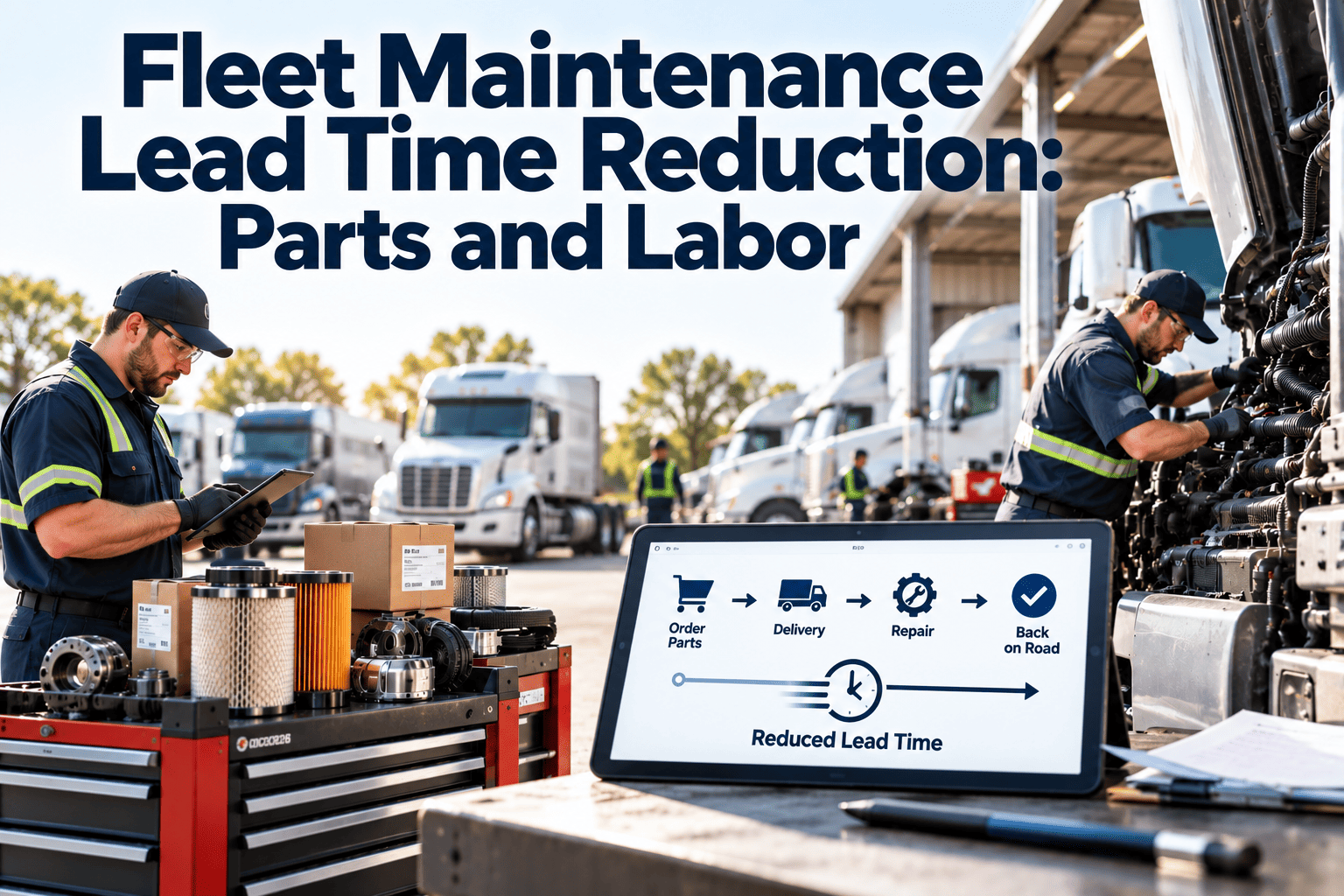
Vehicles often idle because they are waiting on a repair. A small, well-chosen stock cuts that wait.
Common battery sizes used across the fleet
Battery cables, terminals, and hold-downs
Belts, hoses, and thermostats for frequent models
Cab heater and air conditioning wear items
Fuel and air filters matched to service schedules
Block heater cords and fittings
Review usage by part monthly and set reorder points from actual consumption rather than guesswork. Include lead times for hard-to-source items, and keep a record of which vehicles consume which parts so that recurring failures stand out quickly and can be addressed at the root.
Common mistakes in idle reduction programs
- Treating all idling as a behavior problem. Equipment faults are ignored and drivers lose trust.
- Ignoring engine hours. PM based only on miles misses wear on high-idle vehicles.
- Skipping seasonal prep. The first cold or hot week undoes months of coaching.
- Buying technology without maintenance. Auxiliary units and shutdown systems fail without service plans.
- Not tracking the result. Without before and after data, the program cannot show what worked.
A ninety-day starting plan
Days 1-30
Collect idle data, review asset records, and add idle-related items to inspection checklists.
Days 31-60
Work through the high-idle units: test batteries, check climate and charging systems, and open repair orders.
Days 61-90
Publish idle policy, adjust PM to use hours as well as miles, and begin monthly reviews.
Reporting that links idle data to maintenance results
The most useful reports put idle hours next to repair history, so you can see which fixes actually changed behavior.
- Idle share by vehicle before and after a battery, climate, or charging repair.
- Open defects by age, so long-standing comfort complaints do not drive idling for weeks.
- Repair turnaround time for idle-related work orders, compared across depots or shops.
- Repeat repairs on the same unit, which point to a deeper problem or a vehicle nearing replacement.
- Seasonal comparison of idle hours, to confirm that pre-season inspections made a difference.
Questions to ask your team this month
Which five vehicles idle the most, and what does each driver say is the reason?
How many open work orders relate to batteries, heating, cooling, or charging?
Do our service intervals use engine hours as well as miles?
Which sites or routes have long waiting times that no repair can fix?
Are auxiliary power units and shutdown timers actually being maintained?
What local anti-idling rules apply to the areas where we operate?
Idle KPIs and how to calculate them
Idle share
Idle hours divided by total engine hours
Idle fuel estimate
Idle hours multiplied by measured idle fuel rate for the vehicle
Equipment-related idle
Idle hours on units with open climate, battery, or charging work orders
Repair turnaround
Hours from defect report to completed work order
Use your own measured idle fuel rate where possible, and update it when engines, accessories, or duty cycles change. Rates vary with engine, load, temperature, and accessories.
Before and after: a maintenance-first idle workflow
Before
- Idle reports go to drivers only
- Defects reported verbally
- Batteries replaced after failure
- Mileage-only service schedule
After
- Idle data reviewed with maintenance
- Defects create tracked work orders
- Batteries tested on a schedule
- Service by hours and miles, whichever comes first
Technology that supports idle reduction
Tools help most when they feed a maintenance process rather than only produce reports.
Telematics idle reporting
Shows idle time by vehicle and location, pointing to patterns worth investigating.
Engine shutdown settings
Automatic shutdown timers can reduce idle if programmed and kept in place.
Auxiliary power and battery systems
Provide heat, cooling, or power without running the main engine, but need regular service.
Mobile inspection apps
Capture defects at the vehicle and route them directly to maintenance.
How Oxmaint supports idle reduction
Oxmaint covers the maintenance side of idle reduction. It helps teams find, schedule, complete, and document the repairs that remove idle triggers.
- Mobile inspections: drivers report battery, climate, and charging defects at the vehicle, with the issue linked to the asset.
- Work orders: repairs are assigned, prioritized, tracked, and closed with labor and parts cost.
- Preventive maintenance: seasonal checks and hour or mileage-based services keep equipment ready.
- Asset history: repeat failures on the same unit are visible, which exposes chronic idle causes.
- Inventory: common batteries, belts, and filters stay available so vehicles are not left running while waiting for parts.
- Reports: track open defects, repair time, and cost per vehicle next to idle trends.
Frequently asked questions
How does maintenance reduce idle time?
It fixes batteries, climate systems, and charging faults that make drivers idle, and keeps them fixed through scheduled checks.
Should idle hours affect service intervals?
Often yes. Using engine hours alongside miles prevents high-idle vehicles from running past service needs.
What inspection items relate to idling?
Batteries, charging, heating and cooling, auxiliary power, and shutdown settings. Build these checklists in Oxmaint.
Can all idling be eliminated?
No. Some idling is needed for safety, power-driven work, or extreme weather. Aim to remove avoidable idle, document the approved exceptions, and review them each quarter so that exceptions do not quietly become the norm across the fleet.
Can Oxmaint show idle data?
Oxmaint focuses on maintenance workflows. Ask about current data options in a short demo.
Reduce idle hours by keeping equipment ready
Set up inspections, work orders, and preventive maintenance that remove the equipment reasons for idling.