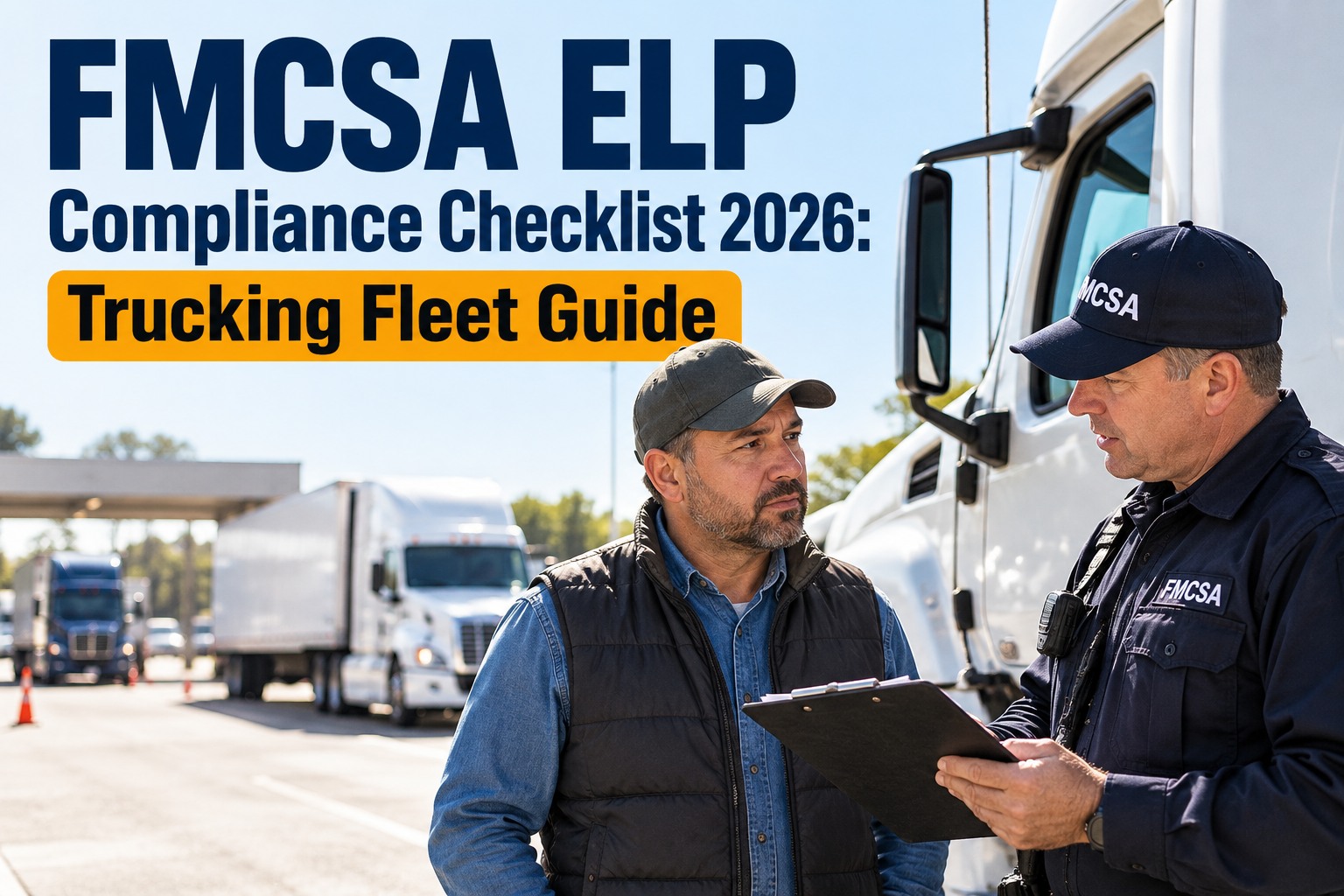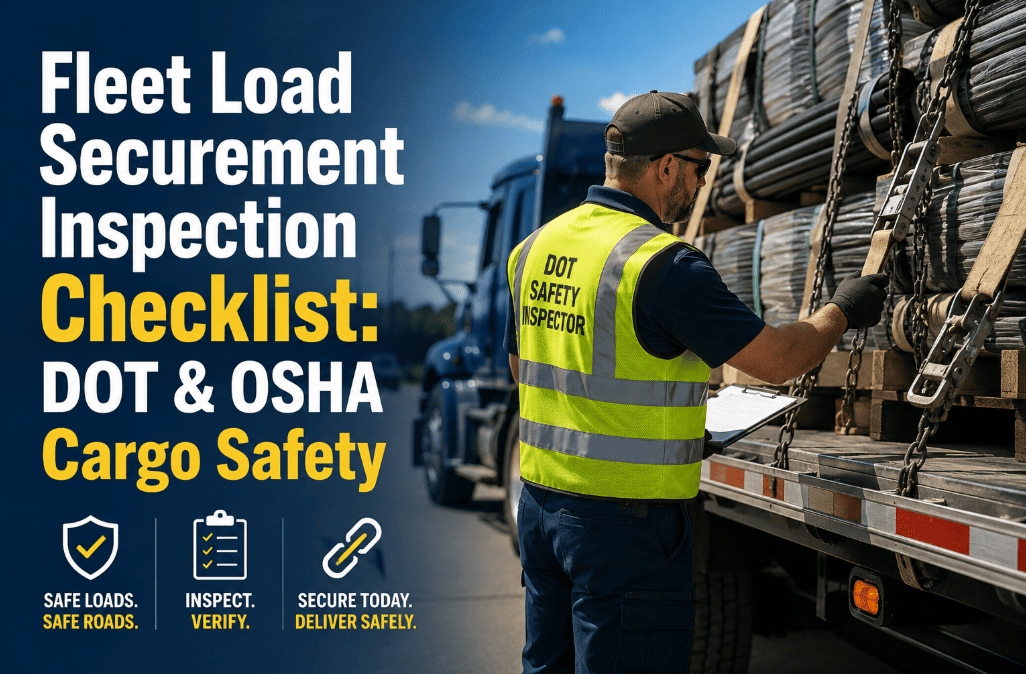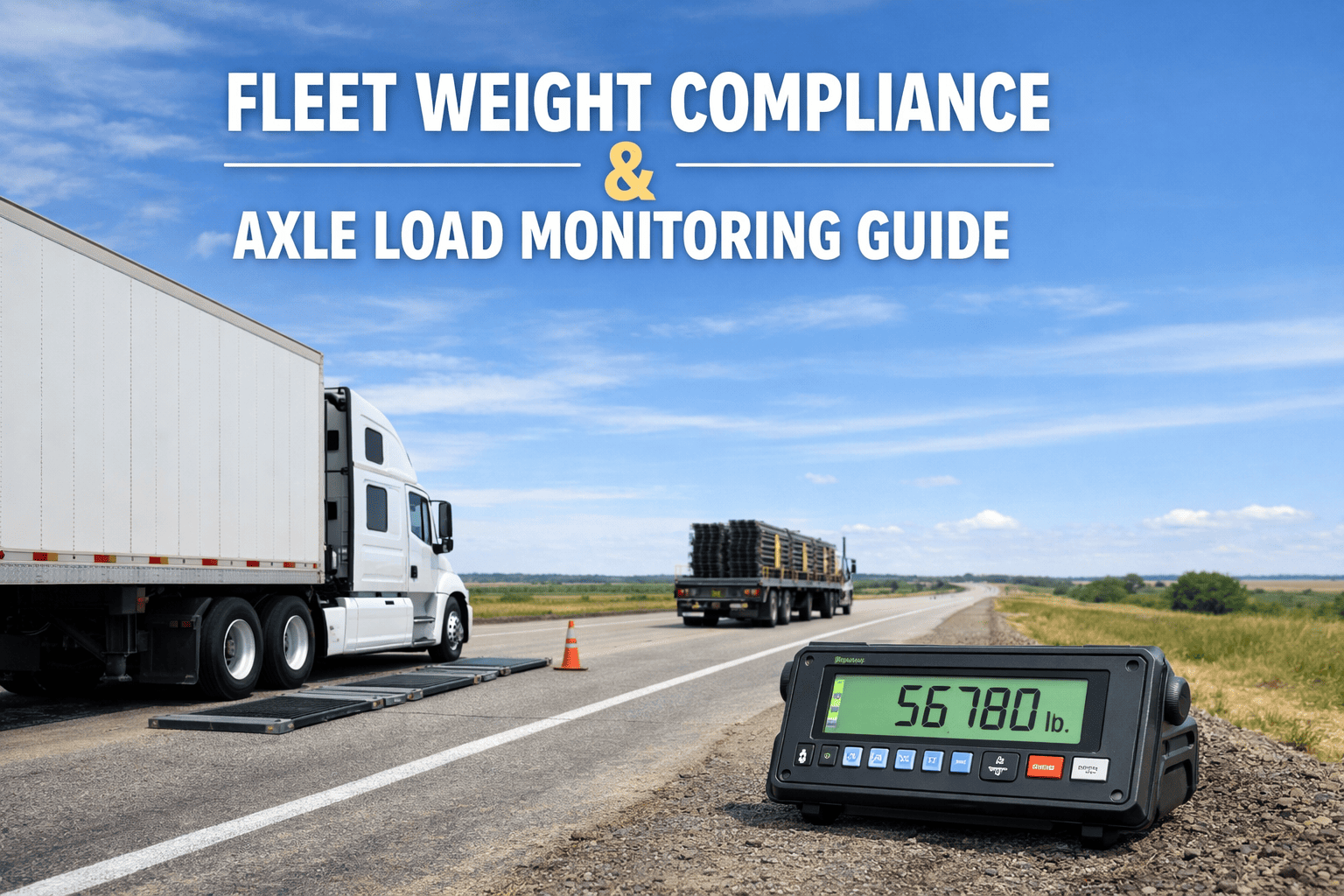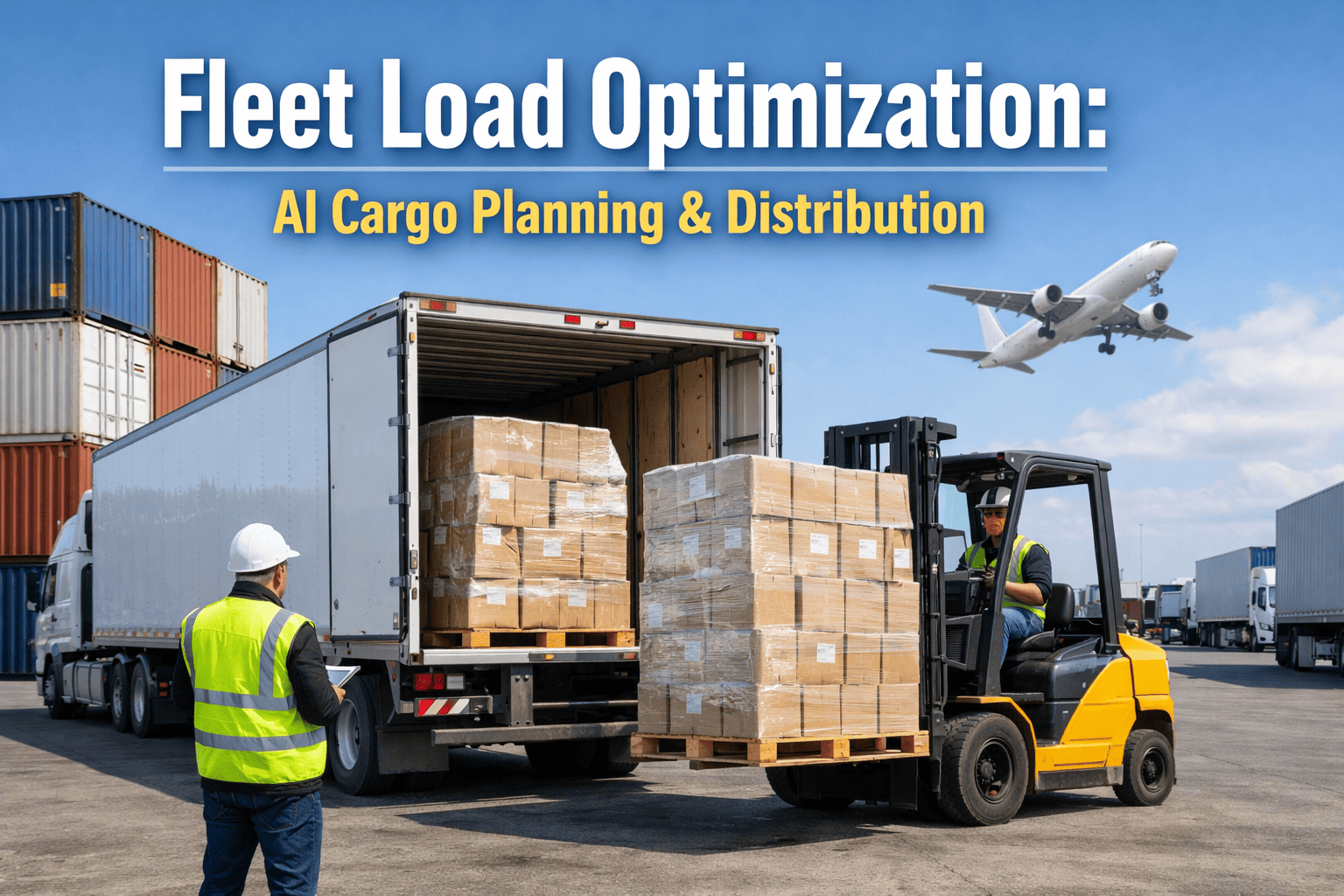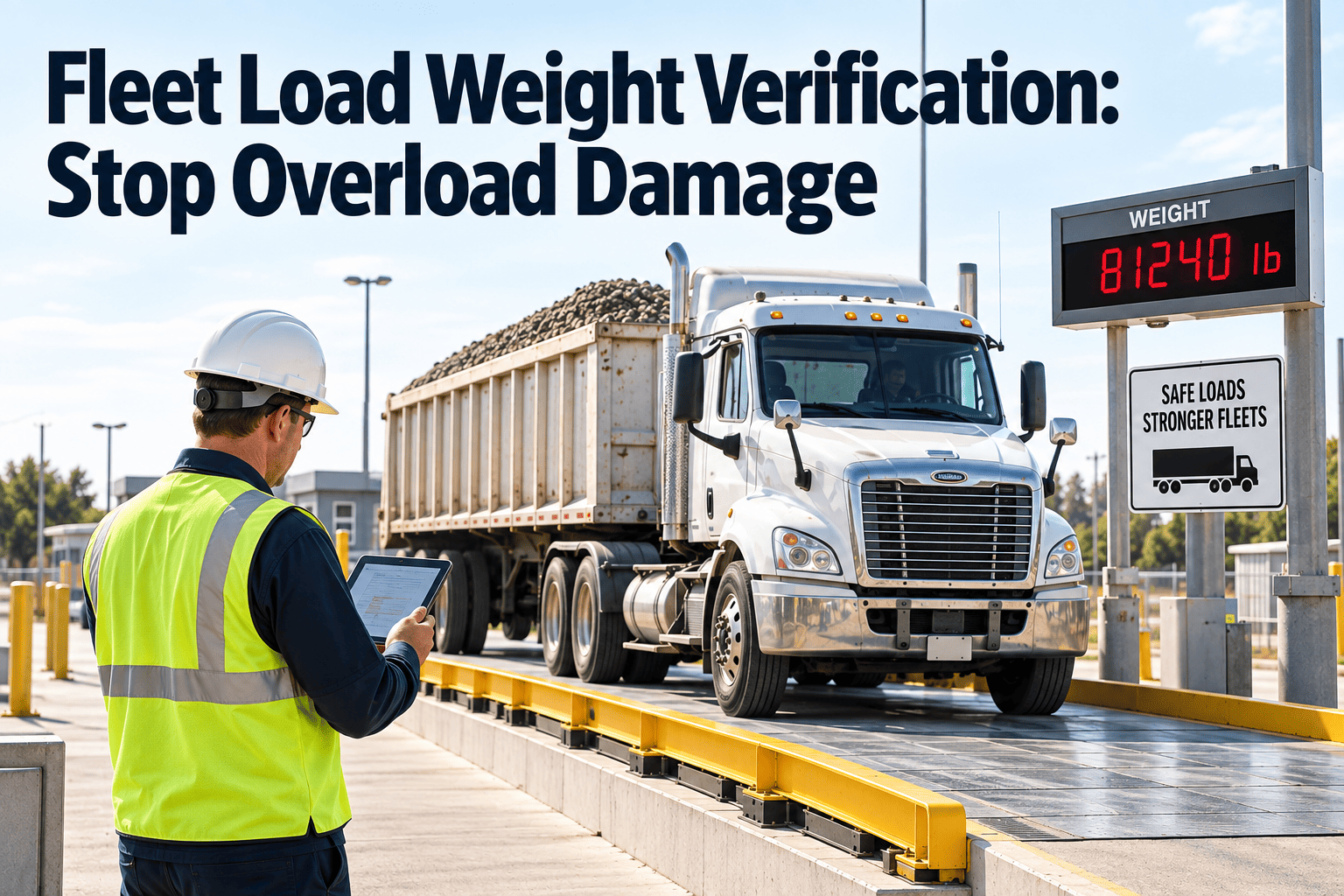
Overloaded trailers crush the cartons on the bottom tier, wear out tires and brakes, and invite roadside fines. Underloaded ones let freight shift and rub. Both problems begin at the dock, where weight is assumed instead of verified. This guide covers federal weight limits, weigh-in-motion, onboard scales, and cargo distribution checks that catch problems before departure, plus the maintenance records that Oxmaint can keep.
Fleet Load Weight Verification: Stop Overload and Underload Damage
Verify gross, axle, and package-level weight before the trailer leaves the dock, so crushed cartons, shifted loads, and roadside fines stop at the source.
Two Failures With Opposite Causes
Weight problems occur at two levels. Vehicle-level weight covers gross and axle loads that regulators measure. Package-level weight covers how much stress each carton or pallet carries, which determines whether freight arrives intact.
Overload
- Bottom-tier cartons crush under the weight stacked above them.
- Tires run hotter and wear faster under excess axle load.
- Brakes work harder, and stopping distances grow.
- Springs, air bags, and frames absorb stress they were not sized for.
- Fines, permit problems, and delays follow a failed scale check.
Underload and poor fill
- Light or loosely packed freight moves during braking and turns.
- Voids between pallets let cartons fall, scuff, and split.
- Securement calculations built on the wrong weight can be inadequate.
- Weight concentrated in one zone can still overload one axle.
- Paid capacity goes unused on every trip.
Why Weight Errors Start at the Dock
Most overweight and poorly loaded trailers trace back to a small set of predictable mistakes. Each one has a control that costs little compared with a claim or a citation.
The Legal Ceiling: Federal Limits and the Bridge Formula
On the Interstate System, federal rules cap gross weight at 80,000 pounds, single axles at 20,000, and tandem axles at 34,000. The Federal Bridge Formula adds a spacing test, because axles that sit close together stress bridges more.
Worked example: 40 feet
Worked example: 51 feet
Payload arithmetic
Points that catch fleets out
- A truck can be legal on gross weight and still be over on one axle or axle group.
- States set their own limits and tolerances away from the Interstate System.
- Some states allow higher axle weights on state roads, so route planning matters.
- Steer axle limits come from tire and component ratings rather than a single federal number.
Compliance Basics for Fleet Managers
Weight enforcement is a mix of federal standards and state practice. Penalties, tolerances, and permit rules differ by jurisdiction, so build your policy around the strictest routes you run.
Where Weight Gets Verified: Four Checkpoints
One scale reading is rarely enough. Verification works best as a chain of checkpoints, each one catching what the previous one missed.
Before loading
After loading
En route
On arrival
Multi-Stop Routes: Weight Changes as the Trailer Empties
A load that scaled legally at the first pickup may become imbalanced after several drops. Removing freight from the wrong end of the trailer can shift weight toward one axle group.
Technology trends worth watching
- Many onboard systems now show axle weights on a phone or tablet over Bluetooth, so drivers can see readings while loading.
- Where systems support it, weight readings can flow into telematics and dispatch records for later review.
- Preclearance services continue to combine credentials, safety data, and screening sensors to reduce stops for compliant trucks.
Choosing Weighing Technology
| Method | What it measures | Strengths | Limits |
|---|---|---|---|
| Certified static scale | Gross and axle weights at a stop | Reference standard for verification | Requires a stop, a fee, and access |
| Onboard scale, air-ride pressure | Axle group weight from suspension air pressure | Reads at the dock, easy to retrofit | Needs calibration, level ground, and a leak-free suspension |
| Onboard scale, load cells | Direct force between chassis and body | Generally more accurate than pressure sensing | Higher cost and heavier installation |
| Pallet or dock scale | Individual pallet or shipment weight | Catches errors before loading | Does not show axle distribution |
| Weigh-in-motion | Approximate weight at highway speed or low speed | Screens trucks without stopping them | Generally a screening tool, not the final word |
Turn Weight Checks Into Maintenance Insight
Oxmaint links inspections, work orders, and asset history, so tire, brake, and suspension repairs can be reviewed alongside the loads those trucks carried.
Cargo Distribution: Placement That Passes the Scale
Total weight is only half the picture. Where the weight sits decides how it divides between the steer, drive, and trailer axles, and a legal gross can still hide an illegal axle.
Front third
Middle third
Rear third
Reading a scale ticket correctly
- Confirm the ticket lists steer, drive, and trailer axle weights separately, not only the gross.
- Match the trailer and tractor numbers on the ticket to the load record.
- Note the date, time, and scale location for later disputes.
Adjusting after the first reading
- Sliding the fifth wheel forward adds steer weight, and sliding it back reduces steer weight.
- Sliding trailer tandems toward the front moves weight from the tractor axles to the trailer axles.
- Re-scale after every adjustment, because one axle group often improves while another worsens.
- Shift the freight itself when hardware adjustments run out of range.
Package-Level Overload: Protecting the Bottom Tier
Cartons fail from the bottom, where the load of every tier above adds up. The illustration below uses round numbers, so replace them with your own package weights and rated stacking limits.
Package-level controls
- Compare each carton's rated stacking capacity with the load it will carry.
- Weigh mixed pallets, not just count them, since one heavy item can change the stack.
- Place denser and stronger packages at the bottom, and keep pallet overhang to a minimum.
- Do not stack over pallets with damaged or wet cartons.
How Overload Shows Up in Maintenance Records
Repeated overweight loads leave a trail in repair history. Trucks that show patterns in the components below deserve a review of loading practices, not only another repair.
| Component | Possible overload sign | Inspection focus | Maintenance response |
|---|---|---|---|
| Tires | Shoulder wear, heat damage, repeated blowouts | Pressure, tread pattern, sidewall condition | Correct inflation, review axle loads, replace damaged casings |
| Brakes | Fast lining wear, overheated drums | Lining thickness, adjustment, drum condition | Shorten service intervals for heavy-loaded units |
| Suspension | Sagging springs, cracked brackets, air bag failures | Ride height, leaks, bushings | Repair leaks promptly and recalibrate onboard scales |
| Wheel ends | Bearing failures, seal leaks | Hub temperature, lubricant level, play | Track repeat failures by axle position |
| Trailer floor and crossmembers | Cracks, sagging, broken boards | Floor flatness and welds under forklift traffic | Repair before the next loaded trip |
A Repair Workflow That Closes the Loop
Finding wear is only useful when it leads to a fix and a change in practice. A simple loop keeps overload findings from repeating.
Keeping the Scale Program Itself Maintained
A scale that drifts gives false comfort. Treat every onboard scale and dock scale as an asset with its own schedule and records.
Schedule
- Calibrate onboard scales using an empty weight and a loaded weight.
- Compare readings with a certified scale on a set rhythm.
- Inspect air lines, fittings, and sensors for leaks.
- Service dock scales and keep certificates on file.
Record
- Scale tickets tied to load and trailer numbers.
- Variance between onboard and certified readings.
- Adjustments made to the fifth wheel or tandems.
- Corrective work after any failed check.
Driver and Dock Checklist
At the dock, before loading
Before departure
Elements of a written weight policy
Metrics That Show Whether Verification Works
Frequently Asked Questions
Can a truck be under 80,000 lb and still receive an overweight citation?
Are onboard truck scales accurate enough to replace certified scales?
Why does overload crush the bottom packages first?
Do cargo securement rules depend on load weight?
How can maintenance software help with weight compliance?
Weigh It, Fix It, Prove It
Give every truck and trailer a maintenance record that shows inspections, repairs, and calibration in one place. Oxmaint helps you cut repeat overload damage and keep evidence ready when questions arise.