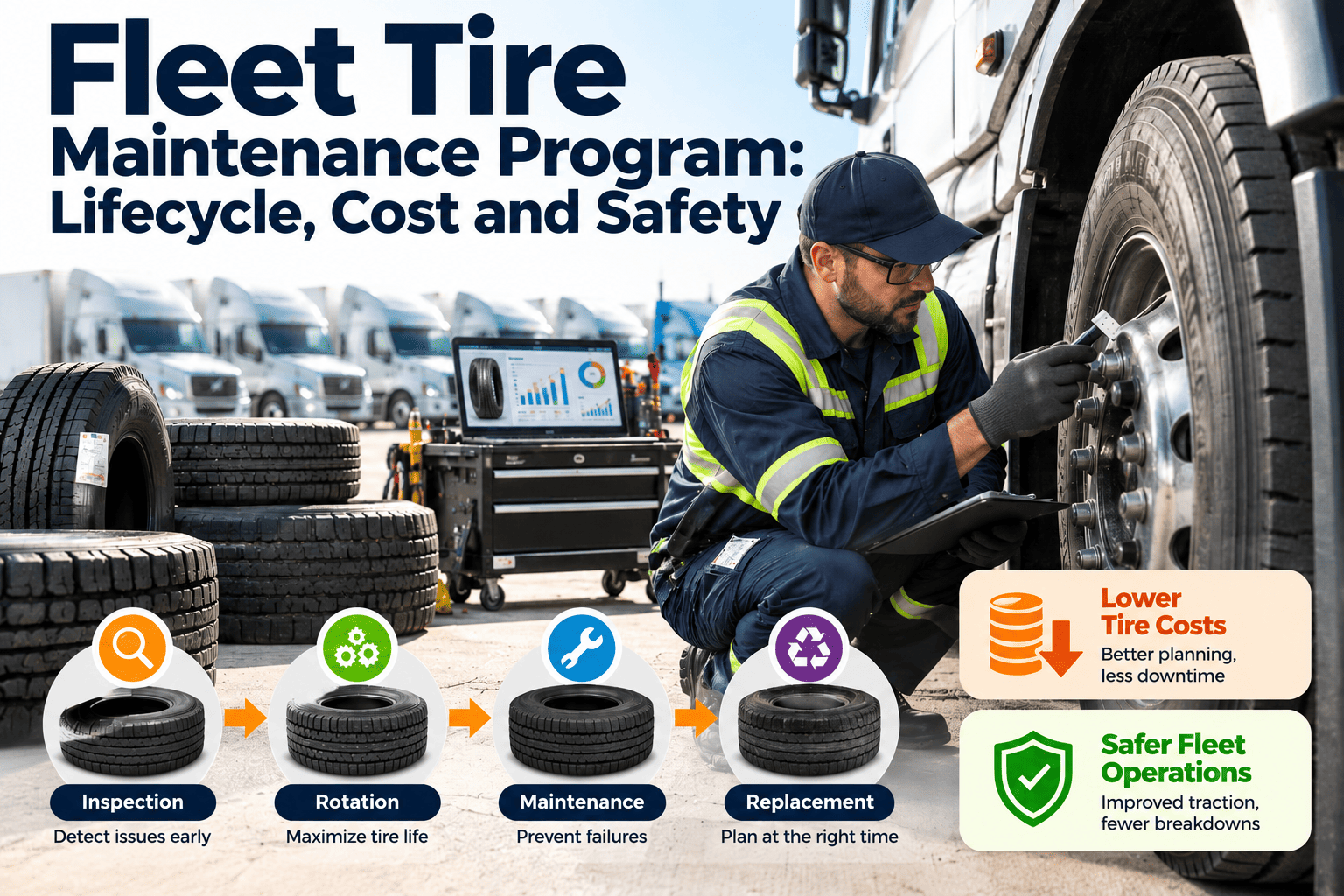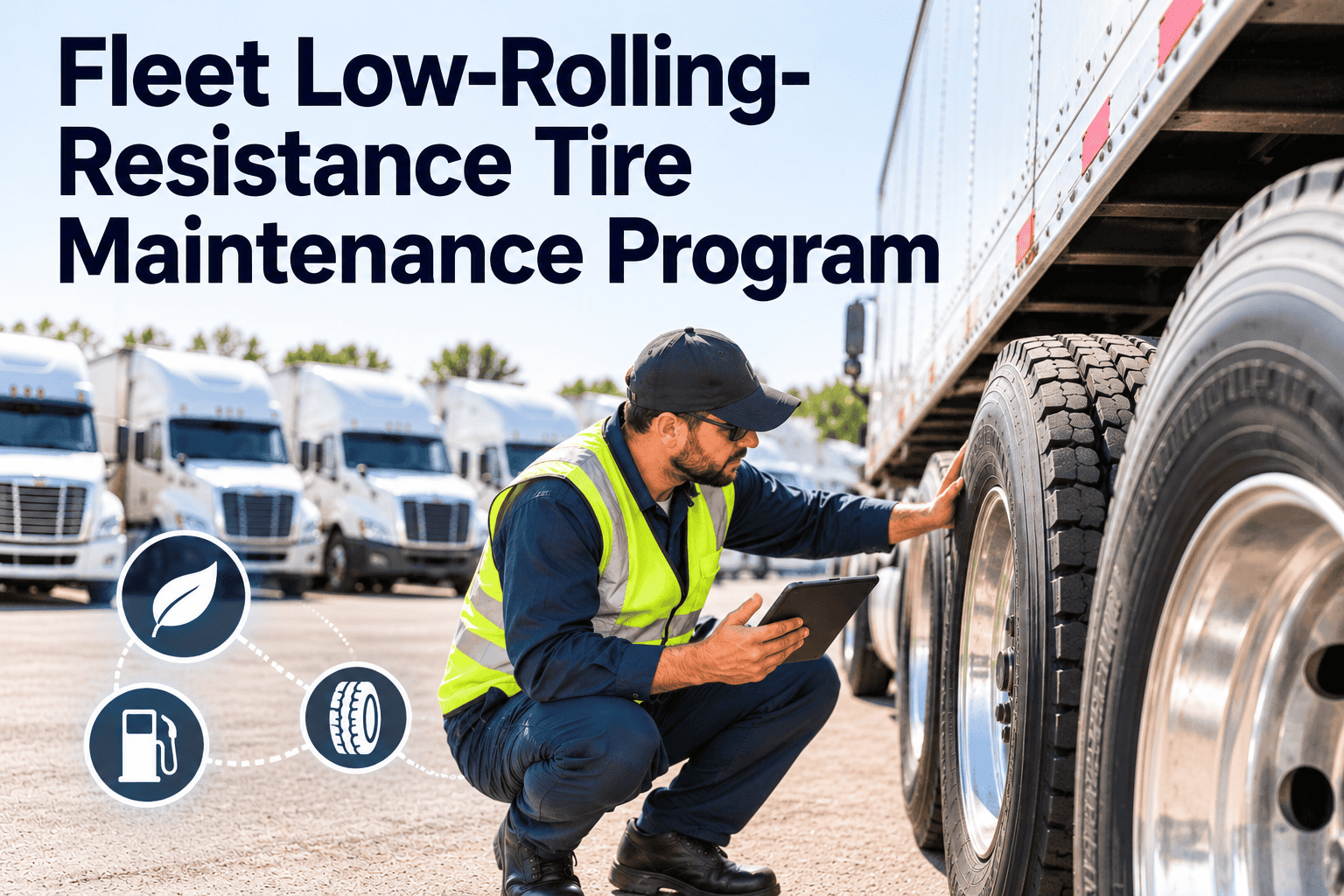
Low-rolling-resistance tires are bought for fuel savings, but the savings are earned in the shop and on the yard, not at the purchase order. Soft tires, mismatched duals, poor alignment, and tires fitted to the wrong axle can erase much of the advantage a good tire was designed to deliver. A maintenance program protects that advantage across the full tire life, including retreads. This article lays out how to build one, and how Oxmaint fleet maintenance software turns each routine into a scheduled, recorded task.
Fleet Low-Rolling-Resistance Tire Maintenance Program
Buying a fuel-efficient tire is step one. A repeatable program of pressure control, inspection, and casing management keeps the fuel benefit from leaking away.
How rolling resistance works in plain terms
Rolling resistance is the energy a tire loses as it flexes against the road. Less loss means the engine works less to keep the vehicle moving.
What drives it
- Casing materials, age, and construction
- Tread compound and tread depth
- Inflation pressure
- Wheel position on the vehicle
- Axle load and load placement
What a program can control
- Inflation, through checks, monitoring, and leak repair
- Position, through assignment rules and rotation records
- Tread and casing, through spec control and retread decisions
- Matching and alignment, through inspections at every service
- Tread rubber is generally a large share of a tire's rolling resistance, so tread spec matters at purchase and at retread.
- Shallower treads usually roll easier, but tread life can fall. Fleets balance fuel savings against mileage per tire.
- Tires verified under the EPA SmartWay program must be used in the correct positions with proper inflation to deliver the expected result.
- Verification does not mean identical performance. Ask suppliers for rolling resistance data on the exact tire you plan to buy.
Where the fuel benefit leaks away
Each leak below is a maintenance event, not a purchasing problem. A tire program closes them one by one.
Position rules: steer, drive, and trailer
Every axle asks something different of a tire. Write the rule once, record it against the position, and stop relying on memory.
| Position | Priority | Common program rule | Records to keep |
|---|---|---|---|
| Steer | Safety, even wear, handling | Best casings in this position; watch pressure and irregular wear closely | Tread depth, wear pattern, alignment dates |
| Drive | Traction, wear, fuel | Match duals by size and depth; use drive-rated tread; confirm torque after mounting | Pair matching, pressure, rotation history |
| Trailer | Fuel and cost per mile | Often the first place to apply low-rolling-resistance tires, especially on tandem trailers | Pressure by trailer, slow leaks, axle alignment |
| Spare | Readiness | Check pressure and condition on a schedule | Last check date, size, condition |
Make every tire routine a scheduled task
Set pressure checks, inspections, and position rules inside one system, so each tire has a history your team can rely on.
Building the program in five phases
Start small on a pilot group, then widen once the routines work. Each phase has a clear output.
Baseline the fleet
List vehicles, axle configurations, current tire brands, sizes, and ages. Record fuel per mile and tire cost per mile for a baseline period.Set the specification
Choose approved tires by position and duty cycle, using supplier rolling resistance data and tread life expectations.Define pressure and inspection routines
Set cold pressure targets, check frequency, tolerance limits, and what triggers a work order.Pilot on a defined group
Run the routines on a set of tractors and trailers. Compare them with similar units kept on the old practice.Scale and review
Extend to the full fleet, review results monthly, and adjust intervals where the records point.Pressure control: three methods compared
Most fleets combine methods. Choose by duty cycle, trailer pool size, and how often units return to base.
| Method | Strength | Limit | Maintenance task it creates |
|---|---|---|---|
| Manual gauge checks | Low cost and works on any unit | Depends on discipline; checks hot tires incorrectly if rushed | Recurring inspection with recorded readings |
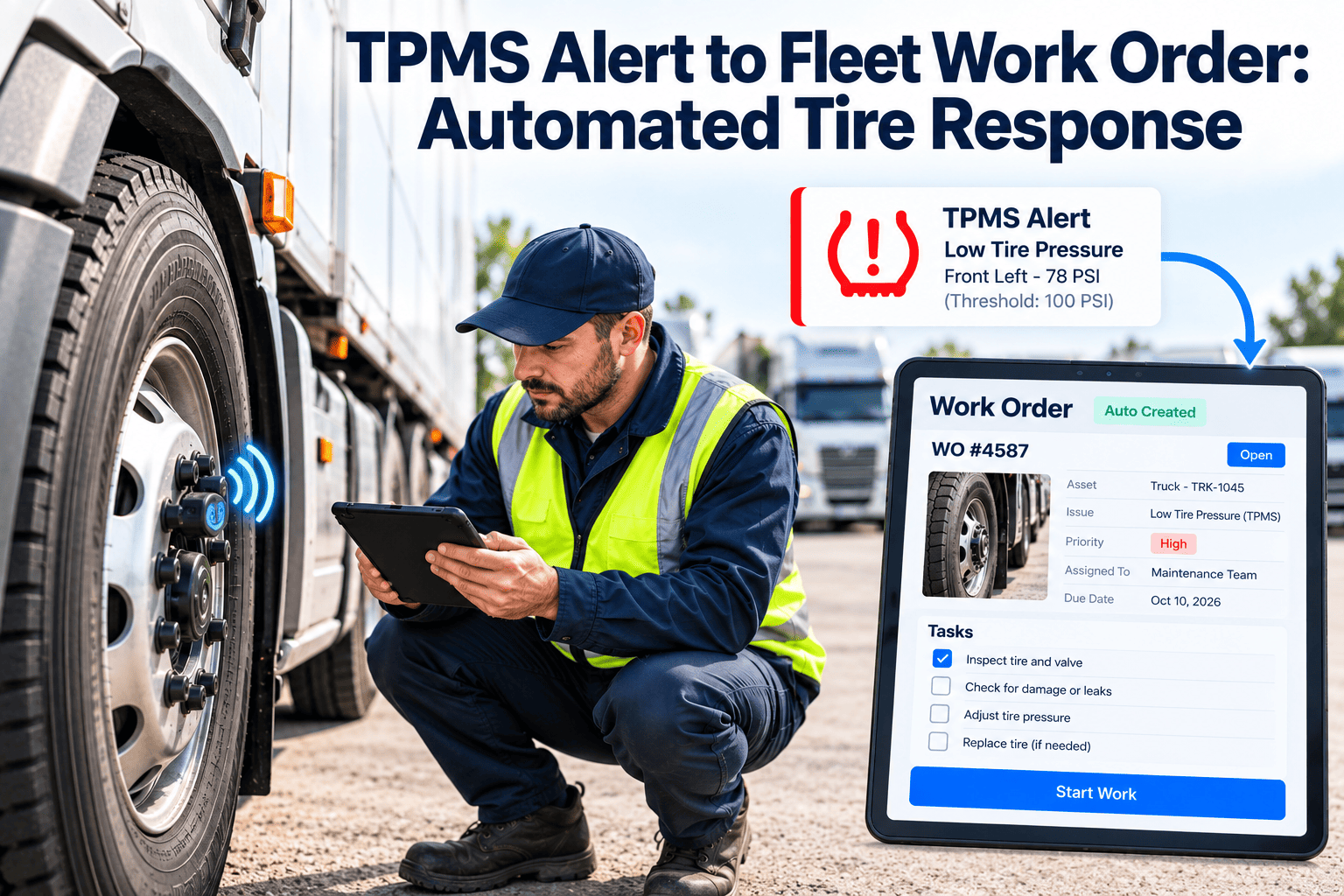
| Tire pressure monitoring | Flags drops between shop visits | Sensors fail and alerts get ignored without a response routine | Alert response work order and sensor checks |
| Automatic inflation systems | Maintains pressure on trailers in service | Can hide a slow leak that needs repair | Leak investigation and system inspection |
Pressure rules worth writing down
- Measure cold pressure, before the vehicle has run, wherever possible.
- Check every position, including inner duals and spares.
- Set targets from the load and tire manufacturer guidance, not one number for the fleet.
- Treat repeated top-ups on one tire as a leak that needs a repair order.
Inspection cadence matrix
Use this as a starting point and set final intervals from your tire supplier, safety rules, and the duty cycle of each unit.
- Driver walkaround for visibly low tires
- Check for cuts, bulges, and missing valve caps
- Report any pull or vibration
- Cold pressure on all positions
- Trailer and spare checks
- Review monitoring alerts
- Tread depth and wear pattern
- Dual matching
- Wheel-end, alignment, and brake drag review
- Casing condition and age review
- Rotation or position change decisions
- Retread eligibility and spec confirmation
Reading wear patterns as maintenance signals
Tire wear tells you what the vehicle has been doing. Record the pattern, not only the depth.
| Wear pattern | Likely cause | Action |
|---|---|---|
| Both shoulders worn | Chronic underinflation | Review pressure routine and find the leak |
| Center worn | Overinflation | Correct targets and check gauge accuracy |
| One shoulder or feathering | Alignment or toe problem | Alignment check and suspension inspection |
| Cupping or scalloping | Worn shocks, loose components, or imbalance | Inspect suspension and wheel-end condition |
| Flat spots | Brake lockup or drag | Brake inspection and adjustment |
| One tire of a dual pair worn faster | Size mismatch or pressure difference | Re-match the pair and correct pressure |
Casing and retread strategy
A good casing can carry more than one tread. Retreads using fuel-efficient tread can deliver results comparable to new low-rolling-resistance tires, provided the casing is sound.
- Casing life depends heavily on inflation history, so pressure discipline raises the number of tread lives you can use.
- Harsh applications such as unpaved or rocky routes damage casings and shorten retread potential.
- Low-grade casings are often poor retread candidates, so purchase quality affects the entire cost per mile.
Ad hoc tire handling versus a managed program
The gap between the two is mostly record keeping and routine, not equipment.
Ad hoc handling
- Pressure checked when a driver complains
- Mixed brands and treads across axles
- No record of which tire sat where
- Casings scrapped without review
- Fuel gains assumed, never measured
Managed program
- Pressure checks scheduled and logged
- Approved specs by position and duty
- Every tire has a position and history
- Casings graded for retread at removal
- Fuel and cost per mile compared with a baseline
Proving the savings are real
Fuel economy moves with weather, load, route, and driving style. A fair comparison controls for those variables as far as possible.
A simple example of the arithmetic
- Assume a tractor-trailer covers 100,000 miles a year at 6.0 miles per gallon, using about 16,667 gallons.
- If tires and upkeep improve that to 6.1 miles per gallon, fuel use drops by roughly 270 gallons.
- Multiply by your actual fuel price and fleet size, and compare it with any change in tire cost per mile.
KPIs for the tire program
Mix process measures with result measures so you know both what was done and what it achieved.
How Oxmaint supports the program
Oxmaint is maintenance management software. It does not select tires or measure rolling resistance, but it schedules and records the work that protects tire performance.
Low-rolling-resistance tire program FAQs
Do low-rolling-resistance tires need different maintenance?
The routines are the same, but the cost of neglect is higher. Poor pressure and alignment can wipe out the fuel benefit you paid for.
Can retreads be fuel efficient?
Yes, when a fuel-efficient tread is applied to a sound casing. Confirm the tread specification and rolling resistance data with your retreader.
How often should pressure be checked?
It depends on duty cycle, monitoring, and safety rules. Many fleets combine daily visual checks with scheduled cold gauge readings.
How do I prove the program saves fuel?
Use a baseline and similar comparison units, and record the maintenance work done. Book a demo to see how the records connect.
Where should a fleet start?
Start with trailer pressure routines and a position record for each tire. Create an Oxmaint account to schedule them.
Protect the fuel savings you paid for
Give your shop, drivers, and managers one tire record from first mount to final retread. See how Oxmaint keeps each routine on schedule.