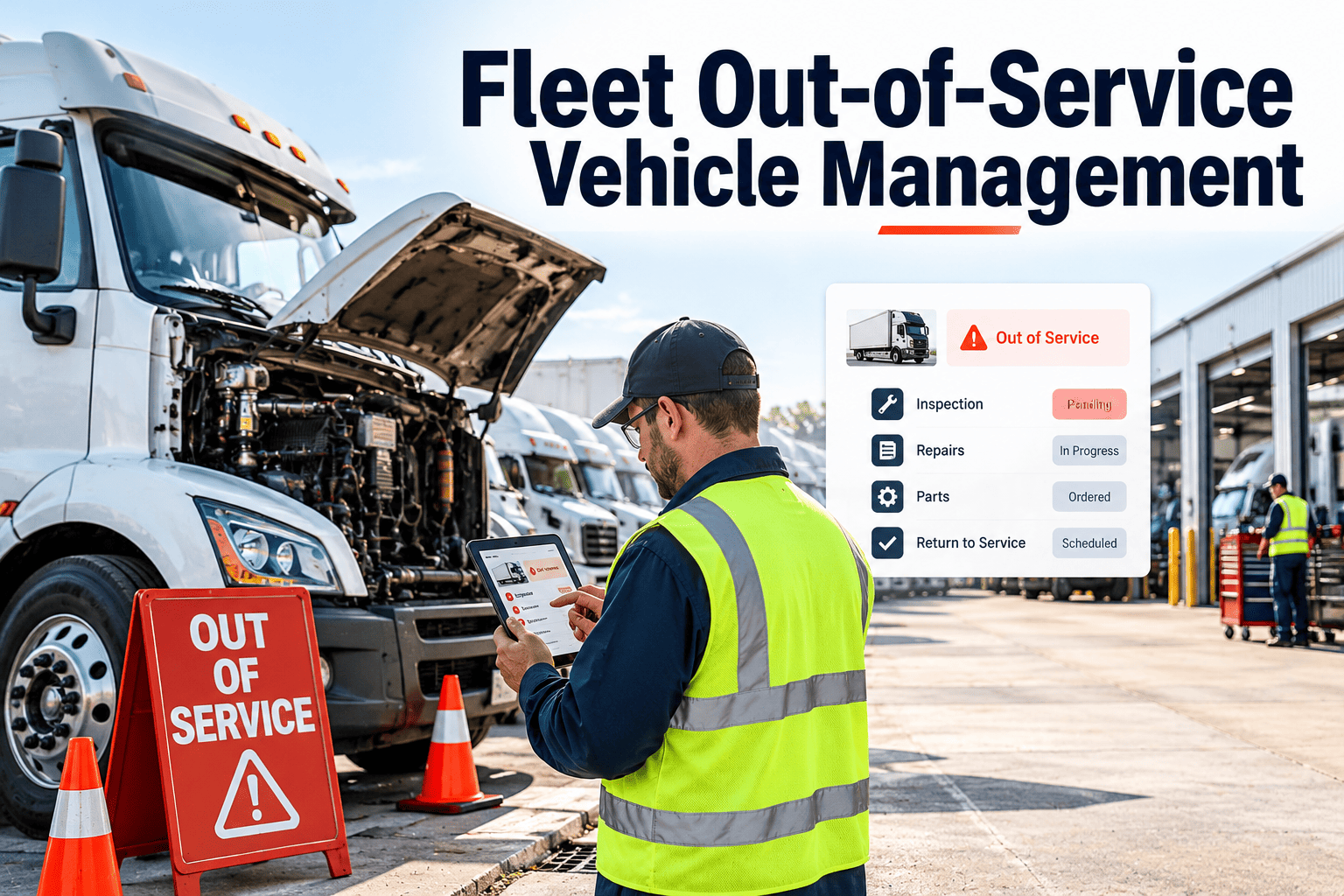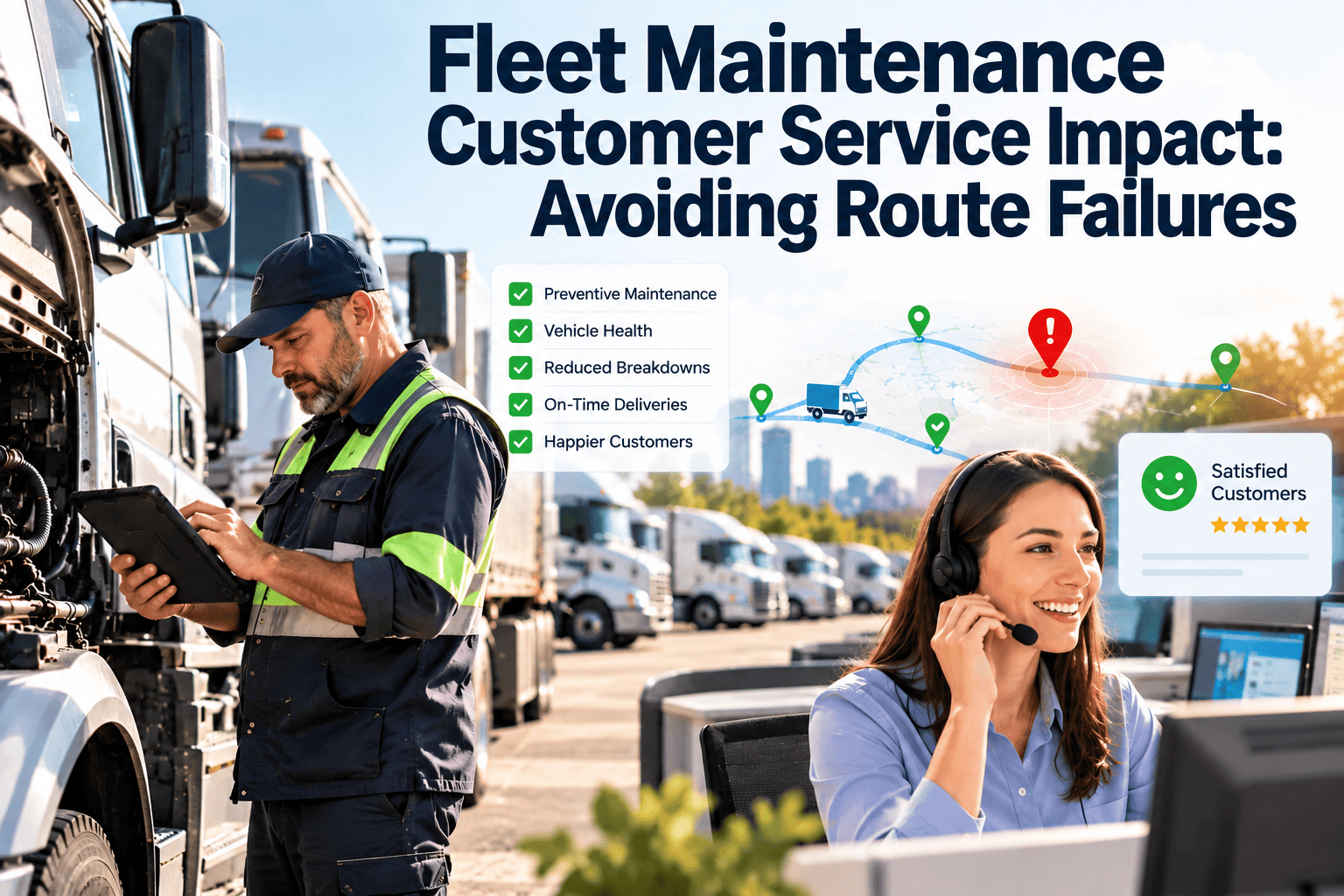
Customers rarely see the maintenance schedule, but they feel every missed delivery, late pickup and cancelled service visit. When a vehicle fails mid-route, the cost is not only a repair bill. It is a broken promise, an unhappy account and extra work for dispatch. Most route failures trace back to maintenance decisions made days or weeks earlier. This guide shows where those failures start, how to block them, and how Oxmaint fleet maintenance software can keep vehicles ready for the routes they serve.
Fleet Maintenance Customer Service Impact: Avoiding Route Failures
Connect inspections, preventive maintenance and repair speed to on-time service, so vehicles stop failing in front of customers.
From Workshop Gap to Customer Complaint
A route failure is the last link in a chain. The chain usually begins in the workshop, long before the customer is involved.
Breaking any one link reduces the chance of the next. The strongest links to break are the first three.
How Vehicle Problems Show Up for Customers
| Maintenance event | What the customer experiences | What the fleet absorbs |
|---|---|---|
| Breakdown on route | Late or missed delivery or visit | Tow, recovery vehicle, reassigned stops |
| Vehicle fails pre-trip check | Delayed departure | Dispatch rework, driver idle time |
| Refrigeration or equipment fault | Damaged or rejected goods | Claims, credits, lost trust |
| Warning light or reduced power | Slow service, wrong arrival windows | Overtime and customer calls |
| Long repair downtime | Reduced service frequency | Hired vehicles or lost routes |
| Safety-related roadside stop | Interrupted service, possible incident | Compliance review, driver impact |
Where Route Failures Start: Five Root Causes
Missed or late preventive maintenance
Service intervals pass because vehicles are too busy to release. Wear then arrives as a roadside failure.
Weak inspections
Paper checks are rushed or lost. Small defects such as leaks and worn tires are not escalated.
Repeat failures never analyzed
The same fault returns because the repair addressed the symptom, not the cause.
Parts not available
Vehicles wait in the workshop for items that should have been stocked or reserved.
Poor visibility for dispatch
Dispatchers assign vehicles without knowing open defects or repair status.
Rank Routes by Service Risk
Not every route carries the same penalty for failure. Rank routes by customer impact, then match vehicle readiness to that risk.
High-impact routes might include time-critical deliveries, regulated goods, medical supplies or contract commitments with penalties.
Give Dispatch and Maintenance the Same View
Track defects, PM status and repairs in one system so the vehicles on your busiest routes are the ones you trust.
A Route Readiness Gate Before Every Departure
A readiness gate is a short set of conditions a vehicle must meet before it is assigned to a route.
What Different Teams See Without and With a Shared System
Disconnected records
- Drivers report defects verbally or on paper.
- Workshop does not know route priority.
- Dispatch assigns vehicles blind to repair status.
- Customer service learns of failures from the customer.
Shared maintenance system
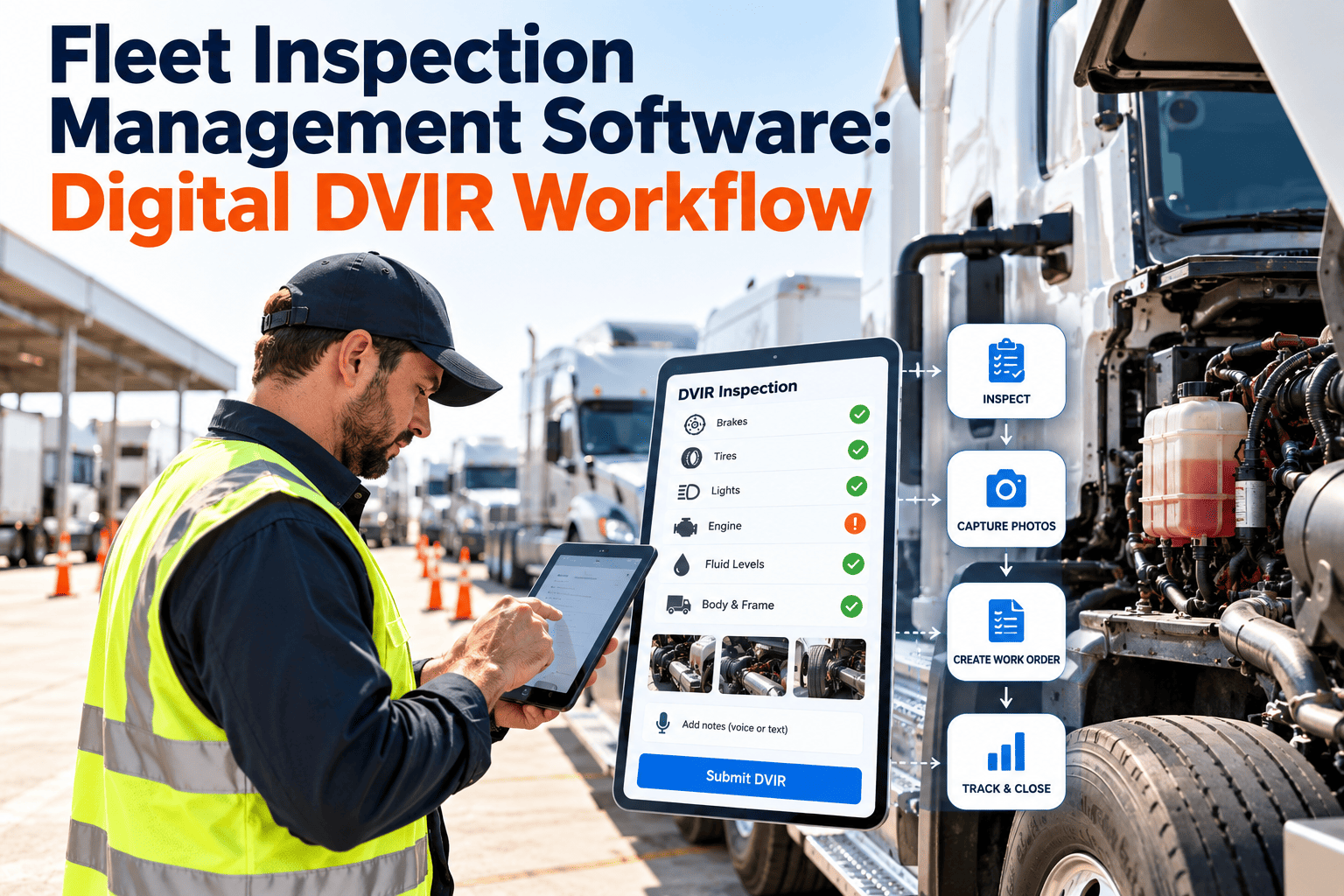
- Defects raise work orders from the inspection.
- Repairs are prioritized by vehicle and route importance.
- Dispatch sees which vehicles are ready.
- Service teams are warned before delays reach customers.
Turning Inspection Findings Into Faster Action
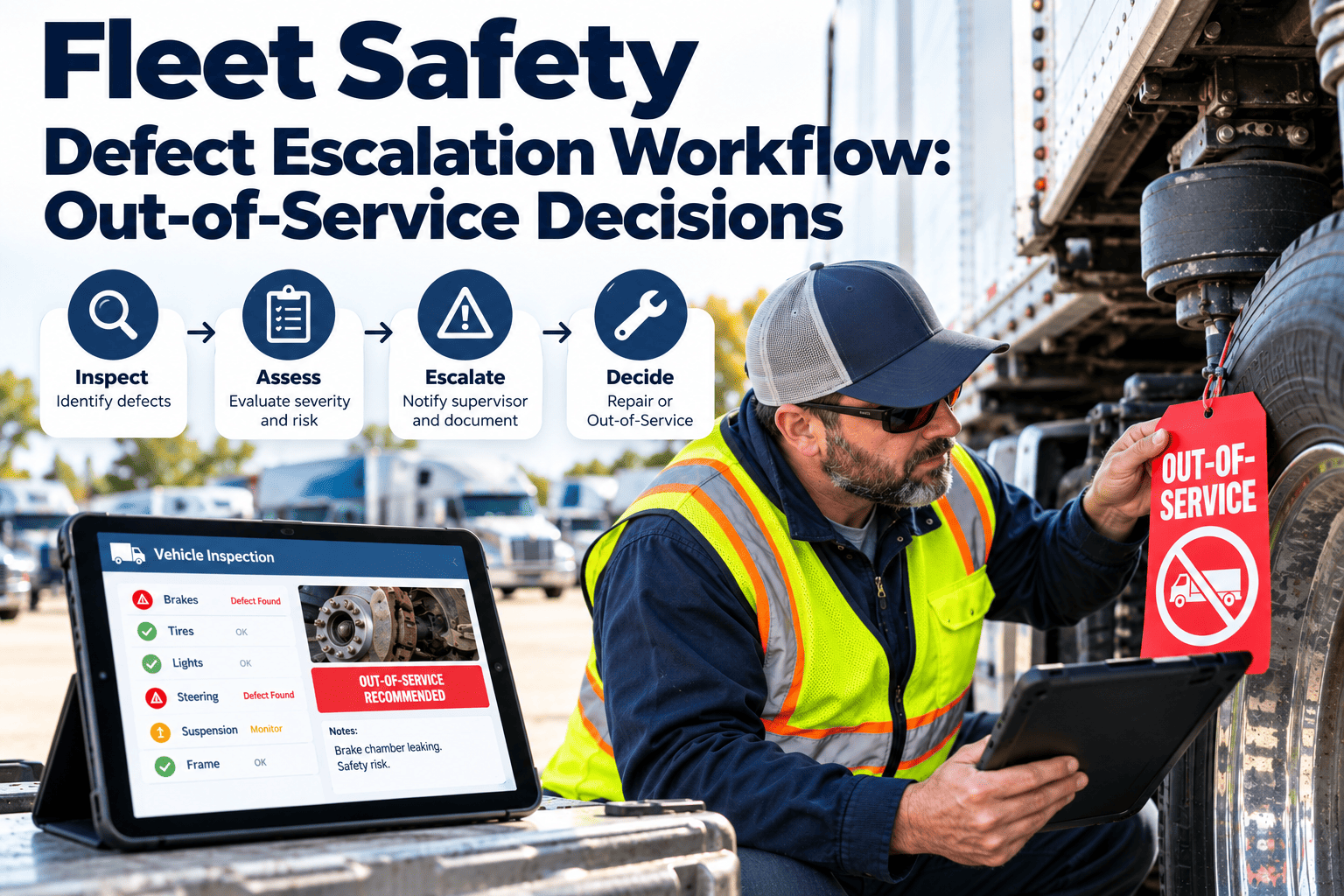
Inspections only protect service if findings are acted on. Sort every defect by whether the vehicle can run.
| Defect class | Example | Response |
|---|---|---|
| Stop | Brake fault, steering play, major leak | Remove from service and repair now |
| Fix before next route | Failing lights, weak battery, worn wipers | Work order scheduled before dispatch |
| Fix at next PM | Minor wear, cosmetic damage | Bundle with planned service |
| Monitor | Slow trend such as rising temperature | Recheck at defined interval |
Recording the class makes it easy for dispatch to understand which vehicles are safe to assign.
Shorten Repair Time on Service-Critical Vehicles
Stock high-failure items for vehicles on high-impact routes and reserve parts when work orders are created.
Prioritize route-critical vehicles in the daily plan and match jobs to qualified technicians.
Reserve bay time for quick turnarounds so small repairs do not wait behind long jobs.
Set clear authority limits so urgent repairs are not delayed by approvals.
Contingency Plans When a Route Still Fails
No program removes every failure. A prepared response limits the customer impact.
- Keep a defined spare vehicle policy for key routes.
- Give drivers a simple breakdown reporting process.
- Notify customers quickly with a revised arrival time.
- Record the failure as a work order for root cause review.
- Review each route failure with maintenance and operations together.
How Oxmaint Supports Service-Focused Maintenance
The goal is a maintenance workflow that serves the route schedule, not one that works against it.
- Inspections and checklists capture defects at the vehicle.
- Preventive maintenance schedules reduce surprise failures.
- Work orders track repair status and downtime.
- Inventory control supports parts availability.
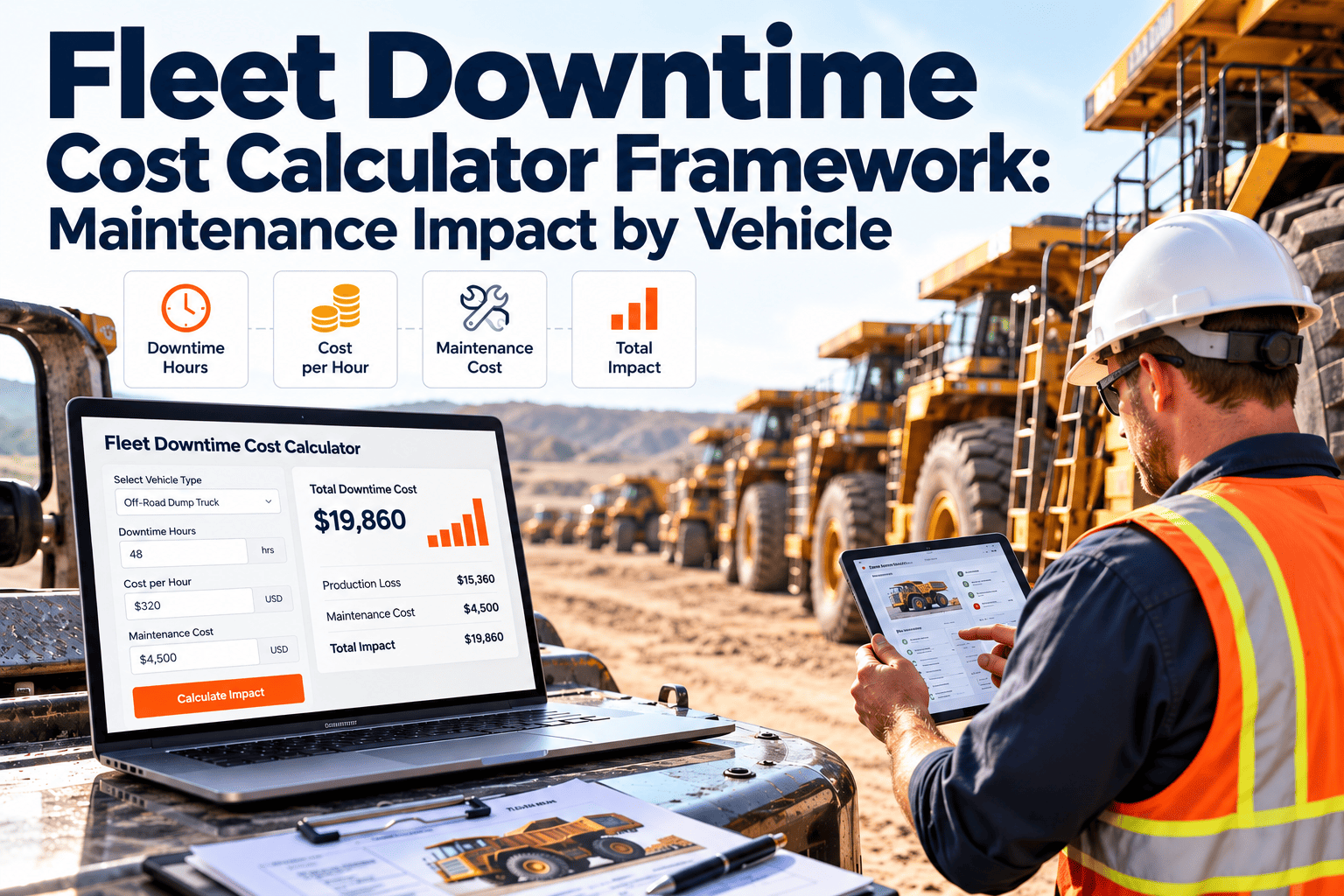
- Reports reveal repeat failures and vehicles that cause the most disruption.
Measures That Link Maintenance to Service
Route Failure FAQs
How does maintenance affect customer service?
Vehicle condition determines whether routes run on time, so weak maintenance leads to late and missed service.
What is the best way to prevent route failures?
Combine on-time preventive maintenance, reliable inspections and fast repair of defects.
Should dispatch see maintenance status?
Yes. Shared visibility avoids assigning vehicles with open defects. See how Oxmaint helps.
How do we track the service impact?
Log breakdowns against routes and vehicles, then review repeat causes monthly.
Can a CMMS help small fleets?
Yes. Even small fleets gain from organized inspections and PM. Book a demo.
Protect Every Route Promise
Use Oxmaint to connect inspections, preventive maintenance, work orders and asset history, and keep vehicles ready for the customers who depend on them.