pool vehicle maintenance policy: Checklist, KPIs, and CMMS Workflow

By Corin Hale on June 27, 2026

pool-vehicle-maintenance-policy-checklist-kpis-and-cmms-workflow

A pool vehicle maintenance policy is the difference between a shared fleet that delivers 90% utilisation and one that delivers 40% with constant complaints about dirty cabins, unexpected downtime, and disputed accident claims. Pool vehicles operate under a fundamentally different ownership model from assigned units — no single driver feels responsible, no single department owns the upkeep, and small problems compound into roadside breakdowns when nobody reports them. Industry data shows shared fleets without a written policy run at 40–50% utilisation; those operating under a formal policy framework reach 80–90% utilisation while cutting maintenance cost per mile by 25%. The fix is not more vehicles or more inspections — it is a clear, written, enforced maintenance policy that defines who is responsible for what, when, and to which standard. Sign Up Free to build your pool maintenance policy in Oxmaint, or Book a Demo to walk through a working framework.

Centralise Pool Vehicle Maintenance Policy in Oxmaint

Define inspection cadences by vehicle class, assign driver responsibilities for pre-trip and return checks, route faults to the right shop automatically, and surface usage and condition data against every pool asset — all from one fleet maintenance platform that drivers and dispatchers can use on mobile.

50%
average utilisation of shared fleets without a written maintenance policy
90%
utilisation achievable with structured policy and digital booking
25%
cost reduction per mile when maintenance is centralised under fleet rather than department-owned
60-80%
target utilisation band for healthy pool fleets at peak operating periods

The 6 Pillars of a Pool Vehicle Maintenance Policy

A complete policy framework is built on six pillars — each addressing a recurring failure mode in shared fleet operations. Skipping any pillar creates a predictable gap that drivers, supervisors, or auditors will surface within months.

01
Driver Eligibility & Authorisation
Define who may operate pool vehicles. Verify driver licence currency, insurance coverage, defensive driver training completion, and annual re-certification. Block access for expired credentials at the reservation level — not at the keys.
Reservation gate: licence valid + training current
02
Pre-Trip Inspection Standard
Every driver completes a standardised pre-trip check before pulling away: fluid levels, tyre condition, lights, brakes, dashboard warning state. Submit via mobile app — paper checks get falsified within 30 days of rollout.
Required before key release on every checkout
03
Return & Defect Reporting
Drivers complete return inspection capturing odometer, fuel level, cabin condition, and any defects observed during the trip. Defects auto-create work orders routed to the assigned shop — not held in a notepad until next week.
Defects route to work order at return
04
Preventive Maintenance Schedule
Each vehicle class follows a documented PM schedule — light cars typically 8,000 km service interval, vans and pickups 10,000 km, hybrid and EV units on time-based service. PM triggers reservation lock-out when due.
PM due triggers reservation lock
05
Cleaning & Cabin Standards
Define cabin standards at handover — empty bins, no personal items, fuel level at or above quarter tank, seats clean. Cleaning fees for non-compliant returns must be enforced consistently or the standard erodes within a quarter.
Cleaning fee policy enforced on return
06
Incident & Accident Protocol
Drivers report any contact, damage, or near-miss before returning the vehicle to the pool. Damage that surfaces on the next checkout becomes unattributable and an immediate disputed-claim liability for the fleet operator.
Report before return — no exceptions

Responsibility Matrix — Who Owns What

Ambiguity in ownership is the most reliable predictor of pool fleet failure. A written responsibility matrix removes that ambiguity by assigning specific tasks to specific roles with clear escalation paths.

TaskDriverFleet CoordinatorMaintenance ShopDepartment Lead
Pre-trip inspectionPrimaryAudit weekly
Reservation & key issuePrimaryApprove user list
Fluid top-up between PMsReport low levelSchedule top-upPrimary
Scheduled PM serviceSchedule and lock vehiclePrimary executionApprove downtime
Defect reportingPrimary on returnTriage and routeRepair
Accident reportingPrimary immediateInsurance liaisonDamage assessmentDisciplinary review
Fuel top-up at returnPrimary above 1/4 tankAudit refuel records
Cabin cleaningPrimary at returnInspection checkDeep clean schedule
End-of-life replacementRecommendCondition assessmentApprove capital request

Daily, Weekly, Monthly Maintenance Cadence

Pool fleet maintenance operates on three nested cadences — driver-level checks at every trip, coordinator-level checks every week, and shop-level service on a documented schedule. Each cadence catches a different failure mode.

DAILY
Driver Pre-Trip & Return Checks
Walk-around for visible damage, tyre condition, fluid leaks under vehicle
Lights, indicators, horn, wipers, washer fluid functionality
Dashboard warning lamps cleared at engine start — no active fault icons
Cabin condition acceptable, seatbelts functional, mirrors clean
Return inspection: odometer, fuel level, cabin tidy, defects logged
WEEKLY
Coordinator Audit & Spot Checks
Spot-audit 20% of returned vehicles for cabin compliance and defect-report accuracy
Tyre tread depth and pressure check on full fleet — driver pressure checks underperform
Wash schedule executed: exterior wash all vehicles, interior detail by rotation
Battery test on vehicles unused for over 5 days — pool batteries fail from sitting
Review utilisation report — identify under-used assets for redeployment
MONTHLY
Shop PM & Compliance Review
PM service executed per class schedule — fluid changes, filter renewal, brake inspection
Comprehensive vehicle inspection: undercarriage, suspension, steering linkage condition
Driver licence and training currency audit — block any user out of compliance
Cost per mile review by vehicle and class — surface units running above fleet baseline
Right-sizing review — recommend additions or retirements based on utilisation data

Pool Policy Audit Checklist

Use this checklist to audit your existing pool maintenance policy against industry best practice. Each unchecked item is a risk surface — disputed damage, missed PM, or eroded driver compliance.

Written policy exists, signed by every driver before first reservation

A written policy that no driver has read or signed is administrative theatre. Require digital signature at user account creation, with policy re-acknowledgement every 12 months at training renewal. Drivers cannot reserve before signing.

Reservation system blocks expired licences and overdue PM automatically

Hard gates at the reservation level prevent the most common compliance failures: a driver with expired credentials cannot book, a vehicle with overdue PM cannot be assigned. Soft warnings get ignored within a quarter.

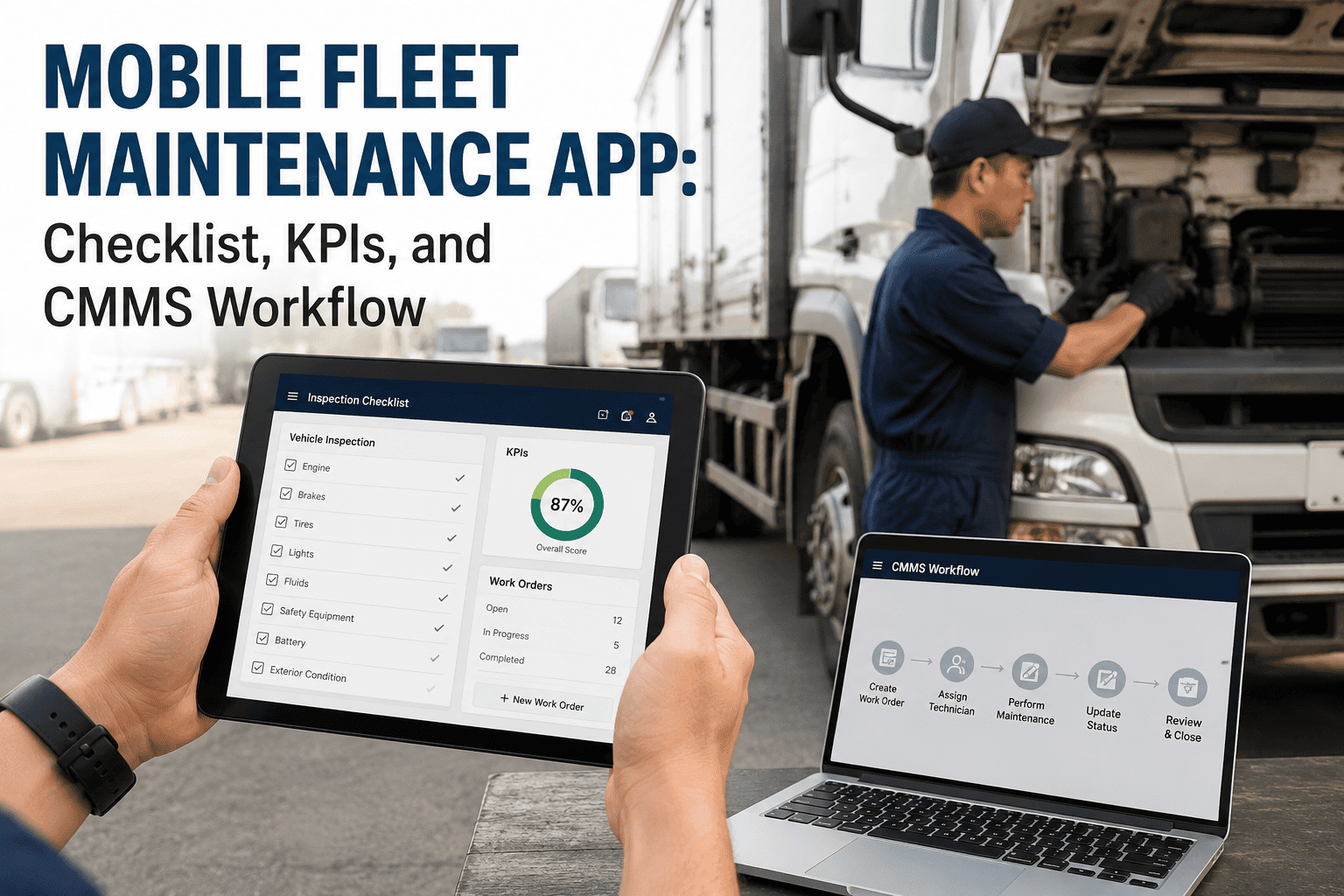
Pre-trip and return inspections completed on mobile, not paper

Paper inspections are completed retrospectively, falsified, or skipped. Mobile inspections capture geolocation, timestamp, and photo evidence, and surface defects directly into the work order queue without human re-entry.

PM service schedule documented by vehicle class with hard intervals

Each class (sedan, SUV, van, light truck, EV) has a documented PM schedule with mileage and time triggers. The schedule is loaded into the maintenance system, not held in a binder. Service dates auto-populate from completion records.

Damage attribution policy enforces same-day reporting

Damage reported on the next checkout becomes orphan damage with no responsible driver. Policy must require immediate reporting before return — and the reservation system must capture damage at handover with timestamped photos.

Fuel and cleaning fees applied consistently for non-compliant returns

The standard erodes the first time a fee is waived. Consistent enforcement — same fee, same trigger, automatic charge to the driver's department — keeps cabin and fuel standards intact across hundreds of drivers and dozens of departments.

Cost per mile tracked by vehicle, surfaced monthly to fleet leadership

Cost per mile is the single most useful operational metric for pool fleets. Outliers surface units with mechanical issues, units being misused, or units approaching end-of-life. Without this metric, replacement decisions are guesses.

Utilisation reviewed quarterly with right-sizing recommendations

Pool fleets drift — departments hoard, units sit idle, requested additions are approved without retiring under-utilised assets. A quarterly utilisation review with documented add/retire recommendations keeps fleet size matched to actual demand.
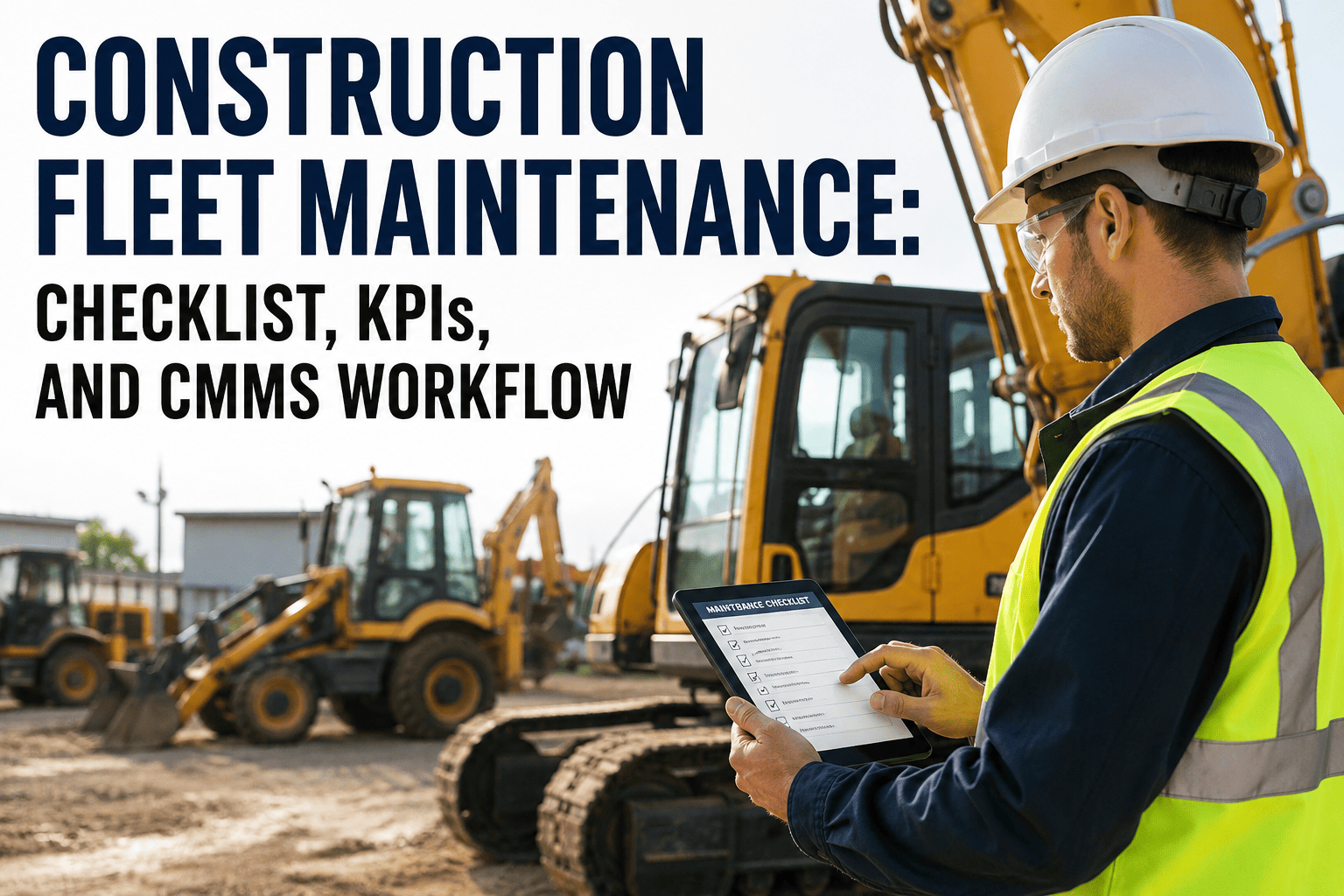
Policy without enforcement is wallpaper. The fleets achieving 80%+ utilisation are the ones running automated reservation gates, mobile inspections, and fee enforcement — not the ones with the longest policy document.

Frequently Asked Questions

Q1
What is the minimum policy framework needed to launch a pool fleet?

At minimum: driver eligibility rules, pre-trip and return inspection requirements, a PM schedule by vehicle class, defect reporting workflow, and an accident protocol. Sign Up Free to load this framework into Oxmaint and start enforcing it.

Q2
How does Oxmaint enforce pool maintenance policy at the reservation level?

Oxmaint blocks reservations when the driver's licence or training is expired, when the requested vehicle has overdue PM, or when the previous user did not complete the return inspection — converting policy from a document to a hard system gate.

Q3
What utilisation rate should a healthy pool fleet target?

60–80% peak-period utilisation is the standard healthy band. Below 50% means too many vehicles for the demand pattern; above 90% means reservation denials and operational friction. Book a Demo to see Oxmaint's utilisation reporting.

Q4
How do you prevent orphan damage on pool vehicles?

Mandatory timestamped photo capture at every checkout and return creates a defensible record of vehicle condition at handover. Damage discovered on a subsequent reservation can be attributed to the prior user with photo evidence, ending disputed-claim losses.

Q5
Should pool vehicle PM be done in-house or outsourced?

Either works as long as PM compliance is tracked centrally. Small pool fleets often outsource PM to dealer networks for simplicity; larger operators bring it in-house for cost control. The key is one system of record for completion dates, not who turns the wrench.

Run Your Pool Fleet on Policy, Not Hope

Oxmaint converts a written pool vehicle maintenance policy into hard reservation gates, automated PM scheduling, mobile inspections, and utilisation reporting — so drivers, coordinators, and shop teams operate from a single source of truth instead of a binder.


Share This Story, Choose Your Platform!