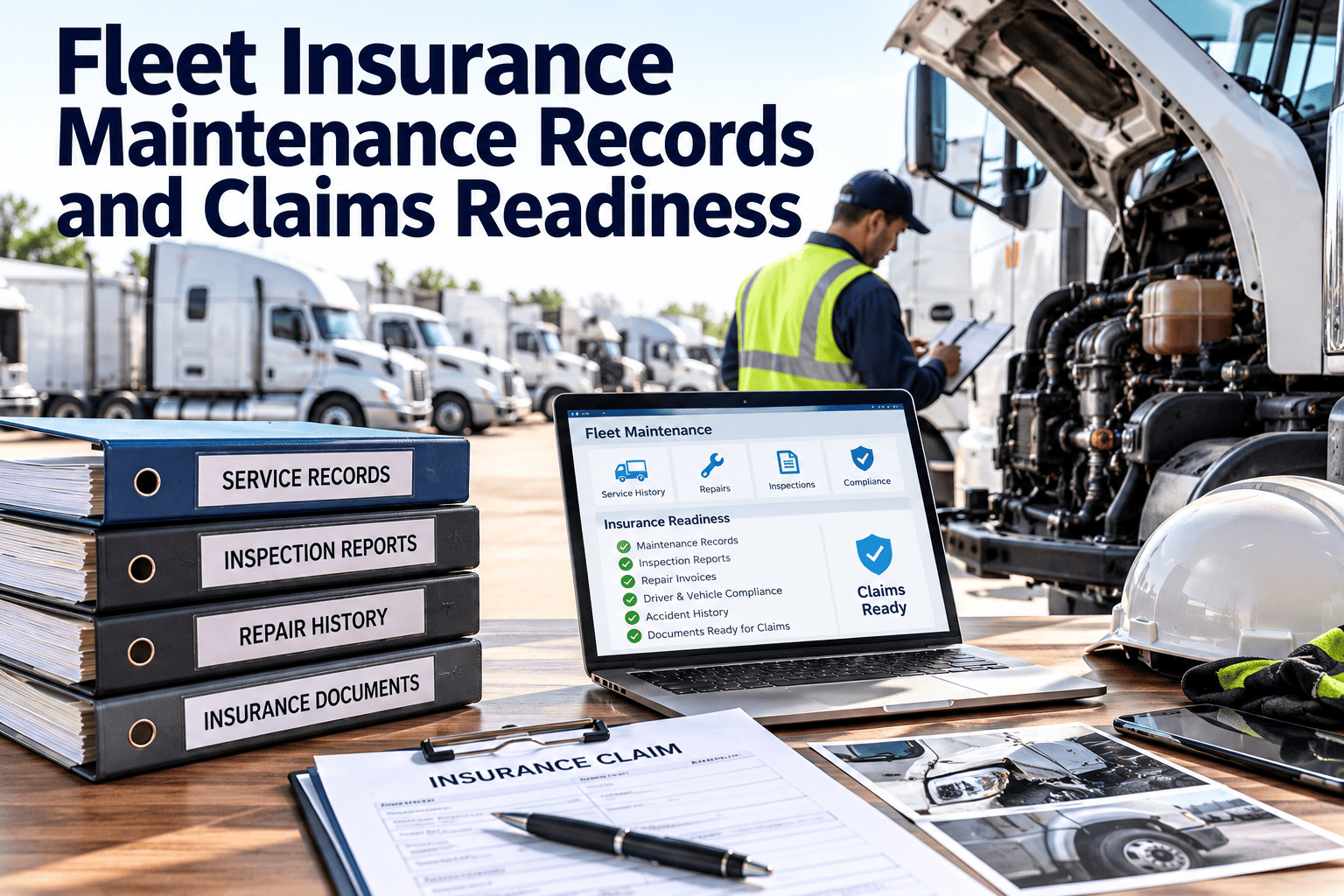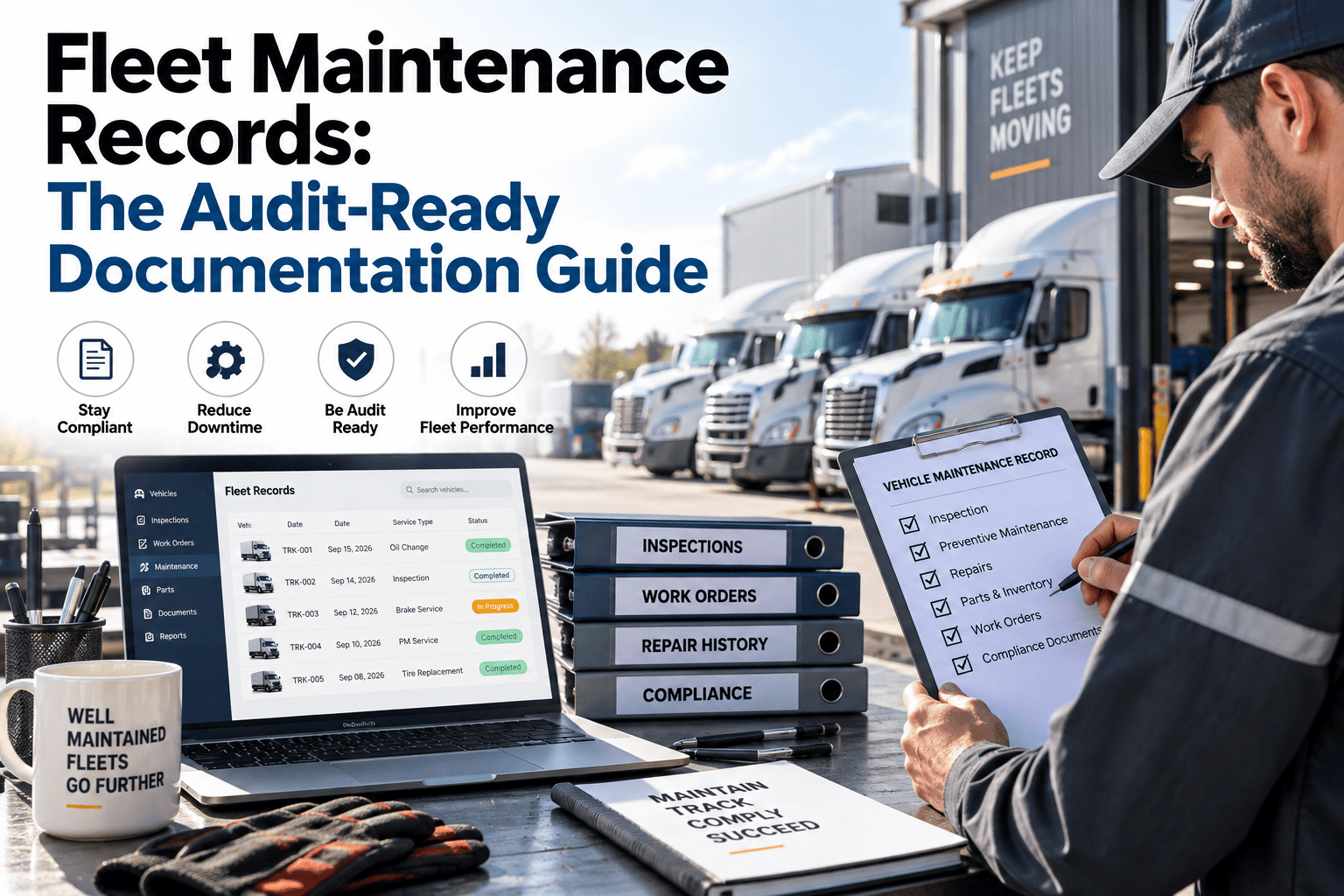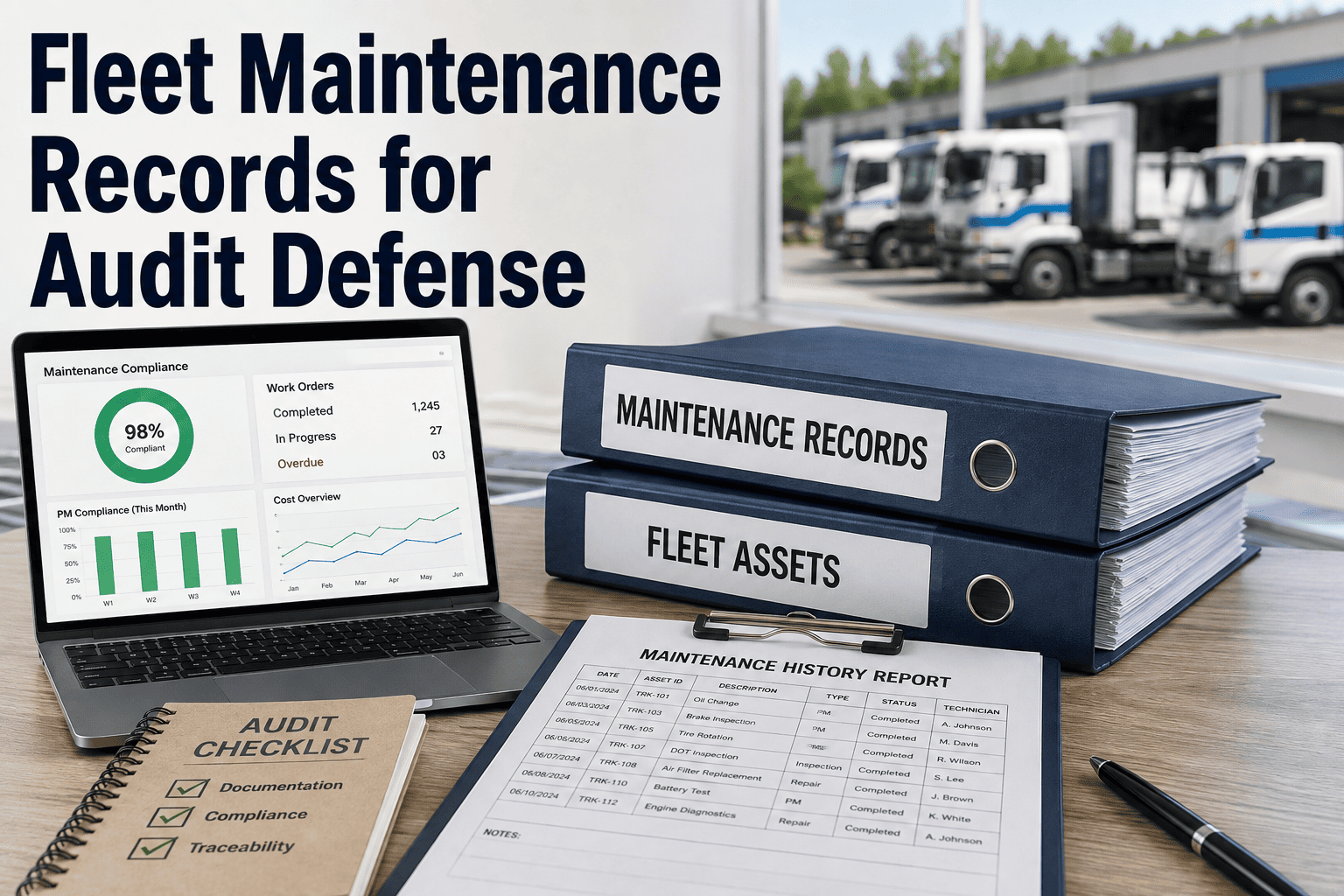
When a DOT auditor asks for your maintenance files, the trucks sitting in your yard do not matter — only what is on paper does. FMCSA treats undocumented maintenance as maintenance that never happened, and roughly one in five commercial vehicles pulled in for roadside inspection is placed out of service for a defect that proper records would have caught first. Building an audit-ready maintenance file is not paperwork for its own sake; it is the difference between a clean compliance review and a costly intervention. This guide walks through what 49 CFR 396.3 requires, how long each record must survive, and how OxMaint keeps every file ready before the auditor calls — start a free trial and see your fleet's audit readiness today.
Could your maintenance files survive a DOT audit tomorrow?
FMCSA does not audit trucks — it audits paper. A perfectly serviced vehicle with an incomplete file looks identical to a neglected one during a compliance review. The carriers who pass clean are the ones whose records were built to be found, not assembled the night before.
The four records every vehicle file must contain
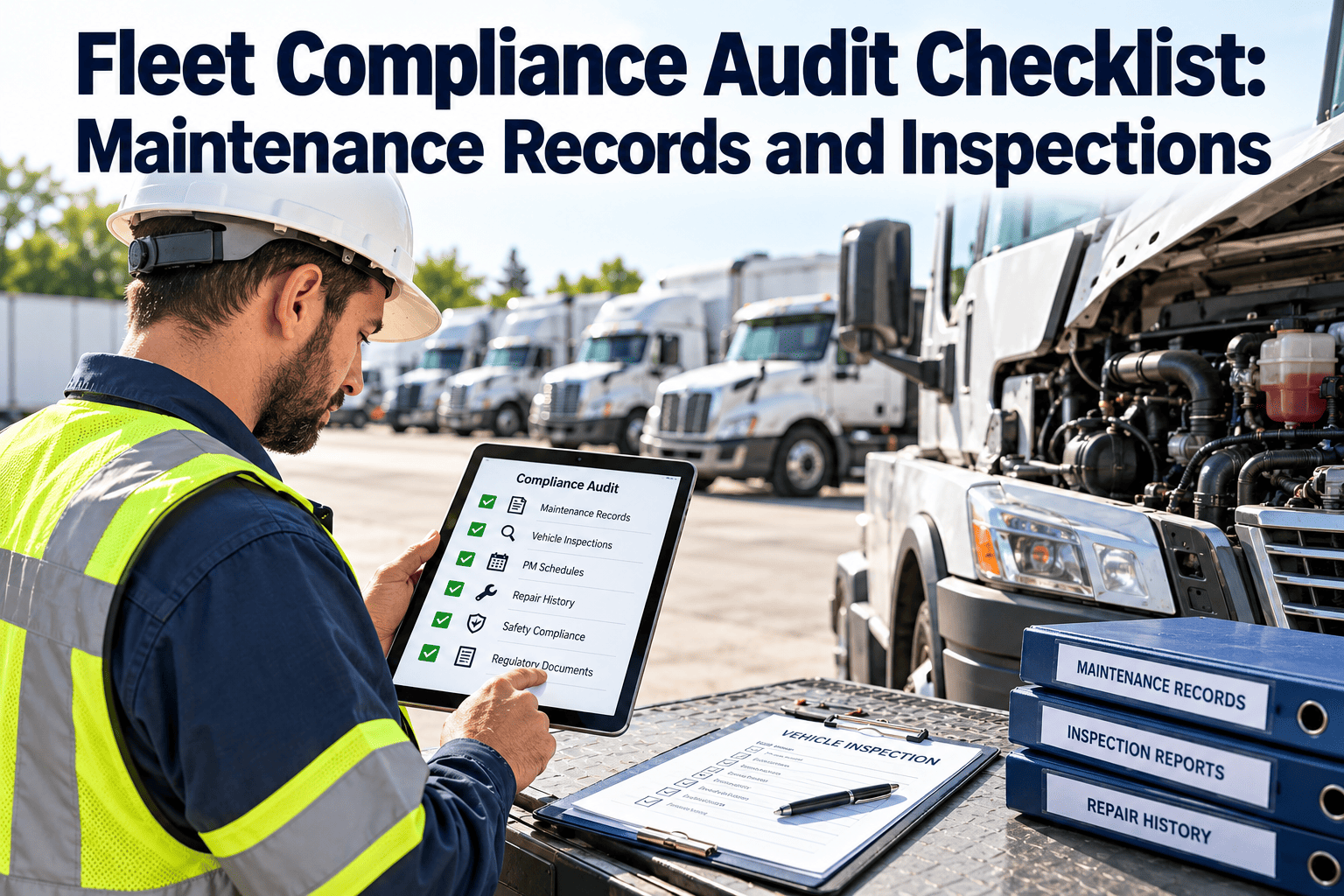
FMCSA requires an individual maintenance file for every commercial vehicle under a carrier's control for 30 or more days — owned or leased. Missing any one of these four pieces is a citable finding, even when the actual maintenance work was done on time.
Vehicle Identifying Data
Make, unit number, VIN, year, and tire size for every vehicle in the fleet, filed in a way that ties directly to the rest of its service history.
Inspection Due Schedule
A running schedule showing what maintenance is due and when for each unit — not just what was done, but what is coming next.
Repair & Service History
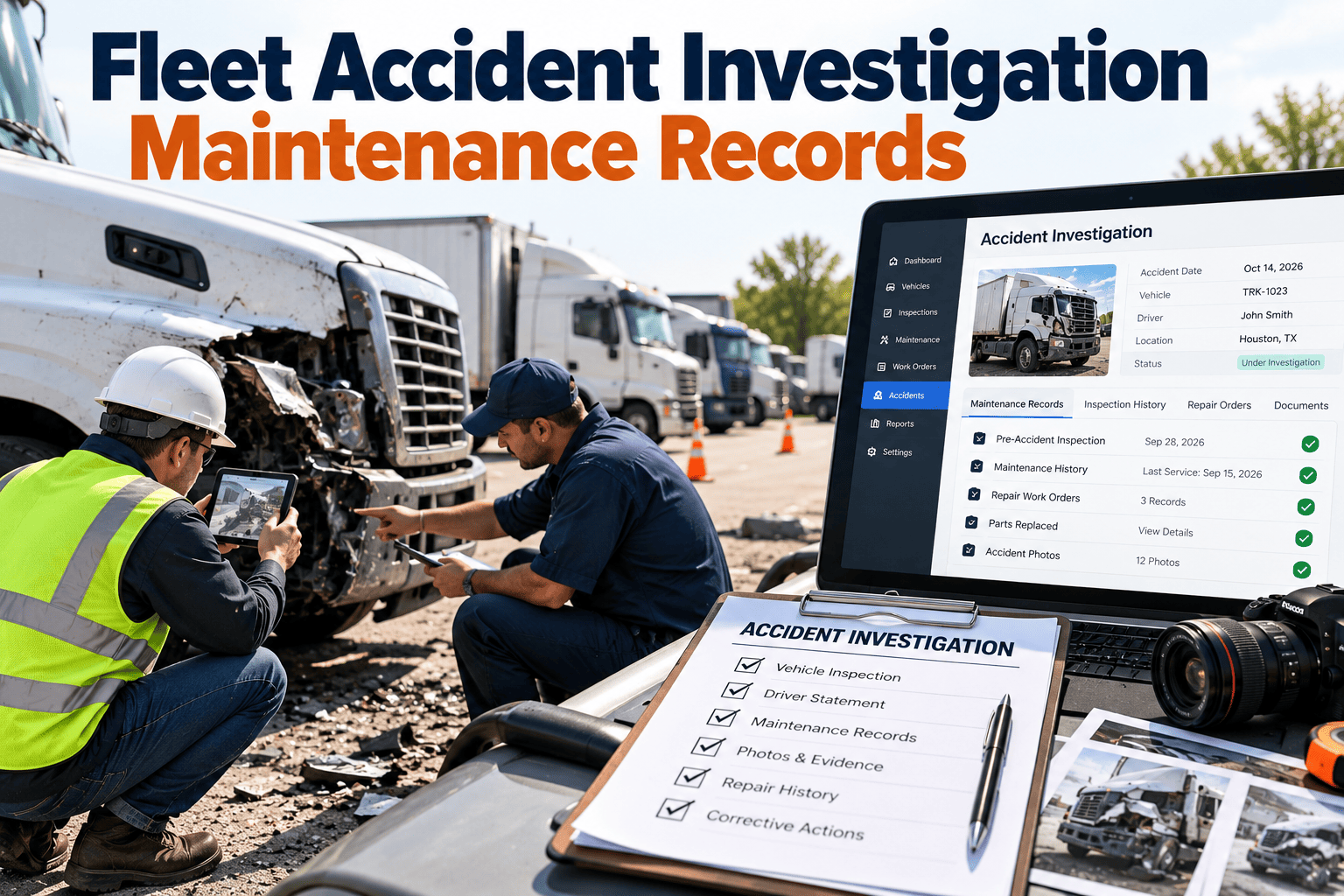
A dated record of every inspection, repair, and maintenance action performed, supported by work orders and receipts an auditor can trace.
Periodic Inspection Proof
Certification that the annual inspection was completed by a qualified inspector within the last 12 months — the single most commonly missing document in a file.
How long each maintenance record actually has to survive
Every record category carries its own retention clock. Purge a file too early and it will not exist the day an auditor asks for it — keep everything forever and retrieval slows to a crawl. Here is what each rule actually requires.
| Record Type | Regulation | Minimum Retention |
|---|---|---|
| Vehicle maintenance file | 49 CFR 396.3 | 1 year in service + 6 months after leaving fleet |
| Roadside inspection report | 49 CFR 396.9 | 12 months |
| Driver Vehicle Inspection Report | 49 CFR 396.11 | 3 months |
| Annual inspection certification | 49 CFR 396.17 | 14 months |
| Litigation-safe best practice | Recommended | 3+ years across all categories |
Why the regulatory minimum is not enough
The federal floor protects you at audit time, but a fatigue or maintenance-related crash claim can surface years later. Carriers that only meet the 396.3 minimum often find the file already purged by the time litigation begins — which is why most compliance advisors recommend holding records for three years or more regardless of what the regulation technically requires.
What a DOT auditor actually checks beyond the file itself
Having the four required documents is only step one. Auditors are trained to look for patterns, not just paperwork — these are the four things they check next.
PM schedule adherence
Auditors compare the due dates on file against the dates service was actually completed, looking for services that ran chronically late.
DVIR-to-repair trail
Every defect a driver reports must show a matching repair entry. A defect noted with no closing record is one of the fastest ways to draw a finding.
Evidence of a systematic program
Investigators look for a consistent pattern across the whole fleet, not a handful of clean files surrounded by gaps.
How fast you can produce it
Slow retrieval during the review itself is treated as a red flag, even when the underlying records eventually turn out to be complete.
Stop rebuilding files the night before an audit
See how OxMaint keeps every vehicle's identifying data, PM schedule, repair history, and inspection certification in one searchable file — ready the moment an auditor asks.
How OxMaint builds a defensible record automatically
OxMaint's CMMS turns the four-part maintenance file into something that assembles itself, so nothing depends on someone remembering to file paperwork on time.
Auto-Built Vehicle Files
VIN, unit number, PM schedule, and service history populate into a single per-vehicle record the moment a truck enters the fleet.
DVIR-to-Repair Linking
Every reported defect is automatically tied to its closing repair record, so the trail an auditor looks for already exists.
Retention Automation
Each record is held for its required window and flagged for safe archival only once its retention clock has run out.
One-Click Audit Export
When an auditor asks, a complete organized file compiles instantly instead of days spent pulling paper from a filing cabinet.
Three habits that separate carriers who pass clean
Beyond the required documents, the fleets that consistently pass reviews without findings share three recordkeeping habits.
Timestamped, unaltered entries
Every service entry is logged with a timestamp that cannot be edited after the fact, giving auditors confidence the record was not backfilled.
Any vehicle, any date, seconds
A full service history is retrievable by unit number or date range instantly, instead of being buried across binders and shared drives.
Warnings before a window closes
The system flags records approaching the end of their required retention period so nothing is purged early by mistake.
Fleet maintenance records — frequently asked questions
How long must fleet maintenance records be kept?
Core maintenance files under 49 CFR 396.3 must be kept for one year while the vehicle is in service, plus six months after it leaves the fleet. Roadside inspection reports, DVIRs, and annual inspection certifications each carry their own shorter windows.
What happens if maintenance records are missing during an audit?
Missing documentation, such as proof of the annual inspection, is treated as an acute violation — a single instance can be enough to trigger an enforcement action. A 30-minute demo shows how OxMaint prevents that gap from happening.
What must every individual vehicle file contain?
Identifying data, a schedule of upcoming maintenance, a dated history of inspections and repairs with receipts, and proof of the current annual inspection. All four must be present for the file to hold up under review.
Do auditors check anything beyond the documents themselves?
Yes. Investigators also look at how consistently the PM schedule was followed, whether reported defects were actually closed out with repairs, and how quickly the fleet can produce the file on request.
How does OxMaint keep records audit-ready year-round?
OxMaint auto-builds each vehicle's file, links every DVIR to its repair, and manages retention automatically. Start a free trial to see a live file assembled for your own fleet.
See your fleet's audit-ready file before an inspector ever asks for it
Auto-built vehicle files, DVIR-to-repair linking, automated retention, and one-click audit export — all in one AI-powered CMMS built for compliance teams.
Free 14-day trial · No credit card