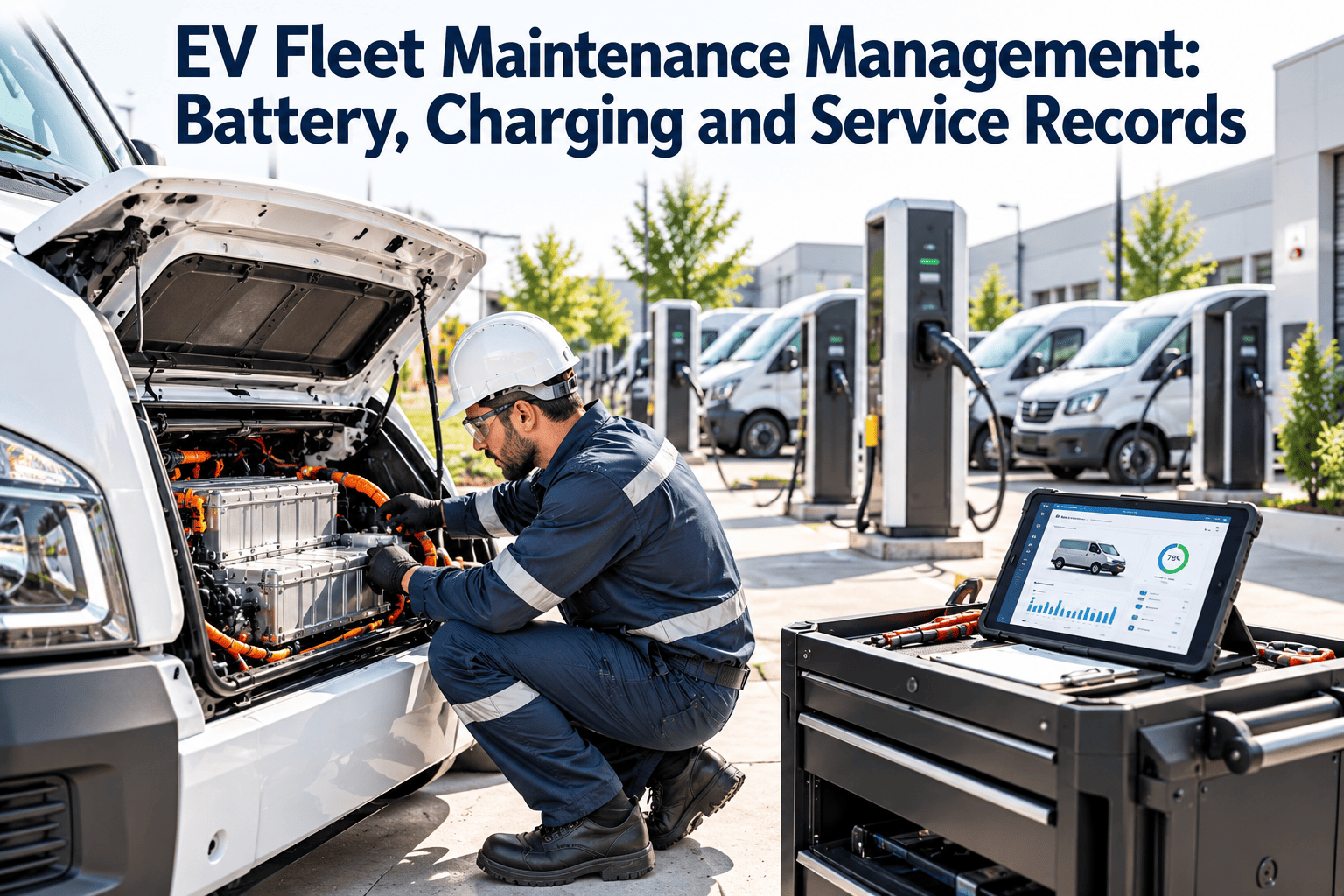
Electric vehicles remove oil changes, exhaust systems and many engine wear items, but they do not remove maintenance. They move it. Battery health, charger uptime, thermal systems, brakes, tires and high-voltage safety now compete for the same technician hours. Fleets that treat EVs like diesel trucks with a plug tend to lose data they later need for warranty, resale and planning. Here is how to organize battery, charging and service records inside a maintenance management platform.
EV Fleet Maintenance Management: Battery, Charging and Service Records
Keep three linked record streams for every electric vehicle so uptime, warranty claims and replacement decisions rest on evidence.
What changes when a fleet goes electric
| Area | Diesel or gasoline fleet | Electric fleet |
|---|---|---|
| Routine service | Oil, filters, belts, exhaust and fuel system | Coolant loops, cabin filters, software updates and fewer engine items |
| Brakes | Wear at friction rates set by braking habits | Regenerative braking often reduces friction wear, but corrosion and seizing can appear from low use |
| Tires | Standard wear | Vehicle weight and instant torque can raise wear, so tracking matters |
| Energy source | Fuel cards and tanks | Chargers, utility power and battery state of health |
| Safety work | Conventional lockout and shop practice | High-voltage procedures and trained, qualified personnel |
| Key records | Service history and fuel use | Battery, charging, service and software history together |
Exact intervals depend on the manufacturer, so use OEM maintenance schedules as the baseline for each model.
Three record streams every EV needs
- Battery identification and installation or replacement date.
- State of health readings taken at set intervals.
- Fault codes, thermal alerts and cell balance warnings.
- Warranty terms and any diagnostic reports.
- Charger asset details, location and connector type.
- Charging sessions by vehicle, with energy delivered.
- Fault events, downtime and repair history.
- Inspection results for cables, connectors and enclosures.
- Preventive maintenance tasks completed on each vehicle.
- Brakes, tires, suspension and coolant work orders.
- Recalls, software updates and technician sign-off.
- Parts used and labor time.
Battery records: what to capture and why
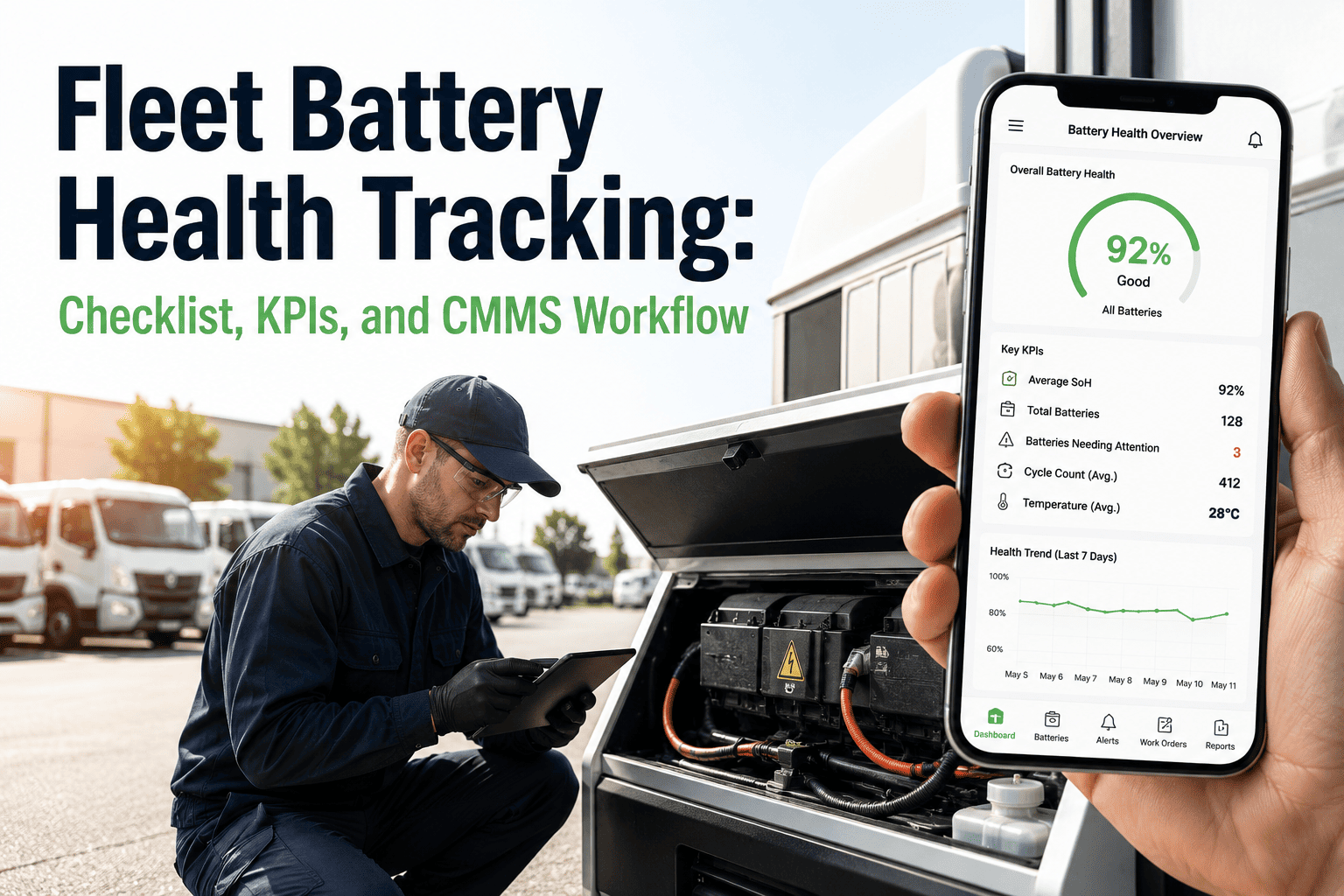
Battery capacity is the biggest cost item in an EV and the hardest to judge by eye. The record should show trends, not just a single reading.
Set a baseline at acceptance
Record capacity or state of health when the vehicle enters service, using the manufacturer's diagnostic method.
Read on a schedule
Log readings at fixed intervals so comparisons are like for like.
Note operating context
Track duty cycle, ambient conditions, and the share of DC fast charging, which many manufacturers advise using thoughtfully.
Escalate on defined triggers
Open a work order when range drops, thermal alerts repeat or diagnostic codes appear.
Keep evidence for warranty
Attach diagnostic reports and service notes to the vehicle so claims are complete when submitted.
Start building EV records that stand up to warranty review
Set up battery, charging and service history for your first electric vehicles, and keep every reading tied to the asset.
Charging infrastructure is part of the asset base
A perfect vehicle does not help if the charger is down at shift start. Treat chargers as assets with their own maintenance plans.
Routine inspection items
- Cable and connector wear, cracks or heat marks.
- Enclosure condition, water ingress and cooling airflow.
- Holsters, cable management and physical damage.
- Display, communication and error log checks.
Information to track
- Uptime and failed sessions by charger.
- Time from fault report to restored service.
- Vendor or contractor service visits.
- Spare connectors, cables and parts on hand.
Electrical work on charging equipment must be performed by qualified personnel following local codes and manufacturer instructions.
Service records for the parts that still wear
| System | What to inspect | Record to keep |
|---|---|---|
| Brakes | Rust, sticking calipers, pad wear, fluid condition | Measurements, replacement dates and findings |
| Tires | Tread depth, pressure, wear pattern | Measurements and rotation history |
| Thermal management | Coolant level, leaks, pump and fan operation | Fluid changes and fault codes |
| Suspension and steering | Bushings, shocks, alignment | Inspection results and repairs |
| High-voltage cabling | Visible damage to orange cables, connectors and shields | Visual inspection log, done by qualified staff |
| Software and firmware | Pending updates and recalls | Version and date applied |
High-voltage safety belongs in the workflow
Safe procedures cannot be optional steps in a work order. Build them into the task itself.
Confirm technician qualification, required protective equipment and the OEM shutdown procedure.
Follow lockout and verification steps, and record who completed each one.
Document tests, torque values and re-energizing checks before release.
Requirements vary by region and employer. Follow manufacturer procedures and applicable electrical safety standards.
Metrics that guide EV fleet decisions
Using Oxmaint for EV maintenance workflows
A first 90 days plan
- List every EV and charger as an asset.
- Load OEM maintenance schedules.
- Define battery reading intervals.
- Launch pre-shift checklists.
- Train technicians on record entry.
- Start charger inspections.
- Review availability and repeat faults.
- Adjust PM intervals.
- Share findings with finance and operations.
Frequently asked questions
Do EVs need less maintenance than diesel vehicles?
Usually fewer engine items, but brakes, tires, cooling and chargers still need planned work and records.
How should a fleet track battery health?
Take a baseline, log readings at set intervals and store diagnostics with the asset. Start a trial to set this up.
Should chargers be in the maintenance system?
Yes. Chargers affect uptime, so give them inspections, work orders and parts history like any critical asset.
What records help with warranty claims?
Baselines, diagnostic reports, service history and dated technician notes. Book a demo to see attachments on work orders.
Who can service high-voltage systems?
Only trained, qualified personnel following OEM procedures and local safety rules.
Give your electric fleet a maintenance record it can trust
Connect battery data, charger care and service work in one system, and plan electrification with confidence.