Ask five technicians to diagnose the same brake noise on the same truck model and you will likely get five different answers, five different repair times, and five different parts invoices. That is not a hiring problem or a training problem — it is a documentation problem. Shops running without written, standardized repair procedures see wider swings in labor hours, parts spend, and comeback rate across their own bays than most fleets see between two entirely different vendors. The technician who knows the shortcut today may not be the technician on shift when the same truck comes back in eight months, and without a documented standard, every departure quietly takes years of institutional knowledge out the door with it. Fleets closing this gap in 2026 are not simply hiring better mechanics — they are building maintenance SOPs that make consistency the default outcome instead of a lucky one, a shift that OxMaint is built to support from day one.
Fleet Maintenance · Standard Operating Procedures · 2026
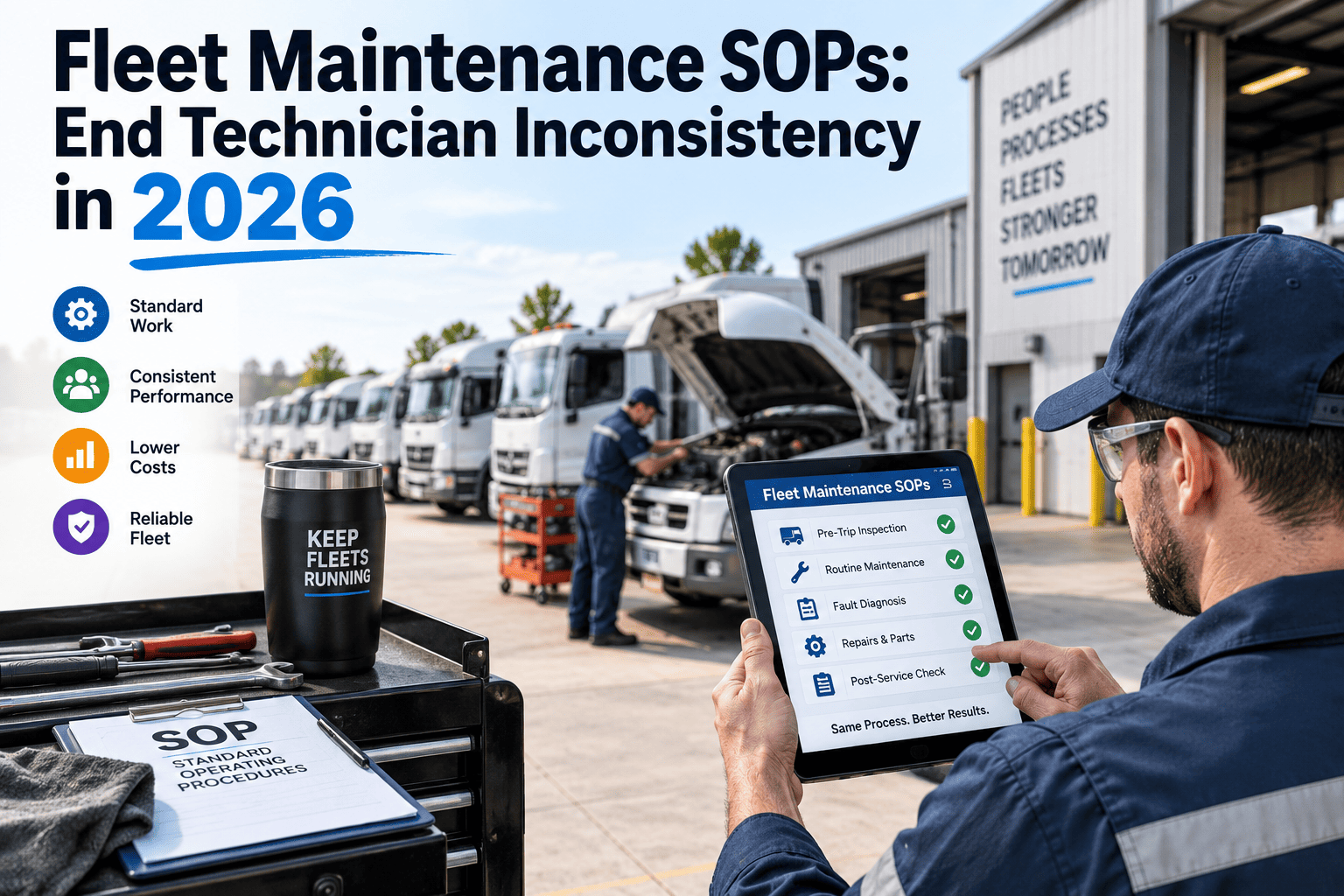
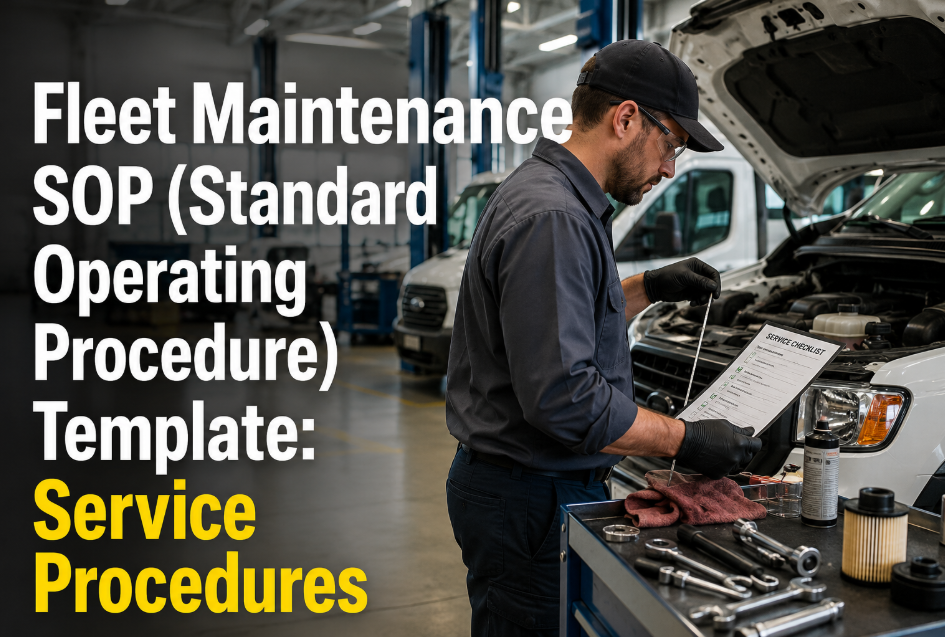
Fleet Maintenance SOPs: End Technician Inconsistency in 2026
Five technicians, five different repair approaches, five different outcomes on the same job. Here is the SOP framework that standardizes every repair across every shift, every bay, and every technician on your roster.
38%
Average variance in repair time for the same job across technicians without a documented SOP
27%
Reduction in comeback repairs reported by shops after enforcing digital SOP checklists
3.4 hrs
Average onboarding time saved per new technician when SOPs replace verbal training
19%
Average reduction in parts overspend once procedures specify exact part numbers and torque values
The Real Problem
One Fleet, Five Different Repairs — Why Tribal Knowledge Is Costing You More Than You Think
Most shops believe they already have standards because their senior technicians know the job well. The problem is that "knowing the job" and "documenting the job" are not the same thing. Without a written procedure, every repair depends entirely on which technician happens to be on shift, what they remember from the last time they touched that component, and how much time pressure they are under that day. Multiply that variance across three shifts, several bays, and a roster that turns over every few years, and the result is not one shop — it is effectively five different shops operating under the same roof, each with its own unwritten rules.
Without SOPs
Tribal Knowledge Repairs
Each technician diagnoses and repairs based on personal experience. Torque specs, part numbers, and inspection points vary by who is holding the wrench.
Result: unpredictable repair time and inconsistent quality
Without SOPs
Verbal-Only Training
New hires learn by shadowing a senior technician for a few days. Whatever shortcuts or gaps that mentor has get passed down unchanged and uncorrected.
Result: institutional knowledge walks out the door at every departure
With SOPs
Standardized Repair Sequence
Every repair follows the same documented sequence, torque specification, and part reference regardless of which technician or shift performs the work.
Result: predictable repair time and consistent first-time quality
With SOPs
Digital Onboarding
New technicians follow the same step-by-step digital procedure a ten-year veteran would use, with photos and checkpoints built into every task.
Result: faster ramp-up and no dependency on any one person
Common Pitfalls
Five Mistakes That Quietly Undermine an SOP Rollout
Writing an SOP is the easy part. Most rollouts fail not because the procedure was wrong, but because of how it was introduced, stored, or enforced. Watch for these five patterns before they erode the consistency you are trying to build.
Pitfall
SOPs Buried in a Binder
A procedure that lives in a filing cabinet or a shared drive nobody opens on the shop floor might as well not exist. Technicians default back to memory and habit the moment the document is even slightly inconvenient to reach mid-repair.
Fix: keep the procedure on the same device the technician already uses at the vehicle
Pitfall
No Ownership for Updates
Procedures written once and never revisited drift out of date as parts, vehicle models, and best practice change, until technicians notice the gap and quietly stop trusting the document altogether, reverting to memory.
Fix: assign a clear owner and a review cadence for every procedure
Pitfall
Too Much Text, Not Enough Visual
Dense paragraphs describing torque sequences or alignment steps get skimmed rather than followed. A technician standing at a vehicle with grease on their hands needs a clear photo and a number, not a page of prose to read.
Fix: replace description with reference photos wherever a visual check matters
Pitfall
No Enforcement at Sign-Off
A procedure that a technician can skip past without consequence gets skipped under time pressure, which is exactly the moment a documented standard matters most and is most likely to be abandoned.
Fix: require a timestamped checkpoint before a work order can close
Fleet SOPs · No Extra Admin · OxMaint
Avoid the Rollout Mistakes That Sink Most SOP Programs
OxMaint keeps procedures on the device technicians already carry, assigns clear ownership for revisions, and enforces sign-off before a job closes — so the standard actually holds under real shop pressure instead of fading after the first busy week.
The Framework
The Five-Layer SOP Framework That Standardizes Fleet Repairs
Building an effective SOP is not about writing a long manual nobody reads. It is about breaking each repair into five layers that a technician can follow on a phone or tablet while standing at the vehicle, with each layer removing one more source of inconsistency from the job. Shops that skip straight to writing steps without these layers tend to produce documents that look thorough but still leave room for interpretation exactly where it matters most.
01
Trigger and Scope Definition
Every SOP starts by defining exactly when it applies — which fault code, which symptom, which mileage interval, which vehicle model — so technicians are not guessing whether a procedure even fits the job sitting in front of them right now.
02
Step-by-Step Sequence With Photos
Each task is broken into ordered steps, with a reference photo attached to steps where visual confirmation matters, so there is no ambiguity about what "properly seated," "correctly aligned," or "fully torqued" actually looks like on the vehicle in front of the technician.
03
Exact Specifications, Not Approximations
Torque values, fluid capacities, and part numbers are written into the procedure itself rather than left to memory or a technician's personal notebook, closing the single biggest source of comeback repairs and warranty disputes.
04
Mandatory Checkpoints and Sign-Off
Critical steps require a timestamped confirmation before the technician can move forward, preventing a rushed shift under a deadline from skipping the one inspection point that actually prevents a breakdown on the road.
05
Feedback Loop for Continuous Revision
Technicians can flag a step that does not match reality on a specific vehicle variant, submit the correction from the field, and the SOP gets revised centrally by the assigned owner, so the procedure keeps improving instead of quietly drifting out of date the way paper checklists always do.
Maturity Levels
Where Does Your Shop Sit on the SOP Maturity Scale?
Most fleets do not move from zero documentation to full digital SOPs overnight — they progress through recognizable stages, each with its own typical repair time variance and comeback rate. Understanding which level your shop currently operates at is the fastest way to identify what is actually driving your numbers, and what the next realistic step forward looks like.
Getting Started
Your First 30 Days: Rolling Out SOPs Without Disrupting Operations
You do not need to document every repair in your shop before seeing results, and trying to do so is one of the fastest ways to stall a rollout before it starts. A focused first month, built around the jobs that already cause the most variance, produces measurable change fast enough to earn technician buy-in for the rest of the rollout.
W1
Identify Your Highest-Variance Repairs
Pull work order history and flag the ten to fifteen repair types with the widest spread in labor hours or the highest comeback rate — these are where an SOP pays back the fastest and proves the case to skeptical staff.
W2
Document the Best Version With Your Senior Technicians
Sit with your most experienced technician while they perform the job, capturing photos, specifications, and checkpoints as they go rather than writing the procedure from memory afterward, when small but important details get lost.
W3
Pilot With One Shift Before Fleet-Wide Rollout
Test the procedure with a single shift, gather feedback on any step that does not match reality on a specific vehicle variant, and revise it based on what technicians actually encounter before pushing it out to every bay and every shift.
W4
Turn On Enforcement and Track the Numbers
Once the procedure is validated, require sign-off at the critical checkpoints and start tracking repair time variance and comeback rate against your pre-SOP baseline so the improvement is visible in numbers, not just impressions.
What Changes
What Standardization Actually Does to Your Shop Numbers
The value of an SOP program shows up first in the numbers that are hardest to manage by instinct: how long a job takes, how often it comes back, and how quickly a new hire becomes productive. Fleets that move from Level 0 or Level 1 to enforced digital SOPs consistently report the same four shifts within the first two to three renewal cycles.
27%
Fewer Comeback Repairs
Enforced checkpoints catch the inspection steps a rushed technician would otherwise skip, before the vehicle leaves the bay, closing the gap that produces most repeat visits within thirty days.
3.4 hrs
Faster New Hire Ramp-Up
A digital step-by-step procedure replaces days of shadowing a senior technician who may not be available every shift, letting new hires perform unfamiliar repairs correctly on day one.
19%
Lower Parts Overspend
Exact part numbers written into the procedure prevent the wrong-part ordering that drives unplanned downtime, rework, and the freight cost of expediting a correction.
100%
Shift-to-Shift Consistency
The same procedure follows the vehicle regardless of which bay, which shift, or which technician touches it next, so quality no longer depends on a schedule.
Shop Manager Questions
Fleet Maintenance SOPs — Common Questions Before Rollout
How long does it take to build a full set of SOPs for a mid-size fleet shop?
+
Most shops document their top twenty highest-frequency repairs within two to three weeks by capturing existing best practice directly from senior technicians while they work. Broader coverage across the full repair catalog typically follows over the next quarter.
Book a demo to see a rollout plan sized to your bay count.
Will technicians actually follow written procedures instead of their own habits?
+
Adoption improves sharply when SOPs are mobile-first with photos rather than dense text, live on the same device technicians already carry, and when mandatory checkpoints require sign-off before the job can be closed out.
What is the difference between a checklist and a true SOP?
+
A checklist confirms a task happened. An SOP defines exactly how it must happen — sequence, specification, and photo reference — leaving no room for two technicians to interpret the same job differently.
How do SOPs reduce comeback repairs specifically?
+
Comebacks most often trace back to a skipped inspection step or an approximated torque value under time pressure. Mandatory checkpoints close both gaps by requiring confirmation before work is marked complete.
Can SOPs be updated as vehicle models and parts change?
+
Yes — a central feedback loop lets technicians flag outdated steps directly from the vehicle, and once an owner approves a revision it pushes to every device immediately.
Start a free trial to see how revisions are managed.
OxMaint · Fleet SOPs · Built for Every Shift
Stop Letting Repair Quality Depend on Who Is on Shift
OxMaint turns your shop's best-known repair methods into digital, enforced SOPs that every technician follows the same way, on the same device they already carry, across every shift and every bay. The result is fewer comeback repairs, faster onboarding for new hires, lower parts overspend, and the same standard of care for every vehicle regardless of who happens to be on the clock when it rolls in.