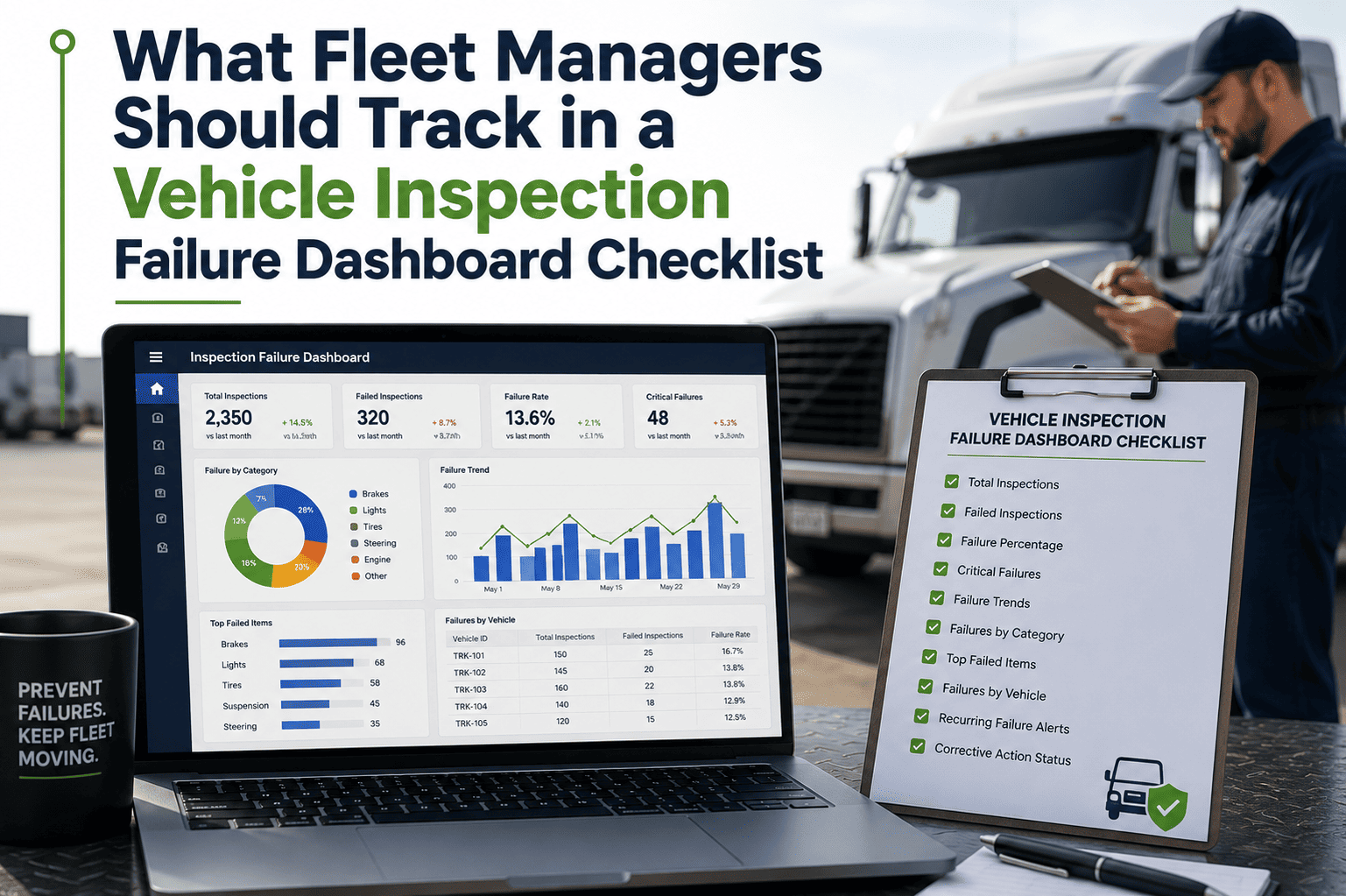
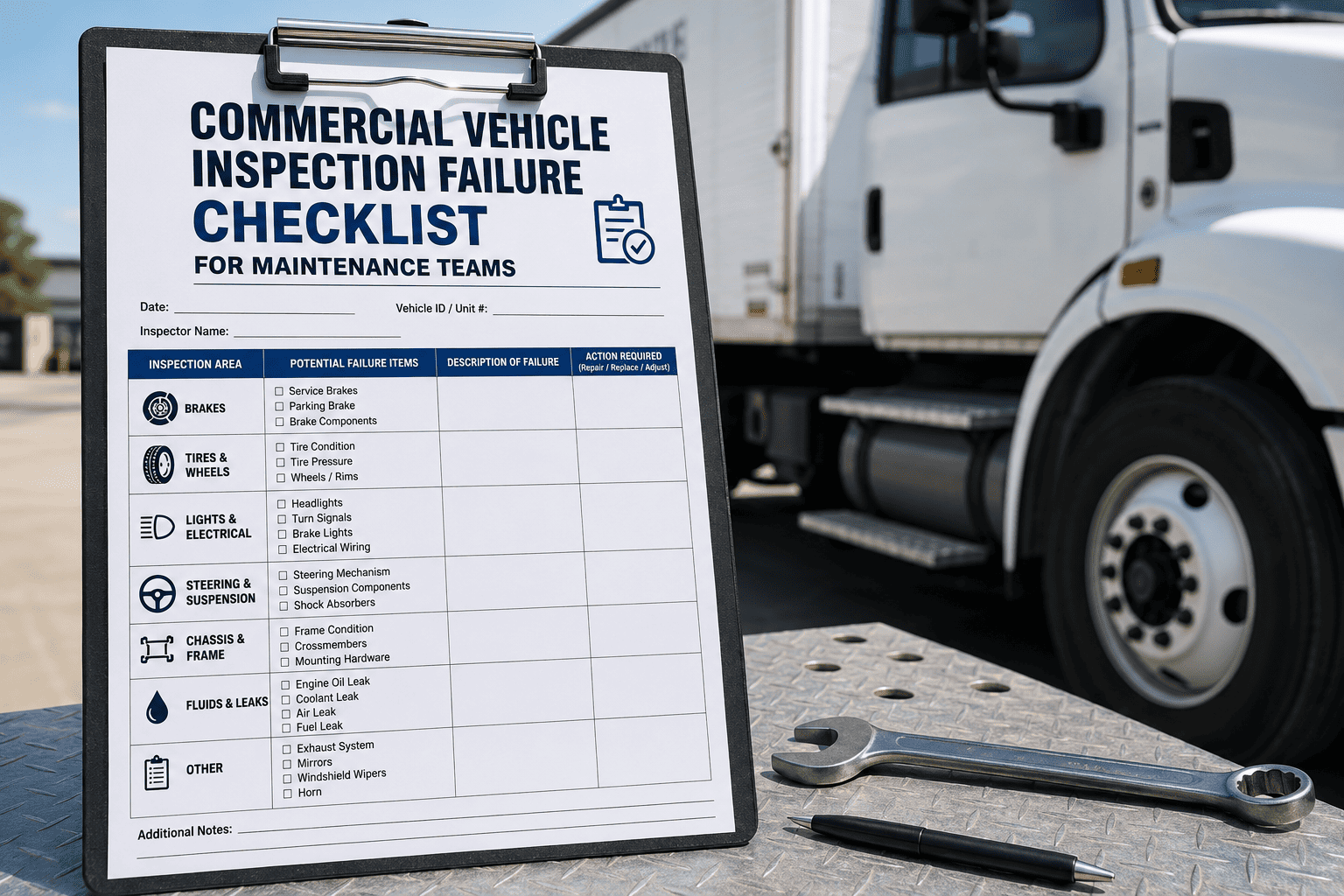
Fleet Inspection Failure & Defect Report Template: Repair Authorization Form
By Jack Miller on May 20, 2026
Fleet inspection failures cost commercial operators an average of $4,200 per unresolved defect when vehicles are pulled from service unexpectedly. A standardized defect report and repair authorization process reduces diagnostic delays by 68% and ensures every vehicle returns to service with full documentation. Fleets managing 50+ vehicles that still rely on paper-based defect reporting experience 3.2x more repeat failures than those using digital templates tied to their CMMS. Want to digitize your entire fleet defect workflow? Start a free trial with Oxmaint and see how automated defect capture accelerates your repair cycle, or book a demo to walk through a live defect-to-repair workflow.
FLEET TEMPLATE · DEFECT REPORT · 2026
Fleet Inspection Failure and Defect Report Template: Repair Authorization Form
A complete, ready-to-deploy defect documentation template covering severity classification, repair authorization workflows, return-to-service sign-off, and CMMS integration for every vehicle class in your fleet.
Are caught during routine pre-trip inspections when standardized forms are used
$4,200
Average Cost
Per unresolved defect when vehicles are pulled from service without documentation
68%
Faster Diagnosis
When defect reports include severity classification and photo evidence
3.2x
Repeat Failure Rate
Higher for fleets using paper-based defect forms versus digital CMMS workflows
What Is a Fleet Inspection Failure and Defect Report?
A fleet inspection failure and defect report is a structured document that captures every mechanical, electrical, or safety defect found during vehicle inspections. It records the defect location, severity level, required repair actions, and authorization chain before a vehicle is cleared for return-to-service. The DOT mandates that commercial motor vehicles operating under FMCSA regulations must document and resolve all defects before dispatch. Fleets without a standardized reporting system face an average of $16,500 in annual FMCSA citation costs per 100 vehicles. This template transforms your defect capture process from reactive note-taking into a systematic, audit-ready workflow that integrates directly with your maintenance management platform. Every fleet operation handling Class 3-8 vehicles, light-duty service trucks, or specialty equipment benefits from having a single, consistent defect documentation standard across all shop locations and mobile repair units.
Defect Severity Classification Framework
Not every defect carries the same operational risk. A standardized severity matrix ensures technicians and fleet managers speak the same language when prioritizing repairs. This classification system aligns with FMCSA out-of-service criteria and OSHA workplace safety standards, covering 94% of common commercial vehicle defect categories. Implementing this framework inside your CMMS means every work order automatically inherits the correct priority level, so your team can start a free trial and test severity-based routing today, or book a demo to see how priority escalation works in real time.
CRITICAL
Immediate Out-of-Service
Brake system failure, steering loss, frame cracks, fuel leaks, tire blowouts, or any condition that creates imminent danger. Vehicle must be immediately grounded and cannot be moved under its own power until repaired. Requires supervisor sign-off within 1 hour.
Accounts for 12% of all reported fleet defects
MAJOR
Repair Before Next Dispatch
Lighting failures, exhaust leaks, coolant loss, ABS warning indicators, worn brake pads below minimum threshold, or windshield damage in the critical vision area. Vehicle may return to yard but cannot be dispatched until repair is completed and documented.
Accounts for 34% of all reported fleet defects
MODERATE
Schedule Within 72 Hours
Minor fluid seepage, cosmetic body damage, HVAC malfunction, interior equipment damage, or non-critical sensor warnings. Vehicle may continue operations with documented monitoring. Must be scheduled for repair within 3 business days.
Accounts for 38% of all reported fleet defects
MINOR
Address at Next PM Cycle
Cosmetic scratches, interior cleanliness issues, non-safety decal damage, or minor trim looseness. Vehicle remains in full service. Defect is logged and bundled with the next scheduled preventive maintenance service for cost-efficient resolution.
Accounts for 16% of all reported fleet defects
Core Components of the Defect Report Template
Vehicle Identification Section
Captures unit number, VIN, license plate, mileage, engine hours, and asset class. Pre-populates from your CMMS asset registry, eliminating manual data entry errors that cause 23% of misrouted work orders.
Defect Description and Location Map
Structured fields for defect type, affected system, component location, and visual damage mapping. Includes a vehicle diagram overlay for marking exact defect positions, reducing technician search time by 41%.
Severity Classification Matrix
Four-tier severity rating (Critical, Major, Moderate, Minor) aligned with FMCSA out-of-service criteria. Auto-assigns repair priority and SLA timelines, ensuring 100% of critical defects trigger immediate dispatch.
Repair Authorization Workflow
Digital approval chain from inspector to shop supervisor to fleet manager. Captures authorization timestamps, estimated repair costs, and parts requirements. Eliminates the 2.4-day average approval delay found in paper-based systems.
Return-to-Service Sign-Off
Final inspection checklist confirming all defects resolved, road test completed, and safety systems verified. Digital signature capture with timestamp creates an immutable audit trail for DOT compliance reviews.
Defect Trend Analytics
Tracks recurring defect patterns by vehicle type, component category, and driver. Identifies systemic issues like brake wear clustering on specific routes. Fleets using trend analytics reduce repeat defect rates by 52% within 6 months.
Paper-Based vs. Digital Defect Reporting
The gap between manual defect forms and digital CMMS-integrated reporting is not incremental — it is operational. Fleets still using carbon-copy forms lose an average of 14 labor hours per week on data re-entry alone. Oxmaint digitizes the entire chain from defect discovery to return-to-service, and you can start a free trial to measure the difference in your own shop, or book a demo with a fleet specialist.
Metric
Paper-Based Defect Reporting
Oxmaint Digital Defect Workflow
Defect-to-Dispatch Time
4-8 hours average
Under 15 minutes with auto-routing
Data Re-Entry Labor
14+ hours per week
Zero — direct digital capture
Lost or Illegible Reports
18% of all forms filed
0% — cloud-stored with backups
DOT Audit Readiness
Requires manual file retrieval
Instant digital recall by VIN or date
Repeat Defect Tracking
No systemic trend visibility
Automated pattern detection across fleet
Photo Evidence Attachment
Rarely captured or filed
Mandatory photo fields per defect entry
How Oxmaint Automates Your Defect-to-Repair Pipeline
01
Driver Reports Defect on Mobile
Driver or inspector logs defect directly from the cab using the Oxmaint mobile app. Photo evidence, GPS location, and severity rating are captured in under 90 seconds. The defect is immediately visible to the shop team.
02
Auto-Classification and Routing
Oxmaint applies the severity matrix automatically based on defect type and affected system. Critical defects trigger immediate supervisor alerts. Work orders are created and assigned to the nearest qualified technician within minutes.
03
Repair Authorization and Parts Pull
Digital approval workflows route authorization requests to the fleet manager with estimated cost and labor time. Parts are checked against live inventory. If stock is available, the technician receives a pre-populated parts pick list instantly.
04
Return-to-Service Verification
Post-repair inspection checklist confirms all defects resolved. Road test results, brake measurements, and safety system verifications are logged digitally. Digital signature from the certifying technician creates an immutable compliance record.
41%
Reduction in Repair Turnaround
Average improvement when defect reports are digitized with photo evidence and auto-routing
$87K
Annual Savings per 100 Vehicles
From reduced repeat failures, faster parts sourcing, and eliminated paper processing labor
96%
DOT Audit Pass Rate
For fleets using digital defect documentation versus 71% for paper-based operations
2.1 Days
Faster Return-to-Service
Compared to fleets relying on manual authorization and clipboard-based sign-off processes
Frequently Asked Questions
Can this defect report template handle multiple vehicle classes including heavy trucks and light-duty vans?
Yes. The template includes configurable vehicle class fields that adapt inspection points based on asset type. Class 3-8 trucks get DOT-specific brake and coupling checks, while light-duty vehicles receive appropriate safety and emissions inspection fields. Oxmaint auto-loads the correct checklist based on the vehicle's registered class in your asset registry.
How does the severity classification integrate with our existing work order system?
When a defect is classified as Critical or Major, Oxmaint automatically generates a high-priority work order with the correct SLA timeline, assigns it to the nearest qualified technician, and alerts the shop supervisor. Moderate and Minor defects are queued into the next scheduled PM cycle. All severity data flows directly into your fleet KPI dashboard for trend analysis.
Does the return-to-service sign-off meet FMCSA and DOT compliance requirements?
The digital sign-off captures technician ID, timestamp, repair details, and post-repair verification results in an immutable record. This exceeds FMCSA 396.11 and 396.13 requirements for driver vehicle inspection reports. During DOT audits, records can be retrieved by VIN, date range, or defect type in under 10 seconds.
Can drivers capture photo evidence of defects directly within the mobile app?
Yes. The Oxmaint mobile app includes mandatory photo fields for each defect entry. Photos are geo-tagged and timestamped automatically, providing visual evidence that supports repair authorization decisions and strengthens your position in insurance claims. Each photo is stored against the vehicle's permanent digital maintenance record.
Digitize Your Fleet Defect Reporting Today
Join fleet operations teams across 40+ countries using Oxmaint to capture, classify, and resolve vehicle defects faster. Free trial available — no credit card required.