Most fleets that grow by adding depots, acquiring operators, or opening new routes inherit several maintenance cultures at once. Each depot has a way of doing things that works locally, yet the fleet as a whole cannot be compared, audited, or improved. Standardization is the discipline of choosing one way for the work that should be identical, and allowing variation only where it is justified. This article lays out a practical standardization path, including how a fleet maintenance CMMS holds the standard in place.
Fleet Maintenance Standardization Across Multiple Depots
Define the standard once, publish it to every depot, and measure adherence with the same yardstick. Less rework, cleaner records, and faster onboarding for new sites.
Standardize What, Exactly?
Standardizing everything creates resistance. Standardizing nothing keeps the chaos. Sort each element into one of three groups before you start.
Fixed Everywhere
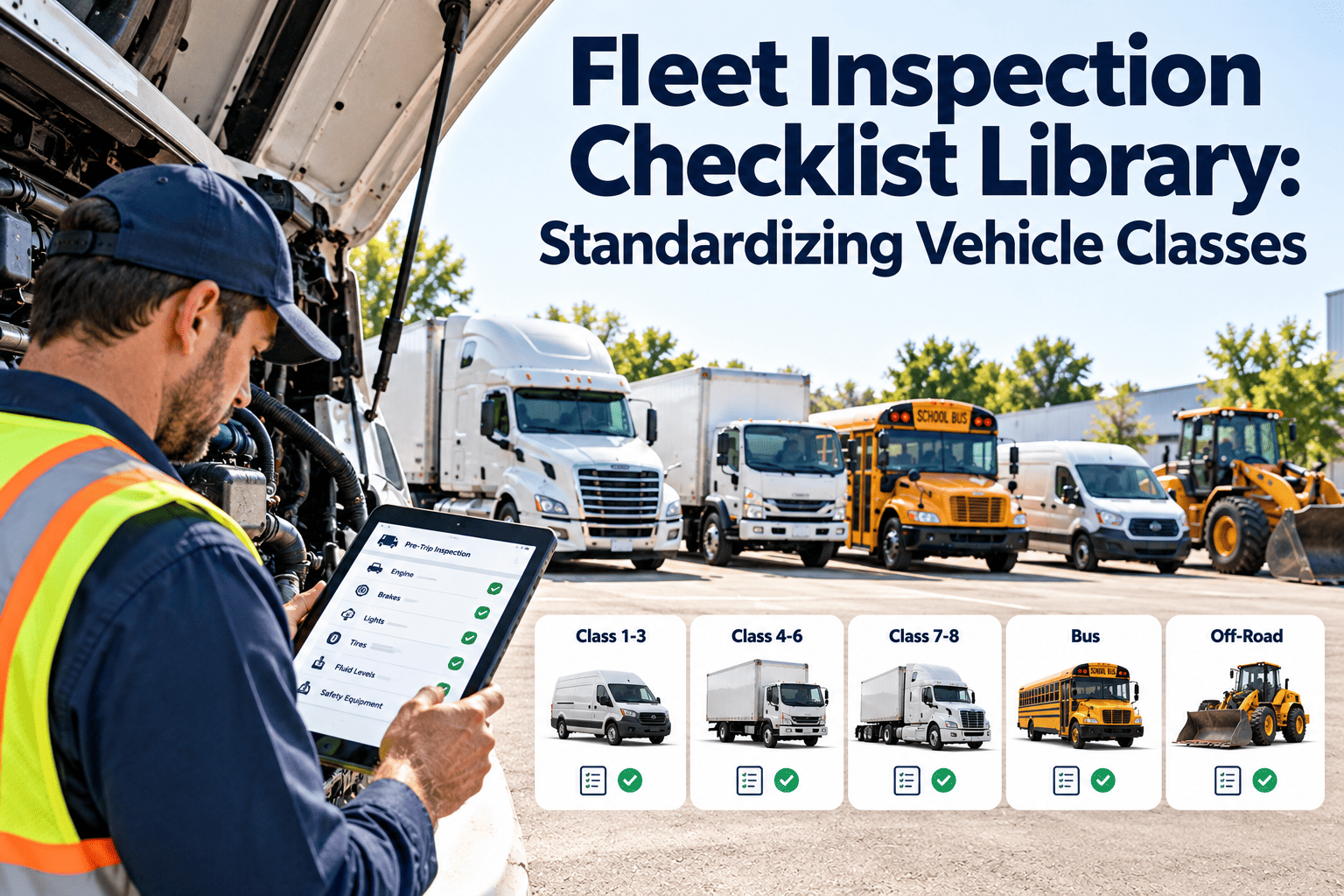
- Inspection form content by vehicle class
- Safety-critical PM tasks
- Defect severity definitions
- Work order status names and closure rules
- Failure and cause code list
- Vehicle and part naming
Guided, With Approved Exceptions
- PM intervals adjusted for climate or duty cycle
- Reorder points per depot
- Shift patterns and bay allocation
- Outside repair vendors
Left to the Depot
- Bay layout and tooling arrangement
- Daily huddle format
- Local supplier relationships
- Technician mentoring methods
Why Standards Fail After Launch
A standard written in a document and emailed to depot managers rarely survives the first busy month.
Build the Standards Library
Keep a small, versioned set of reference items that every depot pulls from the same place.
| Library item | Contents | Owner | Review rhythm |
|---|---|---|---|
| Vehicle class register | Groups of vehicles sharing PM and inspection rules | Fleet maintenance manager | When fleet mix changes |
| PM schedule per class | Tasks, intervals by distance, hours, or time, and parts kit | Maintenance engineer | Annually, or after repeat failures |
| Inspection templates | Pre-trip, post-trip, and periodic inspection items | Safety and compliance lead | Annually and after incidents |
| Failure and cause codes | Short shared list for work order closure | Reliability lead | Twice a year |
| Work order rules | Priorities, approval limits, closure checks | Operations manager | Annually |
| Parts catalog | Standard part numbers and approved substitutes | Inventory controller | Quarterly |
Hold Every Depot to the Same Playbook
Put your standards library into one system and see adherence by location. Or have us walk you through a multi-depot setup.
A 90-Day Standardization Plan
Three phases keep the change manageable and give you early proof before you scale.
Baseline
- Combine vehicle lists from all depots
- Collect current PM and inspection practices
- Identify the biggest differences between depots
- Name a standards owner for each library item
Pilot
- Publish first versions of the library
- Run two depots on the standard
- Gather technician and driver feedback weekly
- Adjust forms that are skipped or unclear
Scale
- Extend to remaining depots in waves
- Start monthly adherence reviews
- Approve and log local exceptions
- Plan the first standards revision
Measure Adherence, Not Just Output
Depot managers respond to what is measured. Report these side by side so differences are visible and fair.
Governing Exceptions Without Losing Control
Exceptions are healthy when they are visible. A simple route keeps them honest.
How a CMMS Keeps the Standard in Place
Documents drift. A shared system enforces consistency while still letting depots work.
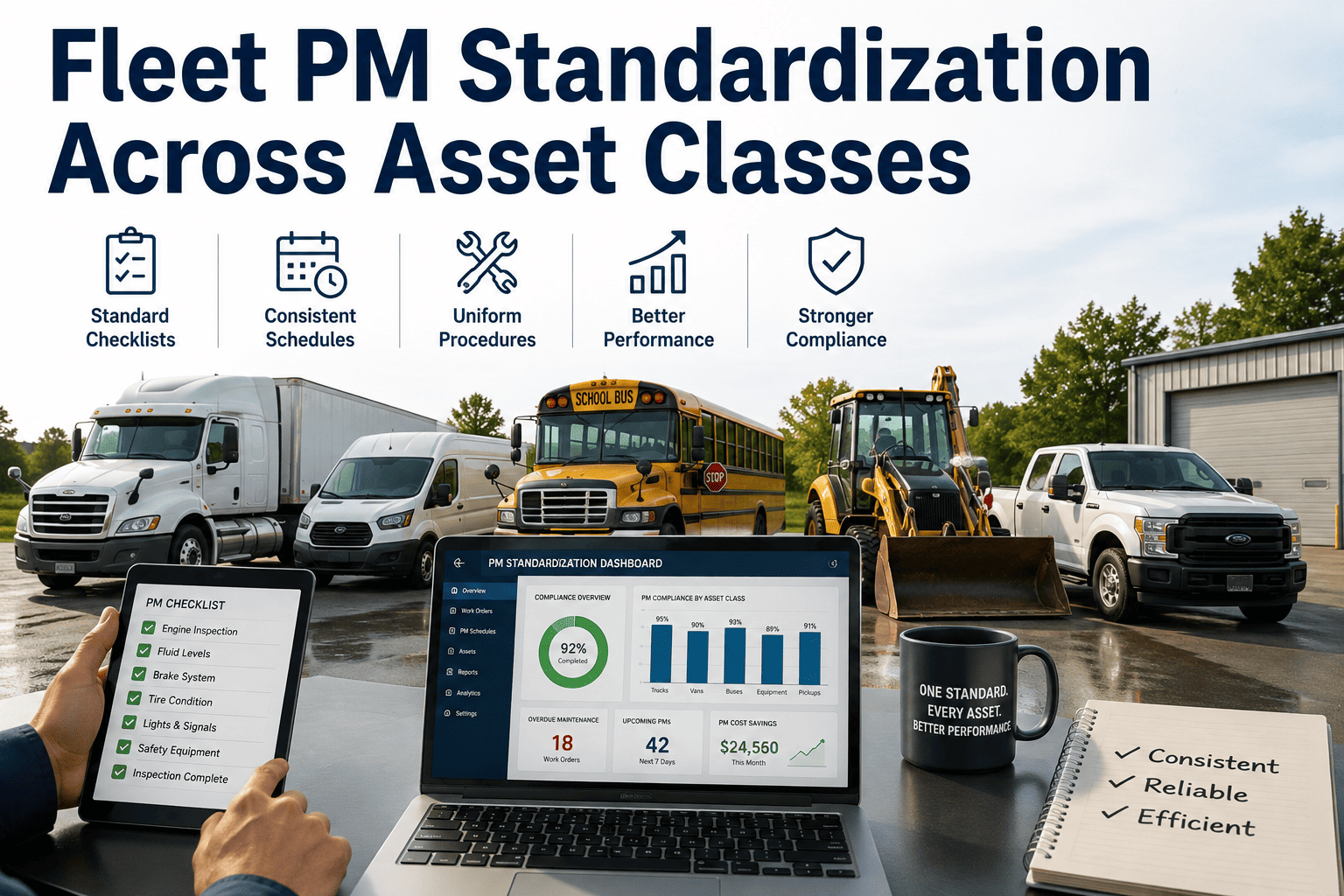
- Preventive maintenance templates applied to vehicle classes, so a schedule change reaches every depot at once.
- Digital inspections using one template per class, with defects turning into work orders.
- Work order fields that require failure codes, labor, and parts before closure.
- Asset history held on the vehicle, so transfers between depots do not break the record.
- Inventory records using standard part numbers across locations.
- Dashboards and reports that compare depots on the same measures.
Frequently Asked Questions
Should all depots use identical PM intervals?
Use one baseline per vehicle class. Allow documented adjustments for climate or duty cycle, reviewed by the standard owner.
How do we win over depot managers?
Involve them in drafting the standard and show how it reduces repeat repairs and audit effort at their site.
How many inspection items are too many?
If drivers skip items, the form is too long. Tie every item to a known failure or regulation.
Can we pilot before committing?
Yes. Sign up and load one or two depots first, then expand once the forms and schedules work in practice.
Who should own the standard?
Assign one accountable owner per library item. Discuss roles on a demo call if you need examples.
Make One Way of Working Stick Across Every Depot
Publish your standards, track adherence, and give leadership a fair comparison between sites.