A new technician can turn a wrench on day one, but knowing your fleet, your inspection standards and your paperwork takes months. Without a plan, new hires learn by watching whoever is nearby, and habits vary from bay to bay. A structured training program sets the same expectations for everyone: safety first, then inspection quality, then repair skill, then documentation. Tying that program to a fleet maintenance work order system makes progress measurable instead of anecdotal.
Work Orders and Shop Operations | Technician Onboarding
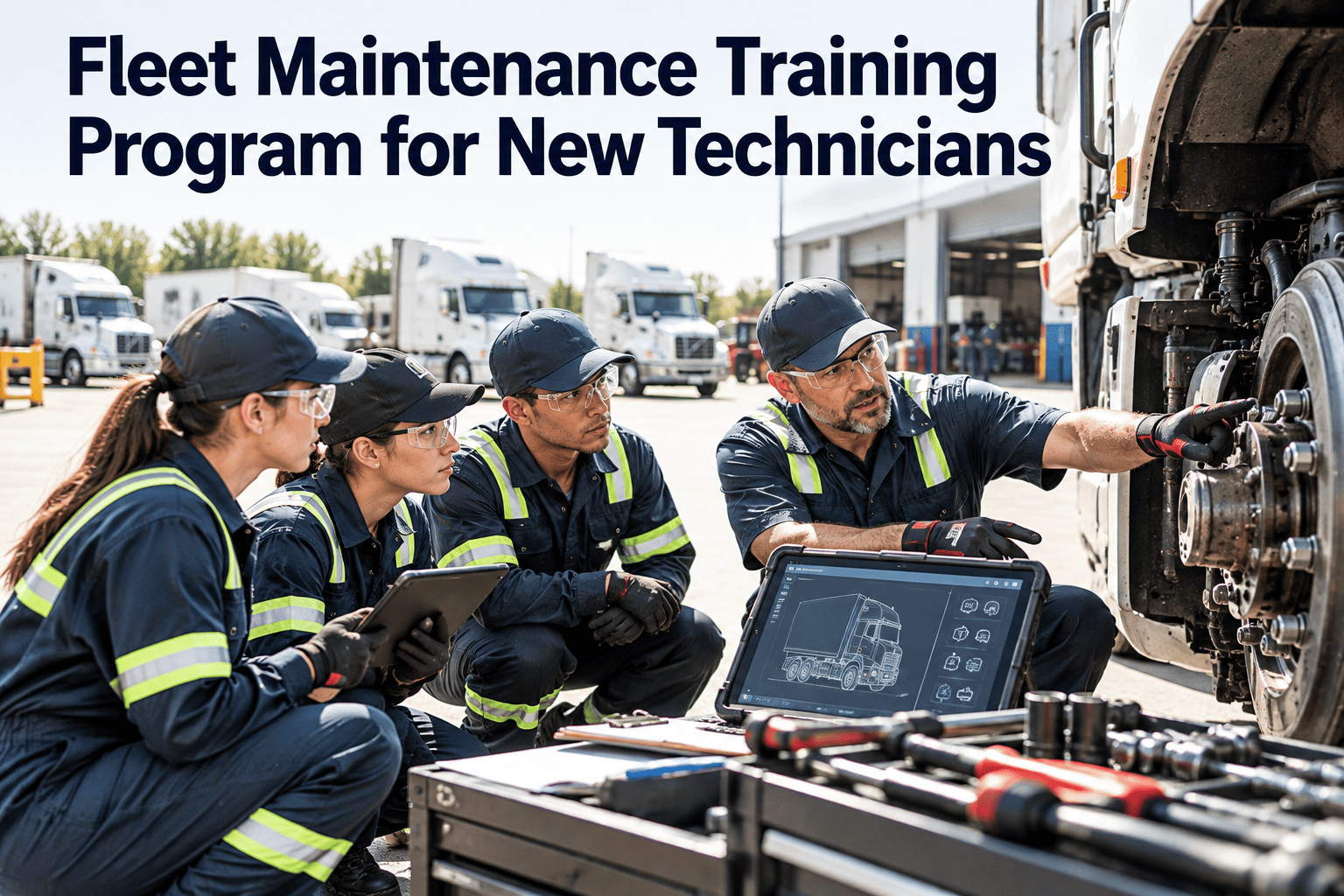
Fleet Maintenance Training Program for New Technicians
A practical 90-day plan that builds safety habits, inspection skill and clean work order records, using your real vehicles and procedures.
Days 1-30
Safety and Basics
Days 31-60
Guided Repairs
Days 61-90
Independent Work
Why Onboarding Often Falls Short
Learning by shadowingQuality depends on which senior technician the newcomer follows.
Unwritten standardsWhat counts as a pass or a defect lives in people's heads.
Thin work ordersVague notes make history unreliable for the next technician.
No progress recordSupervisors cannot show who is ready for which task.
The 30-60-90 Plan in Detail
First 30 Days
- Shop safety, lockout and personal protective equipment
- Tools, lifts, jacks and fluid handling
- Fleet tour: vehicle types, systems, common failures
- Walk-through of the maintenance system and work order fields
- Shadow inspections and complete supervised checklists
Days 31 to 60
- Preventive maintenance services under supervision
- Brakes, tires, fluids, filters and lighting
- Diagnose with fault codes and service manuals
- Write complete work orders with cause and correction
- Parts requests and inventory use
Days 61 to 90
- Run routine services independently
- Perform inspections to your compliance standard
- Handle common corrective repairs
- Peer review of work orders
- Skills assessment and development goals
Use the plan as a template. Adjust content for your vehicle mix, such as heavy trucks, vans, buses or electric vehicles.
Skills Matrix: Who Can Do What
| Task Area | Observe | Assist | Supervised | Independent |
|---|---|---|---|---|
| Safety and lockout | Week 1 | Week 1 | Week 2 | Week 3 |
| Pre-trip and PM inspection | Week 1 | Week 2 | Week 3-4 | Day 45 |
| Tires and wheels | Week 2 | Week 3 | Week 5 | Day 60 |
| Brakes | Week 3 | Week 5 | Week 7 | Day 75 |
| Diagnostics and electrical | Week 4 | Week 6 | Week 9 | After day 90 |
| Work order documentation | Week 1 | Week 1 | Week 2 | Week 4 |
Dates are examples. Sign off each skill only when the supervisor has seen the technician perform it correctly.
What a Good Work Order Looks Like
Weak Entry
- Fixed brakes
- No measurements
- No parts listed
- No cause
Strong Entry
- Front pads at minimum thickness, measurement recorded
- Pads and hardware replaced, parts listed
- Cause: normal wear, no leaks found
- Road test result and time logged
Train on the Same System Technicians Will Use Every Day
Standard checklists, clear work orders and visible asset history make onboarding faster and more consistent.
Training Topics Every New Technician Needs
Shop Safety
Lockout, lifts, hot work, battery and high-voltage awareness, chemical handling.
Inspection Standards
Pass and fail criteria, defect severity and out-of-service rules for your fleet.
Regulatory Basics
Inspection and record rules that apply to your vehicles and jurisdiction.
Parts and Warranty
Request, issue and return parts; record warranty items.
Diagnostics
Reading codes, using manuals and confirming a repair.
Communication
Clear handoffs, defect reporting and customer or driver notes.
Mentor Checklist for Supervisors
Weekly Review With Each New Technician
- Review three completed work orders
- Observe one inspection start to finish
- Check tool and safety compliance
- Update the skills matrix
- Set the next skill target
- Collect questions and gaps
How Oxmaint Supports Technician Training
Work ordersStructured fields and templates teach what complete documentation looks like.
InspectionsMobile checklists guide new hires through each step with photos.
Asset historyPast repairs show how senior technicians solved similar problems.
SchedulingAssign training jobs and pair new hires with mentors.
ReportingReview completion, rework and documentation quality by technician.
Measuring Whether Training Works
Time to Independence
Days to sign-off on core tasks
Rework Rate
Repeat jobs on new hire work
Record Quality
Complete work orders
Safety Incidents
Near misses and injuries
Frequently Asked Questions
How long should new technician training take?
Many shops use a 90-day structure, then continue skills development based on role and experience.
Should training use real work orders?
Yes, under supervision. Real jobs teach documentation and shop flow better than classroom examples alone.
How do I track technician progress?
Use a skills matrix with supervisor sign-offs and review work order quality weekly.
Can software help with onboarding?
Yes, Oxmaint provides checklists, work orders and history that new hires can learn from.
Can I see a technician workflow?
You can book a demo to walk through inspection and work order screens.
Build Technicians Who Work the Same Way Every Time
Standardise inspections, work orders and sign-offs so new hires reach full productivity with confidence.