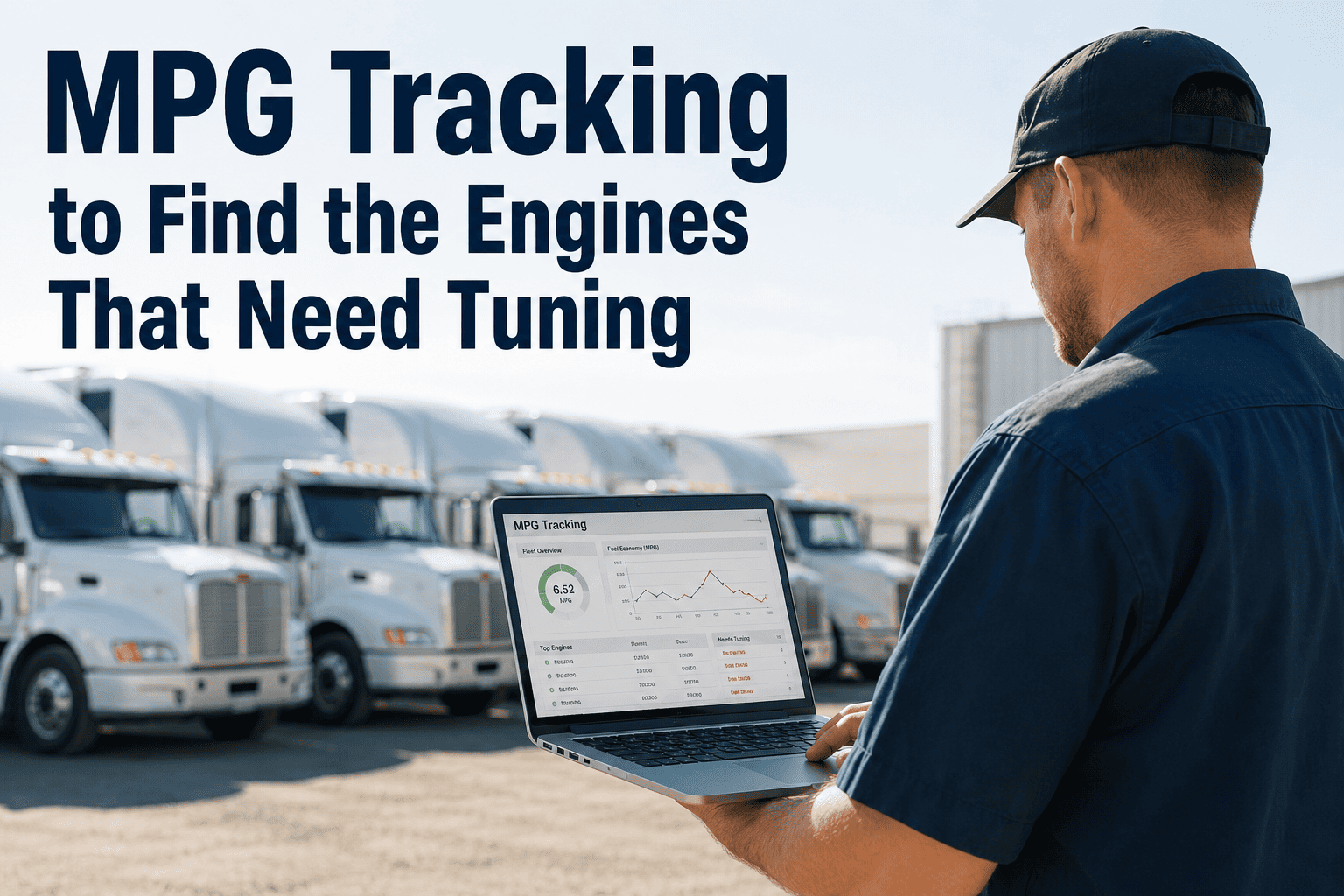
Every gallon your fleet burns tells a story, and most fleet managers only read the last chapter, the invoice. By the time a fuel bill lands on your desk, the engine quietly losing 8-12% of its economy to worn tires, dirty filters, or a missing fairing has already been underperforming for months. Diesel hovering near $3.50 a gallon means a single truck losing half a mile per gallon can bleed thousands of dollars a year without ever tripping a warning light. Fuel already eats up roughly a quarter of total fleet operating costs, so a slow drift in MPG is really a slow leak in your margin, not a random expense. The fix is not buying more fuel, it is logging MPG per vehicle so the underperforming engines surface before they become breakdowns. Ready to see it for your fleet? Start a free trial at https://app.oxmaint.ai to log MPG automatically, or book a demo at https://calendly.com/oxmaintapp/30min to watch engine-level fuel tracking in action.
The MPG Number That Is Hiding Your Next Repair Bill
National fleets average 6.9 MPG while top performers hit 7.8 MPG or higher, and the gap between the two is almost never the truck. It is a handful of engines nobody flagged for tuning.
Your Fleet-Wide MPG Is Hiding The Vehicles That Need Attention
A fleet average of 7.2 MPG sounds healthy, but averages blend a well-tuned truck at 8.0 with a struggling one at 6.3, and the second truck is the one draining your budget every single week. Without per-vehicle logging, that gap stays invisible until the engine fails outright or a lane audit forces the question. Fleets that switch from manual logbooks to automatic per-VIN tracking routinely find their real fuel data accuracy jump from around 72% to 98%, which is often the first time leadership sees which trucks are actually the problem. Start a free trial to begin logging MPG by vehicle instead of by fleet.
Speed, idling, and load patterns compound the problem further. Every mile per hour above 65 costs roughly 0.14 MPG, and idle time above 10% of engine hours quietly erodes fuel economy by close to a full percentage point. None of these show up on a single combined dashboard number, they only show up when you can see one engine's trend line next to another. Book a demo to see how vehicle-level trend lines expose the outliers your average is currently hiding.
6 Signals That Say An Engine Needs Tuning, Not Just Fuel
A sustained drop of even a few tenths over 90 days on one VIN, while the rest of the fleet holds steady, points to a mechanical issue building underneath.
Engine-on time that exceeds 10% of total operating hours burns fuel with nothing to show for it and often signals a route or scheduling gap too.
When one vehicle's cost per mile rises faster than the fleet average, it is usually the earliest financial signal that something is mechanically off.
Purchased gallons that do not match odometer-calculated consumption can point to a leak, a card issue, or an engine burning more than it should.
Underinflated tires and poor alignment are two of the most common, and most fixable, causes of a slow and steady MPG decline on a single unit.
A missing fairing, bent bumper, or loose cab extender disrupts airflow and can quietly cost a truck a full mile per gallon at highway speed.
Where Your Fleet Stands Against The Industry
These figures come from national fleet fuel studies and give every fleet manager a quick gut check before digging into individual vehicles.
Stop Guessing Which Engine Needs Tuning
Oxmaint logs fuel and mileage per vehicle automatically, calculates real MPG against your fleet baseline, and flags engines trending downward before a breakdown forces the issue.
From Fuel Receipt To Flagged Engine In Four Steps
Fuel card transactions and odometer readings sync automatically for every vehicle, replacing manual spreadsheets and paper logs.
Each vehicle gets a live MPG figure calculated per VIN and compared instantly against its own history and the fleet baseline.
Vehicles trending below target for two or more consecutive weeks are automatically surfaced for review before they worsen.
Flagged vehicles generate an inspection or tuning work order automatically, closing the loop between data and the shop floor.
The Five Metrics That Explain An MPG Problem
| Metric | What It Reveals | Healthy Range | Action Trigger |
|---|---|---|---|
| MPG Per Vehicle | True fuel economy by VIN, not fleet average | Within 5% of baseline | Drop of 0.3+ over 90 days |
| Cost Per Mile | Total fuel spend normalized against distance | At or below fleet median | Rising trend for 3+ weeks |
| Idle Time Percent | Engine-on time versus moving time | Under 10% | Sustained spike above target |
| Fuel Card Variance | Purchased gallons versus calculated usage | Under 2% variance | Repeated mismatch on one unit |
| Speed Profile | Time spent above optimal cruising speed | Majority under 65 mph | Frequent excess-speed events |
What Fleets See After They Start Tracking
Turn Fuel Data Into A Tuning Schedule
Every engine that drifts below target gets caught early, routed to the shop, and tuned before it turns into an expensive roadside failure.
Frequently Asked Questions
How does MPG tracking actually find engines that need tuning?
The platform calculates MPG per vehicle from fuel and odometer data, then compares each truck to its own history and the fleet baseline. Start a free trial to see which vehicles are trending down.
Do I need telematics hardware installed to track MPG this way?
No, fuel card and odometer data are enough to start. Telematics adds richer detail like idle time and speed profiles once it is connected.
How quickly will I know which engines need attention?
Most fleets see clear outliers within the first two to four weeks of consistent logging, well before a breakdown would have forced the issue.
Can this replace our manual fuel logs and spreadsheets?
Yes. Automatic logging typically raises fuel data accuracy from around 72% to 98%, removing the guesswork manual entry leaves behind. Book a demo to see the switch in action.
What happens after a vehicle gets flagged for low MPG?
A flagged vehicle automatically generates an inspection or tuning work order, so the finding moves straight to the shop instead of sitting in a report.
Find The Engines Burning Your Budget, Before They Break Down
Oxmaint gives every fleet manager per-vehicle MPG visibility, automatic outlier alerts, and a direct path from fuel data to a tuning work order.



.png)