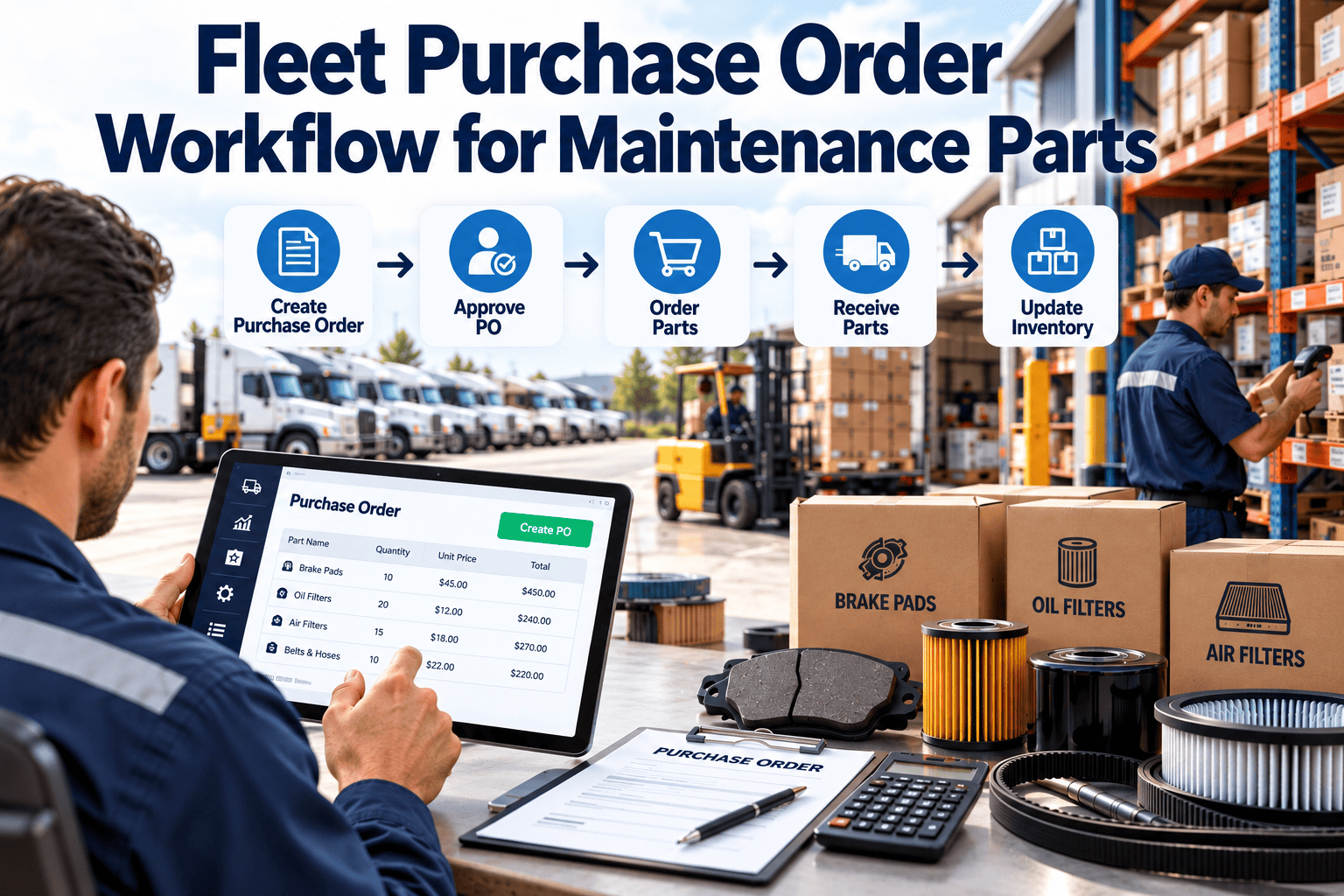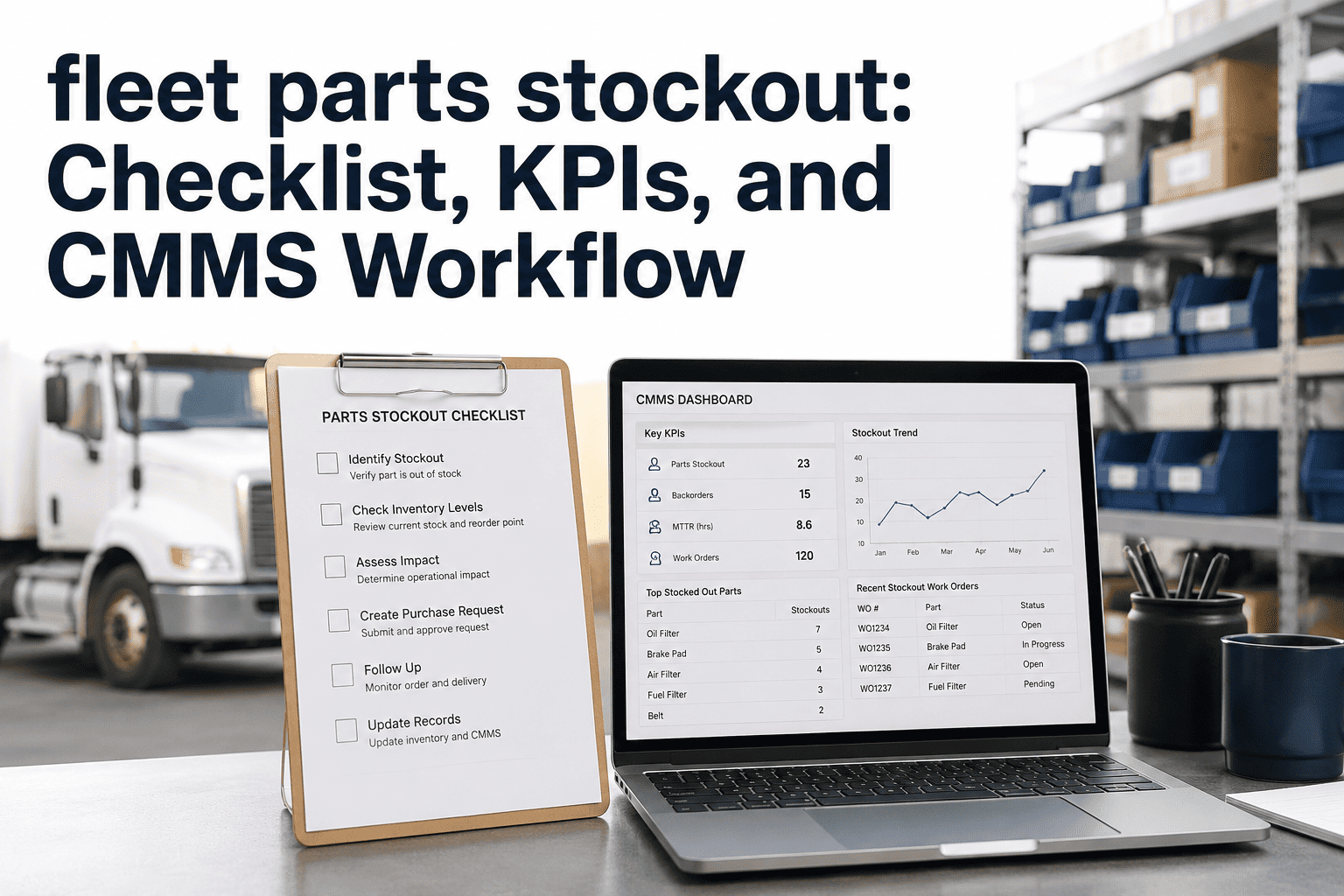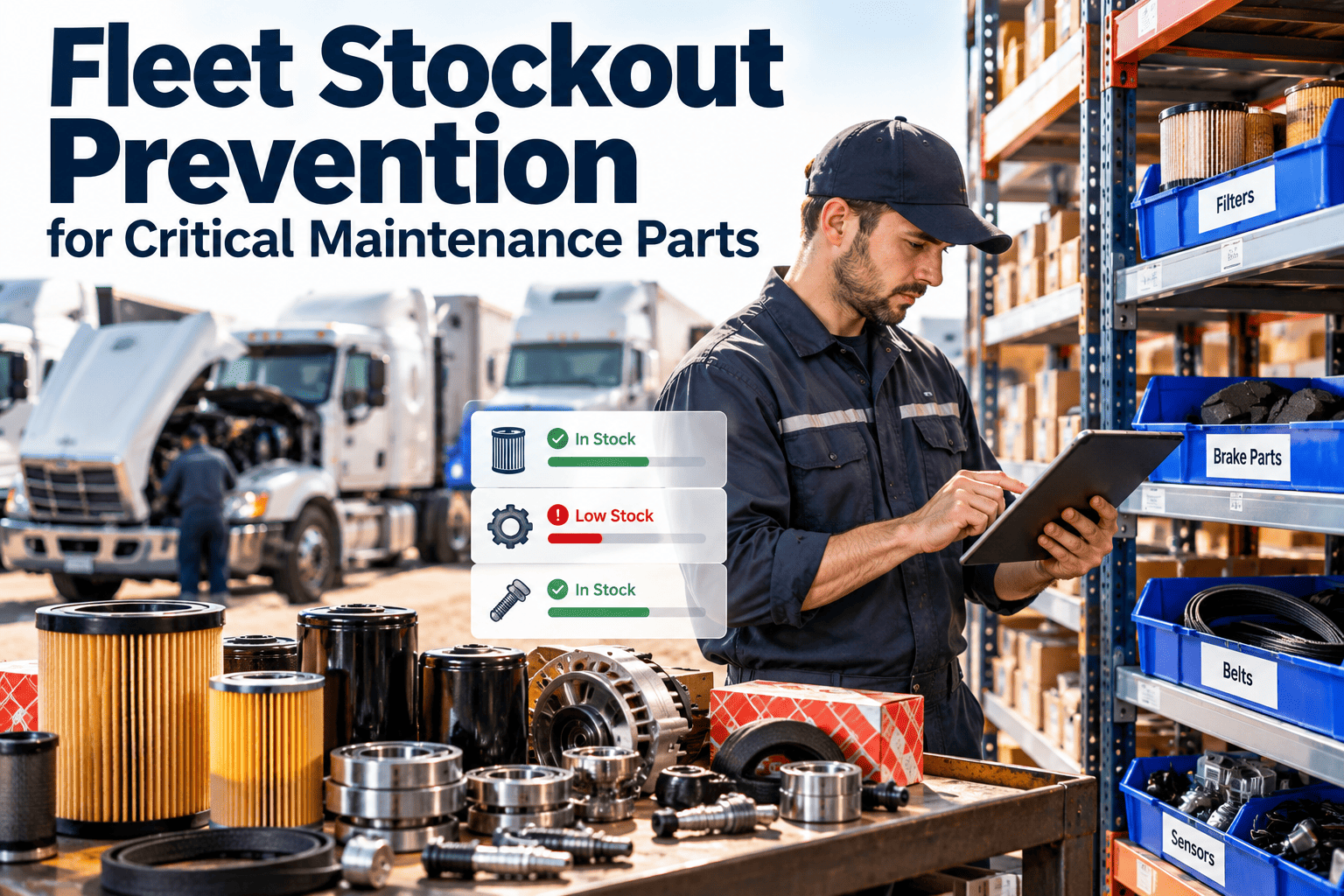
A missing brake chamber, alternator, or air dryer cartridge rarely looks like a purchasing problem at first. It looks like a truck waiting in a bay, a driver without a unit, and a dispatcher reshuffling loads. Fleet stockout prevention for critical maintenance parts is the practice of making sure the right part is on the shelf, or reliably on its way, before a work order needs it. It links inspections, preventive maintenance, usage history, and purchasing into one loop. This guide shows how fleet teams build that loop, and how a maintenance-first CMMS such as Oxmaint keeps parts data tied to real repair work.
Fleet Stockout Prevention for Critical Maintenance Parts
Stop vehicles from waiting on parts. Connect inspections, preventive maintenance, and work orders to stock levels so critical items are reordered before the shelf is empty.
What a Stockout Really Costs a Fleet
Hour 0: The vehicle goes down
A driver defect report or a failed inspection item becomes a work order, and the technician finds the part is not in stock.
Hour 2: The search begins
Someone checks other shop locations, calls the local dealer, or asks a supplier for a same-day price. Each call interrupts other work.
Day 1: A substitute is arranged
Dispatch assigns a spare unit, rents one, or reassigns loads. Service commitments, driver hours, and customer trust all take a hit.
Day 2: Premium buying kicks in
Expedited freight, retail pricing, and counter purchases replace negotiated supplier pricing. Spend rises without improving the repair.
Day 3 and beyond: Compliance exposure
If a defect is deferred or a unit returns to service with a temporary fix, safety and inspection risk grows.
Root Causes Behind Repeated Stockouts
Reactive parts room
- Reorder points set once and never reviewed
- Parts issued without a work order reference
- Usage history scattered across notebooks and spreadsheets
- Same part stocked under different names or numbers
- Upcoming preventive maintenance not linked to parts demand
- Supplier lead time assumed rather than measured
Controlled parts room
- Reorder points tied to usage and measured lead time
- Every issue recorded against a work order and asset
- Consumption history visible by part, vehicle, and failure type
- One clean part record with approved alternates
- Scheduled PM tasks reserve kits ahead of the service date
- Supplier performance reviewed on a regular cadence
The hidden contributors
Unrecorded usage
When technicians grab parts without logging them, system stock stays high while the shelf is empty. Counts and records drift apart.
Inspection blind spots
Defects found late create urgent demand. Defects found early create planned demand, which is far easier to stock for.
Mixed fleet complexity
Multiple makes, models, and model years multiply part numbers. Without standardization, safety stock gets spread too thin.
Classify Parts by Criticality Before Setting Stock Levels
| Part class | Typical examples | If it stocks out | Suggested stocking approach |
|---|---|---|---|
| Safety critical | Brake components, steering parts, tires on steer axles, lighting required for roadworthiness | Vehicle cannot legally or safely return to service | Hold safety stock at each shop, review often |
| Downtime critical | Starters, alternators, air dryers, fuel filters, belts, sensors | Vehicle is idle until the part arrives | Min/max levels based on usage and lead time |
| PM consumables | Oil, oil filters, air filters, wiper blades, fluids | Scheduled service is delayed or incomplete | Kit by service interval and reserve ahead of due dates |
| Long lead items | Specialty components, body panels, uncommon model parts | Extended downtime, sometimes weeks | Stock one spare for high-risk units, or pre-arrange supplier agreements |
| Low impact | Cosmetic trim, non-essential accessories | Minor inconvenience | Order on demand |
Risk Matrix: Usage Rate vs. Supplier Lead Time
Fast use, short lead time
Keep lean min/max levels and reorder frequently. Low risk if records are accurate.
Fast use, long lead time
Highest risk. Hold generous safety stock and review reorder points often.
Slow use, short lead time
Buy on demand from a reliable supplier. Avoid tying up cash on the shelf.
Slow use, long lead time
Hold a minimal spare only if the part is safety or downtime critical for the unit.
Reorder Logic That Fleet Teams Can Maintain
- 1
Measure real usage
Use issued quantities from closed work orders, not purchase history. Purchases show what you bought, not what you consumed.
- 2
Record true lead time
Track the days between order and receipt for each supplier. Use the typical delay, and note how often it varies.
- 3
Add safety stock by criticality
Safety critical and downtime critical parts get larger buffers. Low impact parts may get none.
- 4
Account for scheduled demand
Upcoming preventive maintenance, seasonal changes, and known campaigns increase demand in ways averages miss.
- 5
Verify with cycle counts
Regular counts of high-risk items keep system quantities honest, which every other step depends on.
A Sourcing Ladder for Critical Parts
Rung 1: Own shelf stock
Parts held at the shop for high-usage and safety critical items. Fastest and most predictable, but ties up cash.
Rung 2: Primary supplier delivery
Negotiated pricing with scheduled or next-day delivery. Record promised and actual lead times for every order.
Rung 3: Secondary supplier or approved alternate
A backup source and an engineering-approved alternate part number, documented before they are needed.
Rung 4: Inter-shop transfer
Borrow from another location in the network. This only works if every location can see the same inventory.
Rung 5: Emergency purchase
Counter or expedited buying, used sparingly and always reviewed afterward to find out why earlier rungs failed.
Common Mistakes in Fleet Parts Planning
Reordering from purchase history
Purchases include emergency buys and returns. Consumption from closed work orders is the cleaner signal.
Treating all parts equally
Applying the same safety stock to a wiper blade and a brake valve wastes money and still leaves risk where it matters.
Ignoring vehicle age and mix
Older units and rare models drive unusual demand. Review the fleet roster when a new model or batch of vehicles arrives.
Skipping root cause on repeat stockouts
If the same part runs out twice, the reorder point, the record, or the supplier needs attention, not just another rush order.
Keeping the parts room separate from maintenance
When inventory sits in its own spreadsheet, technicians and planners never see the same numbers. Shared records keep everyone aligned.
Trends worth watching
- Telematics and fault code data that point to likely parts needs before breakdowns happen
- Condition-based triggers that replace fixed intervals for components with variable wear
- Mobile work order capture that records parts usage at the vehicle, not hours later
- Growing electrified and mixed-powertrain fleets that add new, slower-moving part families
See Parts Availability Before the Work Order Needs It
Connect Inspections and PM to Parts Demand
Use preventive maintenance as a demand calendar
- Build parts kits for each service interval, such as filters and fluids for a standard PM
- Check kit availability when the PM schedule is generated, not on the day of service
- Flag upcoming PM clusters, such as many units reaching the same mileage together
- Review repeat failures so that recurring parts needs are stocked, not discovered
Weekly Stockout Prevention Checklist
Review parts at or below reorder point
Confirm that purchase requests exist and delivery dates are known.
Check open work orders waiting on parts
Look for patterns in what is blocking repairs and which suppliers are slow.
Compare upcoming PM against stock
Look ahead two to four weeks and reserve or order kits that are short.
Count a sample of critical bins
Rotate through safety and downtime critical items and correct mismatches immediately.
Review emergency purchases
Each counter or expedited buy is a clue. Ask why the part was not stocked.
KPIs That Show Whether Stockout Prevention Is Working
| Metric | What it tells you | How to read it |
|---|---|---|
| Stockout frequency | How often a requested part was not available | Falling trend means better reorder logic |
| Parts fill rate | Share of requested items issued from stock on first request | Segment by criticality class |
| Downtime waiting on parts | Vehicle hours idle because parts were missing | Most direct measure of operational impact |
| Emergency purchase share | Portion of parts spend bought outside normal channels | High share points to planning gaps |
| Inventory accuracy | Match between system quantity and physical count | Low accuracy undermines every reorder trigger |
| Inventory turns | How quickly stock is consumed and replaced | Watch for both overstock and shortages |
| Supplier on-time delivery | How reliably vendors meet promised lead time | Feeds safety stock and sourcing decisions |
How Oxmaint Supports Fleet Parts Control
Who Owns Stockout Prevention?
| Role | Responsibility | Key action |
|---|---|---|
| Technician | Accurate parts usage on every work order | Record issued parts at the time of repair and flag missing items immediately |
| Maintenance planner | Match upcoming PM and repairs to stock | Reserve kits and raise purchase requests before the service date |
| Parts coordinator | Inventory accuracy and supplier follow-up | Run cycle counts, confirm delivery dates, and update lead times |
| Fleet manager | Balance downtime risk against inventory cost | Review KPIs and approve safety stock for critical classes |
Frequently Asked Questions
What is the first step in preventing parts stockouts?
Rank parts by criticality and clean up inventory records. Reorder logic only works when quantities and usage data are accurate.
How much safety stock should a fleet hold?
It depends on usage variability, supplier lead time, and the cost of downtime. Safety critical parts justify a larger buffer than low impact items.
Can preventive maintenance reduce stockouts?
Yes. Scheduled services create predictable demand, so kits can be reserved early. Start with a PM schedule and link it to parts.
Why does system stock differ from the shelf?
Usually because parts are issued without a work order or counts are infrequent. Consistent issue records and cycle counts close the gap.
Does a CMMS replace purchasing?
No. It gives purchasing better signals, such as usage, low stock, and upcoming demand. See a demo of how those signals connect.