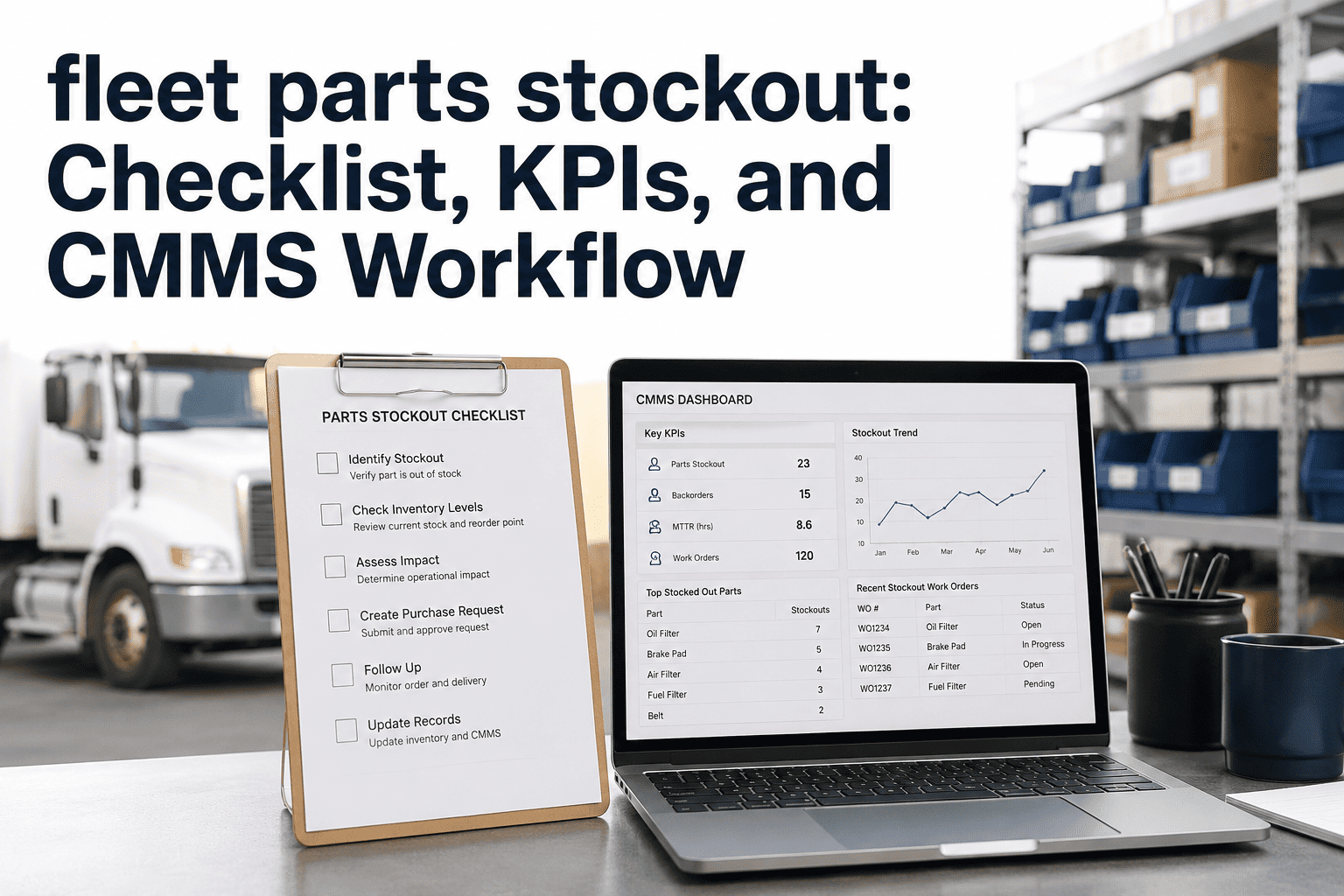
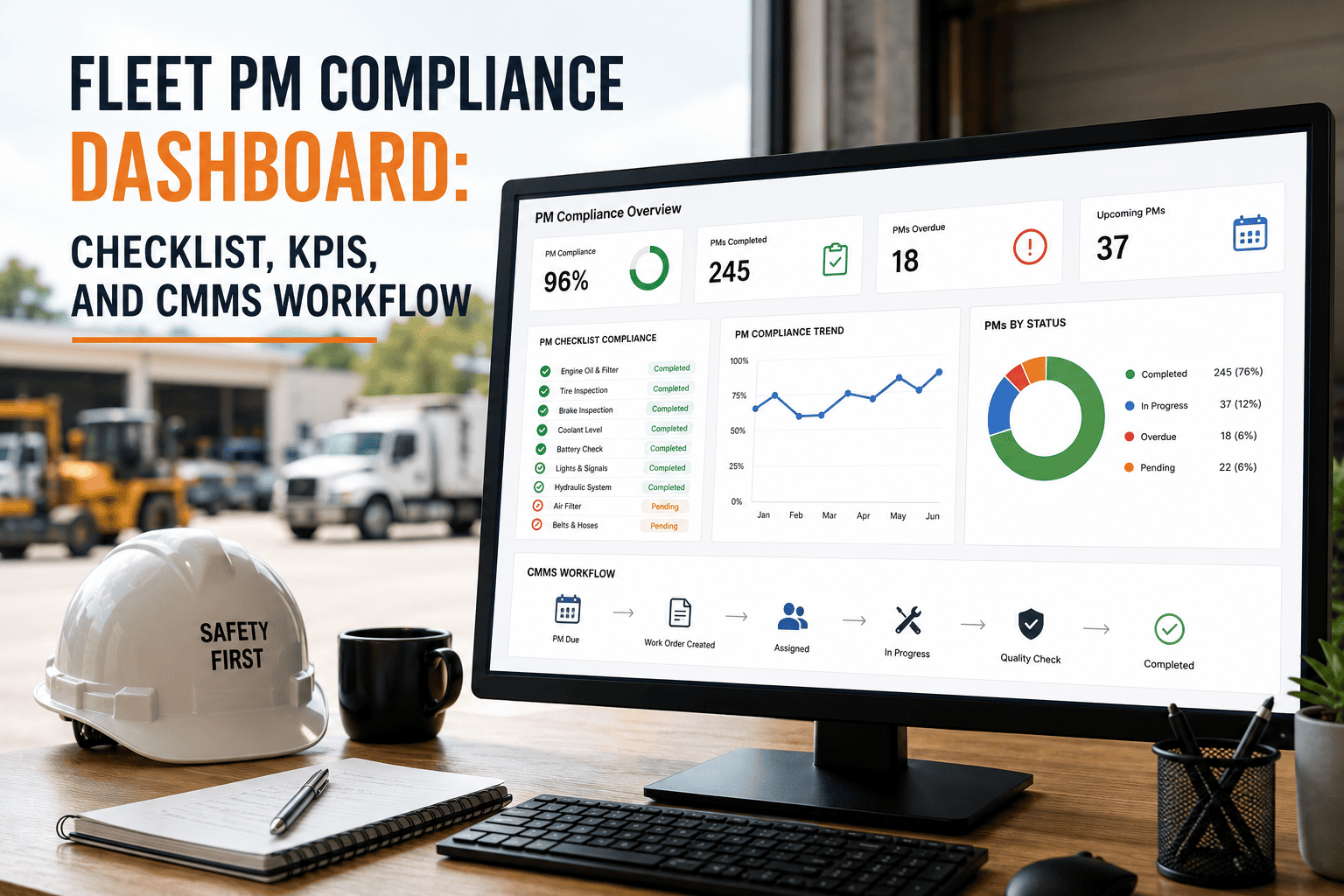
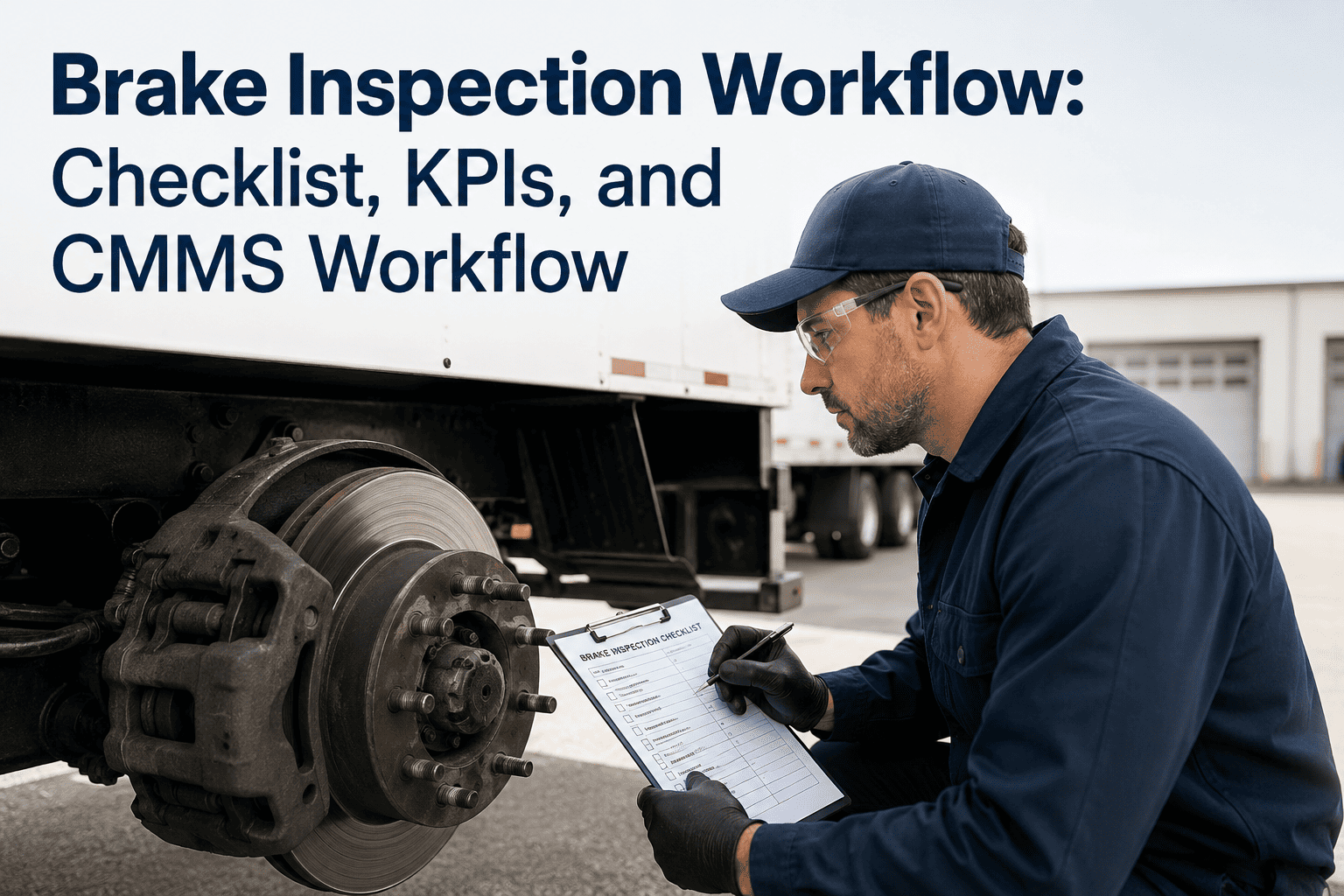
A fleet that runs out of the oil filter for its most common engine platform mid-month does not have a supply chain problem — it has a planning failure. Parts stockouts force two equally damaging outcomes: vehicles operate past their PM intervals waiting for parts, or they sit idle accumulating downtime costs while a replacement part is sourced at a premium. Fleet parts stockout management is the systematic prevention of both outcomes through minimum stock level discipline, supplier lead-time tracking, and CMMS-driven reorder alerts that fire before the shelf is empty. This checklist gives fleet maintenance managers and parts room supervisors a complete parts stockout prevention framework covering inventory levels, reorder triggers, supplier performance, and CMMS workflow — structured so every stock event is traceable and every reorder is proactive. Use OxMaint's parts inventory management module to automate reorder alerts, track supplier lead times, and link parts availability directly to your PM schedule before the next stockout grounds a vehicle.
Parts Inventory · CMMS Workflow · Fleet Maintenance
Fleet Parts Stockout: Checklist, KPIs, and CMMS Workflow
A structured parts stockout prevention framework for fleet maintenance teams — covering inventory audits, reorder triggers, supplier lead times, and CMMS workflows that stop stockouts before they ground vehicles or push PM intervals past their limits.
68%
of unplanned downtime events involve a parts availability delay
3.2x
higher emergency purchase cost vs planned reorder for the same part
40%
of PM overruns are caused by parts unavailability, not scheduling gaps
Risk Overview
What a Parts Stockout Actually Costs Your Fleet
PM Interval Overrun
Vehicle operates 600+ miles past its PM due point because the oil filter is out of stock. Warranty voided. Wear rate accelerates. DOT inspection risk increases.
Emergency Sourcing Costs
Same-day delivery and local dealer markup for a $12 filter costs $40–80. Multiplied across a fleet of 50 vehicles, emergency purchasing adds thousands per month.
Revenue-Loss Downtime
Vehicle sits in the shop waiting for a part that should have been on the shelf. Every hour of unscheduled downtime is a missed delivery, load, or service call.
Supplier Relationship Damage
Reactive emergency orders undermine negotiated pricing agreements and signal poor planning to suppliers — reducing your priority status for future allocations.
Category 01
Inventory Level Audit Checklist
Monthly inventory audits are not a counting exercise — they are a minimum stock level validation. Every item below its reorder point at the time of the audit represents a stockout risk that is 30 days closer than it was last month. The audit catches drift before it becomes a grounded vehicle.
High-turnover consumables counted and compared to minimum stock levels — oil filters, air filters, fuel filters, cabin filters, and belts counted against minimum stock level; any item below minimum generates a purchase order before the stock reaches zero; minimum stock set to cover 6 weeks of average consumption based on PM schedule volume
M Parts Room Supervisor · Monthly consumables audit log
Brake components inventory verified against upcoming PM schedule — brake pads, rotors, drums, and slack adjusters counted; brake component consumption forecasted against the number of brake PMs scheduled in the next 60 days; brake components ordered to arrive at least 2 weeks before the first scheduled brake PM where current stock is insufficient
M Fleet Maintenance Manager · Brake component inventory review
Lighting and electrical components inventoried — headlamp assemblies, marker lights, turn signal bulbs, and fuses counted by vehicle platform; lighting violations are among the most common roadside inspection citations; maintaining a minimum 30-day lighting stock level prevents a $2 bulb from generating a DOT out-of-service order
M Parts Room Supervisor · Lighting inventory log
Tyre and wheel inventory reviewed by size and platform — available spare tyres counted by size, condition, and tread depth; tyre consumption rate calculated from the previous 3 months; tyre orders placed to maintain a minimum 2 spare tyres per common size in stock; seasonal tyre changeover inventory confirmed 60 days before the changeover date
M Fleet Maintenance Manager · Tyre inventory review
Fluids and lubricants confirmed against next 30-day PM consumption — engine oil, transmission fluid, coolant, brake fluid, DEF, and hydraulic fluid quantities confirmed; fluid consumption calculated from the number and type of PMs scheduled in the next month; orders placed to maintain a minimum 4-week supply; fluid storage containers inspected for correct labelling and seal integrity
M Parts Room Supervisor · Fluid inventory and storage check
Category 02
CMMS Reorder Workflow Checklist
A CMMS that tracks work orders but does not track parts inventory is half a maintenance system. Linking parts consumption to PM work orders creates automatic reorder triggers that fire when the last unit of a part is consumed — not when a technician discovers the empty shelf on the day a vehicle rolls in.
Parts linked to PM work order templates in CMMS — every PM work order template in the CMMS includes a parts list with quantities; when a PM work order is opened, the system reserves the required parts from inventory and flags when stock falls below the reorder point; parts reservation prevents two technicians from pulling the last unit of a part for separate work orders on the same day
M CMMS Administrator · PM template parts linkage audit
Reorder point and reorder quantity set for every stocked part — reorder point calculated as (average daily consumption × supplier lead time in days) + safety stock; reorder quantity set to the economic order quantity for that part based on storage space, carrying cost, and volume discount thresholds; reorder parameters reviewed and updated quarterly as PM volume and fleet composition changes
Q Fleet Maintenance Manager · Reorder parameter review
CMMS reorder alerts reviewed and actioned within 24 hours — all pending reorder alerts in the CMMS reviewed daily by the parts room supervisor; purchase orders generated for all parts at or below reorder point before end of business on the day the alert fires; outstanding purchase orders tracked in CMMS with expected delivery date and supplier confirmation number
D Parts Room Supervisor · Daily reorder alert review
Parts consumption recorded against work orders at point of use — technicians record every part consumed against the specific work order in CMMS at the time of use, not at end of shift or end of day; real-time inventory accuracy depends on point-of-use recording; inventory inaccuracies of more than 5% between physical count and CMMS quantity trigger an immediate reconciliation
D Technicians · Work order parts consumption log
OxMaint links your parts inventory directly to PM work order templates — so when a PM is scheduled, parts are reserved automatically, reorder alerts fire before the shelf is empty, and your maintenance manager sees parts availability before dispatching a work order, not after a technician goes looking for a filter that isn't there.
Category 03
Supplier Performance Checklist
The reorder point calculation is only as accurate as the supplier lead time it is built on. A supplier who quotes a 3-day lead time but delivers in 7 days three times out of five has a real lead time of 7 days — and a reorder point calculated on 3 days will produce stockouts every time that supplier is slow. Monthly supplier performance review keeps the reorder model honest.
Supplier on-time delivery rate calculated for the month — number of purchase orders delivered on or before the promised delivery date divided by total purchase orders placed; any supplier with an on-time delivery rate below 85% in a given month is flagged for review; on-time delivery rate below 75% for two consecutive months triggers a supplier qualification review and secondary supplier sourcing
M Fleet Maintenance Manager · Supplier on-time delivery report
Parts quality rejection rate tracked and communicated to supplier — defective, incorrect, or non-conforming parts received during the month counted and expressed as a percentage of total parts received from that supplier; supplier notified in writing of every quality rejection with the part number, purchase order number, and defect description; quality rejection rate above 2% triggers a corrective action request to the supplier
M Parts Room Supervisor · Supplier quality rejection log
Secondary supplier relationships established for all critical single-source parts — any part with only one qualified supplier identified; secondary supplier sourced, qualified, and added to the approved vendor list before a primary supplier failure creates a stockout; secondary supplier order placed at least once per year to maintain an active account and confirm lead times are still accurate
Q Fleet Maintenance Manager · Single-source parts risk review
KPIs
Six KPIs That Prove Your Parts Stockout Programme Is Working
| KPI |
How to Measure |
Target |
Frequency |
| Parts Stockout Rate |
Work orders delayed by parts unavailability / Total work orders |
0% |
Monthly |
| Inventory Accuracy |
Parts with correct CMMS quantity / Total stocked parts (physical count) |
Above 97% |
Monthly |
| Reorder Alert Response Time |
Average hours from CMMS reorder alert to purchase order issued |
Under 24 hrs |
Weekly |
| Emergency Purchase Rate |
Emergency/same-day purchases / Total purchases by line item |
Below 5% |
Monthly |
| Supplier On-Time Delivery |
POs delivered on or before promised date / Total POs |
Above 90% |
Monthly |
| Parts-Caused PM Overrun Rate |
PM overruns attributed to parts unavailability / Total PM overruns |
0% |
Monthly |
FAQs
Frequently Asked Questions
How do I calculate the right reorder point for fleet parts?
What parts should every fleet carry as minimum stock?
At minimum, every fleet should stock: engine oil filters, air filters, fuel filters, brake pads for each common axle configuration, lighting components (headlamps, markers, signals), belts and tensioners, and coolant and engine oil. The specific quantities depend on fleet size, PM interval frequency, and supplier lead times for each item.
Book a demo to see how OxMaint builds a minimum stock model from your existing PM schedule data.
How does a CMMS prevent parts stockouts versus a spreadsheet?
A spreadsheet requires manual updates and does not connect to work orders. A CMMS deducts inventory when a technician records parts used on a work order, fires a reorder alert when stock hits the reorder point, and can reserve parts against upcoming scheduled PMs before the work order is even opened. Stockouts on a spreadsheet system are discovered when the shelf is empty; stockouts on a CMMS are prevented because the alert fires before the last unit is consumed.
What is the cost of a parts stockout beyond the emergency purchase price?
Beyond the 2–5x emergency purchase premium, a parts stockout generates: technician idle time while waiting for the part, vehicle downtime revenue loss, potential PM overrun compliance exposure, and customer or operations disruption if the vehicle is in active service. For a Class 8 truck generating $1,800 per day in revenue, even 4 hours of parts-caused downtime costs more than the entire annual inventory carrying cost for the missing part.
How often should fleet parts inventory be physically counted?
High-turnover consumables should be cycle-counted weekly; less frequent items monthly. A full physical inventory count should be conducted quarterly to reconcile CMMS quantities against actual shelf counts. Any discrepancy greater than 5% between the CMMS and the physical count triggers an immediate investigation to identify whether the variance is caused by unrecorded consumption, theft, misplacement, or data entry errors.
OxMaint's cycle count module structures the weekly count process by bin location.
Eliminate Parts Stockouts
Parts on the Shelf. PMs on Schedule. Zero Stockout Surprises.
OxMaint connects your PM schedule to your parts inventory — automatically reserving parts when PMs are scheduled, firing reorder alerts before the shelf empties, and giving your maintenance manager a daily parts availability dashboard that turns stockout prevention from a manual job into an automated workflow.