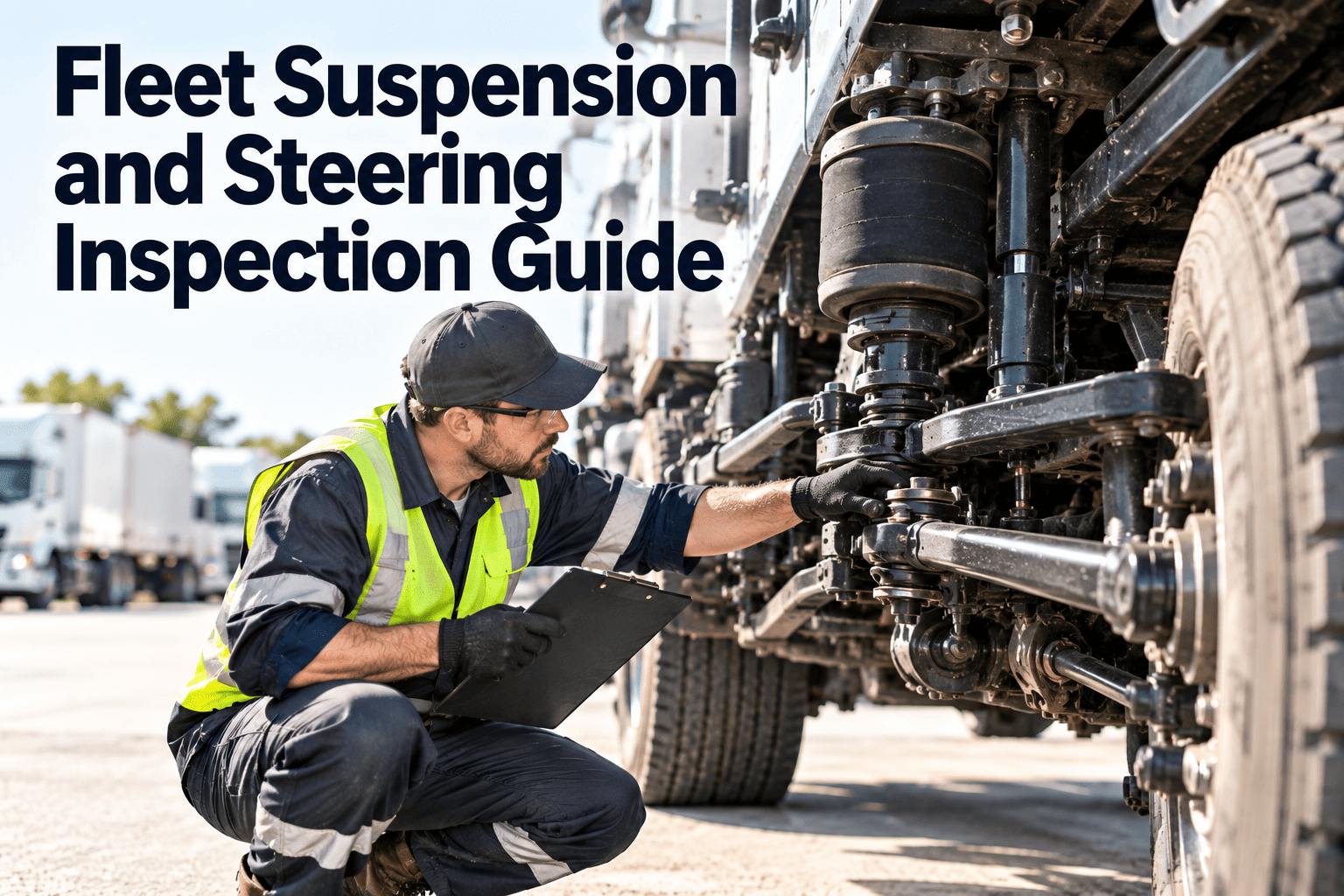
Suspension and steering wear is easy to normalize. A slight pull, a little extra play in the wheel or a new noise over bumps becomes part of how the truck drives, until a tie rod end separates or a spring hanger cracks. These systems carry the vehicle's weight and control its direction, so defects here are both safety issues and expensive tire and alignment issues. This guide covers what to inspect, how to rank findings, and how to keep proof with a fleet CMMS.
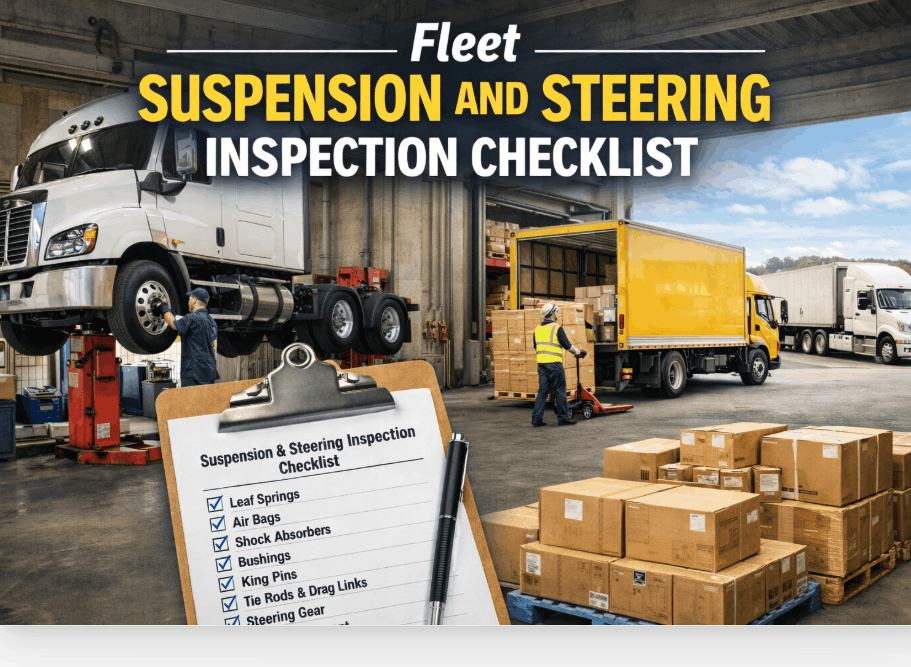
Fleet Suspension and Steering Inspection Guide
A zone-by-zone method for finding wear early, ranking defects by risk and recording every repair against the vehicle.
Why these two systems deserve their own inspection routine
Loss of steering control or a broken spring component can reduce the driver's ability to stop or steer.
Worn parts change wheel angles, and uneven tire wear is often the first visible symptom.
Federal rules on suspension and steering appear in 49 CFR Part 393, and inspectors check them roadside.
Inspect by zone, not by memory
Splitting the vehicle into zones gives technicians and drivers a repeatable route. Each zone becomes a checklist section in your inspection workflow.
Steering wheel and column
- Free play at the wheel with the engine running on power steering vehicles.
- Column looseness, universal joint wear and shaft play.
- Power steering fluid level, condition and visible leaks.
Steering gear and linkage
- Pitman arm, drag link, tie rod ends and cross tube for play or damaged boots.
- Gear box mounting bolts, seals and leaks.
- Cotter pins, castle nuts and clamp hardware in place.
Springs, air bags and shocks
- Leaf springs for cracks, shifted leaves, missing pieces or broken center bolts.
- Air springs for cracks, chafing, leaks and correct ride height.
- Shock absorbers for leakage, damaged bushings and loose mounts.
Axle attachment and hangers
- U-bolts, torque rods, radius rods and hanger brackets for cracks, elongated holes or loose fasteners.
- Bushings for splitting, extrusion or displacement.
- Frame areas near hangers for cracks or corrosion.
Wheel ends and kingpins
- Wheel bearing play, hub seal leaks and lubricant condition.
- Kingpin and bushing play using the OEM method.
- Tire wear patterns that point to alignment or component wear.
Reading the symptoms
Drivers notice symptoms before technicians see parts. Capture the symptom in the pre-trip report, then let the shop trace the cause.
| Driver report | Possible causes to check | Inspection focus |
|---|---|---|
| Pulls to one side | Uneven tire pressure, alignment change, brake drag, weak spring | Tires, brakes, alignment, spring and ride height |
| Loose or wandering steering | Worn tie rod ends, drag link joints, kingpins or steering gear | Linkage play, kingpins, gear box |
| Vibration at highway speed | Wheel imbalance, worn shocks, loose components, wheel bearing wear | Wheel ends, shocks, mounting hardware |
| Clunk over bumps | Worn bushings, loose U-bolts, damaged shock mounts | Bushings, hangers, U-bolts |
| Uneven or feathered tire wear | Toe or camber change from worn parts | Linkage, kingpins, alignment measurement |
| Leaning or uneven ride height | Broken leaf, air leak, failed height valve | Springs, air system, valves |
Turn every steering complaint into a tracked repair
Create a suspension and steering checklist, attach it to your vehicle classes and see reported defects flow straight to work orders.
Ranking findings by risk
A clear severity scale stops small findings from clogging the shop and keeps critical ones from waiting. Adapt the wording to your own policy and to OEM and regulatory limits.
Minor seepage, light bushing wear, cosmetic corrosion. Recheck at the next service.
Measurable play within limits, worn shocks, early tire wear. Plan the repair within a set window.
Excess steering play, cracked components, air leaks that prevent normal ride height.
Broken or missing spring members, separated linkage, loose steering gear, or anything the out-of-service criteria prohibit.
Out-of-service conditions are defined by CVSA criteria and regulation, so keep the current version available to your inspectors.
How often to inspect
Driver walk-around: leaks, ride height, tire condition, steering feel, loose or missing parts.
Technician checks linkage play, grease points, shock condition, hangers and hardware.
Deeper inspection of kingpins, wheel bearings, alignment and axle attachment on a distance or time basis from OEM guidance.
Formal inspection recorded and retained under applicable rules.
Practical checks a technician can standardize
Before lifting the vehicle
- Record odometer and driver complaints.
- Check tire pressure and note wear patterns.
- Measure steering free play with the wheels straight.
With the axle supported
- Check wheel bearing and kingpin play using the OEM procedure.
- Inspect linkage boots, joints and clamps.
- Look for cracked welds and elongated bolt holes.
Before release
- Torque fasteners to specification.
- Lubricate points that require it.
- Road test, then record results and sign off.
Common gaps that let problems repeat
Metrics that show whether the program works
Steering and suspension defects per 100 inspections
Shows whether findings are rising or falling by vehicle class.
Repeat repairs on the same component
Reveals poor parts quality, missed root causes or driving conditions.
Tire replacements linked to alignment or wear
Ties chassis condition to tire spend.
Time from defect report to repair
Measures shop response to safety-critical findings.
Using Oxmaint for suspension and steering work
- Build inspection checklists per vehicle class, with pass, fail and measurement fields.
- Convert failed items into corrective work orders with priority and due dates.
- Schedule preventive maintenance by mileage, hours or calendar interval, including greasing and periodic deep inspections.
- Track parts such as tie rod ends, bushings, shocks and air springs in inventory, and see usage by unit.
- Review each asset's history to spot repeat failures and plan replacements around budget.
Frequently asked questions
How often should steering linkage be checked?
Drivers look on every trip, and technicians check play and lubrication at each preventive maintenance service.
Which defects should take a vehicle out of service?
Follow CVSA out-of-service criteria and OEM limits, such as broken spring members or separated steering components.
Can uneven tire wear point to suspension problems?
Yes. Worn linkage, kingpins or bushings change wheel angles, so record wear patterns and track them by asset.
Should alignment follow every steering repair?
Often, yes. Add an alignment check as a linked task on the work order for the relevant repairs.
How can we see repeat suspension failures?
Review component history by unit and class. You can schedule a demo to see reports built for this.
Keep steering and suspension defects from reaching the road
Bring checklists, measurements, work orders and parts history into one place, so every finding has an owner and an end date.