Water pump failure is one of the costliest surprises on a diesel fleet's maintenance calendar — a single seized pump can push engine temperature past the safe limit within minutes and turn a $600 repair into a full rebuild. The good news is that pumps rarely fail without warning: coolant temperature variance and pump feedback voltage both begin drifting away from their normal baseline days before the impeller actually seizes. Fleets that track these two signals together, instead of watching each one in isolation, catch the failure while it is still a scheduled repair instead of a roadside breakdown. This guide walks through the exact sensor combination, the day-by-day failure timeline, and how to turn the alert into a work order — or see the same signature running live on your own fleet data at app.oxmaint.ai.
The pump doesn't fail suddenly. The data just stops being watched.
A rising coolant temperature variance paired with a falling pump feedback voltage is a documented pre-failure signature — not a coincidence. Fleets that monitor both channels together catch the wear stage while the fix is still a $700 part swap.
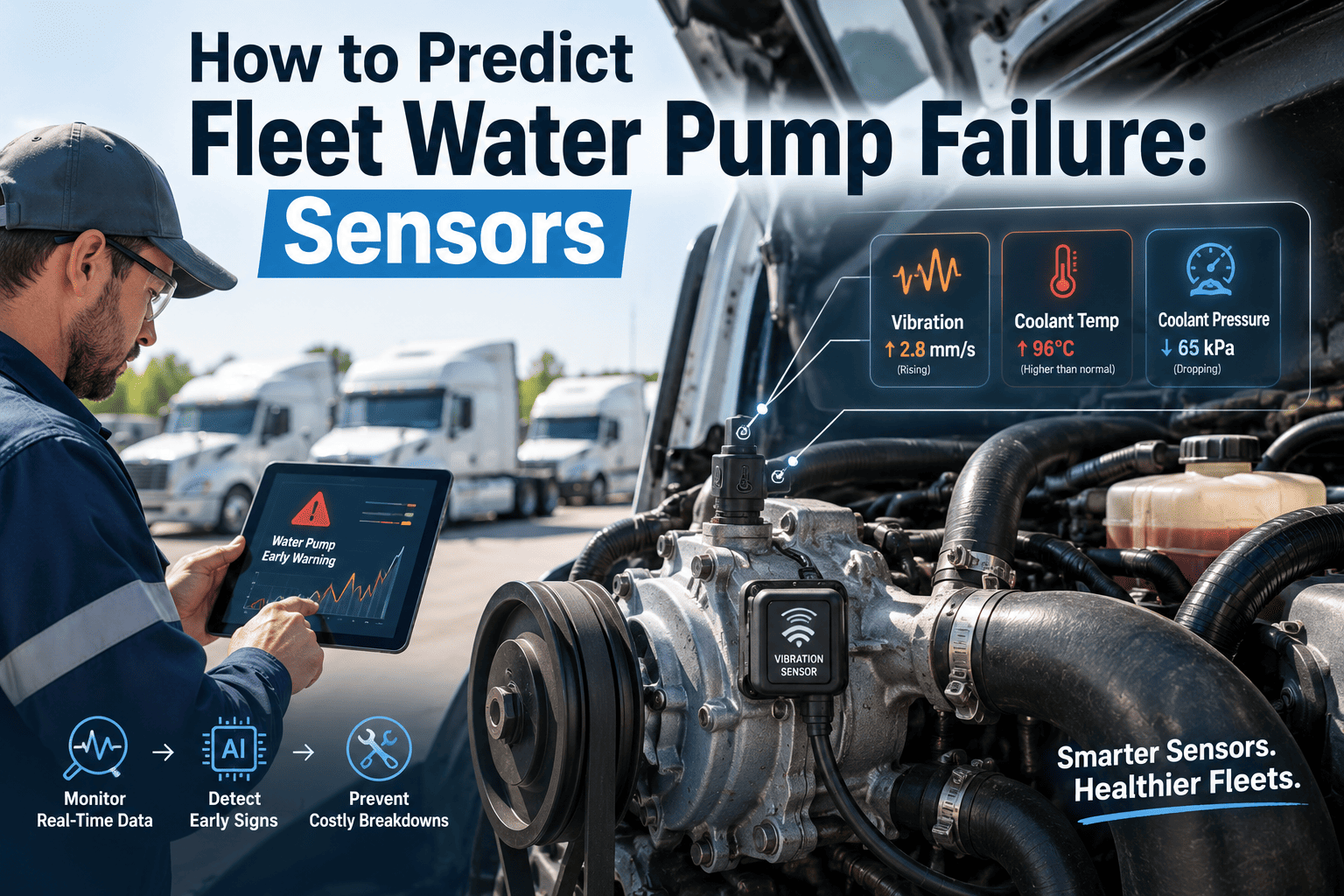
Three sensor channels, one early warning
No single sensor catches a dying water pump reliably on its own. Coolant temperature swings for a dozen harmless reasons, and voltage on an electric pump circuit fluctuates with ambient load. The signature only becomes reliable when the three channels below are scored as one pattern.
Coolant temperature variance
A sustained rise of roughly 12% in temperature variance while running above 85°F ambient signals the impeller is no longer moving a consistent volume of coolant per revolution — the first sign of bearing or seal wear.
Pump feedback voltage drop
On PWM-controlled electric pumps, the feedback line reports actual motor speed against the ECM's target speed. A widening gap between commanded and reported voltage means the motor is straining to hold speed — usually bearing drag or a degrading circuit board.
Coolant pressure response lag
A roughly 3% slowdown in how fast system pressure responds to RPM changes, paired with a small stabilized oil pressure dip, confirms the flow restriction is mechanical and not a one-off sensor glitch.
See this exact signature on your own trucks
Oxmaint layers coolant temperature, pump feedback voltage, and pressure response into one health score per vehicle — with a work order triggered automatically the moment the pattern crosses threshold.
What the 21-day window actually looks like
Every stage below is a real decision point. Catch the pattern early and it is a parts-counter transaction. Miss all four checkpoints and it is a tow truck.
Variance drift begins
Coolant temperature variance and feedback voltage begin trending outside the vehicle's own baseline. No dash light, no DTC — this is the window where a scheduled bay visit costs the least.
Efficiency drop crosses threshold
Pump efficiency has typically fallen around 15% from baseline by this point. Warm-up time lengthens and temperature swings become noticeable to a driver paying close attention.
Pressure response lags
Coolant pressure now visibly lags RPM changes and stabilized oil pressure has dipped slightly. Most drivers still notice nothing unusual from the seat.
Weeping seal or intermittent overheat
Coolant loss from a weeping shaft seal or brief temperature spikes on grades start to appear. This is usually the first point a fault code fires.
Seizure and overheat event
Coolant circulation stops. Cylinder head and gasket damage can occur within minutes, and a roadside failure now means a tow, a rental unit, and a multi-day shop wait for parts.
What you actually need wired up
None of this requires ripping out your existing telematics hardware. Most Class 3–8 trucks already report the base signals over the OBD-II or J1939 bus — the work is in fusing them into one score.
Coolant temperature sensor
Standard OBD-II / J1939 PID, already present on nearly every diesel engine built after 2010.
Coolant pressure sensor
Reports the response-time signal that separates a real mechanical restriction from a sensor spike.
Voltage or current clamp
Required on electric and PWM-controlled pumps to compare commanded versus reported motor speed.
Telematics gateway
Streams all three channels to a CMMS in real time instead of waiting for the next scheduled download.
Cost escalation by the day you catch it
The repair itself doesn't get harder as the days pass — the damage around it does. This is the same failure, priced at four different checkpoints.
| Checkpoint | What's failing | Typical repair cost |
|---|---|---|
| T-21 to T-14 days | Scheduled water pump replacement | $600 – $900 |
| T-7 to T-3 days | Pump plus hose and seal repair | $1,200 – $2,500 |
| Overheat, engine still runs | Cylinder head or gasket repair | $8,000 – $22,000 |
| Roadside seizure | Engine rebuild, tow, and downtime | $30,000 – $50,000+ |
Turn the signature into a scheduled work order
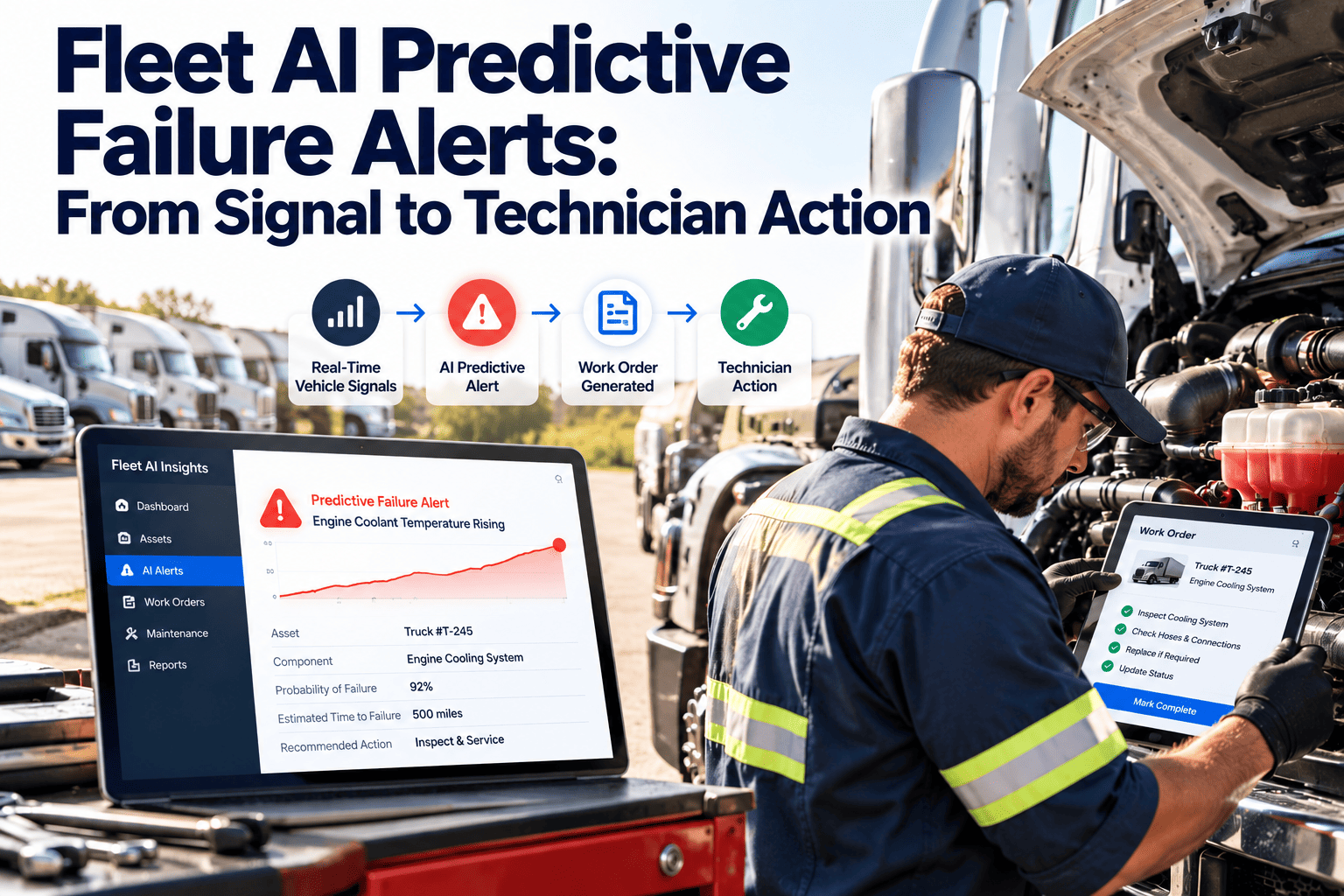
Oxmaint's CMMS reserves the part and drafts the work order the moment your fleet's coolant and voltage baseline is breached — before a driver ever sees a warning light.
Questions fleet managers ask about this signature
Does this work on belt-driven pumps, not just electric ones?
Yes. Belt-driven pumps rely mainly on the coolant temperature and pressure response signals, since there's no feedback voltage to read. Electric and PWM-controlled pumps add the voltage channel as a stronger, earlier signal. See both configurations at app.oxmaint.ai.
Can I use hardware I already have, or do I need new sensors?
Most trucks built after 2010 already report coolant temperature over the J1939 bus. Coolant pressure and pump voltage sometimes need an added sensor or clamp, typically a low-cost retrofit per vehicle.
How is this different from just watching the check-engine light?
A fault code fires only after a threshold is already broken, often just days before failure. The variance-based signature moves the alert back to the 21-day mark, while the damage is still preventable.
What does the alert actually look like for a technician?
A plain-language message naming the vehicle, the detected drift, and the recommended action — for example, a pump efficiency decrease over the past two weeks with a suggested inspection window.
How do we get this running on our fleet?
Book a walkthrough at calendly.com/oxmaintapp/30min and a reliability engineer will map the signature to your existing telematics feed within the call.
Stop finding out about pump failure on the roadside
Fuse coolant temperature, pressure response, and pump voltage into one score per vehicle — and get the work order before the breakdown.