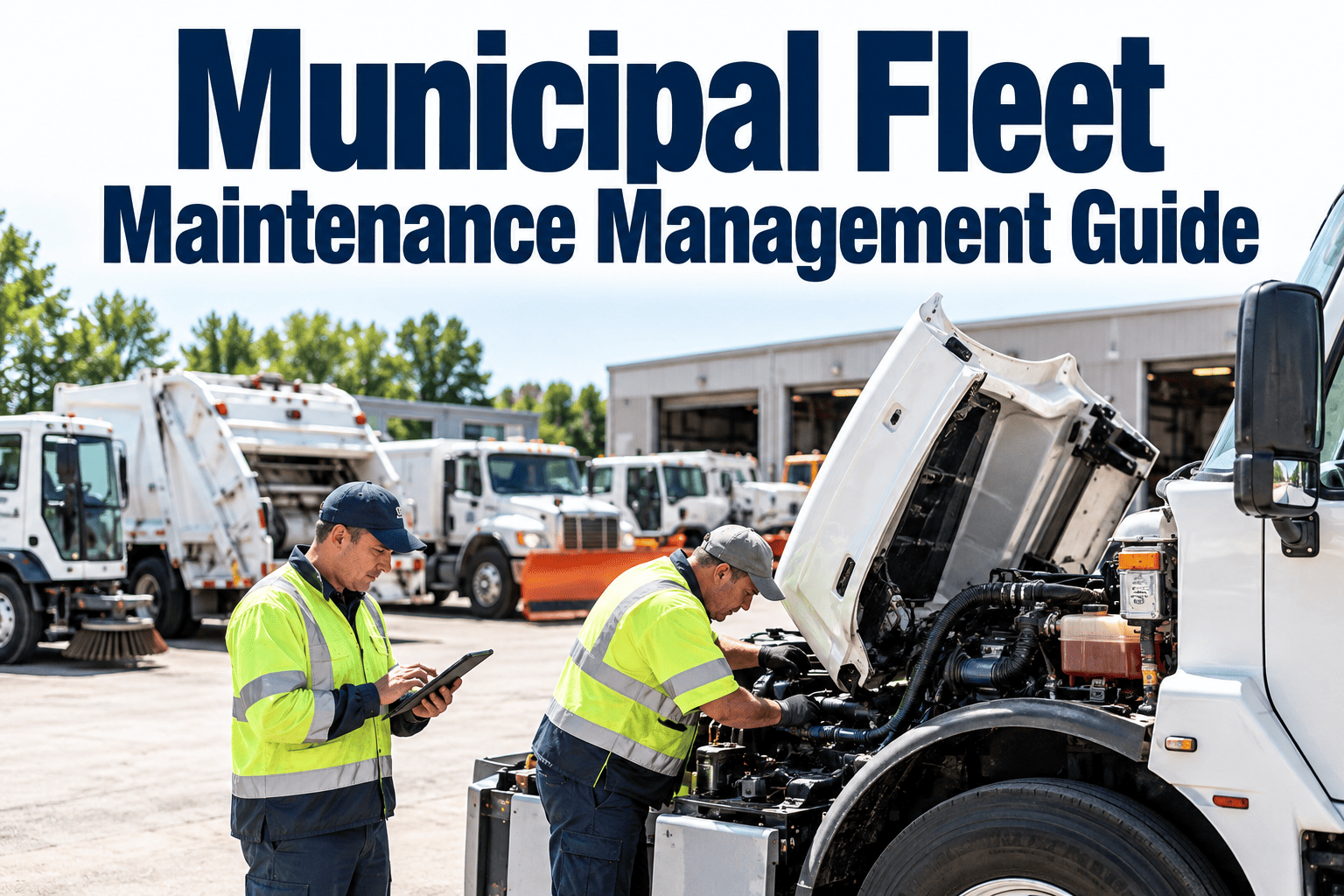
Municipal fleets keep a city running: police cruisers on patrol, sanitation trucks out before sunrise, snow plows staged ahead of a storm, and transit buses carrying thousands of riders a day. When maintenance lags on a fleet like this, the failure is never private — a stalled ambulance, a missed collection route, or a bus that breaks down mid-run becomes a public complaint and a budget headline at the same time. Departments that keep these vehicles road-ready without blowing an already tight budget do it with a structured maintenance program, and increasingly that program runs on fleet maintenance software built around how public works actually operates.
One fleet, a dozen vehicle types, and a budget that answers to the public
Municipal fleets mix police cruisers, sanitation packers, snow plows, transit buses, and public works trucks under one maintenance team, one parts room, and one line item that taxpayers can ask to see at any time. A maintenance-first CMMS turns that mix into a schedule instead of a scramble.
Municipal maintenance carries pressures a private fleet never sees
A logistics company can retire an aging truck the moment the math stops working. A city cannot retire a snow plow in July and buy a new one in November without a budget cycle, a bid process, and a council vote. That single difference reshapes almost every maintenance decision a municipal shop makes, from how long a vehicle stays in service past its expected lifespan to how tightly parts spending has to be tracked against the fiscal year.
Budget cycles, not spot decisions
Capital replacement runs on annual or multi-year budget approval, so aging vehicles stay in service longer and lean harder on preventive maintenance to keep going.
Mixed asset classes, one shop
The same technicians who service a light sedan also service a rear-loader packer and a tandem-axle plow truck, each with its own PM interval and parts list.
Public accountability
Maintenance spending is public record. A resident, auditor, or council member can request service history on any vehicle at any time.
Seasonal surge demand
Snow removal, storm response, and summer paving crews all push specific asset classes into round-the-clock use for weeks at a time.
Every vehicle class in the yard runs on a different clock
A single blanket PM schedule does not fit a fleet this varied. The table below is the kind of breakdown most municipal maintenance managers eventually build by hand in a spreadsheet — and the kind a CMMS can trigger automatically by asset class instead.
| Asset Class | Typical PM Trigger | Common Failure Point | Downtime Impact |
|---|---|---|---|
| Police patrol vehicles | 3,000-5,000 miles | Brakes, tires, idle-heavy engine wear | Reduced patrol coverage |
| Sanitation packers | Engine hours, hydraulic cycles | Hydraulic packer system, hoist cylinders | Missed collection routes |
| Snow and ice control | Seasonal pre-check plus hours in use | Plow hydraulics, spreader chains, corrosion | Storm response failure |
| Transit buses | Mileage and federal inspection interval | Brakes, transmission, wheelchair lift | Rider service disruption |
| Public works trucks | Mileage plus attachment-specific hours | PTO-driven attachments, suspension | Delayed field crews |
The maintenance workflow that keeps a mixed fleet moving
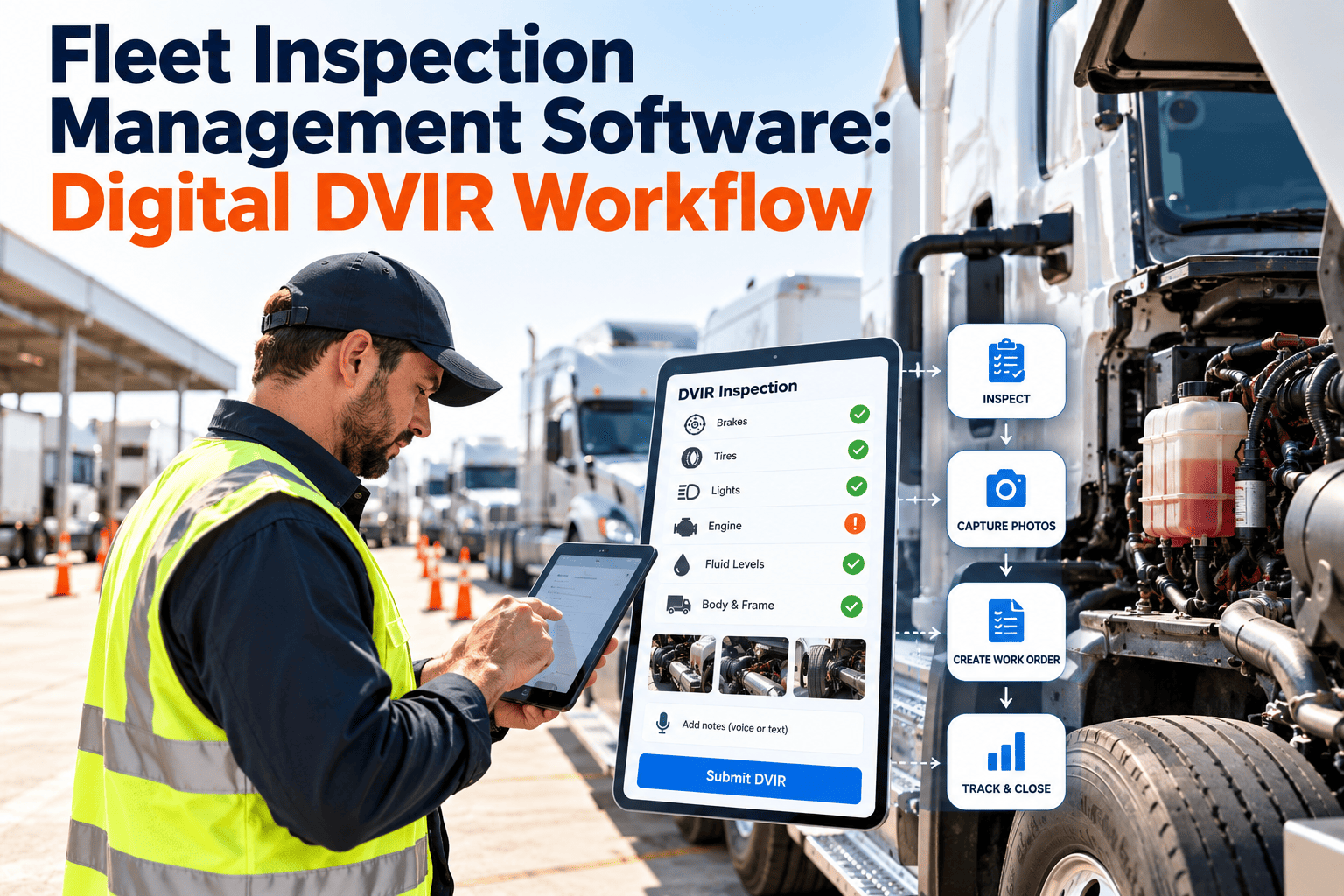
The vehicle class changes from bay to bay, but the workflow that protects uptime stays the same. A driver inspection, a triggered work order, a parts check, and a documented closeout form a loop that a CMMS can run automatically instead of on paper.
Daily driver inspection
A pre-trip checklist on a mobile device flags anything abnormal before the vehicle leaves the yard.
Automatic work order
A flagged item or a scheduled PM interval opens a work order and assigns it to the right technician automatically.
Parts availability check
Inventory is checked against the work order before the vehicle is pulled from service, avoiding a bay sitting idle waiting on a part.
Repair and sign-off
The technician logs labor, parts consumed, and time to repair against that specific asset's permanent history.
Compliance record filed
The completed work order becomes part of the audit-ready record for that vehicle, searchable the moment it's requested.
Bring every vehicle class into one maintenance system.
Police, sanitation, snow removal, and transit — scheduled, tracked, and documented from one dashboard.
Every work order is a document someone can eventually ask to see
Municipal fleets answer to more than a maintenance manager. Federal Motor Carrier Safety Administration annual inspections apply to transit and heavy vehicles, state DMV inspection rules apply to on-road units, and public records requests can surface any vehicle's history without warning.
- Annual DOT inspection records for vehicles over the applicable weight threshold, stored against the specific asset.
- State-mandated safety and emissions inspection history for on-road vehicles operating within city limits.
- Complete work order and parts history available for a public records or FOIA request without a manual file search.
- Driver pre-trip and post-trip inspection logs retained for the period required by the department's records policy.
A paper-based shop can usually produce this information eventually. A CMMS-backed shop can produce it in the time it takes to open a browser tab, which matters when the request comes from a council member on a deadline, a reporter working a story, or an auditor reviewing the department's spending for the fiscal year.
The numbers a fleet manager actually reports upward
Budget hearings run on numbers, not anecdotes. These are the metrics municipal fleet managers most often bring into a budget or council review, and the ones a CMMS dashboard can surface without a manual pull.
What changes when a fleet moves off paper
The difference between a reactive municipal shop and a scheduled one shows up first in overtime hours, then in the capital replacement conversation, because a well-maintained vehicle makes a stronger case for one more budget cycle in service.
Paper-based shop
- PM schedules tracked in spreadsheets by memory and mileage stickers.
- Records requests take days to assemble from paper files.
- Parts reordered after a technician discovers the shelf is empty.
- Budget requests built on estimates rather than logged cost history.
CMMS-scheduled shop
- PM triggers automatically by mileage, hours, or calendar date per asset class.
- Records requests answered from a searchable digital history in minutes.
- Inventory levels checked against upcoming work orders before parts run out.
- Budget requests built on real cost-per-mile and repair history by vehicle.
A pre-winter checklist worth building into the schedule
Snow and ice season punishes a fleet that skipped its fall inspection. These are the checks most public works departments run before the first storm, structured here as the kind of standing work order a CMMS can generate automatically every fall.
Six vehicle classes means six different parts shelves to manage
A municipal parts room stocks brake pads for a sedan, hydraulic seals for a packer, hitch pins for a plow assembly, and transit-specific components all under one roof, which makes inventory planning harder than it looks from the outside.
Slow-moving specialty parts
A plow cutting edge or a bus wheelchair lift actuator might sit on the shelf for months, then be needed urgently the moment the season turns.
Vendor lead times vary widely
A common brake part might arrive next-day, while a transit-specific component can take weeks, which changes how far ahead reordering needs to happen.
Shared stock across departments
Public works, transit, and police fleets sometimes draw from the same parts room, so visibility into what's reserved for which work order matters.
Budget-year purchasing rules
Bulk parts purchases often tie back to the same annual budget cycle as vehicle replacement, so accurate usage history strengthens the purchasing request.
Linking inventory directly to the work order system means a low-stock plow cutting edge or transit part triggers a reorder automatically, months before the season that needs it, instead of a technician discovering an empty shelf mid-repair.
Electrification, telematics, and the next budget cycle
Municipal fleets are under pressure to modernize on two fronts at once: sustainability goals pushing toward electric and hybrid vehicles, and telematics adoption pushing toward real-time condition data instead of scheduled guesswork.
- Electric and hybrid vehicles entering municipal fleets bring different maintenance profiles, with less engine work but new attention to battery health and charging infrastructure.
- Telematics feeds from newer vehicles can trigger a work order directly from an engine fault code instead of waiting for a driver report.
- Grant funding for fleet modernization increasingly asks for documented maintenance and utilization data as part of the application.
- A digital maintenance record built now becomes the baseline data a fleet needs to justify electrification funding later.
None of this replaces the fundamentals. A telematics fault code or an electric vehicle's battery alert still needs to land in the same work order system as a plow truck's hydraulic leak, or the fleet ends up managing two separate maintenance programs instead of one.
Technician time is the real constraint, not the software
Most municipal shops aren't short on willingness, they're short on technicians, and public sector hiring rarely moves as fast as private industry. A maintenance system earns its keep by making the technicians already on staff more effective, not by adding paperwork to their day.
Manual scheduling
- Technicians spend part of each morning figuring out what's due, rather than working on it.
- Job assignments handled by radio call or handwritten board.
- Skill matching to the right technician happens informally.
Automated dispatch
- Work orders are pre-sorted by priority and asset class before the shift starts.
- Mobile assignment reaches the technician directly with the job details attached.
- Specialty work routes to the technician certified for that equipment class.
Municipal fleet maintenance software — answered
How is municipal fleet maintenance different from commercial fleet maintenance?
Municipal fleets mix vehicle classes under one shop and one budget cycle, and every maintenance record can become a public records request, which commercial fleets rarely face.
Can a CMMS handle both light vehicles and heavy equipment like packers and plows?
Yes. Asset-specific PM triggers by mileage, engine hours, or calendar date let one system schedule a sedan and a rear-loader packer differently without separate spreadsheets.
How does software help with DOT and state inspection compliance?
Inspection intervals are tracked per asset and generate a work order automatically, with the completed inspection stored as part of that vehicle's permanent record. Schedule a demo to see the inspection workflow in detail.
What should be in a public records request response for fleet maintenance?
Work order history, parts consumed, inspection records, and technician sign-off for the requested vehicle, ideally pulled from one searchable system rather than paper files.
Does preventive maintenance really reduce municipal fleet costs?
Deferred preventive maintenance is a leading cause of unplanned municipal fleet downtime, and unplanned repairs typically cost more than the scheduled service that would have prevented them.
Making the case to a city manager or council
A fleet manager asking for a new maintenance system rarely gets approval on the promise of convenience alone. The stronger pitch ties directly back to the numbers a council already cares about: downtime, overtime, capital replacement, and public trust.
Give your municipal fleet one maintenance system instead of six spreadsheets.
Schedule PMs by asset class, track compliance, and answer any records request in minutes.
Free 14-day trial · No credit card