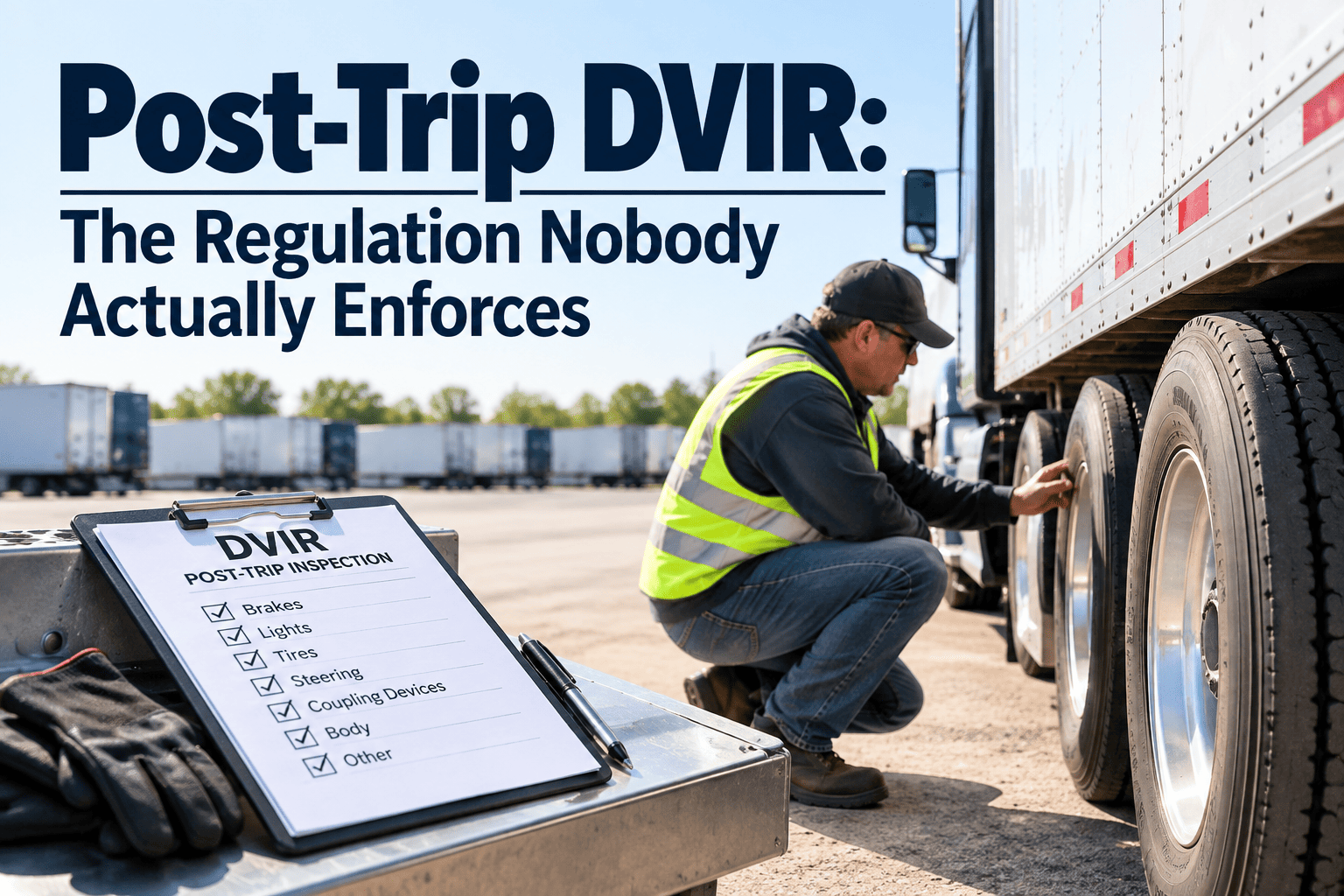
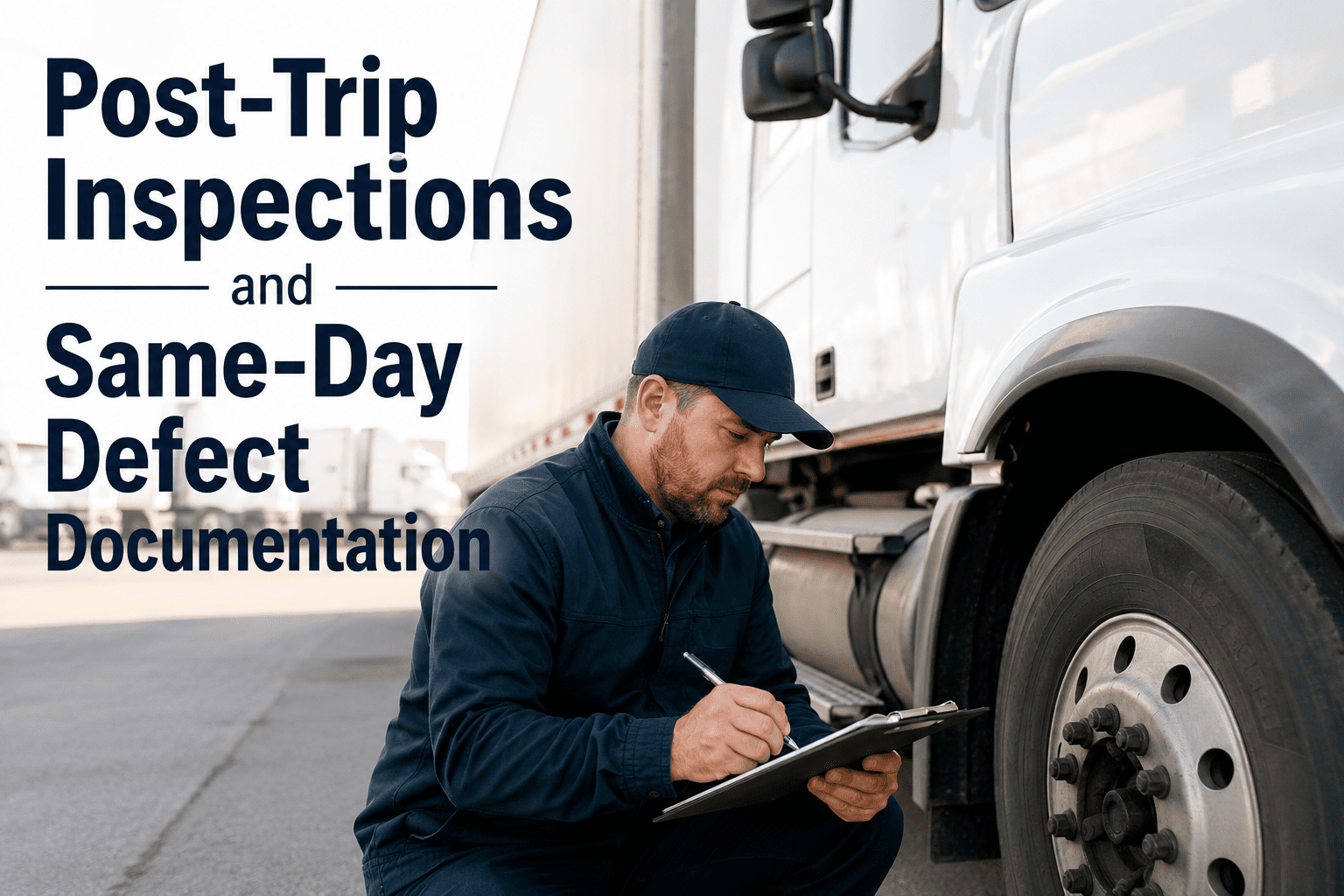
Post-trip DVIR is one of the oldest paperwork requirements in commercial trucking, yet it remains one of the most frequently cited violations found during DOT compliance reviews, year after year. Under 49 CFR 396.11, every commercial driver must prepare a written report documenting any defect discovered or reported during the day's operation, and that report only means something once it passes through a driver, a mechanic, and the next driver who takes the wheel. In thousands of fleets, the post-trip walkaround has quietly become a rubber stamp at the end of a long shift — a signature on a form that says nothing was wrong, without anyone actually checking. That gap between what the regulation requires on paper and what happens on the yard at 6 p.m. is exactly where citations, denied insurance claims, and roadside breakdowns are born, and closing it is a workflow problem you can actually fix at https://app.oxmaint.ai or by booking a walkthrough at https://calendly.com/oxmaintapp/30min.
Post-Trip DVIR: The Regulation Nobody Actually Enforces
Ninety-five percent of driver DVIRs report no defects at all. That is either a fleet in perfect mechanical health or a post-trip inspection that stopped happening years ago. OxMaint turns the post-trip walkaround into a same-day, photo-backed record that survives an audit and catches the defect before it becomes a roadside failure.
Why the Post-Trip Gap Is So Easy to Miss
Pre-trip inspections get almost all of the training budget and almost all of the supervisor attention, because a bad pre-trip can stop a truck from ever leaving the yard. The post-trip has no equivalent gatekeeper. A driver who skips it, or fills it out from memory in the cab five minutes after clocking out, faces no immediate consequence — until an auditor pulls the file, or a defect that was quietly developing all day turns into a brake failure on the interstate. The numbers below are why fleet safety directors are no longer willing to treat this as a formality.
Three Signatures, One Legally Binding Chain
A post-trip DVIR is not a single form filled out once. It is a sequential chain of custody involving three separate people, and FMCSA auditors are trained to look for exactly where that chain breaks. Miss one signature and the carrier — not the driver — owns the citation, the insurance exposure, and any discovery request in a nuclear-verdict lawsuit.
The 11 Components Every Report Must Cover
49 CFR 396.11(a)(1) lists specific vehicle systems that a compliant DVIR has to address at minimum. A report that skips a category, even on a day with no defects, is a documentation gap an auditor will flag on sight. These are the categories a genuine end-of-shift walkaround has to touch.
Post-Trip Compliance Reference
These are the figures a fleet safety manager needs on hand before an auditor asks for them, laid out in one reference table rather than scattered across a regulation binder.
| Compliance Element | Requirement | Governing Rule |
|---|---|---|
| Written DVIR | Required only when a defect is discovered or reported to the driver | 49 CFR 396.11(a) |
| Combined tractor-trailer report | One DVIR is adequate for a combination; trailer defects must still be captured | 49 CFR 396.11(a) |
| Single-vehicle carriers | No DVIR required for a motor carrier operating only one CMV | 49 CFR 396.11(a)(5) |
| Repair certification | Mechanic or carrier official signs before the vehicle is redispatched | 49 CFR 396.11(c) |
| Record retention | DVIR, repair certification, and driver acknowledgment kept 90 days minimum | 49 CFR 396.11(a)(4) |
| Electronic DVIR | Digital signatures, mobile submission, and cloud storage formally authorized | FMCSA-2025-0115, effective March 23, 2026 |
| Unrepaired defect dispatch | Civil penalty for operating with a known, unrepaired safety defect | FMCSA penalty schedule, up to $15,420 |
| No-defect day | Not legally required for property carriers, but recommended as standing company policy | Post-2014 rule revision |
Close the Chain Before an Auditor Finds the Gap
OxMaint enforces required fields and photo evidence by defect category, routes the repair certification to a mechanic automatically, and time-stamps every signature in the chain, so a brake or tire finding can never be logged as a vague note again.
Three Places the Chain Actually Breaks
Fleets rarely fail an audit because nobody has heard of 396.11. They fail because the chain snaps at one of these three predictable points, month after month, without anyone noticing until the file is pulled.
Post-Trip DVIR: Frequently Asked Questions
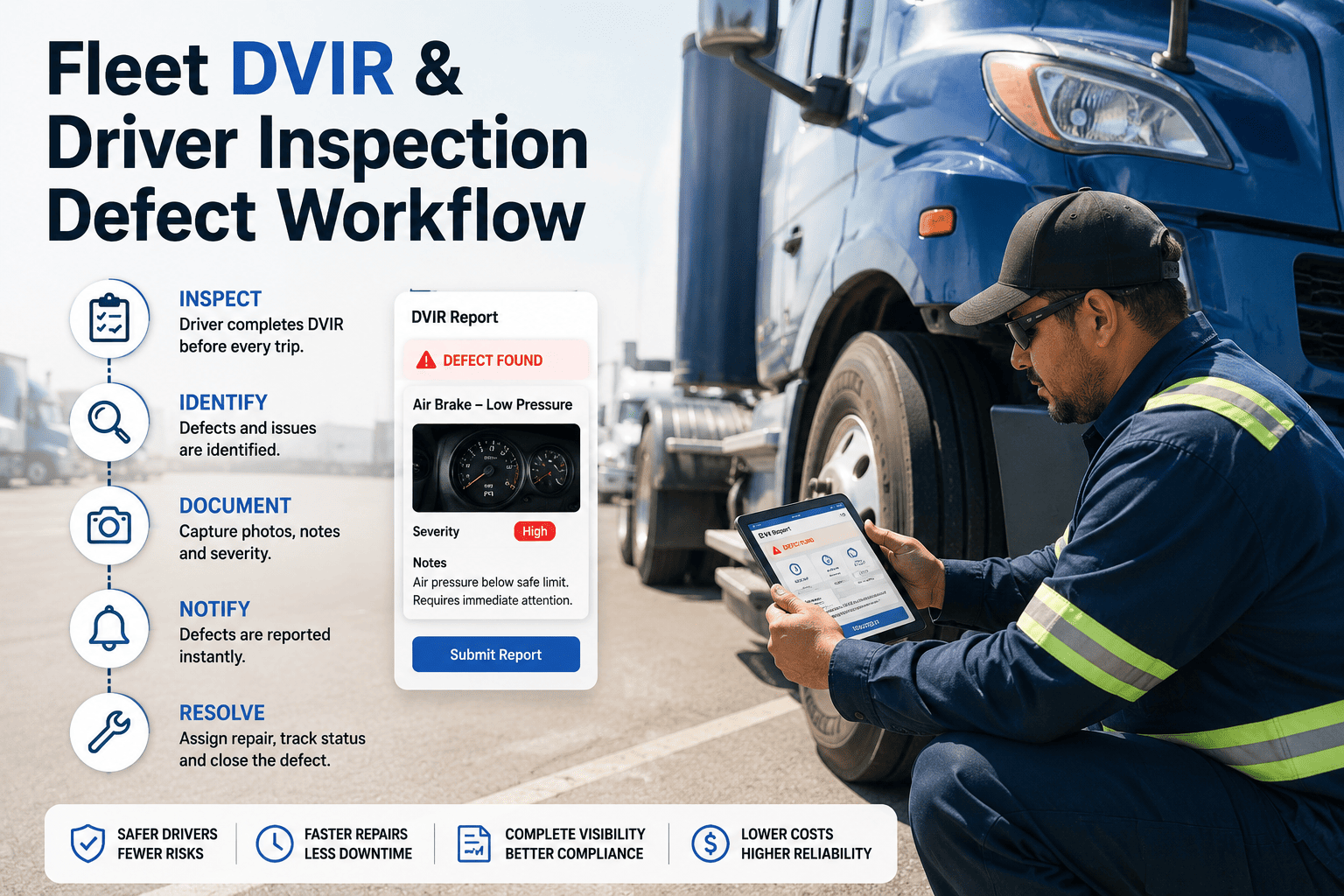
How OxMaint Enforces the Chain Automatically
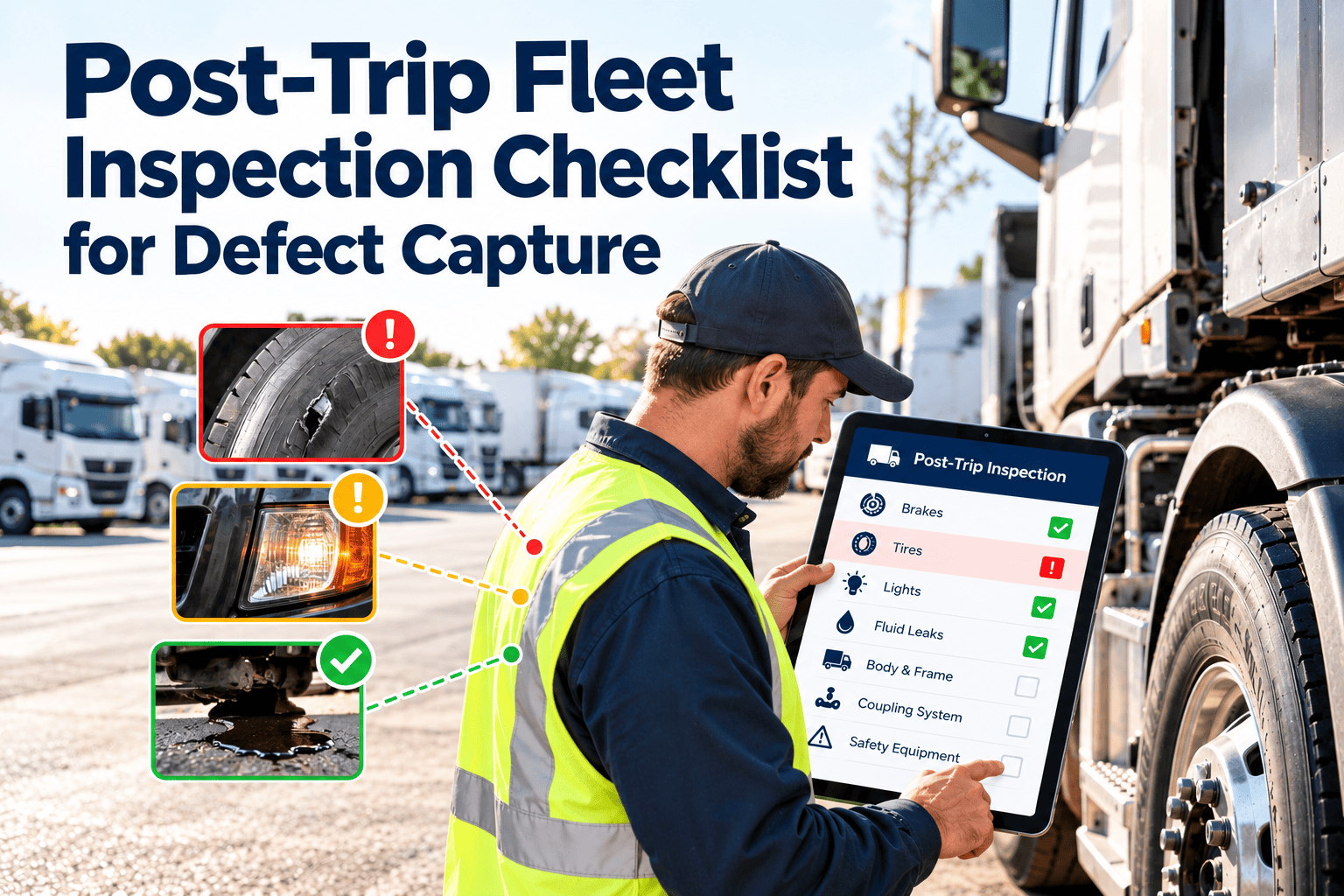
Every reported defect follows one enforced path from the driver's device to a closed, auditable file. The flow below is what OxMaint runs behind each of the four capabilities that follow it.
Case Study: Closing a Two-Year Documentation Gap
Our compliance review found that our post-trip DVIR rate had been sitting at effectively zero for two years — drivers were signing a no-defect box out of habit, not observation. It took one roadside brake failure, thankfully without injury, to force the question of what our post-trip program was actually catching. We moved the entire fleet onto a structured workflow that requires the walkaround before the report can be submitted, and our documented defect rate went from near-zero to a realistic 8 percent within the first quarter. More importantly, we now have a repair certification on file for every single one of them.
— Director of Safety, Regional Dry Van Carrier
Make the Post-Trip DVIR Mean Something Again
A regulation that nobody enforces is still a regulation your fleet is exposed to the moment a truck fails on the road or an auditor opens the file. OxMaint turns the post-trip walkaround into a same-day, photo-backed, three-signature record that actually protects your drivers and your compliance file.


.png)
