
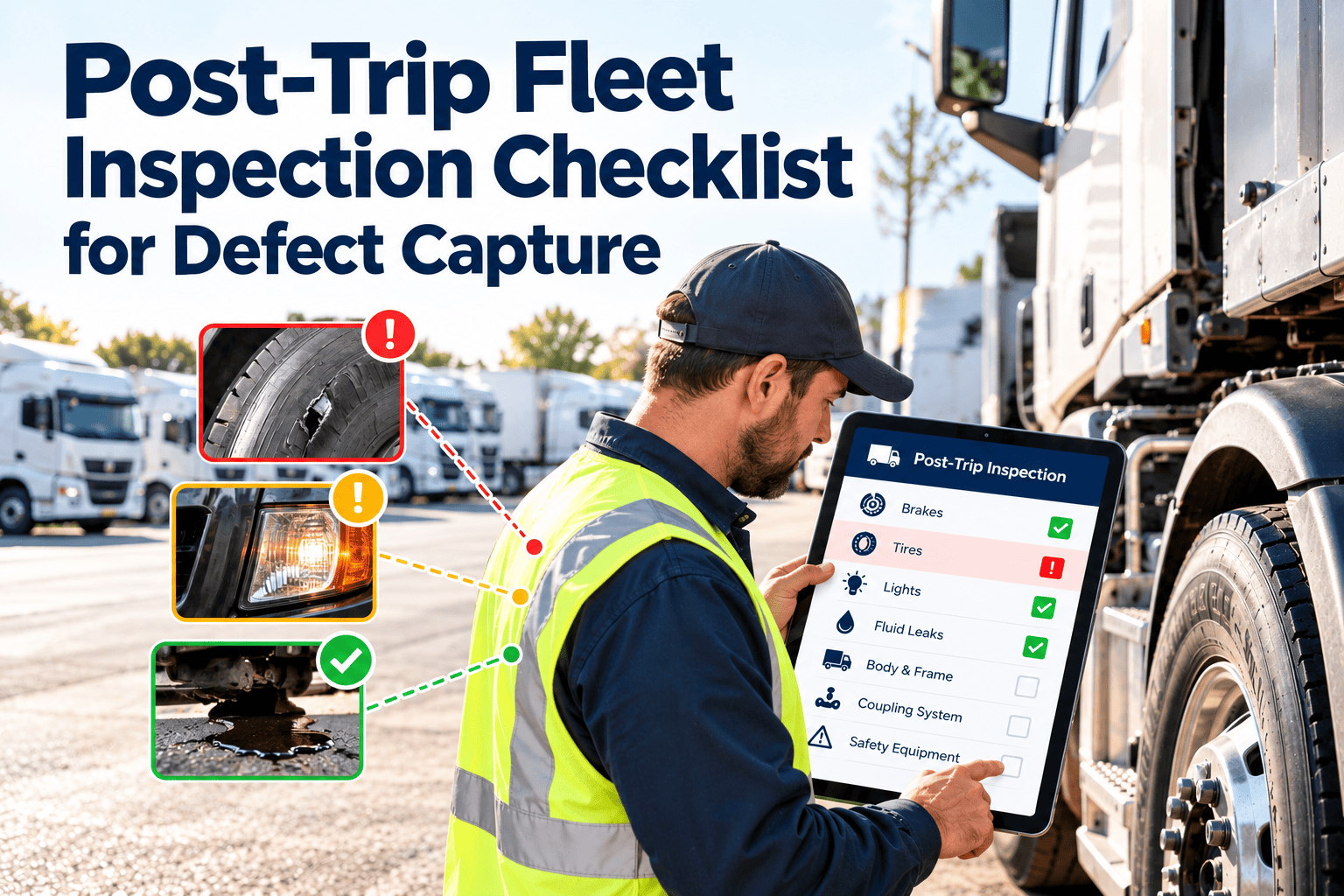
A pre-trip inspection that takes 4 minutes on a paper form catches about 60% of the defects it should — because paper checklists are static, generic, and offer no guidance when a driver reaches an item they have never failed before. A driver inspecting brakes on a Class 8 tractor for the first time has the same paper form as a 15-year veteran, with no photos, no pass/fail thresholds, and no indication that the trailer's brake chambers were flagged at the last service. Oxmaint's AI-enhanced pre-trip and post-trip inspection checklists adapt to the vehicle type, surface the last three defects found on that specific unit, and require photo verification on any item that has previously generated a repair order — so every inspection is as thorough as the fleet's best inspector, not its least experienced one. See Oxmaint's AI inspection checklists configured for your fleet — start free.
Pre-Trip & Post-Trip Inspection Checklist: AI-Enhanced for Commercial Fleets
Smart checklists that adapt to vehicle type, past defect history, and weather conditions — with photo verification, voice-to-text defect reporting, and instant shop escalation built in. Every inspection as thorough as your best driver.
Oxmaint generates a customized inspection checklist for every pre-trip and post-trip based on vehicle class, the last 3 defects found on that unit, any open repair orders, and current weather conditions — so a driver inspecting a trailer in sub-freezing temperatures gets brake line freeze prompts automatically, not a generic form that was designed for a different vehicle in a different season.
Why Generic Inspection Checklists Miss Critical Defects
Static paper checklists treat every vehicle the same — a Class 3 delivery van and a Class 8 sleeper tractor get the same form, the same sequence, and the same pass/fail criteria. Oxmaint's AI checklists are generated dynamically: a tractor with a history of brake chamber issues gets photo verification required on brake items; a reefer trailer in sub-freezing weather gets freeze-check prompts added automatically; a unit returning from a mountain route gets suspension prompts weighted higher than flat-road items.
Oxmaint fleets report that AI-contextualized checklists catch an average of 2.4 more defects per 100 inspections than paper equivalents — defects that, if missed, would have generated roadside OOS events within 30 days. Start free to see adaptive checklists on your fleet.
AI Inspection Results — Oxmaint Customer Fleets
Outcomes at commercial fleets that replaced paper checklists with Oxmaint's AI inspection module — measured at 12 months post-deployment.
Checklist Coverage — Required Items by Vehicle Class
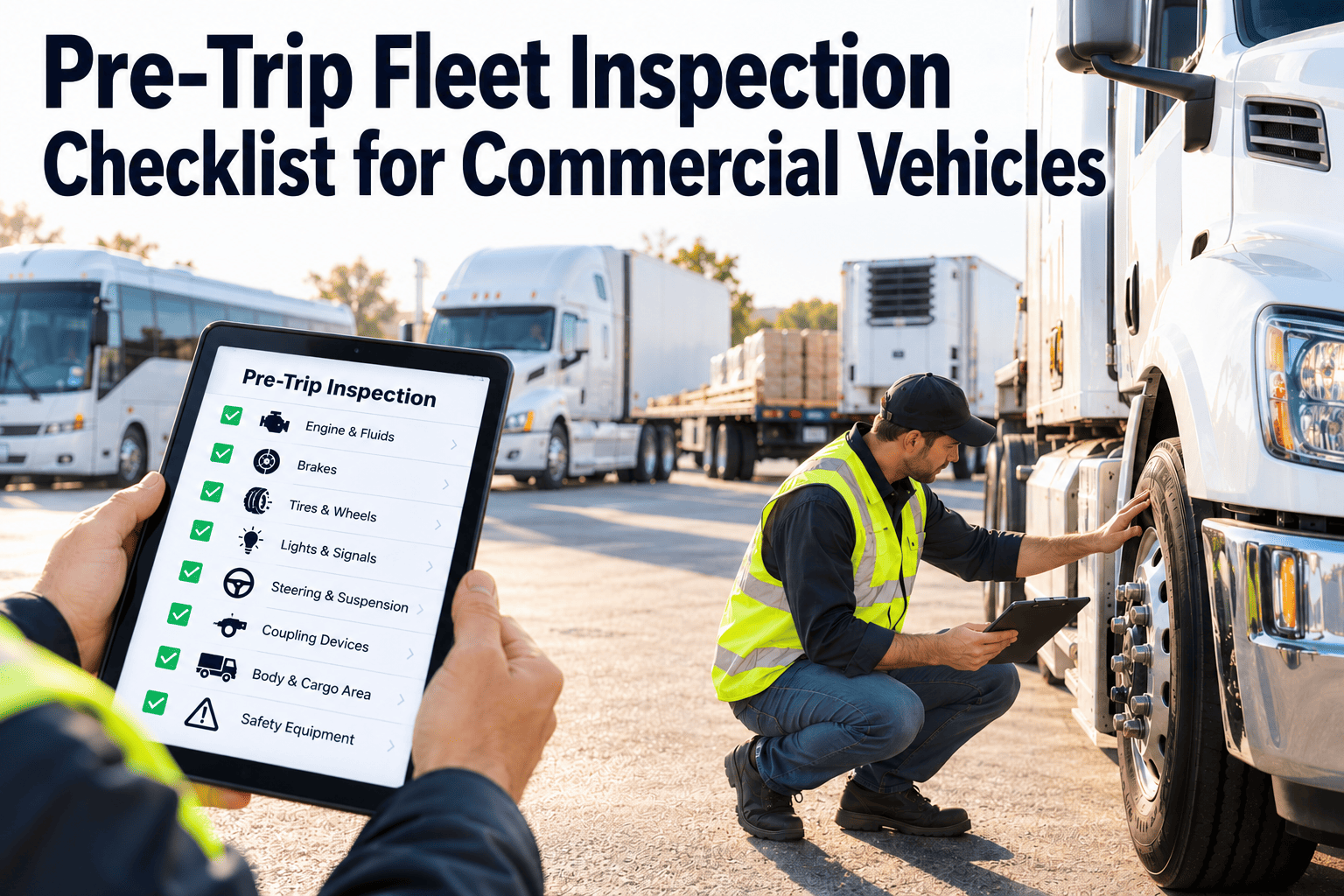
FMCSA 49 CFR 396.11 defines required inspection categories for all CMVs. Oxmaint's AI templates extend these with vehicle-class prompts, history-based photo requirements, and severity classification for each defect type. See checklist templates for your vehicle classes.
| Inspection Item | Required By | AI Enhancement | Severity |
|---|---|---|---|
| Brake System | 49 CFR 396.11 — all CMVs | Photo + AI wear classification | Safety-Critical |
| Tires & Wheels | 49 CFR 396.11 — all CMVs | Tread depth AI estimate from photo | Safety-Critical |
| Lights & Reflectors | 49 CFR 396.11 — all CMVs | Guided checklist by light position | Priority |
| Steering Mechanism | 49 CFR 396.11 — all CMVs | Play measurement prompt + photo | Safety-Critical |
| Fluid Levels | 49 CFR 396.11 — all CMVs | Level field + leak photo prompt | Priority |
| 5th Wheel / Coupling | Class 8 tractor-trailer only | Latch photo + kingpin check prompt | Safety-Critical |
| Emergency Equipment | 49 CFR 396.11 — all CMVs | Expiry scan + quantity verification | Routine |
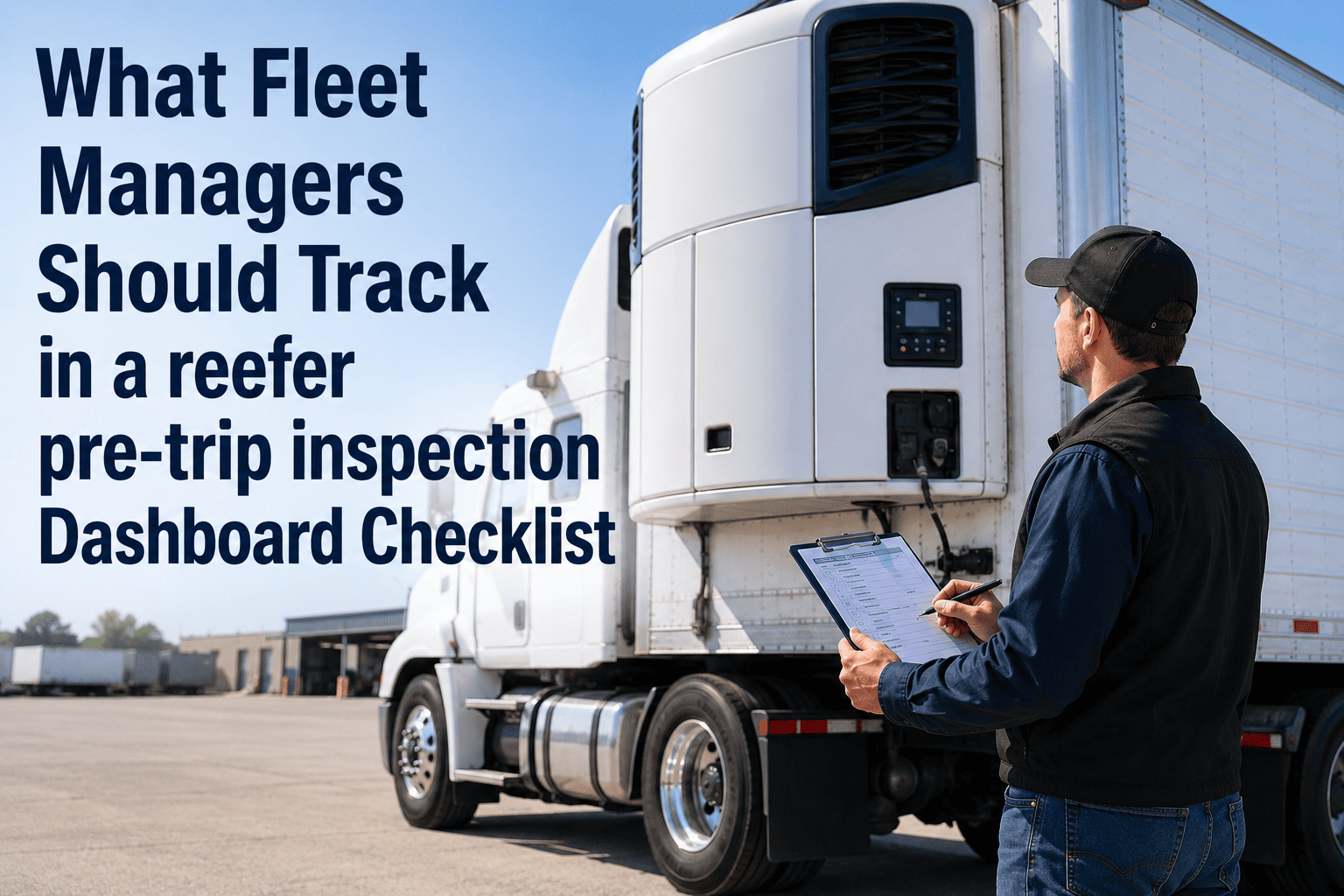
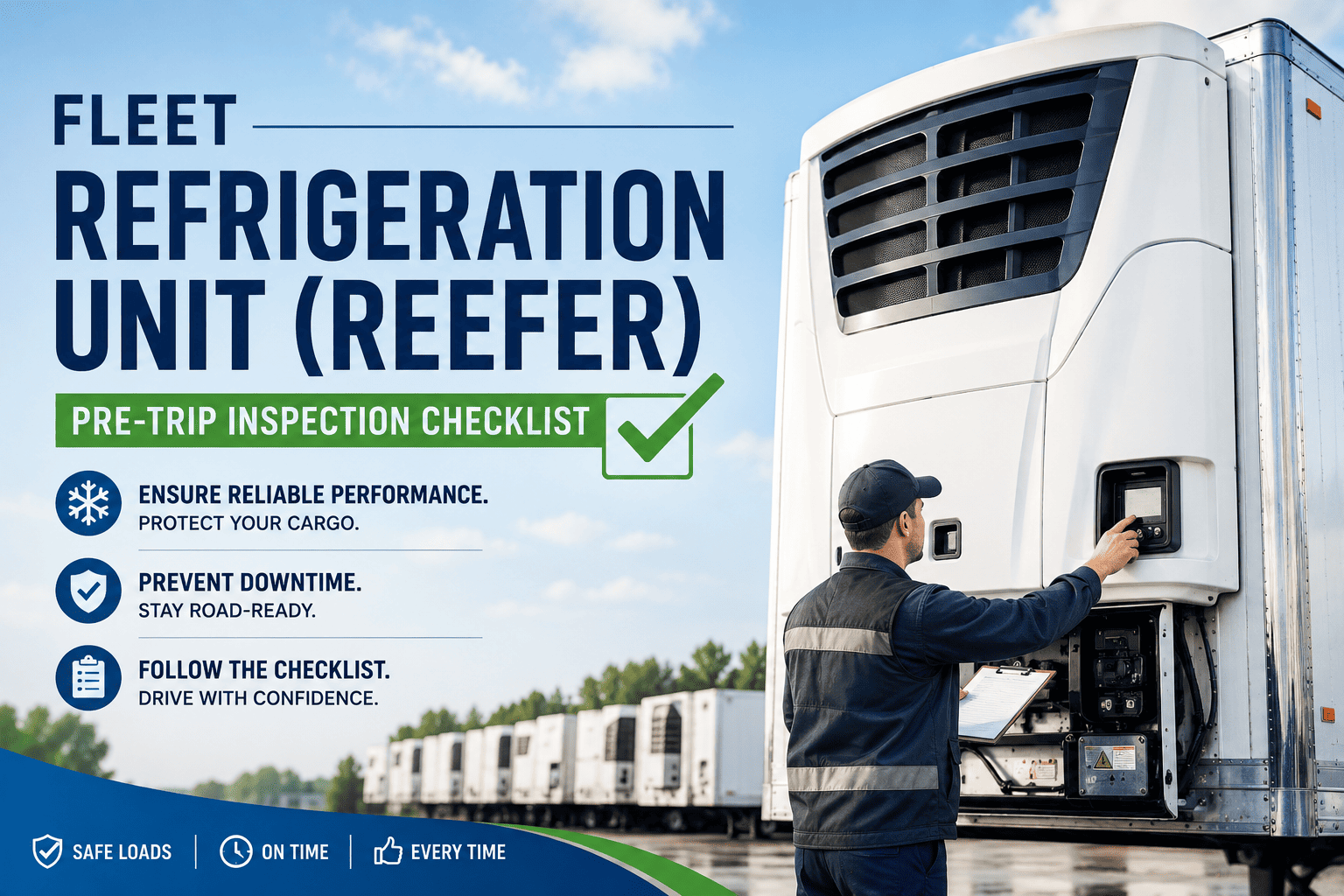
| Reefer / Refrigeration Unit | Reefer trailers — carrier policy | Temp setpoint + door seal check | Priority |
AI Inspection Workflow — Driver to Shop to Audit
Oxmaint connects the driver's mobile checklist directly to the shop's repair queue and the fleet manager's audit record in a single unbroken digital chain — eliminating the paper handoff gaps where defects disappear before they reach the shop.
Our roadside pass rate went from 87% to 99.3% in 6 months. The biggest change was the photo requirement on brake items — drivers were marking pass on paper because it was faster. Oxmaint caught 11 brake issues in the first 90 days that would have been OOS violations.
Frequently Asked Questions
2.4x More Defects Caught. 99% Completion Rate. Zero Missing Records.
AI-enhanced pre-trip and post-trip checklists — live in Oxmaint within 1 week.
.png)

.png)