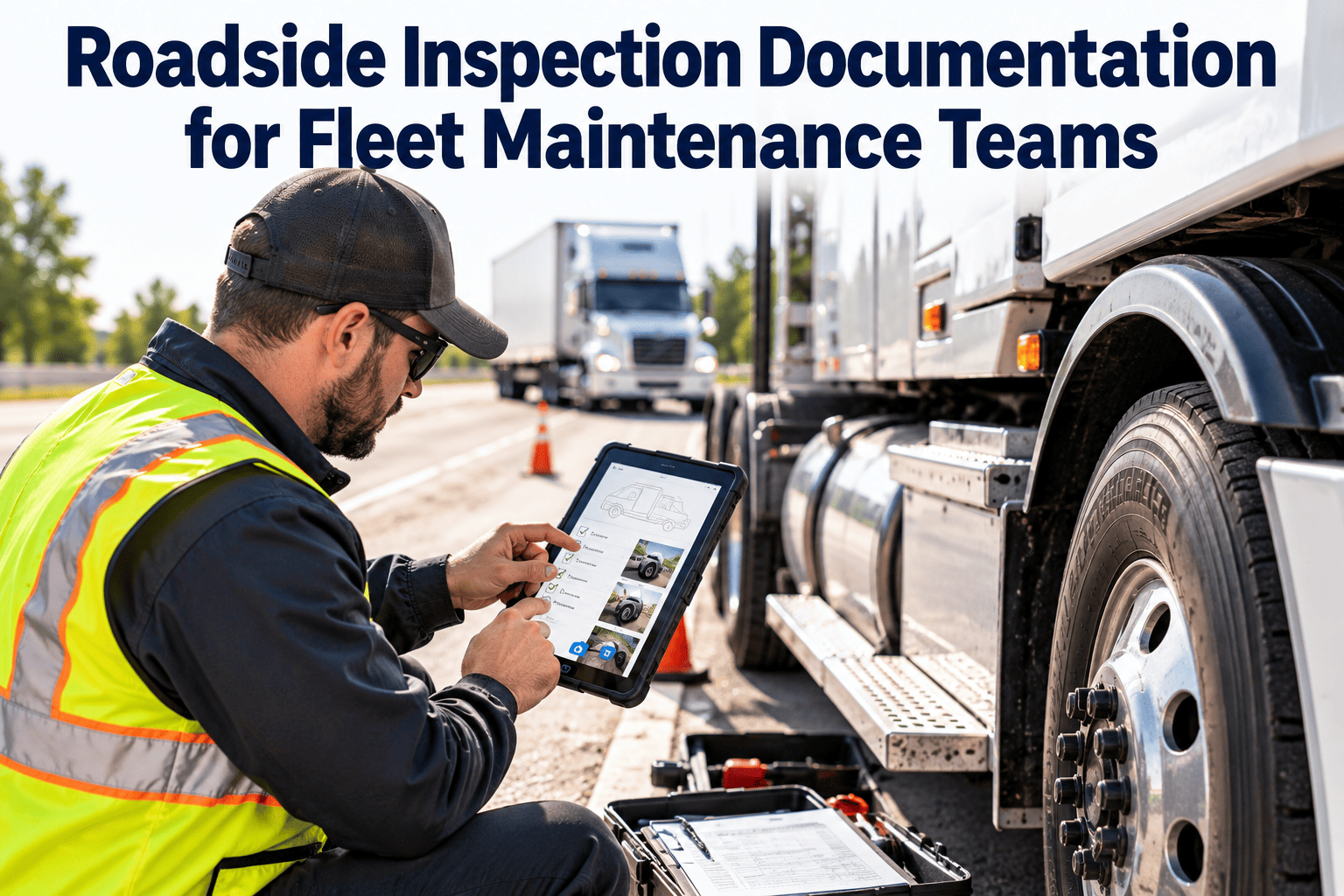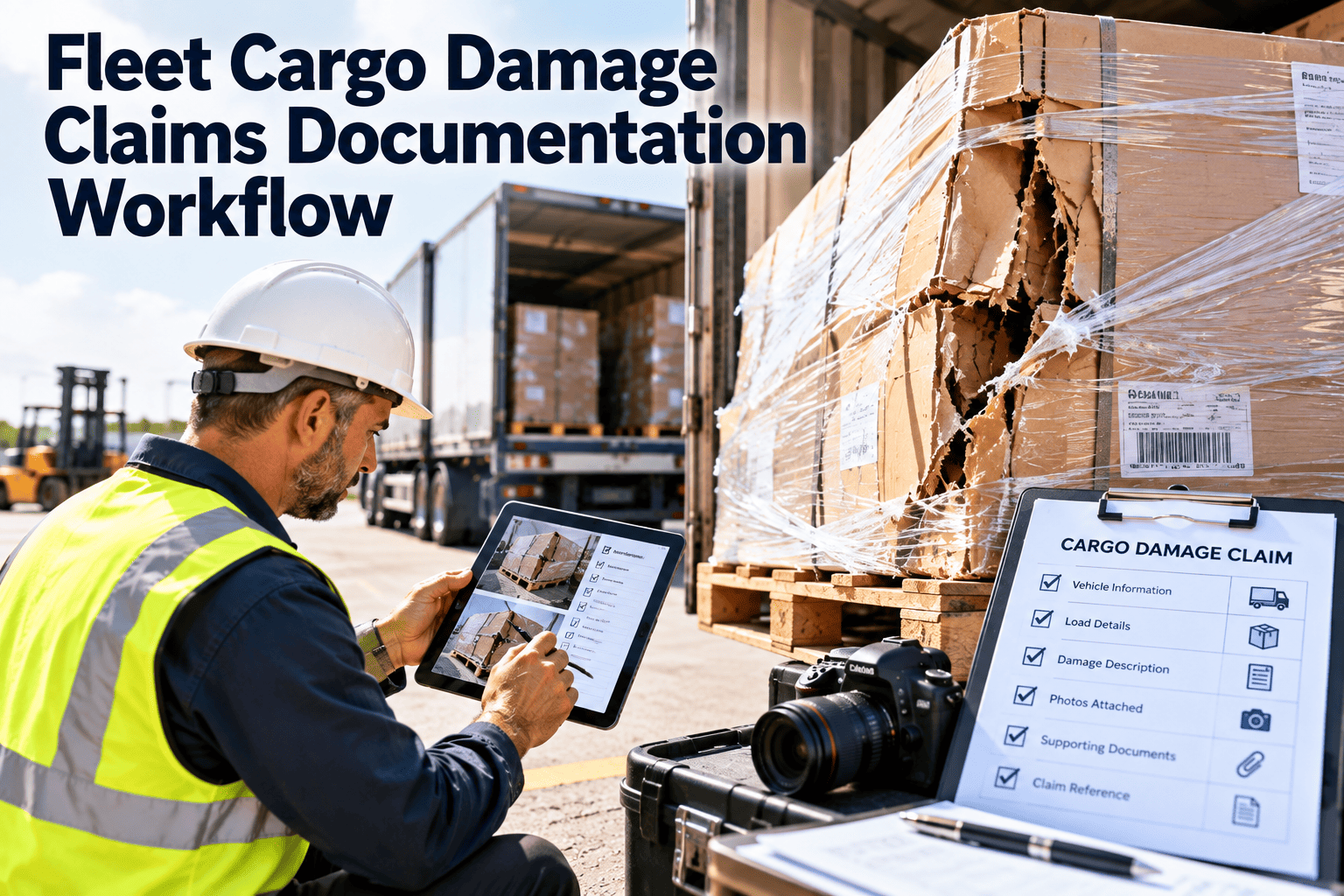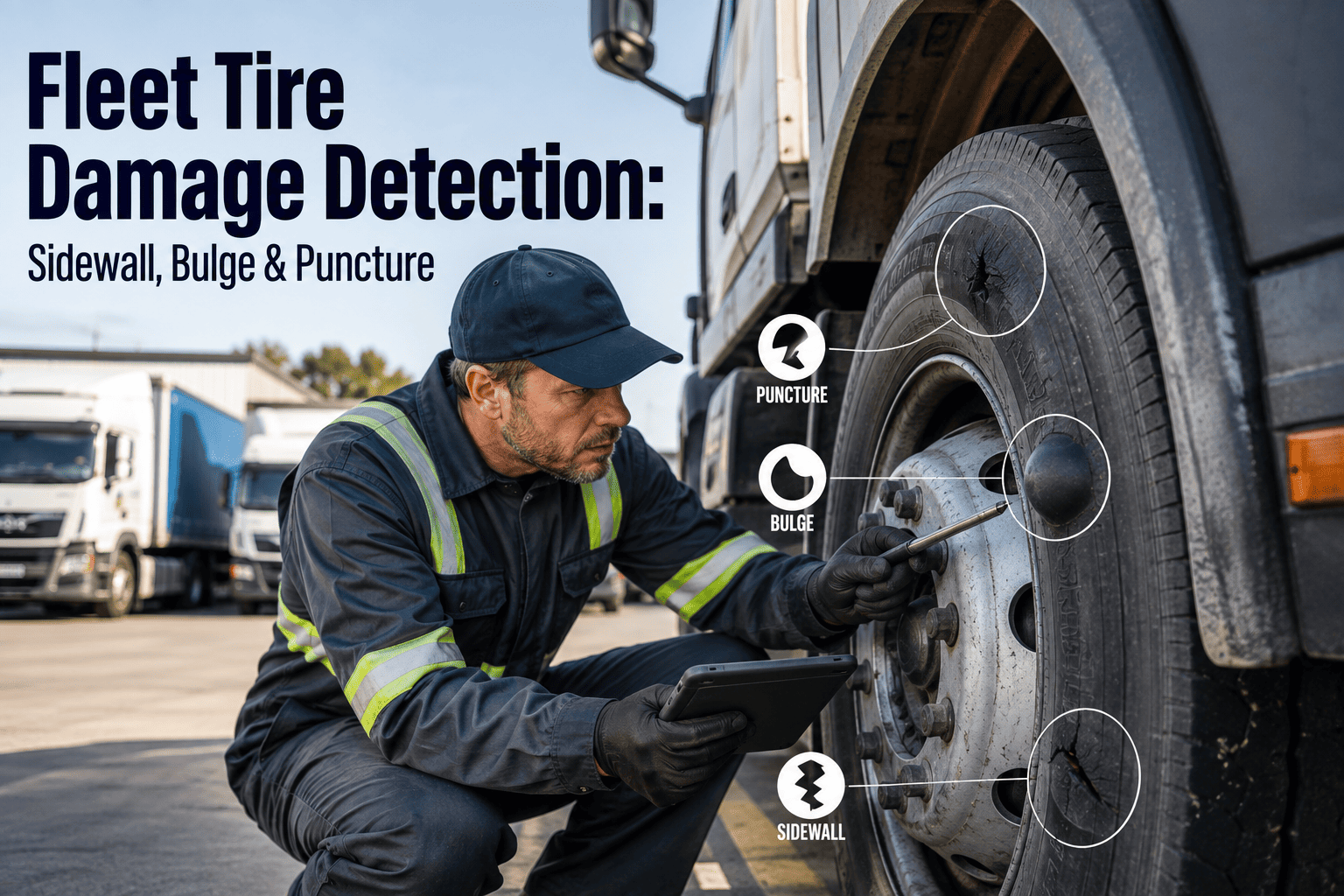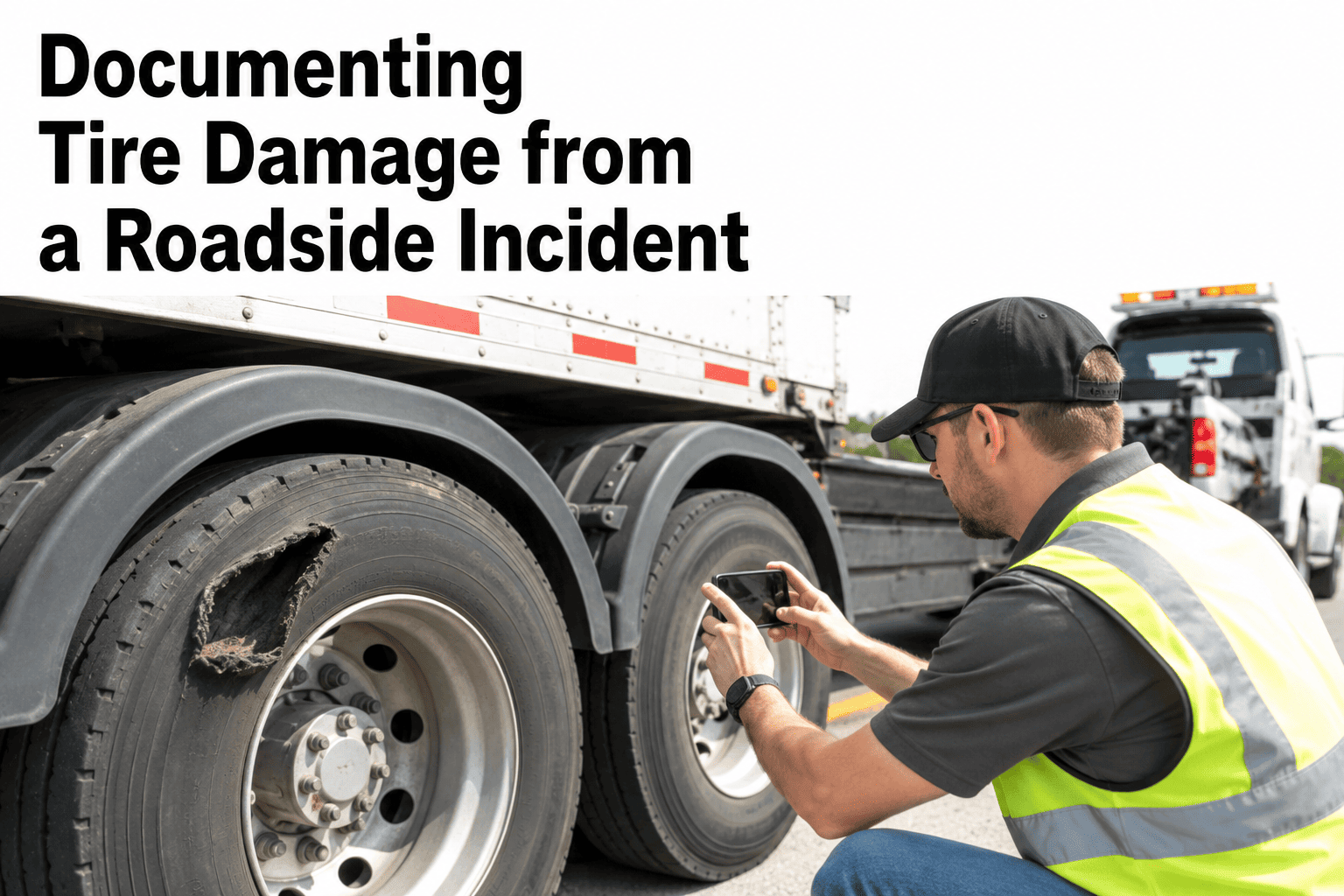
A roadside tire failure — whether a highway-speed blowout, a sidewall puncture from road debris, or a sudden tread separation — is rarely just a maintenance headache. It is a recoverable financial event, often payable under manufacturer warranty, road-hazard insurance, or both, provided the incident is documented to spec at the moment it occurs. Fleets that capture GPS coordinates, multi-angle photo evidence, DOT codes, and driver statements within minutes see claim approval rates roughly 40 percentage points higher than those relying on paper roadside service reports alone. The structured workflow below turns every flat tire into a defensible, recoverable record — and you can begin piloting it in Oxmaint today when you Start Free Trial.
ROADSIDE TIRE DAMAGE GUIDE 2026
Most tire claims don't fail on facts.
They fail on evidence captured at the roadside.
A blowout at 65 mph on I-85 may be fully recoverable under manufacturer warranty or road-hazard insurance — but only if the driver logs location, debris, DOT code, and casing condition before the tow truck leaves. Without that packet, roughly 7 in 10 fleet tire claims are denied on insufficient documentation.
WHY STRUCTURED DOCUMENTATION MATTERS
A flat tire is a $400–$1,200 incident. The paperwork decides who pays.
A single steer-tire blowout on a Class 8 tractor typically costs $480 in the replacement tire, $150–$300 in roadside labor, and $200–$900 in lost revenue hours — before any tow. When that same event is documented to manufacturer spec, recovery shifts to the tire OEM, the casing retreader, or the road-hazard carrier instead of the fleet's maintenance budget.
THE SEVEN-PART DOCUMENTATION STANDARD
Every roadside tire event needs these seven evidence elements
Manufacturer warranty, road-hazard insurance, and casing recall claims each demand overlapping but distinct proof. The seven items below form a single evidence package that satisfies all three channels simultaneously — captured once, submitted everywhere.
GPS coordinates accurate to ±10 meters, plus road type (interstate / two-lane / construction zone), pavement material, and posted speed limit. Geo-tagged photos are the strongest form — a timestamped lat/long embedded in the image metadata is admissible where a typed address is not.
Vehicle speed at moment of failure, gross load and axle distribution, weather, pavement condition (wet, dry, potholed, freshly milled), and any impact with debris or infrastructure. Note whether the vehicle pulled, vibrated, or lost pressure gradually versus instantly.
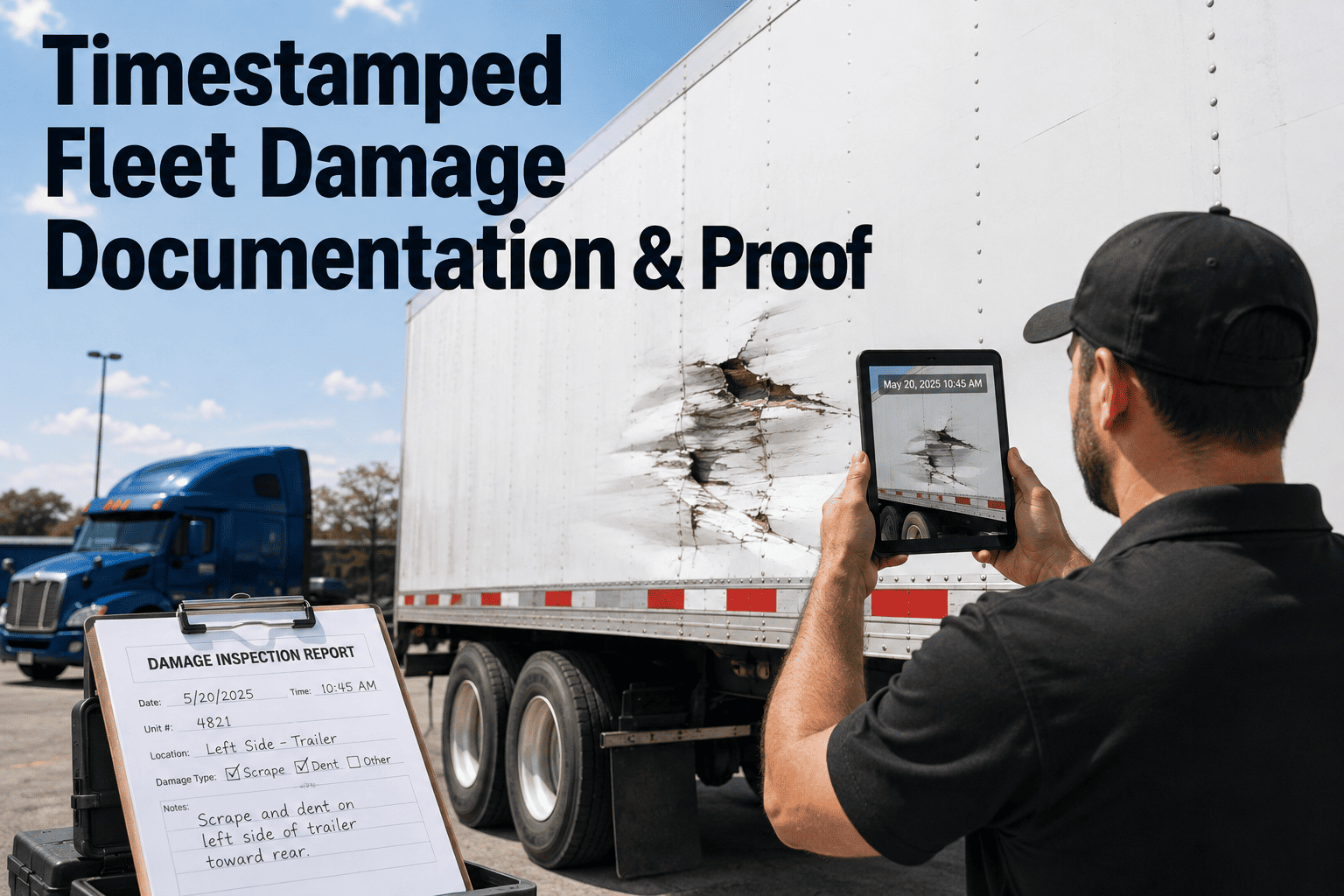
Minimum five frames: full tire on vehicle, sidewall close-up (both sides), tread face, bead area, and interior casing if ruptured. Include a ruler or common object for scale. Photograph the debris if still present, in situ before removal.
The DOT code — four digits for week and year of manufacture, plus the plant and size codes — must be legible in at least one photo. This establishes tire age and is mandatory for any casing recall submission (Firestone, Michelin, Bridgestone and others have issued recalls keyed to specific DOT ranges).
Pull the full life record: original mount date, every position rotation, TPMS pressure history (flag any sustained under-inflation event), and tread-depth readings over time. This proves the tire was operated within spec and is the single most decisive evidence in warranty disputes.
A first-person account of vehicle behavior in the 60 seconds before failure: steering pull, vibration, audible pop, sudden pull, gradual softening. Captured while memory is fresh, ideally as a structured form rather than free text, to prevent contradiction with the photo evidence later.
The tire vendor's or towing operator's written report — labor performed, parts replaced, time on scene, and their own assessment of cause. Counter-sign it on the spot. Vendor reports that conflict with driver statements are the leading cause of claim denial at the adjuster stage.
CLAIM TYPES & EVIDENCE REQUIREMENTS
Match the evidence to the recovery channel
Different payors demand different proof. Submitting a road-hazard packet to a casing manufacturer, or vice versa, is a guaranteed denial. The matrix below maps each recovery channel to the evidence it requires and the typical payout.
| Recovery Channel | Trigger Event | Required Evidence | Typical Recovery |
|---|---|---|---|
| OEM Warranty | Premature tread wear, belt separation, manufacturing defect | DOT code, mount date, TPMS pressure history, load records, no impact damage proof | 40–70% of tire value (pro-rated) |
| Road-Hazard Insurance | Debris impact, pothole, curb strike, puncture from foreign object | Debris photo in situ, road conditions, GPS, driver statement of impact | Up to 100% of replacement + labor |
| Casing Recall | Tire falls within an active OEM recall DOT range | DOT code photo, failure description, casing returned to dealer | Full replacement tire or refund |
| Third-Party Liability | Negligent road maintenance, construction debris, at-fault third party | Scene photos, police report, witness statements, GPS, debris retention | Full cost + downtime (often via subrogation) |
| Retread Adjustment | Retread failure within adjustment period | Retread invoice, casing DOT, mileage since retread, failure photos | 50–100% of retread cost (pro-rated by mileage) |
WORKED EXAMPLE
A 220-truck regional fleet recovers $61,400 in one year
A dry-bulk fleet operating 220 tractors across the Southeast averaged 184 roadside tire events per year — blowouts, debris punctures, and tread separations combined. Before structured documentation, they recovered on just 22% of incidents, losing an estimated $182,000 annually to unrecoverable tire and labor costs.
After deploying Oxmaint's mobile roadside capture workflow — GPS-tagged photos, mandatory DOT field, auto-linked CMMS tire history, and a structured driver statement form — their recovery rate climbed to 63% within twelve months. The fleet recovered $61,400 in tire adjustments and road-hazard payouts in year one, on top of $24,000 in reduced claim-administration labor.
Turn your next roadside flat into a recoverable record
Oxmaint captures tire incidents as first-class events — mobile photo upload, GPS tagging, automatic CMMS history linkage, and one-tap claim packet export. Deploy across your drivers in under a week.
FAQ
Roadside tire documentation, answered
How soon after a roadside tire failure must documentation be captured?
Most OEM warranty and road-hazard carriers require incident notification within 48 hours, but the admissible evidence — GPS location, debris in situ, casing condition before towing — must be captured at the scene within roughly 7 minutes. Once the vehicle moves and the debris disperses, that evidence is gone permanently. Oxmaint's mobile incident form enforces photo and GPS capture before the record can be submitted.
What if the DOT code is unreadable on the damaged sidewall?
The DOT code is mandatory for warranty and recall claims, so photograph it before the tire leaves the vehicle. If the sidewall is destroyed, locate the code on the opposite sidewall (codes appear on both sides, though only one side carries the full plant/size/date string). As a last resort, pull the mount record from your CMMS — Oxmaint stores the DOT code at mount time and auto-attaches it to the incident. You can verify this by booking a walkthrough at Book a Demo.
Does road-hazard insurance cover blowouts, or only debris punctures?
Coverage depends on the carrier and policy language, but most road-hazard programs cover debris impact, pothole damage, and curb strikes — not heat-related blowouts from under-inflation or overload. The decisive factor is proof of the impact event: a debris photo, an impact description in the driver statement, and road conditions consistent with the claim. Without that proof, the carrier classifies the failure as operational and denies it.
Can I claim a tire under both manufacturer warranty and road-hazard insurance?
No — you must choose one channel per incident. The standard practice is to assess cause first: if the failure pattern (even tread wear, belt separation, no impact evidence) points to manufacturing defect, file the OEM warranty claim. If there is clear debris or impact evidence, file the road-hazard claim. Submitting to both simultaneously triggers a coordination-of-benefits denial from both carriers and delays recovery by weeks.
How long should we retain roadside tire incident records?
Retain the full documentation package — photos, GPS, DOT code, driver statement, CMMS history, and vendor report — for a minimum of seven years to cover warranty limitation periods, potential recall submissions, and liability subrogation. Oxmaint stores these as permanent first-class incident records linked to the tire's lifecycle, so no manual archiving is required. Start building that archive today at Start Free Trial.
START DOCUMENTING TIRES THE RIGHT WAY
Every flat tire is either a cost or a claim. The paperwork decides.
Give your drivers a 90-second mobile workflow that turns roadside failures into recoverable, audit-ready records — with GPS, photos, DOT codes, and full CMMS history attached automatically.
Free 14-day trial · No credit card